We unleash your business potential by maximize the business innovation.
Send EmailPotassium Ligno Sulfonate, Potassium Lignin Sulfonate, Potassium Lignosulphonate, 37314-65-1
POTASSIUM LIGNOSULFONATE (PLS)
Potassium Ligno Sulfonate / Potassium Lignine Sulfonate / Lignosulfonic Acid Potassium Salt
CAS Number: 37314-65-1
EC Number: 616-031-3 (typical)
1. IDENTIFICATION
| Property | Information |
|---|---|
| Chemical Name | Potassium Lignosulfonate |
| Synonyms | Potassium ligno sulfonate, Potassium lignine sulfonate, Lignosulfonic acid potassium salt, Potassium lignin sulfonate |
| Chemical Formula (Representative) | C₂₀H₂₄K₂O₁₀S₂ (approximate – complex polymer) |
| Molecular Weight | ~528.61 g/mol (monomer unit approximate) |
| CAS Number | 37314-65-1 |
| EC Number | 616-031-3 (typical) |
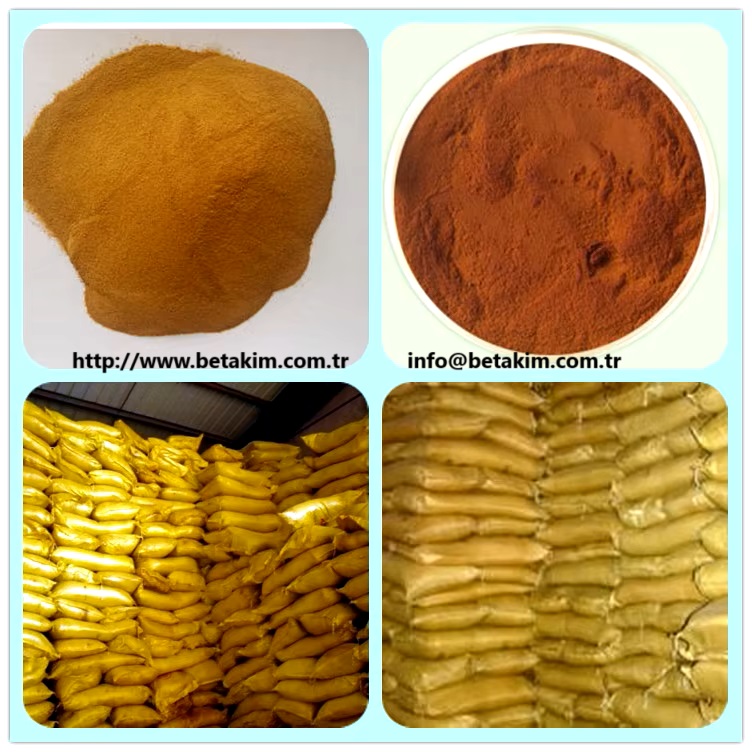
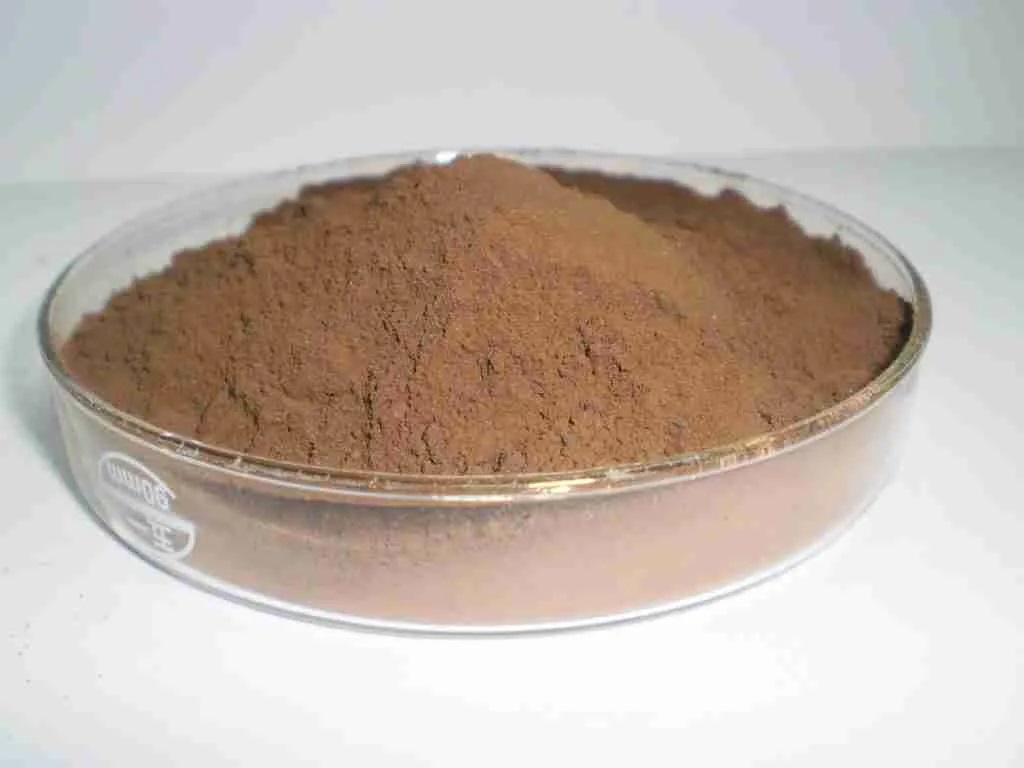
| Appearance | Yellowish-brown to brown powder or brown liquid |
| Odor | Odorless or slight wood-derived characteristic odor |
Note: Lignosulfonates are complex, high-molecular-weight polymers derived from lignin (wood pulping by-product). The formula above is representative; actual commercial products are polydisperse.
2. PHYSICAL PROPERTIES
| Property | Powder Form | Liquid Form |
|---|---|---|
| Physical State (20°C) | Solid (free-flowing powder) | Liquid |
| Appearance | Yellowish-brown to brown powder | Brown liquid |
| Odor | Odorless or slight wood-derived | Odorless or slight wood-derived |
| Solubility in Water | Complete (cold and hot water) | Complete |
| pH (5-10% solution) | 4 – 7 (acidic to neutral) | 4 – 7 (acidic to neutral) |
| Density | ~0.532 g/cm³ (bulk density) | 1.10 – 1.30 g/cm³ |
| Bulk Density (Powder) | 0.5 – 0.7 g/cm³ | – |
| Hygroscopicity | Moderately hygroscopic | – |
| Moisture Content (Powder) | 4 – 8% | – |
| Ash Content | 10 – 20% | 10 – 20% |
| Dry Solids (Liquid) | – | 45 – 55% (typical) |
3. CHEMICAL PROPERTIES
| Property | Information |
|---|---|
| Chemical Class | Lignosulfonate (potassium salt) |
| Counter-ion | K⁺ (Potassium) |
| Ionic Character | Anionic |
| Molecular Weight Range | 1,000 – 100,000+ Da (polydisperse) |
| Potassium (K) Content | 6 – 12% (provides plant-available potassium) |
| Sulfur (S) Content | 4 – 8% (as SO₃) |
| Organic Matter Content | 60 – 80% |
| Functional Groups | Sulfonic acid (-SO₃H), carboxyl (-COOH), phenolic -OH, aliphatic -OH |
| Surface Activity | Anionic surfactant |
| Solubility | Excellent in water (both cold and hot) |
| Stability | Stable under normal conditions; good performance at high temperatures |
| Incompatible Materials | Strong oxidizing agents |
Key Chemical Features:
-
Provides potassium (K⁺) – essential plant nutrient
-
Excellent dispersant, binder, emulsifier, and sequestering agent
-
Good filtration control properties
-
Stable in the presence of contaminants and at high temperatures
-
Biodegradable (derived from renewable resource)
4. PRODUCTION PROCESS
| Stage | Description |
|---|---|
| 1. Raw Material | Softwood lignin from wood pulping (sulfite pulping process) |
| 2. Sulfonation | Lignin is treated with sulfite (SO₃²⁻ or HSO₃⁻) at elevated temperature and pressure |
| 3. Reaction | Sulfonic acid groups (-SO₃H) are introduced into the lignin structure |
| 4. Neutralization | Sulfonated lignin is neutralized with potassium hydroxide (KOH) instead of sodium or calcium hydroxide |
| 5. Concentration | Liquid product is concentrated by evaporation |
| 6. Drying (Optional) | For powder form, concentrated liquid is spray-dried |
| 7. Formulation | Product may be formulated to specific solids content |
| 8. Packaging | Powder is bagged; liquid is drummed or bulk |
Simplified Reaction:
Lignin + SO₃²⁻ → Lignin-SO₃²⁻ → Neutralize with KOH → Potassium Lignosulfonate
Source: By-product of the wood pulping industry – sustainable, renewable resource.
5. APPLICATIONS
5.1. Agriculture (Primary Use – Most Important)
| Application | Function |
|---|---|
| Fertilizer Additive | Provides potassium (6-12% K) and enhances nutrient uptake |
| Soil Conditioner | Improves soil structure, buffering capacity, and fertility |
| Chelating Agent (Fulvic Acid Production) | Used to produce liquid fulvic acid fertilizers |
| Plant Growth Regulator | Promotes healthy plant growth; increases yield and fruit quality |
| Nutrient Carrier | Improves absorption of beneficial ions by plants |
| Drip Irrigation Additive | Compatible with drip irrigation systems (0.1-0.3% concentration) |
| Soil pH Neutralizer | Helps neutralize both acidic and alkaline soils |
| Heavy Metal Remediation | Aids in washing and remediation of lead- and copper-contaminated soil |
Benefits in Agriculture:
-
Increases crop yield and fruit quality
-
Improves fruit taste and extends storage life
-
Enhances nutrient (N, P, K, micronutrients) use efficiency
-
Creates favorable environment for soil microbial biomass
-
Reduces the proportion of acid-soluble and reducible fractions (toxic metals)
Comparison with Other Lignosulfonates for Agriculture:
| Type | Agricultural Suitability | Key Advantage |
|---|---|---|
| Potassium | ✅ Best for agriculture | Provides K + organic matter + chelation |
| Sodium | ⚠️ Limited | High sodium may harm soil |
| Calcium | ⚠️ Limited | May increase soil hardness |
| Ammonium | ⚠️ Caution | Acidifying – not for acidic soils |
5.2. Concrete & Construction
| Application | Function |
|---|---|
| Plasticizer (Water Reducer) | Reduces water demand in concrete (5-15% reduction) |
| Workability Enhancer | Improves concrete flowability and pumpability |
| Set Retarder | Slows cement hydration (extends working time) |
| Dispersant | Improves particle dispersion |
Typical Dosage: 0.2 – 0.6% of cement weight
5.3. Animal Feed
| Application | Function |
|---|---|
| Pellet Binder | Binds feed ingredients into stable pellets |
| Mineral Absorption Enhancer | Improves mineral uptake in animals |
| Dust Suppressant | Reduces dust in animal feed |
Typical Dosage: 0.5 – 2% of total feed formulation
5.4. Ceramics & Bricks
| Application | Function |
|---|---|
| Binder | Provides green strength and shape stability |
| Drying Rate Regulator | Controls drying speed to prevent cracking |
Typical Dosage: 1 – 3% of formulation
5.5. Oil & Gas Drilling / Mining
| Application | Function |
|---|---|
| Drilling Fluid Additive | Provides thinning and filtration control |
| Flotation Reagent Carrier | Carrier for flotation reagents in mineral processing |
| Dispersant | Improves dispersion of solids |
Typical Dosage: 1 – 5% of drilling fluid
5.6. Environmental & Road Stabilization
| Application | Function |
|---|---|
| Dust Suppressant | Controls dust on unpaved roads and construction sites |
| Soil Compaction Agent | Improves soil density and stability |
| Erosion Control | Prevents soil erosion on slopes |
Typical Dosage (Liquid): 0.5 – 2 L/m²
5.7. Paper & Wood Industry
| Application | Function |
|---|---|
| Adhesive Additive | Used in MDF (Medium Density Fiberboard) and particleboard adhesives |
| Dispersant | For paper coating formulations |
5.8. Chemical & Pharmaceutical
| Application | Function |
|---|---|
| Chelating Agent | Binds metal ions |
| Dispersant | For pigment and other dispersions |
6. AGRICULTURAL USE – DETAILED GUIDE
6.1. Olive Cultivation – Drip Irrigation Schedule
| Period | Application Method | Dosage | Effect / Purpose |
|---|---|---|---|
| Pre-flowering | Drip irrigation | 1 – 2 kg/ha | Root activation; enhances nutrient uptake |
| Fruit Set | Weekly or every 10 days | 0.5 – 1 kg/ha per application | Cell growth; fruit enlargement |
| Fruit Development | Continue with regular irrigation | 0.5 – 1 kg/ha per application | Chlorophyll synthesis; increases nutrient retention capacity |
| Pre-harvest (2-3 weeks before) | Final application | 1 – 2 kg/ha | Improves taste, aroma, and storage life |
Technical Notes for Olive Cultivation:
-
Concentration: Typically 0.1 – 0.3% in irrigation water
-
Compatibility: Compatible with urea, ammonium sulfate, and other fertilizers
-
Not a fertilizer alone: Must be integrated into a complete fertilization program
6.2. General Crop Application Rates
| Crop Type | Application Rate | Timing |
|---|---|---|
| Cereals (Wheat, Barley, Corn) | 2 – 5 kg/ha | Pre-planting or early growth |
| Vegetables | 1 – 3 kg/ha | At planting or as side-dress |
| Fruit Trees (Olive, Citrus, Apple) | 2 – 5 kg/ha | Pre-flowering, fruit set, fruit development |
| Grapes (Vineyards) | 1 – 3 kg/ha | Before flowering and during berry development |
| Pasture/Grassland | 2 – 4 kg/ha | Spring application |
6.3. Benefits in Agriculture
| Benefit | Mechanism |
|---|---|
| Potassium Supply | Provides 6-12% K for plant health |
| Improved Nutrient Uptake | Chelates micronutrients (Fe, Zn, Cu, Mn) |
| Soil Structure Improvement | Acts as soil conditioner; improves aggregation |
| Water Retention | Polymer structure holds water in soil |
| pH Neutralization | Helps buffer both acidic and alkaline soils |
| Heavy Metal Remediation | Chelates and removes toxic metals (Pb, Cu) |
| Drought Resistance | Helps plants withstand water stress |
6.4. Comparison with Other Lignosulfonates – Agriculture Focus
| Property | Potassium | Sodium | Calcium | Ammonium |
|---|---|---|---|---|
| Counter-ion | K⁺ | Na⁺ | Ca²⁺ | NH₄⁺ |
| Plant Nutrient Value | High (K) | Low (Na not essential) | Medium (Ca) | Medium (N) |
| Soil pH Effect | Neutral | Neutral | Neutral | Acidifying |
| Fulvic Acid Production | Excellent | Moderate | Moderate | Good |
| Drip Irrigation Compatibility | Excellent | Moderate | Poor (precipitates) | Good |
| Best For | All crops, all soils | Cement, industrial | Cement, animal feed | Acidic soils (caution) |
7. TYPICAL QUALITY SPECIFICATIONS
| Parameter | Powder Grade (Typical) | Liquid Grade (Typical) |
|---|---|---|
| Appearance | Yellowish-brown powder | Brown liquid |
| Dry Solids | ≥ 92% | 45 – 55% |
| pH (10% solution) | 4 – 7 | 4 – 7 |
| Potassium (K) | 6 – 12% | 6 – 12% |
| Sulfur (as SO₃) | 4 – 8% | 4 – 8% |
| Organic Matter | 60 – 80% | 60 – 80% |
| Ash | 10 – 20% | 10 – 20% |
| Water Insolubles | ≤ 1.0% | ≤ 1.0% |
| Moisture | ≤ 8% | – |
| Density (Liquid) | – | 1.10 – 1.30 g/cm³ |
| Bulk Density (Powder) | 0.5 – 0.7 g/cm³ | – |
8. STORAGE & HANDLING
| Parameter | Information |
|---|---|
| Storage Conditions (Powder) | Cool, dry, well-ventilated area; protect from moisture |
| Storage Conditions (Liquid) | 5-30°C; protect from freezing; agitate before use if settled |
| Container Requirements | Moisture-proof bags (powder); HDPE drums, IBC, bulk tanks (liquid) |
| Shelf Life (Powder) | 12-24 months (if kept dry) |
| Shelf Life (Liquid) | 6-12 months (may settle; agitate before use) |
| Hygroscopicity | Moderately hygroscopic (powder) – keep sealed |
| Incompatible Materials | Strong oxidizing agents |
| Packaging Options (Powder) | 25 kg bags, 500 kg/1000 kg FIBC |
| Packaging Options (Liquid) | 200 kg drums, 1000 kg IBC, flexibag, bulk tankers |
9. SAFETY & HEALTH INFORMATION
GHS Classification (Typical)
| Hazard Class | Category |
|---|---|
| Skin Irritation | Category 3 (H316) |
| Eye Irritation | Category 2 (H319) |
| Specific Target Organ Toxicity (Inhalation) | Category 3 (H335) |
Hazard Statements (H-Codes)
| Code | Statement |
|---|---|
| H316 | Causes mild skin irritation |
| H319 | Causes serious eye irritation |
| H335 | May cause respiratory irritation |
Precautionary Statements (P-Codes)
| Code | Statement |
|---|---|
| P261 | Avoid breathing dust |
| P264 | Wash thoroughly after handling |
| P280 | Wear protective gloves and eye protection |
| P302+P352 | IF ON SKIN: Wash with plenty of water |
| P305+P351+P338 | IF IN EYES: Rinse cautiously with water for several minutes |
Toxicological Information
| Parameter | Value |
|---|---|
| Oral LD50 (rat) | > 5,000 mg/kg (low toxicity) |
| Skin Irritation | Mild irritant |
| Eye Irritation | Moderate irritant |
| Sensitization | Not a known sensitizer |
First Aid Measures
| Exposure Route | Action |
|---|---|
| Inhalation | Remove to fresh air. Seek medical attention if respiratory irritation occurs. |
| Skin Contact | Wash with plenty of water and soap. |
| Eye Contact | Rinse immediately with plenty of water for at least 15 minutes. Seek medical attention. |
| Ingestion | Rinse mouth. Drink water. Seek medical attention if large amount ingested. |
Personal Protective Equipment (PPE)
| Equipment | Recommendation |
|---|---|
| Respiratory Protection | Dust mask (N95) when handling powder |
| Hand Protection | Chemical-resistant gloves (nitrile) |
| Eye Protection | Safety glasses with side shields |
| Body Protection | Lab coat or protective clothing |
10. ENVIRONMENTAL INFORMATION
| Parameter | Information |
|---|---|
| Biodegradability | Readily biodegradable |
| Aquatic Toxicity | Low toxicity |
| Bioaccumulation | Not expected |
| Source | Renewable resource (wood by-product) |
| Soil Effects | Neutral pH effect; improves soil structure |
| Waste Disposal | Dispose according to local regulations; can be incinerated or landfilled (non-hazardous) |
11. REGULATORY INFORMATION
| Region | Status |
|---|---|
| EU | REACH registered; approved for agricultural use |
| Turkey (KKDIK) | Mandatory compliance for industrial use |
| USA (TSCA) | Listed |
| Canada (DSL) | Listed |
| Australia (AICS) | Listed |
| Japan (ENCS) | Listed |
| Organic Farming | Permitted in some organic certification schemes (check local regulations) |
12. SYNONYMS & OTHER NAMES
| Name | Description |
|---|---|
| Potassium Lignosulfonate | Standard name |
| Potassium Ligno Sulfonate | Alternative spelling |
| Potassium Lignine Sulfonate | Alternative spelling |
| PLS | Abbreviation |
| Lignosulfonic acid potassium salt | IUPAC name |
| Potassium salt of lignosulfonic acid | Systematic name |
Database Identifiers:
-
CAS: 37314-65-1
-
EC: 616-031-3 (typical)
-
MDL: MFCD00163377 (approximate)
13. LIGNOSULFONATE FAMILY COMPARISON
| Property | Potassium | Sodium | Calcium | Ammonium |
|---|---|---|---|---|
| Counter-ion | K⁺ | Na⁺ | Ca²⁺ | NH₄⁺ |
| CAS | 37314-65-1 | 8061-51-6 | 8061-52-7 | 8061-53-8 |
| pH (10% sol.) | 4-7 | 7-11 | 4-6 | 4-7 |
| Plant Nutrient | K (6-12%) | None (Na not essential) | Ca | N (4-8%) |
| Cement Use | ⚠️ Limited | ✅ High | ✅ High | ⚠️ Limited |
| Agriculture Use | ✅ Best | ⚠️ Limited | ⚠️ Limited | ⚠️ Caution |
| Fulvic Acid Production | ✅ Excellent | Moderate | Moderate | Good |
| Drip Irrigation | ✅ Excellent | Moderate | Poor | Good |
| Soil pH Effect | Neutral | Neutral | Neutral | Acidifying |
14. SUMMARY
Potassium Lignosulfonate (PLS, CAS 37314-65-1) is the potassium salt of lignosulfonic acid, derived from softwood lignin. It is an anionic, water-soluble polymer that functions as a dispersant, binder, emulsifier, chelating agent, and soil conditioner.
Key Features:
| Feature | Description |
|---|---|
| Appearance | Yellowish-brown powder or brown liquid |
| pH | 4-7 (acidic to neutral) |
| Potassium Content | 6-12% |
| Sulfur Content | 4-8% |
| Solubility | Complete in cold and hot water |
| Biodegradability | Readily biodegradable |
| Source | Renewable (wood by-product) |
Main Application Areas:
| Sector | Applications |
|---|---|
| Agriculture | Fertilizer additive, soil conditioner, chelating agent, plant growth regulator, fulvic acid production |
| Concrete & Construction | Plasticizer, water reducer, set retarder |
| Animal Feed | Pellet binder, mineral absorption enhancer |
| Ceramics & Bricks | Binder, drying rate regulator |
| Oil & Gas / Mining | Drilling fluid additive, flotation reagent carrier |
| Environment | Dust suppressant, soil compaction, erosion control |
| Paper & Wood | Adhesive additive for MDF/particleboard |
Why Choose Potassium Lignosulfonate for Agriculture?
| Reason | Explanation |
|---|---|
| Provides Potassium | Essential nutrient for plant health, fruit quality, and yield |
| Excellent Solubility | Works perfectly in drip irrigation systems |
| Soil Conditioner | Improves soil structure, buffering, and water retention |
| Chelating Agent | Enhances micronutrient availability |
| Fulvic Acid Production | Key raw material for liquid fulvic acid fertilizers |
| Neutral pH Effect | Safe for all soil types (unlike ammonium which acidifies) |
| Renewable & Biodegradable | Environmentally friendly |
Key Safety Points:
-
LOW TOXICITY – Generally considered safe
-
MILD IRRITANT – May cause mild skin/eye irritation
-
NOT A FERTILIZER ALONE – Must be integrated into a complete fertilization program
-
MODERATELY HYGROSCOPIC – Store in sealed containers
15. IMPORTANT NOTES
-
Best Lignosulfonate for Agriculture: Among all lignosulfonate types (sodium, calcium, ammonium, potassium), potassium lignosulfonate is the most suitable for agricultural use because it provides potassium (K⁺) – an essential plant macronutrient – while also functioning as a soil conditioner and chelating agent.
-
Not a Standalone Fertilizer: Potassium lignosulfonate is a soil conditioner and nutrient enhancer, not a complete fertilizer. It must be integrated into a balanced fertilization program with nitrogen (N), phosphorus (P), and other nutrients.
-
Drip Irrigation Compatibility: Potassium lignosulfonate has excellent solubility in both cold and hot water, making it ideal for drip irrigation and fertigation systems. Recommended concentration: 0.1-0.3% in irrigation water.
-
Fulvic Acid Production: Potassium lignosulfonate is a key raw material for producing liquid fulvic acid fertilizers, which are highly valued in organic and sustainable agriculture.
-
Olive Cultivation Benefits: In olive orchards, potassium lignosulfonate applied via drip irrigation during pre-flowering, fruit set, fruit development, and pre-harvest stages improves fruit size, yield, taste, aroma, and storage life.
-
Heavy Metal Remediation: Potassium lignosulfonate can aid in the remediation of lead (Pb) and copper (Cu) contaminated soil by chelating and mobilizing these metals for removal.
-
Not for Acidic Soils (Ammonium vs Potassium): Unlike ammonium lignosulfonate (which acidifies soil), potassium lignosulfonate has a neutral pH effect and is safe for all soil types, including acidic soils.
-
Concrete Application: While potassium lignosulfonate can be used as a concrete plasticizer, sodium and calcium lignosulfonates are more common in construction due to lower cost and better performance in cement.
-
Dosage Sensitivity: Overdosing in soil applications may cause salt accumulation around roots. Follow recommended dosage rates (typically 1-5 kg/ha depending on crop and soil conditions).
-
Storage: Potassium lignosulfonate powder is moderately hygroscopic. Store in a cool, dry place in sealed containers. Liquid grades may settle over time – agitate before use.
Important Disclaimer: This Technical Data Sheet (TDS) is for informational purposes only. For complete safety, handling, storage, and regulatory compliance information, always refer to the official Safety Data Sheet (SDS) provided by the manufacturer/supplier.