We unleash your business potential by maximize the business innovation.
Send EmailMonoethylene Glycol, Mono Ethylene Glycol, Ethylene Glycol, Glycol Alcohol, EG, MEG, 107-21-1
MONOETHYLENE GLYCOL (MEG)
| Product Code | MEG-IND-001 |
|---|---|
| Revision No. | 01 |
| Issue Date | April 20, 2026 |
1. PRODUCT IDENTIFICATION & CHEMICAL IDENTITY
Product Name: Monoethylene Glycol (MEG)
Chemical Family: Glycol / Dihydric Alcohol
| Property | Value / Description |
|---|---|
| IUPAC Name | Ethane-1,2-diol |
| Chemical Formula | C₂H₆O₂ |
| CAS Number | 107-21-1 |
| Molecular Weight | 62.07 g/mol |
| Synonyms / Trade Names |
Ethylene Glycol, 1,2-Ethanediol, 2-Hydroxyethanol, Glycol Alcohol, Fridex, Zerex, Dowtherm SR 1, MEG 100, Macrogol 400 BPC, Tescol, Norkool |
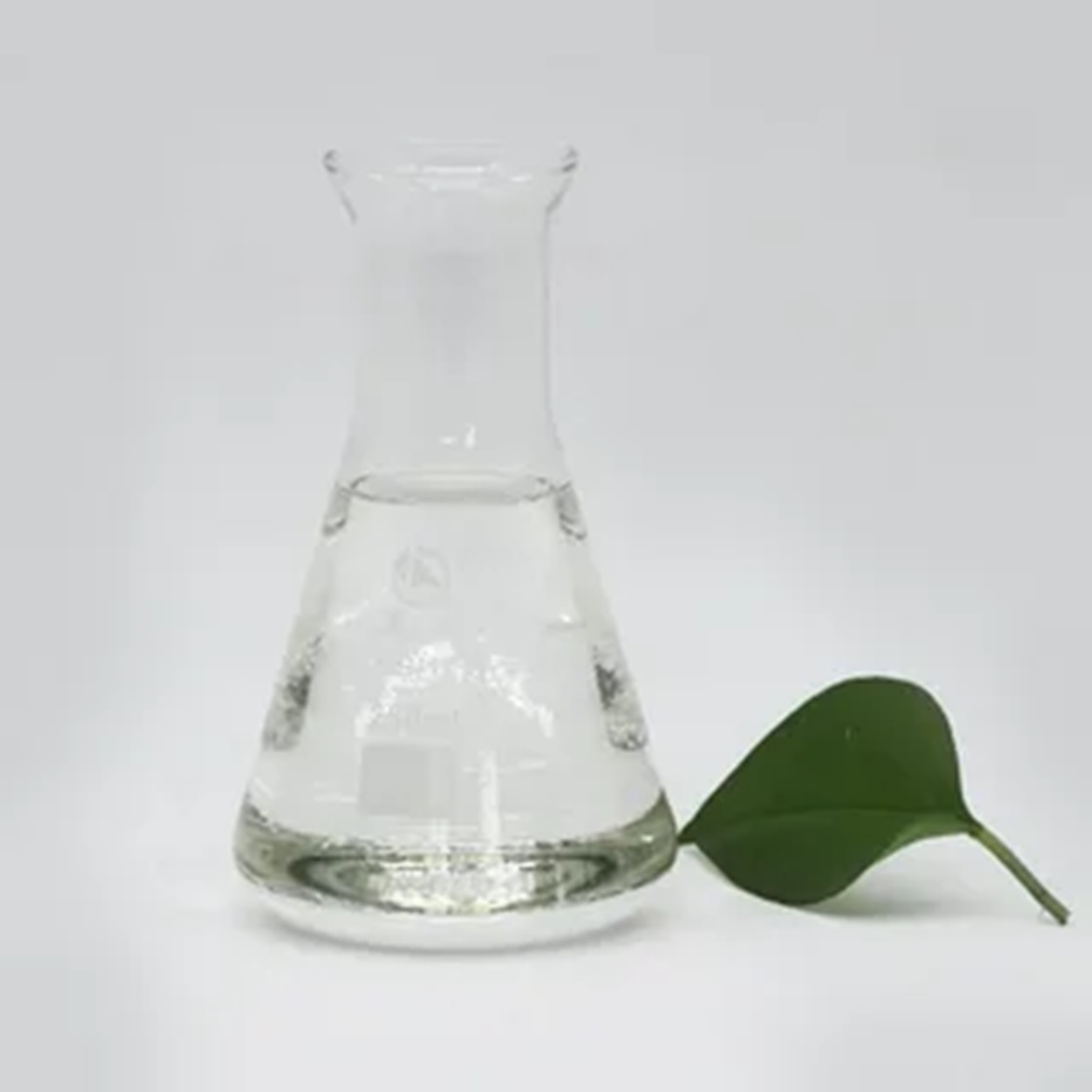
| Physical Description | Colorless, clear, odorless, viscous, and hygroscopic liquid. |
2. PHYSICAL & CHEMICAL PROPERTIES
| Parameter | Specification Value | Unit |
|---|---|---|
| Physical State (20°C) | Clear Liquid | Visual |
| Color | Colorless (Pt-Co Max. 10) | APHA |
| Odor | Odorless | — |
| Density (20°C) | ~1.113 - 1.115 | g/cm³ |
| Boiling Point (760 mmHg) | ~197 - 198 | °C |
| Freezing / Melting Point | ~ -12.9 to -13 | °C |
| Flash Point (Closed Cup) | ~111 | °C |
| Autoignition Temperature | ~398 - 400 | °C |
| Vapor Pressure (20°C) | 0.008 | kPa |
| Solubility |
Fully miscible with Water, Alcohol, Acetone, Methylene Chloride; Insoluble in oils and mineral oils. |
3. FREEZING POINT PERFORMANCE (Water Mixture)
Monoethylene Glycol lowers the freezing point of water. The table below shows standard theoretical values based on pure product. (Industrial applications may vary by ±3-5%).
| MEG Volume % | Water Volume % | Freezing Point (°C) | Freezing Point (°F) |
|---|---|---|---|
| 10% | 90% | -3.4 °C | 25.9 °F |
| 20% | 80% | -7.9 °C | 17.8 °F |
| 30% | 70% | -13.7 °C | 7.3 °F |
| 40% | 60% | -23.5 °C | -10.3 °F |
| 50% | 50% | -36.8 °C | -34.2 °F |
| 60% | 40% | -52.8 °C | -63.0 °F |
Caution: For systems involving human contact or food processing (e.g., potable water systems), Monopropylene Glycol (MPG) must be used instead of MEG due to MEG's toxicity.
4. APPLICATIONS & END USES
MEG is the highest volume traded glycol globally.
| Industry | Application Details |
|---|---|
| Antifreeze & Heat Transfer | Automotive engine coolants, aircraft de-icing fluids (Type I), HVAC chiller systems, ice rink cooling, gas compressor cooling. |
| Polymer & Plastics | PET (Polyethylene Terephthalate) resin production (Plastic bottles, packaging films), Polyester fibers and textile yarns. |
| Coatings & Adhesives | Alkyd resins, synthetic rubbers, latex paints, asphalt emulsions, industrial glues. |
| Solvents & Carriers | Detergent formulations, printing inks, cosmetic humectants (moisturizers), pharmaceutical excipients (Macrogol grade). |
| Industrial Processes | Hydrate inhibitor in natural gas pipelines (Dehydration/Desiccant), Polyurethane foam recycling (glycolysis), mining flotation frother. |
5. SAFETY & TOXICOLOGICAL INFORMATION
5.1 Hazard Identification & Toxicity
MEG has a low acute toxicity profile via inhalation but is harmful or fatal if swallowed. It has a sweet taste, making it attractive and dangerous to children and pets.
-
Acute Effects: Ingestion may cause metabolic acidosis, central nervous system depression, tachycardia, and acute kidney failure.
-
Skin/Eye: Irritant.
-
Carcinogenicity: Not listed.
5.2 Personal Protective Equipment (PPE)
-
Respiratory: Use appropriate mask if ventilation is inadequate.
-
Hands: Butyl or Nitrile rubber gloves.
-
Eyes: Chemical safety goggles.
-
Body: Protective clothing.
5.3 First Aid Measures
| Exposure Route | Emergency Action |
|---|---|
| Inhalation | Move to fresh air. Seek medical attention if symptoms persist. |
| Skin Contact | Wash immediately with plenty of soap and water for at least 15 minutes. |
| Eye Contact | Rinse cautiously with water for at least 15 minutes. Remove contact lenses if present. Get immediate medical attention. |
| Ingestion | DO NOT INDUCE VOMITING. Rinse mouth with water. Seek immediate medical attention. Administration of Ethanol or Fomepizole may be required. |
5.4 Fire Fighting Measures
-
Suitable Extinguishing Media: Water spray, alcohol-resistant foam, dry chemical powder, CO₂.
-
Special Protective Equipment: Self-contained breathing apparatus (SCBA) required for fire conditions.
6. STORAGE & PACKAGING
| Feature | Description |
|---|---|
| Storage Conditions | Store in a cool, dry, well-ventilated area. Keep away from strong oxidizers and open flames. Stainless steel or aluminum tanks recommended. |
| Incompatible Materials | Strong acids, strong oxidizing agents, sulfuric acid, nitric acid. |
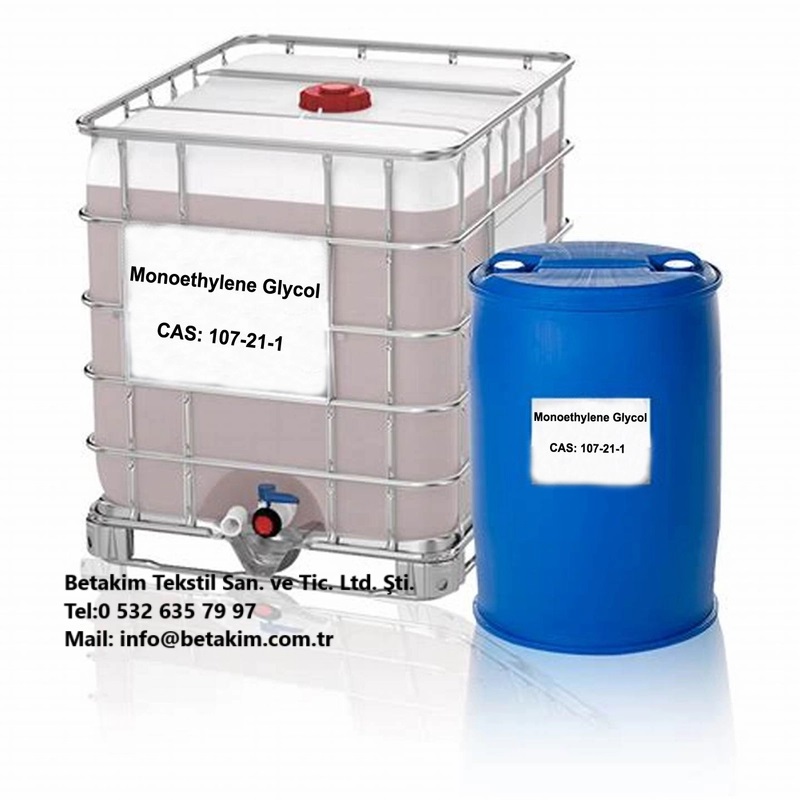
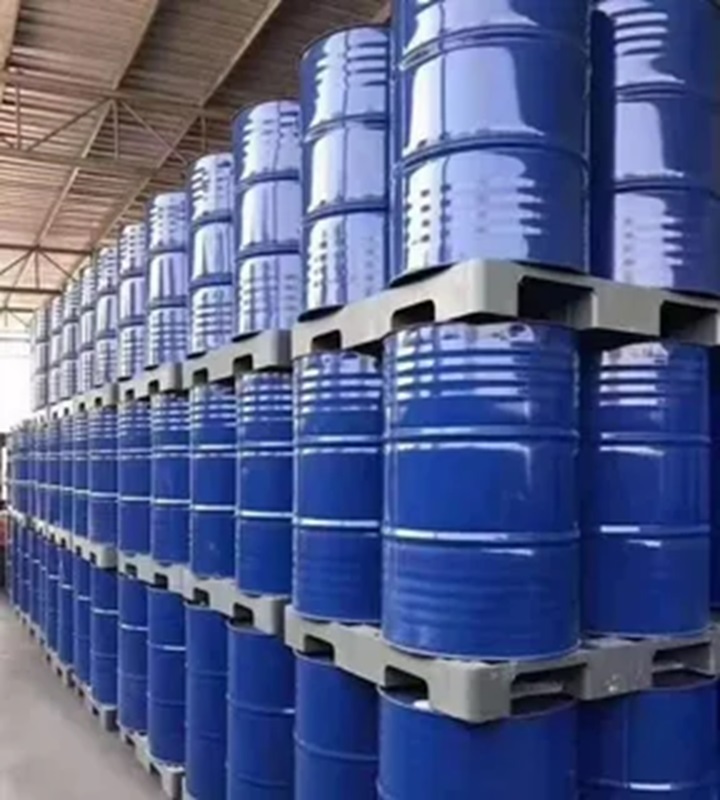
| Packaging Options | • 230 kg Net Drums (Metal/Plastic) • 1100 - 1200 kg IBC Tote • Bulk Tanker / ISO Tank Container |
7. ENVIRONMENTAL & REGULATORY INFORMATION
-
Biodegradability: Readily biodegradable.
-
Ecotoxicity: Low to moderate toxicity to aquatic organisms (LC50 > 100 mg/L). Spills into groundwater may increase oxygen demand.
-
Standards & Ratings:
-
NFPA 704 Rating: Health: 2 | Flammability: 1 | Reactivity: 0
-
Quality Management: ISO 9001:2015 compliant production.
-
Regulatory Compliance: Compliant with EU REACH regulations and US TSCA inventory.
-
Disclaimer:
The information contained in this Technical Data Sheet is based on current knowledge and reliable sources. The manufacturer/distributor assumes no liability for use outside of specified applications or improper handling. The user is responsible for testing the product's suitability for their specific process. Please refer to the Safety Data Sheet (SDS) for comprehensive hazard and handling details.
MONOETHYLENE GLYCOL (MEG) – APPLICATION & FORMULARY GUIDE
1. APPLICATION METHODS & HANDLING PROCEDURES
The method of application varies significantly depending on the industry.
| Sector | Application Method |
|---|---|
| Antifreeze / Coolant | Pre-mix with deionized/demineralized water to desired concentration (see formulary below). Add corrosion inhibitor package. Circulate in closed-loop system. |
| PET Resin Production | Reacted with Purified Terephthalic Acid (PTA) in an esterification reactor at high temperature (260-280°C) and vacuum to form Bis(2-Hydroxyethyl) terephthalate (BHET) , which is then polycondensed. |
| Natural Gas Dehydration | Injected directly into high-pressure gas streams before expansion/cooling. MEG absorbs water to prevent hydrate formation (ice-like crystals). Rich MEG is then regenerated via distillation/reboiler units. |
| Polyester Polyols (PU Foams) | Used in Glycolysis Recycling. Rigid PU foam is heated with MEG and a catalyst (e.g., Titanate) at ~200°C to break urethane bonds, yielding liquid recycled polyol. |
| Latex Paint / Coating | Added as a coalescing aid and freeze-thaw stabilizer during the let-down phase of paint manufacturing (typically 1-3% of total formula). Must be mixed under low shear. |
2. FORMULARY & MIXING RECIPES (By Industry)
Below are standard industrial starting point formulations.
A. Automotive Antifreeze Concentrate (Inhibited)
For a typical Heavy-Duty Diesel or Automotive Coolant Base.
| Component | Percentage (wt%) | Function |
|---|---|---|
| Monoethylene Glycol (MEG) | 94.0 - 96.0 % | Freeze/Boil protection |
| Corrosion Inhibitor Package | 3.0 - 5.0 % | Protection for Cu, Al, Fe, Solder |
| Sodium Hydroxide (50%) | 0.5 - 1.0 % | pH Buffer (pH 8.0 - 9.0) |
| Water (Deionized) | 0.5 - 1.5 % | Balance |
| Defoamer / Dye | q.s. | Aesthetic / Process |
Usage Recipe for End-User: Mix this concentrate with 50% Deionized Water to achieve freeze protection down to -36.8 °C.
B. Aircraft De-icing Fluid (Type I - Newtonian Fluid)
For ground de-icing/anti-icing of aircraft surfaces (Non-thickened).
| Component | Percentage (wt%) |
|---|---|
| Monoethylene Glycol (MEG) | 50.0 - 88.0 % |
| Water | 10.0 - 48.0 % |
| Wetting Agent (Surfactant) | 0.5 - 1.0 % |
| Corrosion Inhibitor (Triazole/Silicate) | 0.5 - 1.0 % |
C. Polyester Resin (Unsaturated) - Solvent Alternative
Used as a reactive diluent in fiberglass repair putty and primers.
| Component | Parts by Weight |
|---|---|
| Unsaturated Polyester Resin (Base) | 100 |
| MEG | 5 - 10 |
| MEKP Catalyst | 1 - 2 |
Procedure: MEG acts as a viscosity reducer. Warning: High levels of MEG will make the cured resin water-sensitive and soft.
3. SECTOR-SPECIFIC SUITABILITY & GRADE REQUIREMENTS
| Industry Sector | Required MEG Grade / Purity | Suitability Notes |
|---|---|---|
| PET Bottle/Fiber | Fiber Grade (>99.9% purity) | Ultra-low UV transmittance (UV-220 nm >70%). Strict limits on Aldehydes and Iron (<0.1 ppm). Lower purity leads to yellowing/brittle bottles. |
| Automotive Antifreeze | Industrial Grade (>99.5%) | Requires low Chloride content (<5 ppm) to prevent stainless steel/aluminum pitting. |
| Aircraft De-icing | Industrial / Fiber Grade | Must meet SAE AMS 1424 standard. Toxicity to aquatic life must be managed in runoff. |
| Pharma/Cosmetics | USP/EP Grade (Macrogol) | Must comply with pharmacopoeia monographs for Ethylene Glycol and Diethylene Glycol (DEG) limits (DEG < 0.1%). |
| Gas Pipeline | Industrial Grade | High reboiler thermal stability required. Salt precipitation control needed if formation water mixes. |
| Construction (Concrete) | Industrial Grade | NOT RECOMMENDED. MEG is a strong retarder but highly toxic. Non-toxic alternatives preferred for soil/groundwater contact. |
4. COMPLETE LIST OF SYNONYMS & TRADE ALIASES
For procurement, MSDS search, and cross-referencing.
| Category | Names / Aliases |
|---|---|
| Scientific / IUPAC | Ethane-1,2-diol, 1,2-Ethanediol, 2-Hydroxyethanol, 1,2-Dihydroxyethane |
| Industry Abbrev. | MEG, EG, EG 100 |
| Commercial/Brand | Fridex, Zerex, Glysantin G 34, Dowtherm SR 1, Ucar 17, Tescol, Norkool, Union Carbide XL 54 |
| Pharma Grade | Macrogol 400 BPC |
| Regional/Turkish | Etilen Glikol, Monoetilen Glikol, Glikol Alkol |
5. ALTERNATIVES & SUBSTITUTION GUIDE
MEG is often substituted based on toxicity requirements or performance limitations.
| Scenario / Limitation | Recommended Alternative | Key Difference vs MEG |
|---|---|---|
| Food Processing / Potable Water | Monopropylene Glycol (MPG / PG) | Non-Toxic. Recognized as GRAS (Generally Recognized As Safe) by FDA. MEG is toxic if ingested. |
| Extreme Low Temp (-50°C and below) | MEG + Water is still best, but MPG or Ethanol may be used. | MPG is less efficient at freeze point depression; Ethanol is volatile/flamable. |
| PET Production (Bio-based) | Bio-MEG (from Ethanol dehydration) | Chemically identical to petro-MEG. Lower carbon footprint. |
| Secondary Loop Chillers | Potassium Formate or Calcium Chloride Brine | Lower viscosity than Glycol/Water mixes = Better pump efficiency and heat transfer. |
| Plasticizer / Solvent | Diethylene Glycol (DEG) or Triethylene Glycol (TEG) | DEG has higher boiling point but is more toxic and hygroscopic. |
| Gas Dehydration | Triethylene Glycol (TEG) | TEG is superior to MEG for this application due to higher thermal stability and lower vapor losses. MEG is only used for in-line hydrate inhibition, not for standard contactor towers. |
6. CRITICAL TECHNICAL NOTES FOR FORMULATORS
-
Inhibitor Compatibility: MEG degrades over time in hot engine environments forming Glycolic Acid and Formic Acid. Do not use MEG without a proper organic acid technology (OAT) or nitrite corrosion inhibitor package in engines.
-
Aldehyde Formation: When heating MEG above 150°C (especially in PET production), trace amounts of Acetaldehyde (AA) form. This is a critical control point for mineral water bottles as AA migrates into the water affecting taste.
-
Viscosity: At -20°C, a 50/50 MEG/Water mix is significantly more viscous than pure water. Pump sizing must account for this cold start viscosity increase.