We unleash your business potential by maximize the business innovation.
Send EmailNitric Acid, Hydrogen Nitrate, Azotic Acid, Aqua Fortis, Red Fuming Nitric Acid, RFNA, 7697-37-2
NITRIC ACID
PRODUCT IDENTIFIER INFORMATION
| Parameter | Information |
|---|---|
| Product Name | Nitric Acid |
| Chemical Name (IUPAC) | Nitric Acid |
| CAS Number | 7697-37-2 |
| EC Number (EINECS) | 231-714-2 |
| GTIP Code | 2808.00.00.00.00 |
| Molecular Formula | HNO₃ |
| Molecular Weight | 63.01 g/mol |
SECTION 1: CHEMICAL IDENTITY AND DESCRIPTION
| Parameter | Information |
|---|---|
| Chemical Name (IUPAC) | Nitric Acid |
| Systematic Name | Hydrogen Nitrate; Azotic Acid |
| Synonyms (English) | Nitric Acid, Hydrogen Nitrate, Azotic Acid, Aqua Fortis, Fuming HNO₃, Red Fuming Nitric Acid (RFNA) |
| CAS Number | 7697-37-2 |
| EC Number (EINECS) | 231-714-2 |
| Molecular Formula | HNO₃ |
| Molecular Weight | 63.01 g/mol |
| Chemical Class | Strong inorganic mineral acid; strong oxidizer |
| Physical State (20°C) | Colorless to yellowish liquid (fuming grades emit white to reddish fumes) |
| Odor | Sharp, pungent, suffocating |
| Taste | Highly acidic and corrosive (not for consumption) |
SECTION 2: PHYSICAL AND CHEMICAL PROPERTIES
| Property | Value | Test Method / Note |
|---|---|---|
| Appearance | Colorless to pale yellow clear liquid; darker yellow/red for fuming grades | Visual |
| Odor | Sharp, pungent, suffocating | Olfactometric |
| Molecular Weight | 63.01 g/mol | Calculated |
| Melting Point | -42°C | DSC |
| Boiling Point | 83 – 121°C (concentration dependent; azeotrope at ~68% boils at 121.6°C) | ASTM D86 |
| Density (20°C) | 1.41 g/cm³ (for ~68% concentration); up to 1.51 g/cm³ for fuming grades | ASTM D4052 |
| Vapor Pressure (20°C) | ~48 hPa (for 68% solution) | Calculated |
| Vapor Density (Air=1) | ~2.2 (heavier than air) | Calculated |
| Solubility in Water | Completely miscible in all proportions (highly exothermic) | General Method |
| pH (1M solution) | ~ -1.4 (highly acidic) | Calculated |
| Refractive Index (nD²⁰) | 1.397 (for 68% solution) | Refractometry |
| Concentration Forms | 56% (common technical grade), 60% (concentrated), 68% (azeotropic), 85% (fuming), 90%+ (high-strength) | Titrimetric |
| Character | Hygroscopic; highly corrosive; oxidizing; fuming grades release NO₂ gas |
SECTION 3: CHEMICAL PROPERTIES AND REACTIVITY
| Parameter | Information |
|---|---|
| Chemical Character | Strong monobasic mineral acid; powerful oxidizing agent; highly corrosive |
| Stability | Stable under normal storage; decomposes upon heating to release NO₂, O₂, and H₂O |
| Reactivity | Reacts violently with bases, reducing agents, organic matter, and most metals; passivates some metals (e.g., aluminum, stainless steel) |
| Incompatible Materials | Organic compounds (wood, paper, cloth, oils), strong bases, reducing agents, alcohols, acetone, metal powders, and hydrogen sulfide |
| Polymerization | Does not polymerize |
| Decomposition Products (Heating) | Nitrogen dioxide (NO₂ - toxic brown gas), Oxygen (O₂), Water (H₂O) |
| Hazardous Reactions | Reacts violently with organic materials causing fire and explosion; with metal powders can generate flammable hydrogen gas; with turpentine or acetone can autoignite |
SECTION 4: COMMON MINERAL ACIDS COMPARISON TABLE
| Property | Nitric Acid (HNO₃) | Sulfuric Acid (H₂SO₄) | Hydrochloric Acid (HCl) | Phosphoric Acid (H₃PO₄) |
|---|---|---|---|---|
| CAS Number | 7697-37-2 | 7664-93-9 | 7647-01-0 | 7664-38-2 |
| Formula | HNO₃ | H₂SO₄ | HCl | H₃PO₄ |
| Common Strength | 68% | 96-98% | 30-37% | 75-85% |
| Boiling Point | 121.6°C (azeotrope) | 335°C (decomp.) | 110°C (azeotrope) | 158°C |
| Density (g/cm³) | 1.41 | 1.84 | 1.18 | 1.71 |
| Primary Character | Strong oxidizer | Dehydrating agent | Non-oxidizing acid | Weak/moderate acid |
| Key Application | Fertilizers, explosives | Batteries, fertilizer, refining | Metal pickling, pH adjustment | Fertilizers, food additive |
SECTION 5: FUNCTIONAL PROPERTIES AND MECHANISM OF ACTION
| Property | Description |
|---|---|
| Strong Oxidizing Agent | Acts as a powerful oxidizer; reacts with metals to produce nitrates and oxides; passivates some metals (e.g., stainless steel, aluminum) |
| Nitrating Agent | Introduces nitro groups (-NO₂) into organic molecules; essential for producing explosives, pharmaceuticals, and dyes |
| Acidifying Agent | Provides H⁺ ions for pH adjustment, neutralization, and salt formation (nitrates) |
| Etching/Pickling Agent | Removes scale, rust, and welding discoloration from metal surfaces (especially stainless steel) |
| Fuming Property | Concentrated forms release NO₂ gas, creating characteristic "fuming" or "red fuming" appearance; indicates high reactivity |
| Decomposition | Thermal decomposition releases NO₂ (brown gas), O₂, and water; NO₂ is toxic and enhances oxidizing power |
SECTION 6: MAIN APPLICATION AREAS
| Industry / Application | Function | Typical Use |
|---|---|---|
| Agriculture - Fertilizer Production | Raw material/nitrogen source | Production of Ammonium Nitrate, Sodium Nitrate, Potassium Nitrate, Calcium Nitrate; soil pH regulation |
| Explosives & Ammunition | Nitrating agent | Production of TNT, RDX, nitroglycerin, gunpowder, pyrotechnics |
| Chemical Synthesis | Oxidizer and nitrating agent | Synthesis of nitroaromatics, adipic acid, caprolactam (nylon precursors), cyclohexanone |
| Polymer & Textile | Raw material/intermediate | Production of polyamide (nylon) intermediates; textile processing |
| Metal Finishing & Surface Treatment | Pickling/passivation agent | Stainless steel weld cleaning (with HF), brightening, derusting, gold/silver surface cleaning |
| Food & Dairy Industry | CIP (Clean-in-Place) cleaning | Cleaning of milk tanks, pipelines, and heat exchangers to remove mineral deposits |
| Water & Wastewater Treatment | Oxidation/neutralization | Heavy metal treatment (in combination with H₂SO₄); nitrogen source for microbiological processes |
| Laboratory | Reagent | General acidification, digestion, nitration reactions, analytical chemistry |
| Boiler & Heat Exchanger Maintenance | Scale removal | Cleaning of boilers, combi-boilers, and heat exchangers |
| Other Applications | Pigment production, passivation | Selenium dioxide synthesis, post-welding stainless steel brightening; pigment manufacturing |
SECTION 7: QUALITY SPECIFICATIONS (TECHNICAL GRADE - 68% SOLUTION)
| Parameter | Specification | Test Method |
|---|---|---|
| Appearance | Clear, colorless to pale yellow liquid | Visual |
| Assay (HNO₃) | 68.0 – 70.0 % (w/w) | Titrimetric (NaOH) |
| Density (20°C) | 1.405 – 1.415 g/cm³ | ASTM D4052 |
| Chlorides (as Cl) | ≤ 0.0005 % | Nephelometry |
| Sulfates (as SO₄) | ≤ 0.001 % | Turbidimetry |
| Iron (Fe) | ≤ 0.0002 % | AAS / ICP |
| Heavy Metals (as Pb) | ≤ 0.0002 % | AAS / ICP |
| Residue on Ignition | ≤ 0.01 % | Gravimetric |
| Nitrous Acid (HNO₂) | ≤ 0.1 % | Titrimetric |
| Color (APHA) | ≤ 10 (clear grades); up to 50 (technical grades) | ASTM D1209 |
SECTION 8: TOXICOLOGICAL PROFILE
| Parameter | Value |
|---|---|
| Acute Oral Toxicity (LD50, Rat) | ~ 1,100 mg/kg (moderate toxicity) |
| Acute Dermal Toxicity (LD50, Rabbit) | ~ 2,000 mg/kg (corrosive) |
| Acute Inhalation Toxicity (LC50, Rat, 4h) | ~ 1,500 ppm (highly toxic, severely irritating) |
| Skin Corrosion/Irritation | Severe corrosion (Category 1A/1B); causes severe burns and necrosis |
| Eye Damage/Irritation | Severe irreversible eye damage (Category 1) |
| Respiratory Irritation | Vapors cause severe irritation, pulmonary edema, and respiratory distress |
| Carcinogenicity | Not classified (IARC, NTP) – however, nitrosamines formed from secondary amines are carcinogenic |
| Mutagenicity | Not classifiable as mutagenic |
| Reproductive Toxicity | No known adverse effects at occupational exposure limits |
| Occupational Exposure Limit (8h TWA) | 2 ppm (ACGIH); 5 ppm (OSHA) for NO₂; specific limits vary by country |
| Short-Term Exposure Limit (STEL) | 4 ppm (ACGIH); 10 ppm (OSHA) for NO₂ |
SECTION 9: GHS CLASSIFICATION AND LABELING
GHS Classification (according to 1272/2008/EC and UN GHS):
| Hazard Class | Category | H-Statement |
|---|---|---|
| Oxidizing Liquid | Category 2 | H272 |
| Corrosive to Metals | Category 1 | H290 |
| Skin Corrosion/Irritation | Category 1A | H314 |
| Serious Eye Damage/Irritation | Category 1 | H318 |
| Specific Target Organ Toxicity - SE | Category 3 | H335 |
| Acute Toxicity (Inhalation) | Category 3 | H331 |
Signal Word: DANGER
Hazard Pictograms: GHS03 (Flame Over Circle), GHS05 (Corrosion), GHS06 (Skull and Crossbones - for fuming/high concentrations)
Hazard Statements (H-Codes):
| Code | Statement |
|---|---|
| H272 | May intensify fire; oxidizer |
| H290 | May be corrosive to metals |
| H314 | Causes severe skin burns and eye damage |
| H318 | Causes serious eye damage |
| H331 | Toxic if inhaled |
| H335 | May cause respiratory irritation |
SECTION 10: PRECAUTIONARY STATEMENTS (P-CODES)
| Code | Statement |
|---|---|
| P210 | Keep away from heat, sparks, open flames, hot surfaces. No smoking. |
| P220 | Keep away from clothing and other combustible materials |
| P260 | Do not breathe vapors/mists/sprays |
| P280 | Wear protective gloves/protective clothing/eye protection/face protection |
| P301+P330+P331 | IF SWALLOWED: Rinse mouth. DO NOT induce vomiting |
| P303+P361+P353 | IF ON SKIN (or hair): Take off immediately all contaminated clothing. Rinse skin with water/shower |
| P305+P351+P338 | IF IN EYES: Rinse cautiously with water for several minutes. Remove contact lenses if present and easy to do. Continue rinsing |
| P310 | Immediately call a POISON CENTER/doctor |
| P370+P378 | In case of fire: Use dry chemical, CO₂, or water fog. DO NOT use water jet (may spread) |
| P403+P233 | Store in a well-ventilated place. Keep container tightly closed |
| P501 | Dispose of contents/container in accordance with local/regional/national/international regulations |
SECTION 11: FIRST AID MEASURES
| Exposure Route | Action to Take |
|---|---|
| Inhalation | Move to fresh air immediately. Keep at rest in a position comfortable for breathing. If breathing is difficult, give oxygen. Seek immediate medical attention. |
| Skin Contact | Remove contaminated clothing immediately. Rinse skin with copious amounts of water for at least 15–20 minutes. Do not use neutralizing agents. Seek medical attention. |
| Eye Contact | Rinse immediately with plenty of water for at least 15–20 minutes. Hold eyelids open. Remove contact lenses. Seek immediate medical attention. |
| Ingestion | Rinse mouth. DO NOT induce vomiting. Do not give anything to drink to an unconscious person. Seek immediate medical attention. |
SECTION 12: FIRE-FIGHTING MEASURES
| Parameter | Information |
|---|---|
| Fire Hazard | Not flammable but strong oxidizer; can ignite combustible materials and intensify fires |
| Hazards During Fire | Toxic brown NO₂ gas, O₂ release; may accelerate combustion of other materials |
| Suitable Extinguishing Media | Dry chemical powder, CO₂, water fog (for cooling), alcohol-resistant foam |
| Unsuitable Extinguishing Media | Water jet (may spread corrosive material); avoid for large spills |
| Special Protective Equipment | Self-contained breathing apparatus (SCBA), acid-resistant full protective clothing, chemical-resistant gloves |
| Special Precautions | Keep runoff water away from drains and waterways; cool exposed containers with water fog from a safe distance; prevent contact with organic materials |
SECTION 13: STORAGE AND SHELF LIFE
| Parameter | Information |
|---|---|
| Storage Conditions | Store in a cool (15-25°C), well-ventilated, dry place, away from direct sunlight and heat sources |
| Container Requirements | Tightly closed, acid-resistant (glass, stainless steel, polyethylene, PTFE) containers; must be vented to prevent pressure build-up |
| Materials to Protect From | Organic materials, combustible materials, reducing agents, bases, alcohols, acetone, metal powders, turpentine |
| Shelf Life | 24 – 36 months (in unopened original packaging; concentration decreases over time due to NO₂ gas evolution) |
| Stability Note | Stable under normal conditions; decomposes upon heating to release NO₂ (brown gas); color darkens over time due to NO₂ formation – this is normal |
SECTION 14: PACKAGING OPTIONS
| Packaging Type | Quantity | Material |
|---|---|---|
| Glass Bottle | 1 L, 2.5 L | Amber glass with PTFE-lined cap |
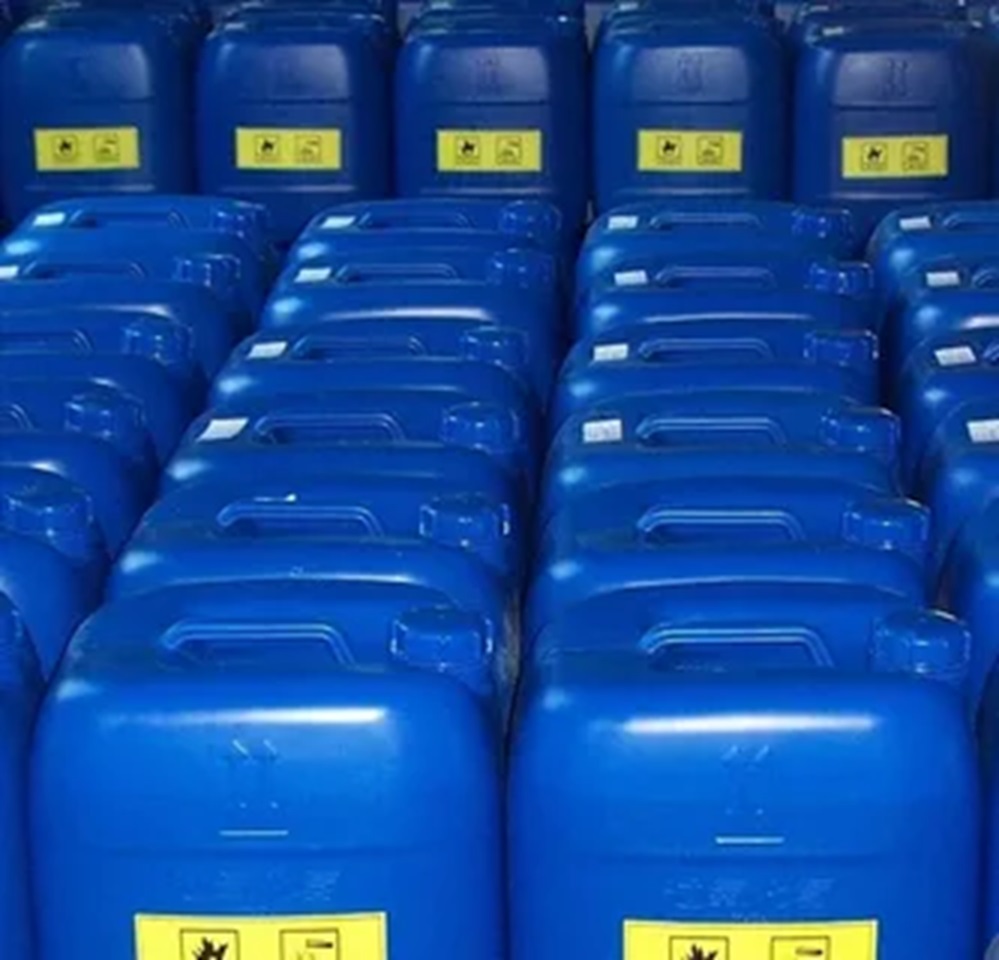
| HDPE Can | 5 L, 10 L, 20 L | High-Density Polyethylene (HDPE) – acid-resistant |
| HDPE Jerrycan | 25 L, 50 L | HDPE with vented cap |
| HDPE Drum | 200 L | HDPE (heavy duty) |
| IBC Container | 1000 L | HDPE / Stainless steel 316L |
| Bulk Tanker | 20-30 tons | Stainless steel 316L / acid-resistant lined carbon steel |
SECTION 15: TRANSPORT INFORMATION
| Parameter | Information |
|---|---|
| UN Number | UN 2031 (Nitric Acid, other than red fuming) / UN 2032 (Red Fuming Nitric Acid) |
| Hazard Class | 8 (Corrosive substance) + subsidiary risk 5.1 (Oxidizer) |
| Packing Group | II (for > 65% concentration) |
| ADR/RID | UN 2031, Nitric Acid, 8, (5.1), PG II |
| IMDG Code | UN 2031, Nitric Acid, 8, (5.1), PG II, Marine Pollutant: No |
| IATA (Air) | UN 2031, Nitric Acid, 8, (5.1), PG II (forbidden on passenger aircraft) |
| Marine Pollutant | No |
| Transport Temperature | Ambient; protect from heat and organic materials |
SECTION 16: REGULATORY STATUS
| Region / Authority | Status |
|---|---|
| European Union | REACH registered; regulated as CWC (Chemical Weapons Convention) dual-use chemical |
| USA (TSCA) | Listed |
| USA (EPA) | Regulated under CAA (Clean Air Act) and CWA (Clean Water Act) |
| Turkey | Industrial chemical; subject to KKDIK (Registration, Evaluation, Authorization, and Restriction of Chemicals) regulation; used as precursor under narcotics regulation |
| IARC | Not classified as carcinogenic |
| OSHA | Regulated (highly corrosive, oxidizer) |
| CWC (Chemical Weapons Convention) | Listed as a dual-use chemical; import/export tracking may be required |
SECTION 17: OTHER NAMES AND SYNONYMS
| Type | Name |
|---|---|
| Synonyms (English) | Nitric Acid, Hydrogen Nitrate, Azotic Acid, Aqua Fortis, Fuming Nitric Acid, Red Fuming Nitric Acid (RFNA), White Fuming Nitric Acid (WFNA) |
| Synonyms (Turkish) | Nitrik Asit, Kezzap, Hidrojen Nitrat, Azotik Asit |
| Chemical Names | Nitric Acid; Hydrogen Nitrate; Azotic Acid |
| CAS Number | 7697-37-2 |
| EC Number | 231-714-2 |
SECTION 18: NITRIC ACID ALTERNATIVES (BY APPLICATION)
| Alternative | Best Suited For | Key Difference |
|---|---|---|
| Citric Acid (Organic) | Mild descaler, dairy CIP cleaning | Non-toxic, non-oxidizing, biodegradable; much weaker acid |
| Phosphoric Acid | Rust removal, passivation | Weaker acid; leaves phosphate coating; less oxidizing |
| Hydrochloric Acid | Metal pickling, pH adjustment | Non-oxidizing; not for stainless steel (causes pitting); stronger corrosion |
| Sulfuric Acid | Strong acidification, fertilizer production | Stronger dehydrating acid; less oxidizing; different reactivity |
| Sodium Hypochlorite (Bleach) | Oxidizing/cleaning applications | Stronger oxidizer; not acidic; corrosive to some metals |
| Ammonium Bifluoride + HCl | Stainless steel pickling (used with nitric acid) | Replaces some nitric in pickling; more toxic |
| Ammonium Persulfate | PCB etching | Oxidizer substitute in controlled conditions |
SECTION 19: SUMMARY TABLE
| Parameter | Value |
|---|---|
| Product | Nitric Acid |
| CAS Number | 7697-37-2 |
| Molecular Formula | HNO₃ |
| Molecular Weight | 63.01 g/mol |
| Appearance | Colorless to yellowish clear liquid; fuming grades emit NO₂ fumes |
| Boiling Point | 83 – 121°C (concentration dependent) |
| Common Concentration | 68% (technical grade) |
| Density (20°C) | 1.41 g/cm³ (for 68%) |
| Primary Function | Strong oxidizer, nitrating agent, pH adjuster, metal pickling |
| Shelf Life | 24 – 36 months |
| GHS Signal Word | DANGER |
| UN Number | UN 2031 (Nitric Acid), UN 2032 (Red Fuming) |
SECTION 20: CRITICAL WARNINGS AND BEST PRACTICES
CRITICAL WARNINGS:
-
Severe Corrosion: Causes severe skin burns and permanent eye damage (H314/H318). Always use full PPE (acid-resistant suit, gloves, face shield, chemical goggles).
-
Strong Oxidizer: May intensify fire (H272). Keep away from all combustible materials – organic matter, oils, solvents, paper, wood, and textiles.
-
Toxic Fumes: Decomposes to release toxic nitrogen dioxide (NO₂) – brown gas, heavier than air. Use only in fume hoods or well-ventilated areas.
-
Reactivity with Organic Solvents: Reacts violently with acetone, alcohol, and turpentine – can cause fires and explosions. Never mix with these solvents.
-
Water Reaction: Always add acid to water, never water to acid, to prevent violent splattering and boil-over.
-
Metal Corrosion: Corrosive to most metals; store only in compatible containers (glass, HDPE, PTFE, stainless steel 316L).
BEST PRACTICE RECOMMENDATIONS:
-
Fertilizer Production: Use as a nitrating agent for ammonia salts; handle in closed systems with proper ventilation.
-
Metal Pickling (Stainless Steel): Use in combination with hydrofluoric acid (HF) for weld cleaning; ensure proper neutralization and waste treatment.
-
Laboratory Use: Always use in a chemical fume hood; wear full PPE; use acid-resistant secondary containment trays.
-
Storage: Store in dedicated acid storage cabinets with ventilation; separate from incompatible materials (organics, bases, combustibles); use pressure-relief venting for containers.
-
Spill Response: Neutralize with sodium bicarbonate or soda ash; absorb with inert material (vermiculite); dispose as hazardous waste. Never use sawdust or organic absorbents.
-
First Aid: For skin/eye exposure, flush with copious amounts of water for a minimum of 15–20 minutes. Do not use neutralizing agents – they may cause exothermic burns.
LEGAL DISCLAIMER:
The information provided in this document is based on our current knowledge and experience and is presented in good faith. However, as all conditions of use are beyond our control, it does not constitute a binding specification or warranty. This Technical Data Sheet is for informational purposes only. Users are responsible for testing the suitability of the product for their specific applications. For complete safety, storage, use, handling, waste, and regulatory compliance information, please refer to the official Safety Data Sheet (SDS/MSDS) provided by the manufacturer/supplier. Nitric acid is a controlled/dual-use substance in many jurisdictions; users are responsible for complying with all applicable local, national, and international regulations.