We unleash your business potential by maximize the business innovation.
Send EmailAceton, Dimethyl Ketone, 2-propanon, Beta Ketopropan, 67-64-1
ACETONE
PRODUCT IDENTIFIER INFORMATION
| Parameter | Information |
|---|---|
| Product Name | Acetone |
| Chemical Name (IUPAC) | Propan-2-one |
| CAS Number | 67-64-1 |
| EC Number (EINECS) | 200-662-2 |
| HS Code | 2914.11.00.00.00 |
| Molecular Formula | C₃H₆O (CH₃COCH₃) |
| Molecular Weight | 58.08 g/mol |
SECTION 1: CHEMICAL IDENTITY AND DESCRIPTION
| Parameter | Information |
|---|---|
| Chemical Name (IUPAC) | Propan-2-one |
| Systematic Name | 2-Propanone; Dimethyl Ketone |
| Synonyms | Acetone, Dimethyl Ketone, 2-Propanone, Beta-Ketopropane, Propanone, Methyl Ketone, Pyroacetic Ether |
| CAS Number | 67-64-1 |
| EC Number (EINECS) | 200-662-2 |
| HS Code | 2914.11.00.00.00 |
| Molecular Formula | C₃H₆O (CH₃COCH₃) |
| Molecular Weight | 58.08 g/mol |
| Chemical Class | Ketone (simplest aliphatic ketone) |
| Physical State (20°C) | Colorless, volatile liquid |
| Odor | Sweetish, pungent, characteristic |
| Taste | Sweetish, pungent (not for consumption) |
SECTION 2: PHYSICAL AND CHEMICAL PROPERTIES
| Property | Value | Test Method |
|---|---|---|
| Appearance | Colorless, clear liquid | Visual |
| Odor | Sweetish, pungent, characteristic | Olfactometric |
| Molecular Weight | 58.08 g/mol | Calculated |
| Melting Point | -94.7°C | DSC |
| Boiling Point | 56°C | ASTM D86 |
| Flash Point | -18°C (closed cup) | ASTM D93 |
| Autoignition Temperature | 465°C | ASTM E659 |
| Density (20°C) | 0.791 g/cm³ | ASTM D4052 |
| Vapor Pressure (20°C) | 233 hPa | ASTM D2879 |
| Vapor Density (Air=1) | 2.0 | Calculated |
| Refractive Index (nD²⁰) | 1.359 | Refractometry |
| Viscosity (20°C) | 0.32 cP | ASTM D445 |
| Surface Tension (20°C) | 23.7 mN/m | Du Noüy Ring |
| Solubility in Water | Completely miscible | General Method |
| Solubility in Organic Solvents | Miscible with ethanol, ether, chloroform, most organic solvents | General Method |
| Evaporation Rate (BuAc=1) | ~5.6 (fast evaporating) | ASTM D3539 |
| Explosion Limits in Air | 2.6 – 12.8 vol% | ASTM E681 |
SECTION 3: CHEMICAL PROPERTIES AND REACTIVITY
| Parameter | Information |
|---|---|
| Chemical Character | Simplest ketone; polar aprotic solvent; highly volatile and flammable |
| Stability | Stable under normal conditions |
| Reactivity | Reacts with strong oxidizing agents, strong acids, strong bases, and halogenated compounds |
| Incompatible Materials | Strong oxidizing agents (nitric acid, chromic acid, peroxides), strong acids, strong bases, chloroform, bromine |
| Polymerization | Does not polymerize |
| Decomposition Products (Heating) | CO, CO₂, ketene |
| Hazardous Reactions | Violent reaction with oxidizing agents; explosive peroxide formation possible with hydrogen peroxide |
SECTION 4: COMMON SOLVENTS COMPARISON
| Property | Acetone | MEK (Methyl Ethyl Ketone) | IPA (Isopropyl Alcohol) | Ethyl Acetate | Toluene |
|---|---|---|---|---|---|
| CAS Number | 67-64-1 | 78-93-3 | 67-63-0 | 141-78-6 | 108-88-3 |
| Formula | CH₃COCH₃ | CH₃COC₂H₅ | (CH₃)₂CHOH | CH₃COOC₂H₅ | C₆H₅CH₃ |
| Boiling Point | 56°C | 80°C | 82°C | 77°C | 111°C |
| Flash Point | -18°C | -4°C | 12°C | -4°C | 4°C |
| Evaporation Rate | Very Fast | Fast | Medium | Fast | Medium |
| Solubility in Water | Miscible | Partially miscible | Miscible | Partially miscible | Immiscible |
| Primary Use | General solvent, nail polish remover, cleaning | Paints, coatings, adhesives | Disinfectant, cleaning, cosmetics | Paints, inks, adhesives | Paints, chemical synthesis |
SECTION 5: FUNCTIONAL PROPERTIES AND MECHANISM OF ACTION
| Property | Description |
|---|---|
| Excellent Solvent | Dissolves wide range of organic compounds including oils, fats, resins, cellulose acetate, nitrocellulose, and many plastics |
| Fast Evaporating | High evaporation rate enables quick drying in cleaning and coating applications |
| Degreasing Agent | Effective removal of oils, greases, and organic residues from surfaces |
| Nail Polish Remover | Dissolves nitrocellulose-based nail polish quickly and effectively |
| Cleaning Agent (Electronics) | Removes flux residues after soldering; cleans electronic components without leaving residue |
| Chemical Intermediate | Used in production of methyl methacrylate, bisphenol A, and other chemicals |
| Mobile Phase (HPLC) | Used as polar aprotic solvent in chromatographic applications |
| Extraction Solvent | Used for liquid-liquid extraction in pharmaceutical and chemical industries |
SECTION 6: PRIMARY APPLICATION AREAS
| Sector / Application | Function | Typical Usage |
|---|---|---|
| Cosmetics - Nail Polish Remover | Primary solvent for nail polish removal | Pure or formulated |
| Paints & Coatings | Solvent, thinner, clean-up | 10 – 50% in formulations |
| Adhesives & Glues | Solvent, viscosity reducer, clean-up | Formulation dependent |
| Electronics Cleaning | Flux remover, degreaser | Pure or blended |
| Plastic Processing | Solvent for acrylic and methacrylate production | Process dependent |
| Chemical Industry | Reaction solvent, intermediate for MMA and BPA | Process dependent |
| Pharmaceutical | Extraction solvent, cleaning agent | Process dependent |
| Laboratory | General solvent, glassware cleaning, HPLC mobile phase | Pure or blended |
| Printing Inks | Solvent, viscosity adjuster | Formulation dependent |
| Automotive | Surface preparation, degreasing before painting | Pure |
SECTION 7: QUALITY SPECIFICATIONS (TECHNICAL GRADE)
| Parameter | Specification | Test Method |
|---|---|---|
| Appearance | Clear, colorless liquid | Visual |
| Purity (Acetone) | ≥ 99.5% | GC-FID |
| Water Content | ≤ 0.3% | Karl Fischer Titration |
| Density (20°C) | 0.790 – 0.793 g/cm³ | ASTM D4052 |
| Boiling Range | 55.5 – 56.5°C | ASTM D86 |
| Non-Volatile Residue | ≤ 10 ppm | Gravimetric |
| Acidity (as Acetic Acid) | ≤ 0.002% | Titrimetric |
| Aldehyde (as Formaldehyde) | ≤ 0.002% | Titrimetric |
| Methanol | ≤ 0.05% | GC-FID |
| Permanganate Test | Passes (color retained ≥ 30 min) | ASTM D1363 |
| Color (APHA) | ≤ 10 | ASTM D1209 |
SECTION 8: TOXICOLOGICAL PROFILE
| Parameter | Value |
|---|---|
| Acute Oral Toxicity (LD50, Rat) | ~5,800 mg/kg (low toxicity) |
| Acute Dermal Toxicity (LD50, Rabbit) | > 7,400 mg/kg (low toxicity) |
| Acute Inhalation Toxicity (LC50, Rat, 4h) | ~50,000 ppm (low toxicity) |
| Skin Irritation | Mild irritant; repeated exposure causes defatting and dermatitis |
| Eye Irritation | Irritant; causes transient corneal injury |
| Respiratory Irritation | Vapors may cause respiratory irritation at high concentrations |
| Carcinogenicity | Not classified (IARC, NTP) |
| Mutagenicity | Negative in standard tests |
| Reproductive Toxicity | No known adverse effects at occupational exposure limits |
| Occupational Exposure Limit (8h TWA) | 500 ppm (ACGIH); 500 ppm (EU) |
| STEL (Short-Term Exposure Limit) | 750 ppm (ACGIH); 1000 ppm (EU) |
SECTION 9: GHS CLASSIFICATION AND LABELING
GHS Classification (compliant with 1272/2008/EC):
| Hazard Class | Category | H-Statement |
|---|---|---|
| Flammable Liquid | Category 2 | H225 |
| Serious Eye Damage/Irritation | Category 2 | H319 |
| STOT - SE | Category 3 | H336 |
Signal Word: DANGER
Hazard Pictograms: GHS02 (Flame), GHS07 (Exclamation Mark)
Hazard Statements (H-Codes):
| Code | Statement |
|---|---|
| H225 | Highly flammable liquid and vapor |
| H319 | Causes serious eye irritation |
| H336 | May cause drowsiness or dizziness |
SECTION 10: PRECAUTIONARY STATEMENTS (P-CODES)
| Code | Statement |
|---|---|
| P210 | Keep away from heat, hot surfaces, sparks, open flames. No smoking. |
| P233 | Keep container tightly closed |
| P240 | Ground/bond container and receiving equipment |
| P241 | Use explosion-proof electrical/ventilating/lighting equipment |
| P261 | Avoid breathing vapor/spray |
| P280 | Wear protective gloves/eye protection/face protection |
| P303+P361+P353 | IF ON SKIN (or hair): Take off immediately all contaminated clothing. Rinse skin with water/shower |
| P305+P351+P338 | IF IN EYES: Rinse cautiously with water for several minutes. Remove contact lenses if present |
| P370+P378 | In case of fire: Use dry chemical powder, CO₂, or alcohol-resistant foam to extinguish |
| P403+P235 | Store in a well-ventilated place. Keep cool |
| P501 | Dispose of contents/container to approved hazardous waste facility |
SECTION 11: FIRST AID MEASURES
| Exposure Route | Action to Take |
|---|---|
| Inhalation | Move to fresh air. Seek medical attention if respiratory irritation or drowsiness occurs. |
| Skin Contact | Remove contaminated clothing. Wash with plenty of water and soap. Seek medical attention if irritation persists. |
| Eye Contact | Rinse immediately with plenty of water for at least 15 minutes. Remove contact lenses if present. Seek medical attention. |
| Ingestion | Rinse mouth with water. Do NOT induce vomiting. Seek immediate medical attention. |
SECTION 12: FIREFIGHTING MEASURES
| Parameter | Information |
|---|---|
| Fire Hazard | Highly flammable liquid and vapor |
| Flash Point | -18°C (closed cup) |
| Autoignition Temperature | 465°C |
| Explosion Limits | 2.6 – 12.8 vol% in air |
| Hazards During Fire | CO, CO₂, ketene |
| Suitable Extinguishing Media | Dry chemical powder, CO₂, alcohol-resistant foam, water mist |
| Unsuitable Extinguishing Media | Water jet (may spread fire) |
| Special Protective Equipment | Self-contained breathing apparatus (SCBA), full protective clothing |
| Special Precautions | Cool containers with water mist from safe distance; vapors are heavier than air and may travel to ignition source |
SECTION 13: STORAGE AND SHELF LIFE
| Parameter | Information |
|---|---|
| Storage Conditions | Cool (15-25°C), dry, well-ventilated area; away from heat and ignition sources |
| Container Requirements | Tightly closed, properly labeled containers; use grounded, explosion-proof equipment |
| Keep Away From | Heat, sparks, open flames, strong oxidizing agents, strong acids, strong bases |
| Shelf Life | 36 months (unopened original packaging under appropriate storage conditions) |
| Stability Note | Stable under normal conditions; highly volatile; keep containers tightly closed |
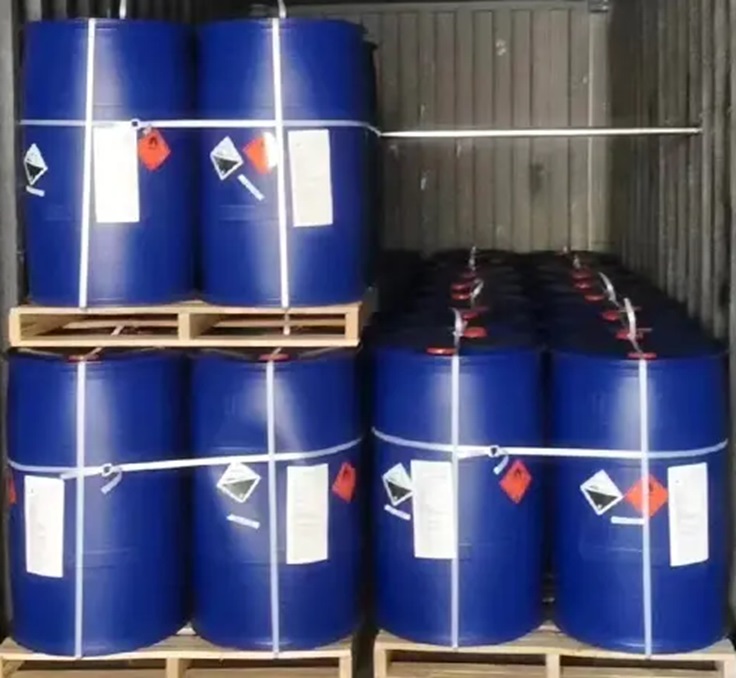
SECTION 14: PACKAGING OPTIONS
| Packaging Type | Quantity | Material |
|---|---|---|
| Glass bottle | 1 L, 2.5 L | Amber glass |
| HDPE drum | 25 L, 200 L | HDPE |
| Steel drum | 200 L | Carbon steel (internally coated) |
| IBC Container | 1000 L | Stainless steel / HDPE |
| Bulk tanker | 20-25 tons | Stainless steel |
SECTION 15: TRANSPORTATION INFORMATION
| Parameter | Information |
|---|---|
| UN Number | UN 1090 (Acetone) |
| Hazard Class | 3 (Flammable Liquid) |
| Packing Group | II |
| ADR/RID | UN 1090, Flammable Liquid, 3, PG II |
| IMDG Code | UN 1090, Flammable Liquid, 3, PG II |
| IATA (Air) | UN 1090, Flammable Liquid, 3, PG II |
| Marine Pollutant | No |
| Transport Temperature | Ambient; protect from heat |
SECTION 16: REGULATORY STATUS
| Region / Authority | Status |
|---|---|
| European Union | REACH registered; industrial chemical |
| USA (TSCA) | Listed |
| USA (FDA) | GRAS for food contact applications (indirect) |
| Turkey | Industrial chemical; subject to chemical registration regulations |
| IARC | Not classified as carcinogen |
| OSHA | Regulated (flammable liquid) |
SECTION 17: OTHER NAMES AND SYNONYMS
| Type | Name |
|---|---|
| Common Names | Acetone, Dimethyl Ketone, 2-Propanone |
| Chemical Names | Propan-2-one, Beta-Ketopropane, Methyl Ketone, Pyroacetic Ether |
| Turkish Names | Aseton, Dimetil Keton, Beta Ketopropan |
| CAS Number | 67-64-1 |
| EC Number | 200-662-2 |
| HS Code | 2914.11.00.00.00 |
SECTION 18: ACETONE ALTERNATIVES
| Alternative | Best For | Key Difference |
|---|---|---|
| Ethyl Alcohol (Ethanol) | Nail polish removal, general cleaning | Less aggressive; slower evaporation |
| Acetone-Free Nail Polish Remover | Gentle nail polish removal | Contains moisturizers; less drying |
| MEK (Methyl Ethyl Ketone) | Industrial solvent, paints | Stronger solvent; higher boiling point |
| IPA (Isopropyl Alcohol) | Electronics cleaning, disinfection | Less aggressive; safer on some plastics |
| Ethyl Acetate | Paints, inks, adhesives | Less flammable; milder odor |
| Lemon Juice (Natural) | Gentle nail polish removal | Natural acid; very mild |
| Vinegar + Lemon Mix | Natural nail polish removal | Natural method; less effective |
| Toothpaste | Gentle nail polish removal | Abrasive action; mild effect |
SECTION 19: SUMMARY TABLE
| Parameter | Value |
|---|---|
| Product | Acetone |
| CAS Number | 67-64-1 |
| Molecular Formula | C₃H₆O (CH₃COCH₃) |
| Molecular Weight | 58.08 g/mol |
| Appearance | Colorless, clear liquid |
| Boiling Point | 56°C |
| Flash Point | -18°C |
| Density (20°C) | 0.791 g/cm³ |
| Primary Function | General-purpose solvent, cleaning agent, chemical intermediate |
| Shelf Life | 36 months |
| GHS Signal Word | Danger |
| UN Number | UN 1090 (Flammable Liquid, 3, PG II) |
SECTION 20: CRITICAL WARNINGS AND BEST PRACTICES
CRITICAL WARNINGS:
-
Highly Flammable: Flash point -18°C; vapors are heavier than air and may travel to distant ignition sources. Use only in well-ventilated areas with explosion-proof equipment.
-
Eye Irritation: Causes serious eye irritation (H319). Wear chemical splash goggles.
-
Vapor Inhalation: High concentrations may cause drowsiness or dizziness (H336). Ensure adequate ventilation.
-
Skin Defatting: Repeated or prolonged contact causes skin dryness and cracking. Wear chemical-resistant gloves.
-
Incompatible Materials: Keep away from strong oxidizing agents, strong acids, and strong bases to prevent violent reactions.
BEST PRACTICE RECOMMENDATIONS:
-
General Solvent: Use as received or blended for cleaning, degreasing, and thinning applications; fast evaporation rate makes it ideal for quick-drying applications.
-
Electronics Cleaning: Use high-purity grade for cleaning flux residues and electronic components.
-
Nail Polish Removal: Use pure or in formulated nail polish removers; moisturize nails and cuticles after use.
-
Storage: Store in tightly closed containers in a cool, well-ventilated area; ground all equipment; use explosion-proof electrical fittings.
-
Fire Safety: Keep fire extinguishers (dry chemical, CO₂, or alcohol-resistant foam) readily accessible.
LEGAL DISCLAIMER:
The information provided in this document is presented in good faith based on our current knowledge and experience; however, since all usage conditions are beyond our control, it does not constitute a binding specification or warranty. This Technical Data Sheet is for informational purposes only. Users are obligated to test the suitability for their own applications. For complete safety, storage, handling, transportation, disposal, and regulatory compliance information, refer to the official Safety Data Sheet (SDS/MSDS) provided by the manufacturer/supplier.