We unleash your business potential by maximize the business innovation.
Send EmailCarbohydrazide, Carbonic Dihydrazide, Hydrazinecarboxamide, 497-18-7
CARBOHYDRAZIDE
SECTION 1: PRODUCT IDENTITY AND CHEMICAL IDENTIFICATION
| Parameter | Information |
|---|---|
| Product Name | Carbohydrazide |
| Chemical Name (IUPAC) | Carbonic Dihydrazide |
| Synonyms (Turkish) | Karbohidrazit, Karbonik Dihidrazid, Hidrazin Karboksamid |
| Synonyms (English) | Carbohydrazide, Carbonic Dihydrazide, Hydrazinecarboxamide |
| CAS Number | 497-18-7 |
| EC Number (EINECS) | 207-837-2 |
| Molecular Formula | CH₆N₄O |
| Molecular Weight | 90.08 g/mol |
| Chemical Class | Organic hydrazine derivative; Carbonic acid hydrazide |
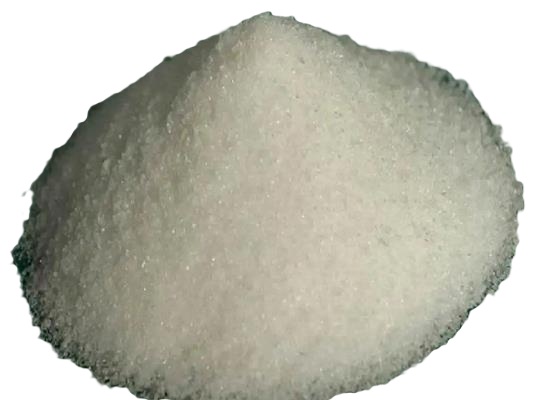
| Appearance | White crystalline powder |
| Odor | Slight characteristic odor |
| Physical State (20°C) | Solid (crystalline powder) |
| Solubility | Soluble in water |
Note: Carbohydrazide is an organic compound developed as a safer alternative to hydrazine. Its structure containing two hydrazine groups makes it a powerful reducing agent and chelating agent. It is widely used as an oxygen scavenger and corrosion inhibitor, particularly in boiler water treatment. It also serves as a cross-linking agent in polymer chemistry and as an intermediate in catalyst synthesis. It offers lower toxicity and a better safety profile compared to hydrazine.
SECTION 2: CHEMICAL STRUCTURE
Structure Description:
        O
        ‖
    H₂N—NH—C—NH—NH₂

    Carbohydrazide
    Carbonic Dihydrazide
    CH₆N₄O
Simplified Structure:
    (NH₂NH)₂CO

    Carbohydrazide
    (Carbonic acid dihydrazide)
| Parameter | Description |
|---|---|
| Molecular Formula | CH₆N₄O |
| Molecular Weight | 90.08 g/mol |
| Functional Groups | Two hydrazine groups (-NH-NH₂), carbonyl (C=O) |
| Structure | Two hydrazine groups attached to a carbonyl group |
| Hydrazine Content | High (reducing capacity) |
| SMILES | C(=O)(NN)NN |
| InChI | InChI=1S/CH6N4O/c2-4-1(6)5-3/h2-3H2,(H2,4,5,6) |
| InChI Key | DUVWFUNQPCSXQW-UHFFFAOYSA-N |
| Hydrogen Bond Donors | 4 |
| Hydrogen Bond Acceptors | 2 |
| Rotatable Bond Count | 2 |
| Polar Surface Area (PSA) | 91.0 Ų |
SECTION 3: PHYSICAL AND CHEMICAL PROPERTIES
| Property | Value | Test Method / Note |
|---|---|---|
| Appearance | White crystalline powder | Visual |
| Odor | Slight characteristic odor | Olfactometric |
| Molecular Weight | 90.08 g/mol | Calculated |
| Melting Point | 153 – 154 °C | DSC / Capillary |
| Density | ~1.45 g/cm³ | - |
| Bulk Density | ~0.6-0.8 g/cm³ | - |
| Water Solubility (20°C) | Soluble (~200 g/L) | General Method |
| Hot Water Solubility | Better soluble | General Method |
| Ethanol Solubility | Slightly soluble | General Method |
| Methanol Solubility | Soluble | General Method |
| Acetone Solubility | Slightly soluble | General Method |
| pH (1% Solution) | ~7.0-8.5 (slightly basic) | pH Meter |
| Vapor Pressure (25°C) | Very low | - |
| Flash Point | >150°C | ASTM D93 |
| Thermal Stability | Stable up to 150°C; decomposes at higher temperatures | - |
| Hygroscopicity | Moderate (absorbs moisture) | - |
| Reducing Potential | Strong reducing agent | - |
| Chelating Capacity | Forms complexes with metal ions | - |
| Decomposition Temperature | >200°C (decomposes) | TGA |
SECTION 4: CHEMICAL PROPERTIES AND REACTIVITY
| Parameter | Information |
|---|---|
| Chemical Class | Organic hydrazine derivative; Carbonic acid hydrazide |
| Reactivity | Strong reducing agent; Oxygen scavenger |
| Oxygen Binding | Rapidly binds dissolved oxygen: N₂H₄CO + O₂ → N₂ + CO₂ + 2H₂O |
| Metal Complexes | Forms stable chelate complexes with metal ions (Fe³⁺, Cu²⁺, Ni²⁺, Co²⁺) |
| Stability | Stable under normal conditions; Decomposes at high temperatures |
| Hydrolysis | May hydrolyze slowly in water (in alkaline medium) |
| Incompatible Materials | Strong oxidizing agents, acids (violent reaction), strong bases |
| Polymerization | Does not polymerize |
| Decomposition Products (Heating) | N₂, NH₃, CO₂, H₂O |
| Oxidation Products | N₂, CO₂, H₂O |
| pH Range | Stable in pH 4.0 – 10.0 |
| Hydrazine Derivative | More stable and safer compared to hydrazine |
SECTION 5: FUNCTIONAL PROPERTIES
| Property | Description |
|---|---|
| Oxygen Scavenger | Chemically binds dissolved oxygen to prevent oxygen-induced corrosion in systems. Reaction: N₂H₄CO + O₂ → N₂ + CO₂ + 2H₂O |
| Corrosion Inhibitor | Forms a protective passivation film on metal surfaces; Prevents pitting and general corrosion; Converts iron oxides (Fe₂O₃) to magnetite (Fe₃O₄). |
| Chelating Agent | Forms stable complexes with transition metal ions (Fe, Cu, Ni, Co); Binds metal ions to prevent catalytic degradation. |
| Reducing Agent | Exhibits strong reducing properties; Used as a reducing agent in organic synthesis. |
| Cross-linking Agent | Forms cross-links between polymer chains; Used in polymer and resin production. |
| Catalyst Precursor | Serves as a ligand for metal complexes; Used as an intermediate in catalyst synthesis. |
SECTION 6: CARBOHYDRAZIDE vs HYDRAZINE COMPARISON
| Property | Carbohydrazide | Hydrazine (Hydrate) |
|---|---|---|
| CAS Number | 497-18-7 | 302-01-2 / 7803-57-8 |
| Molecular Weight | 90.08 g/mol | 32.05 / 50.06 g/mol |
| Physical State | Solid (powder) | Liquid |
| Odor | Slight | Sharp, ammonia-like |
| Oxygen Scavenging Capacity | High | Very High |
| Toxicity | Lower | High (Carcinogenic) |
| Skin Sensitivity | Low | High |
| Stability | More Stable | Less stable |
| Ease of Use | Solid (easy dosing) | Liquid (difficult dosing) |
| Storage | Easy (solid) | Difficult (liquid, volatile) |
| Safety Profile | Safer | Hazardous |
| Cost | Moderate | Low |
| Application Area | Boiler water, polymer, catalyst | Rocket fuel, synthesis |
SECTION 7: APPLICATION AREAS
| Industry | Application | Function |
|---|---|---|
| Boiler Water Treatment | Oxygen scavenger, corrosion inhibitor | Binds dissolved oxygen, prevents corrosion |
| Petroleum Refineries | Process water treatment | Oxygen removal, corrosion control |
| Gas Processing Plants | Water injection systems | Prevents biological and chemical degradation |
| Cooling Circuits | Corrosion inhibitor | Protects metal surfaces |
| Polymer Production | Cross-linking agent | Cross-links polymer chains |
| Resin Production | Cross-linking agent | Increases resin strength |
| Catalyst Synthesis | Ligand for metal complexes | Catalyst precursor |
| Organic Synthesis | Reducing agent | Reductant in organic reactions |
| Photography | Stabilizer | Photographic baths |
| Textile | Finishing aid | Textile processing |
SECTION 8: QUALITY SPECIFICATIONS
| Parameter | Technical Grade | High Purity Grade | Test Method |
|---|---|---|---|
| Appearance | White crystalline powder | White crystalline powder | Visual |
| Assay (Carbohydrazide) | ≥98.0% | ≥99.0% | Titration / HPLC |
| Melting Point | 153 – 154°C | 153 – 154°C | DSC / Capillary |
| Water Content | ≤0.5% | ≤0.3% | Karl Fischer |
| Ash Content | ≤0.1% | ≤0.05% | Gravimetric |
| pH (1% Solution) | 7.0 – 8.5 | 7.0 – 8.5 | pH Meter |
| Heavy Metals (Pb) | ≤10 ppm | ≤5 ppm | ICP-MS |
| Arsenic (As) | ≤2 ppm | ≤1 ppm | ICP-MS |
| Lead (Pb) | ≤2 ppm | ≤1 ppm | ICP-MS |
| Iron (Fe) | ≤5 ppm | ≤2 ppm | ICP-MS |
| Chloride (Cl) | ≤0.05% | ≤0.02% | Titrimetric |
| Sulfate (SO₄) | ≤0.05% | ≤0.02% | Turbidimetric |
| Particle Size | Customer specific | Customer specific | Sieve / Laser |
| Solubility (Water) | Soluble | Soluble | General Method |
SECTION 9: SAFETY AND TOXICOLOGICAL PROFILE
| Parameter | Value / Description |
|---|---|
| GHS Classification | Warning (irritant) |
| Signal Word | Warning |
| Hazard Pictograms | GHS07 (Exclamation mark) |
| Hazard Statements (H-Codes) | H302 (Harmful if swallowed), H315 (Causes skin irritation), H319 (Causes serious eye irritation), H335 (May cause respiratory irritation) |
| Precautionary Statements (P-Codes) | P261, P264, P270, P271, P280, P301+P312, P302+P352, P304+P340, P305+P351+P338, P312, P330, P332+P313, P337+P313, P362+P364, P403+P233, P405, P501 |
| Acute Oral Toxicity (LD50, Rat) | ~1,200-1,500 mg/kg (moderate toxicity) |
| Acute Dermal Toxicity (LD50, Rabbit) | >2,000 mg/kg (low toxicity) |
| Skin Irritation | Mild irritant |
| Eye Irritation | Mild-moderate irritant |
| Skin Sensitization | Low potential |
| Carcinogenicity | Not classified as carcinogenic |
| Mutagenicity | Not mutagenic |
| Reproductive Toxicity | No reproductive toxicity |
| Target Organs | Skin, eyes, respiratory tract, gastrointestinal system |
| NOAEL (Rat, 90 days) | ~50-100 mg/kg/day |
| Hydrazine Toxicity | Carbohydrazide is significantly safer than hydrazine |
SECTION 10: GHS CLASSIFICATION AND LABELING
GHS Classification (in accordance with 1272/2008/EC):
| Hazard Class | Category | H-Statement |
|---|---|---|
| Acute Toxicity (Oral) | Category 4 | H302 |
| Skin Irritation | Category 2 | H315 |
| Eye Irritation | Category 2 | H319 |
| STOT - SE | Category 3 | H335 |
Signal Word: Warning
Hazard Pictograms: GHS07 (Exclamation mark)
NFPA 704 Hazard Classification:
| Health | Flammability | Reactivity | Special |
|---|---|---|---|
| 2 | 1 | 1 | - |
| (Moderate health hazard) | (Combustible) | (Moderate reactivity) | (None) |
SECTION 11: PRECAUTIONARY STATEMENTS (P-CODES)
| Code | Statement |
|---|---|
| P261 | Avoid breathing dust/fume/gas |
| P264 | Wash hands thoroughly after handling |
| P270 | Do not eat, drink or smoke when using this product |
| P271 | Use only outdoors or in a well-ventilated area |
| P280 | Wear protective gloves/protective clothing/eye protection/face protection |
| P301+P312 | IF SWALLOWED: Call a POISON CENTER/doctor if you feel unwell |
| P302+P352 | IF ON SKIN: Wash with plenty of soap and water |
| P304+P340 | IF INHALED: Remove person to fresh air and keep comfortable for breathing |
| P305+P351+P338 | IF IN EYES: Rinse cautiously with water for several minutes. Remove contact lenses if present and continue rinsing |
| P312 | Call a POISON CENTER/doctor if you feel unwell |
| P330 | Rinse mouth |
| P332+P313 | If skin irritation occurs: Get medical advice/attention |
| P337+P313 | If eye irritation persists: Get medical advice/attention |
| P362+P364 | Take off contaminated clothing and wash it before reuse |
| P403+P233 | Store in a well-ventilated place. Keep container tightly closed |
| P405 | Store locked up |
| P501 | Dispose of contents/container in accordance with local/regional/national/international regulations |
SECTION 12: FIRST AID MEASURES
| Route of Exposure | Action |
|---|---|
| Inhalation | If inhaled as powder, move to fresh air. Seek medical attention if respiratory symptoms persist. |
| Skin Contact | Remove contaminated clothing. Wash with plenty of soap and water. Seek medical attention if irritation develops. |
| Eye Contact | Rinse thoroughly with plenty of water for at least 15 minutes. Keep eyelids open. Remove contact lenses if present. Seek medical attention if irritation persists. |
| Ingestion | Rinse mouth with water. Do NOT induce vomiting. Drink 1-2 glasses of water. Seek medical attention. |
| Note | Symptomatic treatment is administered. No specific antidote available. |
SECTION 13: FIREFIGHTING MEASURES
| Parameter | Information |
|---|---|
| Fire Hazard | Combustible organic powder |
| Fire-Related Hazards | Thermal decomposition produces N₂, NH₃, CO₂, NOx |
| Suitable Extinguishing Media | Water mist, CO₂, dry chemical powder, foam |
| Unsuitable Extinguishing Media | Water jet (may spread dust) |
| Special Protective Equipment | SCBA, full protective clothing |
SECTION 14: STORAGE AND SHELF LIFE
| Parameter | Information |
|---|---|
| Storage Conditions | Store in a cool (<25°C), dry, well-ventilated area; protect from direct sunlight and moisture. |
| Temperature Limits | 15-25°C (ideal); do not exceed 30°C |
| Humidity | Low humidity environment (hygroscopic) |
| Container Requirements | Tightly closed, moisture-resistant containers (PE-lined, HDPE, aluminum) |
| Incompatible Materials | Moisture, heat, strong oxidizing agents, acids |
| Shelf Life | 24-36 months (unopened original packaging, under proper storage conditions) |
| Signs of Degradation | Caking, color change (yellowing), odor change |
SECTION 15: PACKAGING OPTIONS
| Packaging Type | Quantity / Capacity | Material | Application Area |
|---|---|---|---|
| Plastic Woven Bag (PE Lined) | 25 kg | PP / PE liner | Industrial, water treatment |
| Fiber Drum (PE Lined) | 25 kg, 50 kg | Fiber / PE | Industrial, chemical |
| HDPE Drum | 25 kg, 50 kg | HDPE | High purity, special applications |
| Aluminum Foil Bag | 1 kg, 5 kg, 10 kg | Aluminum / PE | High purity, research |
| IBC Container | 500 kg, 1000 kg | HDPE | Large-scale industrial supply |
| Liquid Solution (Drum) | 200 L | HDPE / Lined steel | Liquid formulations |
SECTION 16: TRANSPORTATION INFORMATION
| Parameter | Information |
|---|---|
| UN Number | Not applicable (not classified as dangerous substance) |
| Hazard Class | Not applicable |
| Packing Group | Not applicable |
| ADR/RID | Not classified as dangerous goods |
| IMDG Code | Not marine pollutant |
| IATA (Air) | Not classified as dangerous goods; can be transported by air |
| Transport Temperature | Ambient temperature; protect from heat, moisture, and light |
| Transport Precautions | Moisture-proof packaging; keep away from oxidizing agents and acids |
| Marine Pollutant | No |
SECTION 17: REGULATORY STATUS
| Region / Authority | Status |
|---|---|
| USA (EPA) | Approved as water treatment chemical |
| European Union (EC) | REACH registered; Approved as industrial chemical |
| Turkey | Approved as industrial chemical; Subject to KKDIK regulation |
| ECHA (REACH) | Registered substance |
| TSCA (USA) | Listed |
| OSHA | Regulated as hazardous substance |
| California (Prop 65) | Not listed |
| Halal | Yes (synthetic, not animal-derived) |
| Kosher | Yes (with certification) |
| Vegan | Yes (synthetic) |
SECTION 18: OTHER NAMES AND SYNONYMS
| Type | Name |
|---|---|
| Turkish Names | Karbohidrazit, Karbonik Dihidrazid |
| English Names | Carbohydrazide, Carbonic Dihydrazide, Hydrazinecarboxamide |
| CAS Number | 497-18-7 |
| EC Number | 207-837-2 |
| PubChem CID | 24888771 |
| HS Code | 2928.00 |
SECTION 19: SUMMARY TABLE
| Property | Value |
|---|---|
| CAS Number | 497-18-7 |
| Molecular Formula | CH₆N₄O |
| Molecular Weight | 90.08 g/mol |
| Appearance | White crystalline powder |
| Melting Point | 153 – 154 °C |
| Water Solubility | Soluble (~200 g/L) |
| Primary Function | Oxygen scavenger, corrosion inhibitor, reducing agent |
| Main Applications | Boiler water treatment, petroleum refineries, polymer production, catalyst synthesis |
| Shelf Life | 24-36 months |
| Storage | Cool (<25°C), dry, airtight |
| GHS Signal Word | Warning |
| UN Number | Not applicable |
| FDA Status | Approved as water treatment chemical |
| Halal / Kosher / Vegan | Yes |
SECTION 20: CRITICAL WARNINGS AND BEST PRACTICES
CRITICAL WARNINGS:
-
Hydrazine Alternative: Carbohydrazide is a significantly safer alternative to hydrazine. It offers lower toxicity, better stability, and easier handling due to its solid form.
-
Oxygen Scavenger: Rapidly binds dissolved oxygen to prevent corrosion in boiler and water systems. Reaction: N₂H₄CO + O₂ → N₂ + CO₂ + 2H₂O
-
Hygroscopic: Absorbs moisture; store in tightly closed, dry containers.
-
Incompatible Materials: Do not contact with strong oxidizing agents and acids (violent reaction).
-
High Temperature: Decomposition begins above 150°C; avoid high temperatures.
-
Safety: Although safer than hydrazine, use appropriate PPE due to its irritant properties.
BEST PRACTICE RECOMMENDATIONS:
-
Dosage (Boiler Water): Adjust dosage based on dissolved oxygen concentration (typically 5-20 ppm carbohydrate for 2-10 ppm O₂).
-
Dissolution: Easily soluble in water; dissolve with mixing at 20-40°C.
-
pH Control: Use at pH 8.5-10.5 for optimal performance.
-
Storage: Store in cool, dry, airtight containers. Close tightly after opening.
-
Personal Protective Equipment: Nitrile gloves, safety goggles, dust mask (N95/FFP2), protective clothing.
-
Hygiene: Wash hands thoroughly after handling; Do not eat, drink or smoke when using this product.
-
Quality Control: Regularly perform assay (titration/HPLC), melting point, pH, water content, heavy metals tests.
-
Spill Cleanup: Avoid dust generation; use HEPA-filtered vacuum or wet cleaning; prevent entry into sewers or water bodies.
-
Disposal: Dispose of in accordance with local, regional, and national regulations.
LEGAL DISCLAIMER:
The information provided in this document is based on our current knowledge and experience and is presented in good faith. However, as all conditions of use are beyond our control, it does not constitute a binding specification or guarantee. This Technical Data Sheet is for informational purposes only. Users are responsible for testing suitability for their own applications and for complying with all local, regional, and national regulations. For complete safety, storage, use, handling, waste, and regulatory compliance information, please refer to the official Safety Data Sheet (SDS/MSDS) provided by the manufacturer/supplier.