We unleash your business potential by maximize the business innovation.
Send EmailDimethyl Formamide, Dimethylformamide, DMF, 68-12-2
DIMETHYLFORMAMIDE (DMF)
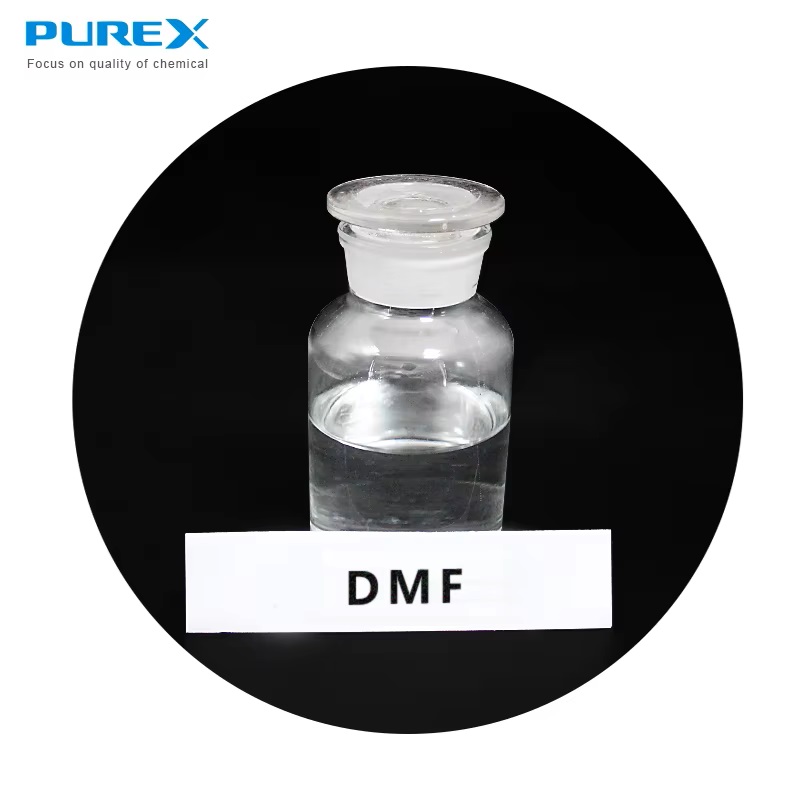
N,N-Dimethylformamide / DMF
CAS Number: 68-12-2
EC Number: 200-679-5
1. IDENTIFICATION
| Property | Information |
|---|---|
| Chemical Name | N,N-Dimethylformamide |
| Synonyms | DMF, Dimethylformamide, N,N-Dimethylmethanamide |
| Chemical Formula | C₃H₇NO |
| Molecular Weight | 73.095 g/mol |
| CAS Number | 68-12-2 |
| EC Number (EINECS) | 200-679-5 |
| Appearance | Colorless to slightly yellowish clear liquid |
| Odor | Normally odorless; upon aging, may develop a fishy odor |
2. PHYSICAL PROPERTIES
| Property | Value |
|---|---|
| Physical State (20°C) | Liquid |
| Appearance | Colorless, clear liquid |
| Odor | Normally odorless; fishy odor on aging |
| Color | Colorless to slight yellow |
| Density (20°C) | 0.948 g/cm³ |
| Melting Point | -78 °C |
| Boiling Point | 153 °C |
| Flash Point | 58 °C (closed cup) |
| Auto-ignition Temperature | 410-445 °C |
| Vapor Pressure (20°C) | 516 Pa (3.87 mmHg) |
| Refractive Index (20°C) | 1.4305 nD |
| Viscosity (20°C) | 0.92 cP |
| Solubility in Water | Completely miscible |
| Solubility in Organics | Miscible with most organic solvents (alcohols, ethers, ketones, esters, hydrocarbons) |
| Dielectric Constant (25°C) | 36.7 |
| Dipole Moment | 3.86 D |
3. CHEMICAL PROPERTIES
| Property | Information |
|---|---|
| Chemical Formula | C₃H₇NO |
| Molecular Weight | 73.095 g/mol |
| Chemical Class | Polar aprotic solvent; amide |
| pH | Neutral (approximately 7) |
| Reactivity | Stable under normal conditions; reacts with strong oxidizing agents, reducing agents, strong acids, strong bases |
| Decomposition | Decomposes at high temperatures (>300°C) to produce dimethylamine and carbon monoxide |
| Hygroscopicity | Hygroscopic (absorbs moisture from air) |
Key Chemical Features:
-
Polar aprotic solvent with high boiling point
-
Excellent solubility for many organic and inorganic compounds
-
Facilitates SN2 reactions
-
Stable to heat in the absence of strong acids or bases
Thermal Decomposition:
(CH₃)₂NCHO + Heat → (CH₃)₂NH + CO↑
4. PRODUCTION PROCESS
| Method | Description | Reaction |
|---|---|---|
| Methyl Formate + Dimethylamine | Methyl formate reacts with dimethylamine to form DMF and methanol | HCOOCH₃ + (CH₃)₂NH → HCON(CH₃)₂ + CH₃OH |
| Carbon Monoxide + Dimethylamine | Dimethylamine reacts with carbon monoxide in the presence of a catalyst | (CH₃)₂NH + CO → HCON(CH₃)₂ |
| Formic Acid + Dimethylamine | Formic acid reacts with dimethylamine; water is removed | HCOOH + (CH₃)₂NH → HCON(CH₃)₂ + H₂O |
Primary Industrial Method: Carbon monoxide + dimethylamine (methoxide catalyst)
5. APPLICATIONS
5.1. Chemical Solvent (Primary Use – Most Important)
| Application | Function |
|---|---|
| Polar Aprotic Solvent | Dissolves both polar and non-polar compounds |
| Reaction Medium | Used in many chemical syntheses |
| SN2 Reactions | Promotes SN2-type reactions |
5.2. Textile Industry
| Application | Function |
|---|---|
| Acrylic Fiber Production | Solvent for wet-spinning of acrylic fibers |
| Spandex (Elastane) Production | Solvent in polyurethane elastomer manufacturing |
| Dyeing | Solvent for certain dyes |
5.3. Pharmaceutical Industry
| Application | Function |
|---|---|
| Drug Synthesis | Reaction solvent for various pharmaceutical intermediates |
| API Manufacturing | Solvent in active pharmaceutical ingredient production |
| Crystallization Medium | Used in purification processes |
5.4. Agrochemicals (Pesticides)
| Application | Function |
|---|---|
| Pesticide Production | Solvent for insecticide, herbicide, fungicide synthesis |
| Formulation | Co-solvent in pesticide formulations |
5.5. Synthetic Leather & Coating Films
| Application | Function |
|---|---|
| Polyurethane (PU) Leather | Solvent for PU coating solutions |
| Coating Films | Solvent for high-performance coatings |
| Adhesives | Solvent for polyurethane adhesives |
5.6. Plastics & Polymers
| Application | Function |
|---|---|
| Polymer Synthesis | Solvent for various polymerization reactions |
| Polymer Processing | Solvent for polyacrylonitrile, polyurethane, polyamide |
| Membrane Manufacturing | Solvent in membrane casting processes |
5.7. Electronics Industry
| Application | Function |
|---|---|
| Semiconductor Manufacturing | Photoresist stripper, solvent |
| Electronic Cleaning | Cleaning of electronic components |
5.8. Other Applications
| Application | Function |
|---|---|
| Paints & Coatings | Solvent for specialty coatings |
| Paint Strippers | Active solvent in paint removal formulations |
| Inks | Solvent for printing inks |
| Adhesives | Solvent for industrial adhesives |
| Gas Purification | Absorbent for acetylene and other gases |
6. SOLUBILITY PARAMETERS
| Soluble In | Insoluble In |
|---|---|
| Water (complete) | Saturated hydrocarbons |
| Alcohols | Some aliphatic hydrocarbons |
| Ethers | – |
| Ketones | – |
| Esters | – |
| Chlorinated solvents | – |
| Aromatic hydrocarbons | – |
Dissolving Power:
-
Dissolves many polar and non-polar organic compounds
-
Dissolves many inorganic salts
-
Excellent solvent for polymers (polyacrylonitrile, polyurethane, polyamide, PVC)
7. STORAGE & HANDLING
| Parameter | Information |
|---|---|
| Storage Conditions | Cool, dry, well-ventilated area; 15-25°C recommended |
| Container Requirements | Tightly closed stainless steel, aluminum, HDPE, or glass containers |
| Protect From | Heat, direct sunlight, moisture, strong oxidizing agents, strong acids, strong bases |
| Shelf Life | 12-24 months (when stored properly with protection from moisture) |
| Hygroscopicity | Hygroscopic – absorbs moisture; keep container tightly sealed |
| Incompatible Materials | Strong oxidizing agents (e.g., nitric acid, peroxides), strong acids, strong bases, reducing agents |
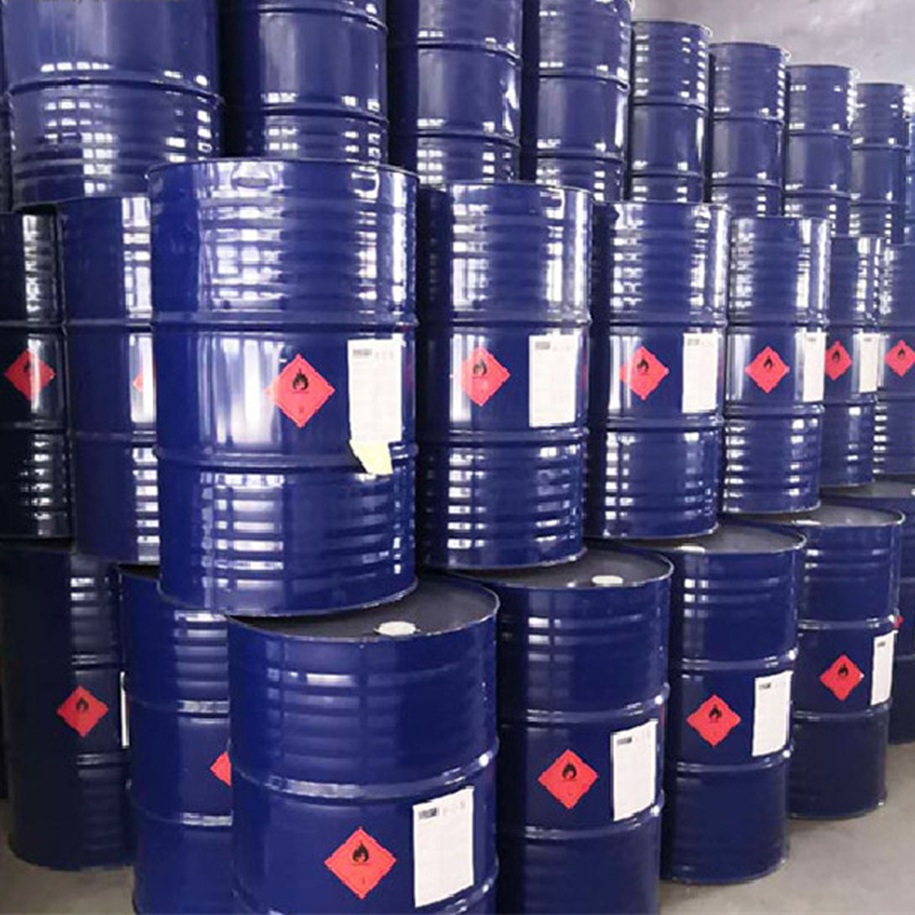
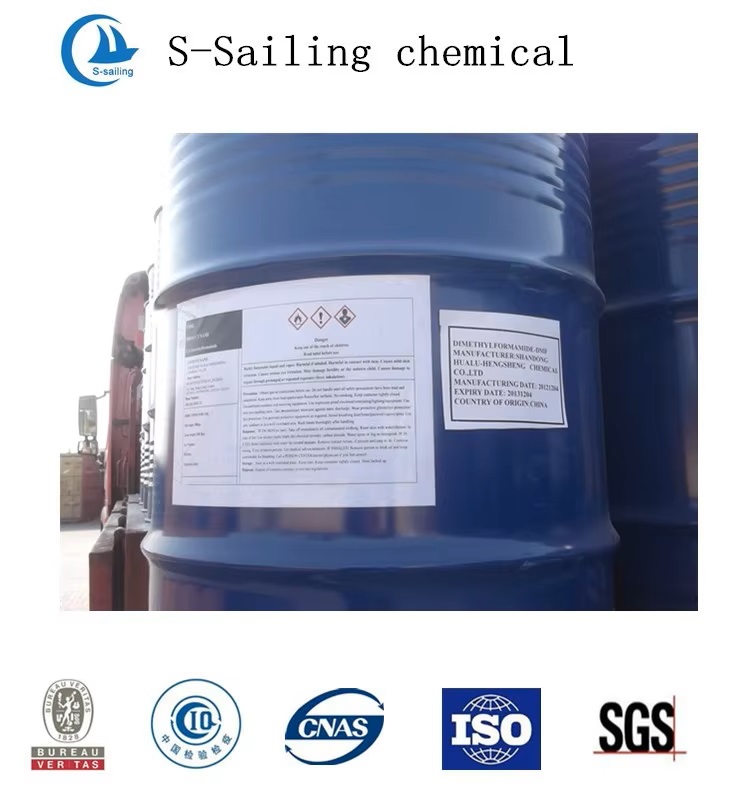
| Packaging Options | 200 L drums, 1,000 L IBC totes, bulk tankers (road/rail), 20 L jerry cans |
8. SAFETY & HEALTH INFORMATION
GHS Classification
| Hazard Class | Category |
|---|---|
| Flammable Liquids | Category 3 (H226) |
| Acute Toxicity (Oral) | Category 4 (H302) |
| Acute Toxicity (Inhalation) | Category 4 (H332) |
| Acute Toxicity (Dermal) | Category 4 (H312) |
| Serious Eye Damage | Category 2 (H319) |
| Skin Irritation | Category 2 (H315) |
| Reproductive Toxicity | Category 1B (H360D) |
Hazard Statements (H-Codes)
| Code | Statement |
|---|---|
| H226 | Flammable liquid and vapor |
| H302 | Harmful if swallowed |
| H312 | Harmful in contact with skin |
| H315 | Causes skin irritation |
| H319 | Causes serious eye irritation |
| H332 | Harmful if inhaled |
| H360D | May damage the unborn child |
Precautionary Statements (P-Codes)
| Code | Statement |
|---|---|
| P210 | Keep away from heat, hot surfaces, sparks, open flames |
| P233 | Keep container tightly closed |
| P240 | Ground and bond container and receiving equipment |
| P241 | Use explosion-proof electrical equipment |
| P242 | Use non-sparking tools |
| P243 | Take action to prevent static discharges |
| P260 | Do not breathe mist/vapors |
| P280 | Wear protective gloves, protective clothing, eye protection |
| P301+P312 | IF SWALLOWED: Call a POISON CENTER if you feel unwell |
| P305+P351+P338 | IF IN EYES: Rinse cautiously with water for several minutes |
Toxicological Information
| Parameter | Value |
|---|---|
| Oral LD50 (rat) | 2,800 – 3,700 mg/kg |
| Dermal LD50 (rabbit) | > 5,000 mg/kg |
| Inhalation LC50 (rat) | 4.8 mg/L (4 hours) |
| Skin Irritation | Mild to moderate irritant |
| Eye Irritation | Moderate to severe irritant |
Health Effects:
-
Acute: Abdominal pain, nausea, vomiting, headache, weakness, dizziness, constipation
-
Chronic: Liver damage (hepatotoxicity), alcohol intolerance (disulfiram-like reaction)
-
Reproductive: May damage the unborn child (developmental toxicity)
NFPA 704
| Health (Blue) | Fire (Red) | Reactivity (Yellow) | Special (White) |
|---|---|---|---|
| 2 | 2 | 0 | None |
Personal Protective Equipment (PPE)
| Equipment | Recommendation |
|---|---|
| Respiratory Protection | Organic vapor respirator (if ventilation inadequate) |
| Hand Protection | Chemical-resistant gloves (butyl rubber, neoprene, nitrile) |
| Eye Protection | Chemical safety goggles with side shields |
| Body Protection | Chemical-resistant apron, lab coat, protective clothing |
First Aid Measures
| Exposure Route | Action |
|---|---|
| Inhalation | Remove to fresh air. Seek medical attention if respiratory irritation or other symptoms occur. |
| Skin Contact | Wash with plenty of water and soap for at least 15 minutes. Remove contaminated clothing. |
| Eye Contact | Rinse immediately with plenty of water for at least 15 minutes. Seek medical attention. |
| Ingestion | Rinse mouth. Do NOT induce vomiting. Seek immediate medical attention. |
9. FIRE FIGHTING MEASURES
| Parameter | Information |
|---|---|
| Flash Point | 58 °C (closed cup) |
| Auto-ignition Temperature | 410-445 °C |
| Flammability Limits (air) | Lower: 2.2% – Upper: 15.2% |
| Fire Hazard | Flammable liquid |
| Extinguishing Media | Carbon dioxide, dry chemical powder, alcohol-resistant foam, water spray |
| Special Hazards | Decomposes when heated, releasing toxic gases (CO, NOₓ, dimethylamine) |
| Protective Equipment | Self-contained breathing apparatus (SCBA), full protective clothing |
10. ENVIRONMENTAL INFORMATION
| Parameter | Information |
|---|---|
| Biodegradability | Readily biodegradable |
| Aquatic Toxicity | Moderate; harmful to aquatic life |
| Bioaccumulation | Low potential (log Kow = -1.01) |
| Persistence | Low |
| Waste Disposal | Dispose according to local regulations. Incinerate in approved facility with flue gas treatment. |
Environmental Fate:
-
Soluble in water; mobile in soil
-
May contaminate groundwater
-
Not expected to bioaccumulate
11. TRANSPORT INFORMATION
| Parameter | Information |
|---|---|
| UN Number | 2265 |
| Hazard Class | 3 (Flammable liquid) |
| Packing Group | III |
| Proper Shipping Name | N,N-DIMETHYLFORMAMIDE |
| ADR/RID Class | 3 |
| IMDG Class | 3 |
| IATA (Air) Class | 3 |
| Marine Pollutant | No |
| EMS | F-E, S-D |
12. REGULATORY INFORMATION
| Region | Status |
|---|---|
| EU | REACH registered; listed as SVHC (Substance of Very High Concern) due to reproductive toxicity |
| Turkey (KKDIK) | Mandatory compliance; requires registration |
| USA (TSCA) | Listed |
| Canada (DSL) | Listed |
| Australia (AICS) | Listed |
| Japan (ENCS) | Listed |
| Korea (KECL) | Listed |
| OSHA | Regulated as hazardous chemical |
Restrictions:
-
Reproductive toxicity (Category 1B) – strict occupational exposure limits
-
Labeling: "May damage the unborn child"
13. SYNONYMS & OTHER NAMES
| Turkish Name | English Name |
|---|---|
| Dimetilformamid | Dimethylformamide |
| DMF | DMF |
| N,N-Dimetilformamid | N,N-Dimethylformamide |
| N,N-Dimetilmetanamid | N,N-Dimethylmethanamide |
14. COMPARISON WITH OTHER COMMON SOLVENTS
| Property | DMF | DMAc (N,N-Dimethylacetamide) | DMSO (Dimethyl sulfoxide) | NMP (N-Methylpyrrolidone) |
|---|---|---|---|---|
| Boiling Point (°C) | 153 | 165 | 189 | 202 |
| Melting Point (°C) | -78 | -20 | 18.5 | -24 |
| Density (g/cm³) | 0.948 | 0.937 | 1.101 | 1.028 |
| Dielectric Constant | 36.7 | 37.8 | 46.5 | 32.2 |
| Flash Point (°C) | 58 | 70 | 95 | 91 |
| Toxicity | Reproductive toxin | Reproductive toxin | Low toxicity | Reproductive toxin |
15. SUMMARY
Dimethylformamide (DMF, CAS 68-12-2) is a colorless, polar aprotic solvent with a high boiling point. It is completely miscible with water and most organic solvents. DMF is widely used in textile, pharmaceutical, agrochemical, plastics, and synthetic leather industries.
Key Features:
| Feature | Description |
|---|---|
| Appearance | Colorless, clear liquid |
| Boiling Point | 153 °C |
| Flash Point | 58 °C (flammable) |
| Solubility | Completely miscible with water and organic solvents |
| Polarity | Polar aprotic solvent |
Main Application Areas:
| Sector | Applications |
|---|---|
| Chemical Industry | Polar aprotic solvent for chemical reactions |
| Textile | Solvent for acrylic fiber and spandex production |
| Pharmaceutical | Reaction solvent for drug synthesis |
| Agrochemical | Solvent for pesticide production |
| Synthetic Leather | Solvent for PU coatings |
| Plastics & Polymers | Solvent for polymer processing |
| Electronics | Photoresist stripper, cleaning agent |
Key Safety Points:
-
FLAMMABLE – Flash point 58°C; keep away from ignition sources
-
REPRODUCTIVE TOXIN – May damage the unborn child
-
LIVER TOXICITY – Chronic exposure causes liver damage
-
ALCOHOL INTOLERANCE – May cause disulfiram-like reaction with alcohol
-
ABSORBED THROUGH SKIN – Use appropriate PPE
16. IMPORTANT NOTES
-
Skin Absorption: DMF is readily absorbed through the skin. Skin contact should be strictly avoided. Gloves and protective clothing are mandatory.
-
Reproductive Toxin: DMF is classified as a Category 1B reproductive toxin (may damage the unborn child). Women of childbearing potential should take extra precautions.
-
Disulfiram-like Reaction: Exposure to DMF followed by alcohol consumption may cause a disulfiram-like reaction (flushing, nausea, vomiting, headache, tachycardia). Workers should avoid alcohol after exposure.
-
Liver Toxicity: Chronic or repeated exposure can cause liver damage. Regular liver function tests are recommended for workers with potential exposure.
-
Hygroscopic: DMF absorbs moisture from air. For moisture-sensitive applications, use fresh DMF and keep containers tightly sealed.
-
Flammability: DMF has a flash point of 58°C. Use explosion-proof electrical equipment and ground containers during transfer to prevent static discharge.
-
Waste Disposal: DMF waste should be incinerated in an approved facility with flue gas treatment. Do not discharge to water bodies.
-
Regulatory Status: DMF is listed as a Substance of Very High Concern (SVHC) in the EU under REACH. Strict occupational exposure limits apply.
-
Alternatives: For some applications, less toxic alternatives (e.g., NMP, DMSO, ionic liquids) may be considered, but each has its own safety profile.
-
Emergency Response: In case of spill, contain with inert absorbent material. Avoid contact with skin and eyes. Use explosion-proof equipment for cleanup.
Important Disclaimer: This Technical Data Sheet (TDS) is for informational purposes only. For complete safety, handling, storage, and regulatory compliance information, always refer to the official Safety Data Sheet (SDS) provided by the manufacturer/supplier.