We unleash your business potential by maximize the business innovation.
Send EmailHydroxyethyl Cellulose, Hydroxy Ethyl Cellulose, HEC, 9004-62-0
HYDROXYETHYL CELLULOSE (HEC)
PRODUCT IDENTIFIER INFORMATION
| Parameter | Information |
|---|---|
| Product Name | Hydroxyethyl Cellulose (HEC) |
| Chemical Name (IUPAC) | Cellulose, 2-hydroxyethyl ether |
| CAS Number | 9004-62-0 |
| Chemical Family | Non-ionic Cellulose Ether |
SECTION 1: CHEMICAL IDENTITY AND DESCRIPTION
| Parameter | Information |
|---|---|
| Chemical Name | Cellulose, 2-hydroxyethyl ether; Hydroxyethyl ether of cellulose |
| Synonyms | Hydroxyethyl Cellulose, HEC, Hydroxy Ethyl Cellulose, 2-Hydroxyethyl Cellulose Ether |
| Abbreviations | HEC |
| CAS Number | 9004-62-0 |
| Chemical Formula | [C₆H₇O₂(OH)₃-m(OC₂H₄OH)m]n |
| Degree of Substitution (DS) | ~1.0 – 1.5 (average hydroxyethyl groups per glucose unit) |
| Molar Substitution (MS) | 2.0 – 3.0 (molar amount of ethylene oxide added; determines solubility and rheology) |
| Ionic Character | Non-ionic |
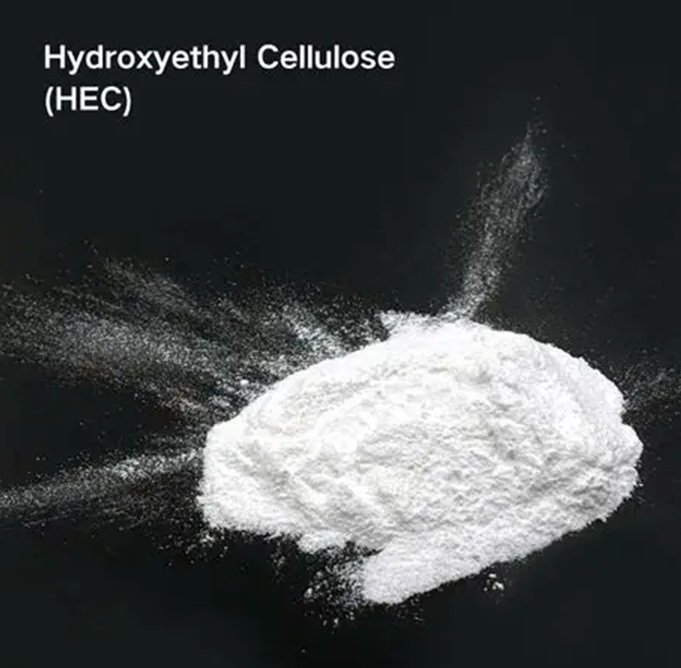
| Physical State (20°C) | Solid (white to slightly yellowish powder or granules) |
| Odor | Odorless |
| Source | Natural cellulose modified by reaction with ethylene oxide in alkaline medium |
SECTION 2: PHYSICAL AND CHEMICAL PROPERTIES
| Property | Typical Value / Range | Notes |
|---|---|---|
| Appearance | White to slightly yellowish powder/granules | Surface-treated types available |
| Moisture Content (%) | ≤ 5.0 | Oven dried at 105°C |
| pH (2% Solution, 25°C) | 5.5 – 8.5 | Wide range bufferable due to non-ionic nature |
| Viscosity (Brookfield, 1-2% Solution) | 300 – 100,000 mPa·s | 20°C, 20 rpm |
| Solubility | Completely soluble in cold and hot water | Non-surface-treated types may form lumps |
| Ash Content (Sulfated Ash) | ≤ 5.0% | Varies by commercial grade |
| Particle Size | 180 µm – 800 µm | Sieve analysis (Mesh 80-200) |
| Bulk Density | ~0.45 – 0.65 g/cm³ | Varies by powder form |
| Thermal Decomposition | >200°C | TGA |
SECTION 3: RHEOLOGICAL BEHAVIOR AND STABILITY
| Property | Description |
|---|---|
| Flow Type | Pseudoplastic (shear thinning); viscosity decreases at high shear rates |
| pH Stability | Excellent in range 2 – 12; suitable from acidic cosmetic peels to alkaline paint formulations |
| Salt and Electrolyte Tolerance | High; non-ionic structure prevents precipitation in saline drilling fluids or high-salt shampoos |
| Film Forming | Forms thin, transparent, oil-resistant, flexible films upon drying |
| Hot Water Solubility | Remains soluble in boiling water (does not gel like HPMC/HEMC) |
| Thermal Gelation | No gelation temperature (soluble in boiling water) |
| Surface Activity | Low foaming tendency |
SECTION 4: CELLULOSE ETHERS COMPARISON
| Property / Suitability | HEC | HPMC | HEMC |
|---|---|---|---|
| Cement Compatibility | Poor | Very Good | Very Good |
| Salt Tolerance | Very High | Medium | Medium |
| Foaming Tendency | Low | High (Air Entraining) | Medium |
| Paint Thickening | Primary Choice | Limited | Medium |
| Pharmaceutical Use | Rare | Standard | Rare |
| Thermal Gelation Temperature | None (soluble in boiling water) | ~60-75°C | ~65-80°C |
| Construction Mortars | Not Recommended | Very Good | Very Good |
| Water Retention in Mortars | Poor | Excellent | Good |
SECTION 5: FUNCTIONAL PROPERTIES AND MECHANISM OF ACTION
| Property | Description |
|---|---|
| Primary Thickener | Provides excellent viscosity build-up in aqueous systems through polymer chain entanglement and hydration |
| Rheology Modifier | Pseudoplastic flow behavior; excellent brushability and roller application in paints |
| Pigment Stabilizer | Prevents pigment settling during storage; ensures homogeneous color distribution |
| Sag Control | Provides anti-sag properties in coatings and adhesives on vertical surfaces |
| Foam Stabilizer (Cosmetics) | Stabilizes foam in shampoos and body washes; adds silky, lubricious feel |
| Film Former | Forms clear, flexible films; provides binding in paper coating and textile printing |
| Filtration Control (Oil & Gas) | Controls fluid loss in drilling muds and completion fluids; excellent salt tolerance |
| Water Retention (Limited) | Provides water retention in non-cementitious systems |
SECTION 6: PRIMARY APPLICATION AREAS AND DOSAGE
| Sector / Application | Function | Typical Dosage (%) |
|---|---|---|
| Paints & Coatings - Latex Paints | Primary thickener, pigment stabilizer, sag control | 0.3 – 1.0 |
| Paints & Coatings - Emulsions | Thickener, stabilizer | 0.3 – 0.8 |
| Cosmetics - Shampoos, Body Washes | Viscosity builder, foam stabilizer, silky feel | 0.3 – 1.0 |
| Cosmetics - Lotions, Creams | Thickener, texture enhancer | 0.3 – 0.8 |
| Oil & Gas - Drilling Fluids | Viscosifier, filtration control, salt tolerance | 0.3 – 0.8 |
| Oil & Gas - Completion Fluids | Fluid loss control | 0.3 – 0.8 |
| Textile Printing - Reactive/Pigment Pastes | Rheology modifier, sharp edge definition | 0.3 – 0.7 |
| Paper Coating - Coated Paper | Film former, binder, surface sizing | 0.3 – 0.5 |
| Construction (Cement-Based) | NOT RECOMMENDED – Use HPMC or HEMC | - |
| Pharmaceutical & Food | Limited / Rare – Regulations favor HPMC | 0.1 – 0.3 |
SECTION 7: QUALITY SPECIFICATIONS (TECHNICAL GRADE)
| Parameter | Specification | Test Method |
|---|---|---|
| Appearance | White to slightly yellowish powder or granules | Visual |
| Moisture Content | ≤ 5.0% | Gravimetric (105°C) |
| pH (2% Solution, 25°C) | 5.5 – 8.5 | pH Meter |
| Viscosity (1% Solution, 20°C, 20 rpm) | Per grade specification (300 – 100,000 mPa·s) | Brookfield Viscometer |
| Ash Content (Sulfated Ash) | ≤ 5.0% | Gravimetric (600°C) |
| Particle Size | Per specification (180 – 800 µm) | Sieve Analysis |
| Heavy Metals (as Pb) | ≤ 20 ppm | ICP-MS |
| Lead (Pb) | ≤ 3 ppm | ICP-MS |
| Arsenic (As) | ≤ 3 ppm | ICP-MS |
| Mercury (Hg) | ≤ 1 ppm | ICP-MS |
| Cadmium (Cd) | ≤ 1 ppm | ICP-MS |
| Total Microbial Count | ≤ 1,000 CFU/g | ISO 4833 |
| Yeast and Mold | ≤ 100 CFU/g | ISO 21527 |
| E. coli | Negative in 10g | ISO 16649 |
| Salmonella spp. | Negative in 25g | ISO 6579 |
SECTION 8: TOXICOLOGICAL PROFILE
| Parameter | Value |
|---|---|
| Acute Oral Toxicity (LD50, Rat) | > 5,000 mg/kg (very low toxicity) |
| Skin Irritation | Not irritating |
| Eye Irritation | Mild mechanical irritation (dust) |
| Respiratory Irritation | Inhalation of dust may cause mechanical irritation |
| Skin Sensitization | Not sensitizing |
| Carcinogenicity | Not classified |
| Mutagenicity | Negative in standard tests |
| GRAS Status | Recognized as GRAS by FDA (for specific food applications) |
| Environmental Toxicity | Low toxicity to aquatic organisms |
SECTION 9: GHS CLASSIFICATION AND LABELING
GHS Classification (compliant with 1272/2008/EC):
| Hazard Class | Category | H-Statement |
|---|---|---|
| Not classified | - | Not classified as hazardous according to current regulations |
Signal Word: No signal word (not classified as hazardous)
Hazard Pictograms: No pictograms required
SECTION 10: FIRST AID MEASURES
| Exposure Route | Action to Take |
|---|---|
| Inhalation | Move to fresh air. Seek medical attention if respiratory irritation persists. |
| Skin Contact | Wash with plenty of water and soap. |
| Eye Contact | Rinse immediately with plenty of water for at least 15 minutes. Remove contact lenses if present. Seek medical attention if irritation persists. |
| Ingestion | Rinse mouth with water. Drink plenty of water. Seek medical attention if you feel unwell. |
SECTION 11: FIREFIGHTING MEASURES
| Parameter | Information |
|---|---|
| Fire Hazard | Combustible organic dust |
| Dust Explosion Risk | Suspended organic dust may form explosive mixture with air in presence of ignition source |
| Hazards During Fire | CO, CO₂, water vapor |
| Suitable Extinguishing Media | Water mist, CO₂, dry chemical powder, foam |
| Special Protective Equipment | Self-contained breathing apparatus (SCBA), full protective clothing |
| Special Precautions | Provide adequate ventilation; ground equipment against static electricity; prevent dust accumulation |
SECTION 12: STORAGE AND SHELF LIFE
| Parameter | Information |
|---|---|
| Storage Conditions | Cool, dry, well-ventilated area; protect from direct sunlight and moisture |
| Container Requirements | Tightly closed, moisture-proof containers; original packaging |
| Keep Away From | Moisture (hygroscopic), ignition sources |
| Shelf Life | 24 months (unopened original packaging under appropriate storage conditions) |
| Stability Note | Hygroscopic; absorbs moisture; protect from humidity |
SECTION 13: PACKAGING OPTIONS
| Packaging Type | Quantity | Material |
|---|---|---|
| Kraft paper sack with PE inner liner | 25 kg | Kraft paper + PE |
| PP woven bag with PE inner liner | 25 kg | PP woven + PE |
| Big-Bag | 500-1000 kg | Polypropylene (with PE inner liner) |
SECTION 14: TRANSPORTATION INFORMATION
| Parameter | Information |
|---|---|
| UN Number | Not regulated (not hazardous) |
| Hazard Class | Not applicable |
| Packing Group | Not applicable |
| ADR/RID | Not regulated |
| IMDG Code | Not regulated |
| IATA (Air) | Not regulated |
| Marine Pollutant | No |
| Transport Temperature | Ambient; protect from moisture |
SECTION 15: REGULATORY STATUS
| Region / Authority | Status |
|---|---|
| European Union | REACH registered (if applicable); industrial chemical |
| USA (FDA) | GRAS for specific food and pharmaceutical applications |
| USA (TSCA) | Listed |
| Turkey | Industrial chemical; subject to chemical registration regulations |
| Cosmetics (EU) | Approved for cosmetic use (EC 1223/2009) |
| Halal / Kosher | Available |
| Vegetarian/Vegan | Suitable (plant-derived from natural cellulose) |
SECTION 16: OTHER NAMES AND SYNONYMS
| Type | Name |
|---|---|
| English Names | Hydroxyethyl Cellulose, Hydroxy Ethyl Cellulose, Cellulose 2-hydroxyethyl ether |
| Turkish Names | Hidroksietil Selüloz, Selüloz türevi kıvam artırıcı, Selüloz eter |
| Chemical Names | Cellulose, 2-hydroxyethyl ether; Hydroxyethyl ether of cellulose |
| Abbreviations | HEC |
| CAS Number | 9004-62-0 |
SECTION 17: SOLUTION PREPARATION GUIDELINES
| Method | Procedure |
|---|---|
| Standard Method | Stir water to create vortex; slowly sift powder into vortex edge. Do NOT dump powder directly into water (causes fish-eye lumps). |
| Surface-Treated Types | Powder disperses first without dissolving; hydrates rapidly after pH adjustment or slight heating. Minimum lumping risk. Recommended form. |
| Slurry Method | Pre-wet powder in water-miscible solvent (e.g., Propylene Glycol, Butyl Diglycol, Glycerin) to form paste; then add to water with stirring. |
| Critical Warning | NEVER add water to dry powder or dump powder directly into still water. |
SECTION 18: SECTORAL SUITABILITY TABLE
| Sector / Application | Suitability | Description |
|---|---|---|
| Paints & Coatings | Primary | Thickener, sag control, pigment stability |
| Cosmetics & Personal Care | Common | Viscosity builder, silky texture, foam stabilizer |
| Oil & Gas Drilling | Suitable | Drilling mud viscosity, filtration control, high salt tolerance |
| Textile Printing | Suitable | Printing paste rheology, sharp edge definition |
| Paper Production | Suitable | Surface sizing, film-forming binder |
| Construction (Cement Mortar) | Limited | Poor cement compatibility; HPMC or HEMC recommended |
| Pharmaceutical & Food | Rare/Limited | Regulations and alternatives (HPMC) limit use |
SECTION 19: FLOOR SAFETY WARNING
| Hazard | Precaution |
|---|---|
| Slippery Floor Hazard | Spilled HEC powder becomes extremely slippery when wet. In case of spillage, sweep up dry FIRST, then perform wet cleaning. DO NOT wash with water before dry sweeping. |
SECTION 20: SUMMARY TABLE
| Parameter | Value |
|---|---|
| Product | Hydroxyethyl Cellulose (HEC) |
| CAS Number | 9004-62-0 |
| Chemical Class | Non-ionic cellulose ether |
| Ionic Character | Non-ionic |
| Appearance | White to slightly yellowish powder or granules |
| pH (2% Solution) | 5.5 – 8.5 |
| Viscosity Range | 300 – 100,000 mPa·s (grade dependent) |
| Primary Function | Thickener, rheology modifier, film former, stabilizer |
| Key Sectors | Paints, cosmetics, oil & gas, textiles, paper |
| Shelf Life | 24 months |
| GHS Signal Word | Not classified |
SECTION 21: CRITICAL WARNINGS AND BEST PRACTICES
CRITICAL WARNINGS:
-
Lumping (Fish Eyes): NEVER dump HEC powder directly into water. Always sift slowly into vortex of vigorously stirred water.
-
Slippery Floor: Spilled HEC powder becomes extremely slippery when wet. Sweep up dry before any wet cleaning.
-
Dust Explosion: Organic dust may form explosive mixture with air. Provide adequate ventilation and ground equipment.
-
Cement Incompatibility: HEC is NOT suitable for cement-based construction mortars. Use HPMC or HEMC instead.
-
Hygroscopic: Absorbs moisture from air; keep containers tightly closed.
BEST PRACTICE RECOMMENDATIONS:
-
Paints & Coatings: Use at 0.3-1.0% as primary thickener; provides excellent sag control and pigment stabilization.
-
Cosmetics: Use at 0.3-1.0% for viscosity build-up and silky sensory feel in shampoos and lotions.
-
Oil & Gas: Use at 0.3-0.8% in drilling fluids; excellent salt tolerance for saline and seawater-based systems.
-
Solution Preparation: Prefer surface-treated grades for easy dispersion; use slurry method with organic solvent if lumps are a concern.
-
Storage: Store in original sealed packaging in a cool, dry environment away from moisture.
LEGAL DISCLAIMER:
The information provided in this document is presented in good faith based on our current knowledge and experience; however, since all usage conditions are beyond our control, it does not constitute a binding specification or warranty. This Technical Data Sheet is for informational purposes only. Users are obligated to test the suitability for their own applications. For complete safety, storage, handling, transportation, disposal, and regulatory compliance information, refer to the official Safety Data Sheet (SDS/MSDS) provided by the manufacturer/supplier.