We unleash your business potential by maximize the business innovation.
Send EmailFerro Copper Master Alloy, Copper-Iron Alloy, 11084-94-9, 7440-50-8, 7439-89-6
FERRO COPPER MASTER ALLOY
1. PRODUCT IDENTIFICATION AND CHEMICAL IDENTITY
| Parameter | Information |
|---|---|
| Product Name | Ferro Copper Master Alloy |
| Chemical Name | Copper-Iron Alloy |
| Grades | FeCu20 (20Fe), FeCu50 (50Fe) |
| Form | Solid ingot |
| Appearance | Metallic, gray-colored |
| CAS Number (Alloy) | 11084-94-9 (Copper-Iron) |
| CAS Number (Copper) | 7440-50-8 |
| CAS Number (Iron) | 7439-89-6 |
| HS Code (Recommended) | 7403.19 (Unwrought copper alloys) |
2. CHEMICAL STRUCTURE
2.1. Molecular Structure
Ferro Copper master alloy is a copper-iron intermetallic system. Copper and iron have limited solubility in the solid state, forming a copper-rich matrix with finely distributed iron-rich precipitates. The alloy consists primarily of a Cu-rich solid solution (FCC) with dispersed Fe-rich phases (BCC). This structure ensures rapid dissolution when added to copper melts.
Crystal Structure:
                    FERRO COPPER MASTER ALLOY
                               |
                 Cu Matrix + Fe-rich Precipitates
                               |
             +----------------+----------------+
             |                |                |
         Cu-rich Matrix    Fe-rich Phases    Fine
         (FCC)             (BCC)              Distribution
2.2. Phase Structure and Crystallographic Properties
| Phase | Crystal System | Description |
|---|---|---|
| Cu-rich Matrix | Face-Centered Cubic (FCC) | Copper solid solution with dissolved iron |
| Fe-rich Phase | Body-Centered Cubic (BCC) | Iron-rich precipitates dispersed in matrix |
2.3. Crystal Structure Details
| Parameter | Cu-rich Matrix | Fe-rich Phase |
|---|---|---|
| Crystal System | Cubic (FCC) | Cubic (BCC) |
| Space Group | Fm3̄m | Im3̄m |
| Lattice Parameter (a) | 3.61 Å | 2.87 Å |
| Coordination Number | 12 | 8 |
| Density | ~8.5-8.9 g/cm³ | ~7.8 g/cm³ |
3. TECHNICAL SPECIFICATIONS
| Property | FeCu20 (20Fe) | FeCu50 (50Fe) |
|---|---|---|
| Liquidus Temperature (°C) | 1400 | 1430 |
| Solidus Temperature (°C) | 1096 | 1096 |
| Typical Iron Content (%) | 18 – 22 | 48 – 52 |
| Density (approx.) | ~8.5 g/cm³ | ~7.8 g/cm³ |
| Form | Solid ingot | Solid ingot |
| CAS Number (Component) | Cu: 7440-50-8 / Fe: 7439-89-6 | Cu: 7440-50-8 / Fe: 7439-89-6 |
| Appearance | Metallic, gray | Metallic, gray |
4. METALLURGICAL PROPERTIES
4.1. Phase Diagram Information
The Copper-Iron system exhibits a miscibility gap in the solid state. At room temperature, the equilibrium phases are Cu-rich FCC (α-Cu) and Fe-rich BCC (α-Fe). The limited solid solubility of iron in copper at room temperature means that iron forms precipitates rather than remaining in solid solution. This precipitation behavior is key to the strengthening mechanisms in iron-containing copper alloys.
4.2. Metallurgical Mechanisms
| Mechanism | Description |
|---|---|
| Grain Refinement | Iron acts as a grain refiner, reducing cast grain size and improving mechanical properties |
| Precipitation Strengthening | Fine Fe-rich precipitates impede dislocation movement, increasing strength and hardness |
| Solid Solution Strengthening | Dissolved iron atoms distort the copper lattice, providing moderate strengthening |
| Recrystallization Resistance | Iron increases recrystallization temperature, improving high-temperature strength |
| Wear Resistance | Hard Fe-rich precipitates enhance wear resistance |
4.3. Iron Addition Effects
| Effect | Description | Mechanism |
|---|---|---|
| Strength Increase | Increases tensile strength and hardness | Precipitation strengthening + grain refinement |
| High Temperature Strength | Improves softening resistance | Increased recrystallization temperature |
| Wear Resistance | Enhances wear resistance | Hard precipitates |
| Ductility | Moderate reduction in ductility | Precipitate formation |
| Corrosion Resistance | May improve or reduce depending on alloy | Varies by application |
5. DETAILED APPLICATION AREAS
5.1. High-Strength Wear-Resistant Alloys
| Application | Function |
|---|---|
| Marine Propellers | High strength and wear resistance in seawater environments |
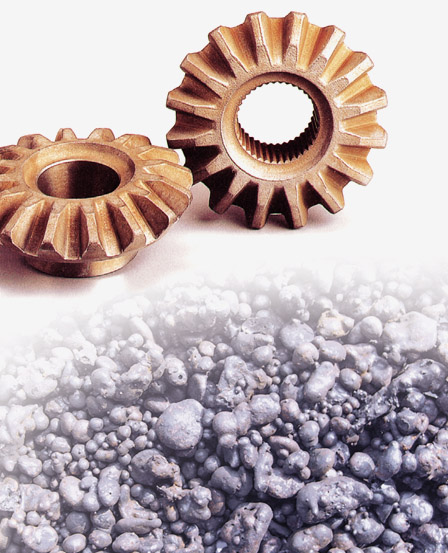
| Heavy-Duty Gears and Worm Wheels | Improved mechanical properties and wear resistance |
| Pump Casings | Enhanced strength and corrosion resistance |
| Bearing Alloys | Improved anti-friction properties |
| Sliding Components | Reduced wear and extended service life |
Why Choose Master Alloy? Iron refines grain structure, increasing strength and wear resistance. The master alloy form ensures homogeneous distribution and high recovery without oxidation losses.
5.2. Electrical and Welding Industry
| Application | Function |
|---|---|
| Resistance Welding Electrodes | High temperature strength and conductivity |
| Semiconductor Components | Controlled thermal expansion and conductivity |
| High-Conductivity Connectors | Improved mechanical properties with minimal conductivity loss |
| Welding Consumables | Controlled composition for welding applications |
| Current-Carrying Components | High temperature softening resistance |
Why Choose Master Alloy? Iron significantly improves high-temperature strength (softening resistance) while maintaining good conductivity. Precise composition control is essential for these applications.
5.3. Grain Refinement (Microalloying)
| Application | Function |
|---|---|
| Brass Castings | Improved mechanical properties and surface quality |
| Bronze Castings | Enhanced strength and wear resistance |
| All Foundry Processes | Refined grain structure and improved castability |
| Continuous Casting | Homogeneous, equiaxed grain structure |
| Sand Casting | Reduced porosity and improved sealing |
Why Choose Master Alloy? Trace iron additions create finer and more homogeneous grain structure during solidification. This improves mechanical properties, enhances sealing, and provides better surface quality.
5.4. Copper Alloy Production
| Application | Function |
|---|---|
| High-Strength Brasses | Improved mechanical properties |
| Aluminum Bronzes | Enhanced strength and wear resistance |
| Silicon Bronzes | Improved high-temperature properties |
| Copper-Nickel Alloys | Controlled iron addition for corrosion resistance |
| Beryllium Copper Alternatives | Non-toxic, cost-effective alternative |
6. ADVANTAGES OVER PURE IRON OR SCRAP
| Feature | FeCu Master Alloy | Pure Iron / Scrap |
|---|---|---|
| Melting Point | 1400-1430°C | 1538°C |
| Dissolution Rate | Rapid | Very slow |
| Recovery Rate | >98% | 60-85% |
| Composition Control | Precise | Poor |
| Oxidation Loss | Minimal | Significant |
| Slag Formation | Minimal | High |
| Energy Consumption | Low | High |
| Melting Time | Short | Long |
| Homogeneity | Excellent | Variable |
| Casting Defects | Reduced | Increased |
6.1. Critical Advantages
-
Lower Melting Point, Higher Yield: Pure iron melts at 1538°C and dissolves slowly in copper melts. FeCu20 (1400°C) and FeCu50 (1430°C) dissolve rapidly with >98% yield, reducing scrap and energy costs.
-
Precise and Homogeneous Composition Control: Unlike powder or scrap iron, master alloy has a precisely known composition, making weighing and target analysis extremely easy. This ensures consistent mechanical properties with every cast.
-
Clean Melt, Minimum Slag: The master alloy form protects iron within the copper matrix, minimizing oxidation losses. The melt remains cleaner, gas absorption is reduced, and slag cleaning is minimized.
-
Energy and Time Savings: Dissolution time of master alloy ingots is significantly shorter than equivalent amounts of iron/steel scrap. This reduces furnace cycle time and increases production capacity.
7. GRADE SELECTION GUIDE
FeCu20 (20% Fe) — For High Precision:
-
Best For: Low iron content, precision alloys (total 0.05-2.5% Fe)
-
Advantages: Eliminates risk of exceeding target composition; wider weighing tolerance
-
Applications: Resistance welding electrodes, high-conductivity connector alloys, precision copper alloys
-
Recommended When: Final alloy requires precise, low-level iron addition
FeCu50 (50% Fe) — For High Efficiency and Low Dilution:
-
Best For: High iron content alloys (total 2-5% Fe and above)
-
Advantages: Less master alloy addition required; melt temperature drops less
-
Applications: High-strength brasses, aluminum bronzes, heavy-duty components
-
Recommended When: Large quantities of iron addition are required
8. COMPARISON WITH OTHER ALLOYING METHODS
| Method | Advantages | Disadvantages |
|---|---|---|
| Ferro Copper Master Alloy | High recovery, precise control, clean melt, fast dissolution | Higher cost than scrap |
| Pure Iron Addition | Lower material cost | Slow dissolution, poor recovery, high oxidation, composition uncertainty |
| Iron Scrap/Steel Addition | Low cost, available | Unpredictable composition, contamination risk, slow dissolution, high slag |
| Iron Powder Addition | Precise weight control | Oxidation losses, dust hazards, poor recovery, slow dissolution |
9. PACKAGING AND STORAGE
| Parameter | Information |
|---|---|
| Packaging | Standard cast ingots, palletized and strapped for shipping convenience |
| Storage | Store in a dry, ventilated area |
| Shelf Life | Unlimited under proper storage conditions |
| Precautions | Protect from moisture; keep in original packaging |
10. SAFETY AND HANDLING INSTRUCTIONS
| Aspect | Recommendation |
|---|---|
| General | Non-hazardous under normal handling conditions |
| Melting Operations | Use appropriate personal protective equipment (heat-resistant gloves, protective goggles/face shield, aluminum-coated clothing) |
| Critical Warning | Never add moist or wet ingots to liquid metal. Steam explosion can cause severe burns |
| Post-Use | After use, seal packaging tightly and store in a dry place |
| Waste Management | Slag and metal waste should be sent to recycling facilities in accordance with local environmental regulations |
11. QUALITY CONTROL
| Test | Method | Acceptance Criteria |
|---|---|---|
| Chemical Analysis | ICP-OES | Fe: 18-22% (FeCu20) / 48-52% (FeCu50) |
| Impurity Analysis | ICP-OES | Total impurities < 0.5% |
| Weight and Dimensions | Checked against tolerances | Within specified limits |
| Visual Inspection | Metallographic | No cracks, large shrinkage cavities, or surface contamination |
| Microstructure | Optical Microscope / SEM | Fine Fe-rich precipitates in copper matrix |
| Certificate of Analysis (COA) | Provided with each shipment | Heat number, batch number, and chemical composition |
12. REGULATORY COMPLIANCE
| Regulation | Status |
|---|---|
| EU REACH | Registered for copper and iron substances; alloy is exempt from registration as a mixture |
| RoHS (Directive 2011/65/EU) | Compliant |
| Conflict Minerals | Copper and iron sourced from conflict-free smelters |
| Transport | Not classified as dangerous goods |
13. QUICK REFERENCE TABLE
| Property | FeCu20 | FeCu50 |
|---|---|---|
| Product Name | Ferro Copper Master Alloy | Ferro Copper Master Alloy |
| Grade | 20Fe | 50Fe |
| Iron Content | 18 – 22% | 48 – 52% |
| Copper Content | Balance (~78-82%) | Balance (~48-52%) |
| Liquidus Temperature | 1400 °C | 1430 °C |
| Solidus Temperature | 1096 °C | 1096 °C |
| Density | ~8.5 g/cm³ | ~7.8 g/cm³ |
| Form | Solid ingot | Solid ingot |
| CAS (Alloy) | 11084-94-9 | 11084-94-9 |
| HS Code | 7403.19 | 7403.19 |
| Primary Use | Low Fe precision alloys | High Fe alloys |
| Key Advantage | Precision, wide tolerance | High efficiency, low dilution |
| Typical Applications | Welding electrodes, connectors | High-strength brasses, aluminum bronzes |
14. CRITICAL NOTICES AND BEST PRACTICES
CRITICAL NOTICES:
-
Never Add Wet Ingots: Moist or wet ingots must never be added to molten metal. Steam explosion can cause severe burns and equipment damage.
-
Moisture Protection: Store in a dry area and keep packaging sealed after use.
-
Grade Selection: Choose FeCu20 for precise low-iron alloys; choose FeCu50 for high-iron alloys requiring efficient addition.
-
Melting Temperature: Ensure appropriate bath temperature (1400-1450°C) for rapid dissolution.
-
Recovery Rate: Expected iron recovery >98% under proper conditions.
-
Contamination Prevention: Use clean tools and crucibles to prevent contamination.
BEST PRACTICE RECOMMENDATIONS:
Storage:
-
Store in a dry, ventilated area
-
Keep in original packaging
-
No shelf life limitation under proper conditions
Handling:
-
Use appropriate PPE (heat-resistant gloves, safety goggles, protective clothing)
-
Use clean, dry tools and crucibles
-
Preheat if moisture is suspected
Melting:
-
Maintain bath temperature 1400-1450°C
-
Add master alloy to the melt
-
Apply gentle stirring for homogeneity
-
Expected iron recovery >98%
Waste Management:
-
Recycle as copper scrap
-
Do not dispose with household waste
-
Follow local environmental regulations
LEGAL DISCLAIMER
This Technical Data Sheet (TDS) is for informational purposes only and is prepared based on available technical data. The user is solely responsible for determining the suitability of the product for their specific application and for complying with all local, national, and international regulations. For complete safety, storage, handling, transport, waste, and regulatory compliance information, the official Safety Data Sheet (SDS/MSDS) provided by the manufacturer/supplier must be consulted. This document does not substitute professional advice.