We unleash your business potential by maximize the business innovation.
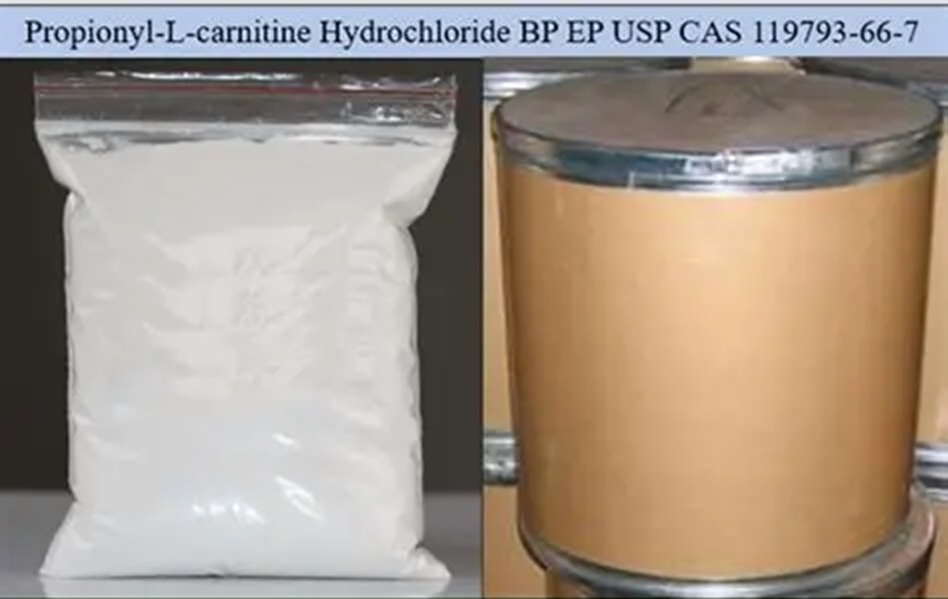
Send EmailPropionyl‑L‑carnitine, Propionyl‑L‑carnitine hydrochloride, Levocarnitine propionyl, PLC, 119793‑66‑7
L‑Carnitine Forms
-
L‑Carnitine Base (Free form)
-
CAS No: 541‑15‑1
-
Pure form without salt or ester. Commonly used in dietary supplements. Highly hygroscopic, acidic taste. Preferred for clinical carnitine deficiency.
-
-
L‑Carnitine Tartrate
-
CAS No: 36687‑82‑8 (Note: 36687‑47‑9 is incorrect)
-
The most common form for athletes. Provides fast absorption. Preferred for performance and fat metabolism support. Low hygroscopicity, easy to tablet.
-
-
Acetyl‑L‑Carnitine (ALCAR)
-
CAS No: 3040‑38‑8
-
Known for its effects on brain function and the nervous system. Used in nootropic supplements for cognitive performance. Crosses the blood-brain barrier, neuroprotective.
-
-
Propionyl‑L‑Carnitine
-
CAS No: 119793‑66‑7 (HCl salt) (Note: 511‑97‑1 is incorrect)
-
Recognized for its benefits on vascular health and circulation. Used in peripheral artery disease, heart failure, and angina. Supports vasodilation.
-
-
L‑Carnitine Fumarate
-
CAS No: 90471‑79‑7
-
Supports energy production and heart health. Also found in sports nutrition products. The fumarate ion directly contributes to the Krebs cycle. High bioavailability.
-
1. Basic Chemical Information
| Parameter | Value |
|---|---|
| Product Name | Propionyl‑L‑carnitine hydrochloride |
| Synonyms | Propionyl‑L‑carnitine HCl, PLC, Levocarnitine propionyl |
| CAS Number | 119793‑66‑7 |
| Chemical Formula | C₁₀H₁₉NO₄ (base) + HCl → C₁₀H₂₀ClNO₄ |
| Molecular Weight | 253.72 g/mol (HCl salt) |
| Active L‑Carnitine Ratio | ~74% (as base) |
2. Physical and Chemical Properties
| Property | Description |
|---|---|
| Appearance | White to off‑white crystalline powder |
| Odor | Characteristic, slightly acidic |
| Solubility | Freely soluble in water (>100 g/L) |
| pH (1% solution) | 4.5 – 6.0 (near neutral) |
| Hygroscopicity | Low |
| Melting Point | ~165‑170°C (decomposes) |
3. Unique Properties
-
Contains a propionyl group. Metabolized to propionyl‑CoA, which enters the Krebs cycle via succinyl‑CoA.
-
Vasodilation and nitric oxide (NO) production are enhanced – unique among carnitines.
-
Most clinically studied carnitine for cardiovascular conditions: peripheral artery disease, intermittent claudication, heart failure, angina.
-
Anti‑ischemic effects: improves blood flow to cardiac muscle.
-
Active primarily in vascular endothelium and heart muscle, less so in skeletal muscle.
4. Comparison with Other Carnitine Types
| Feature | Propionyl‑L‑Carnitine | L‑Carnitine Base | Carnitine Tartrate | Acetyl‑L‑Carnitine |
|---|---|---|---|---|
| Primary use | Cardiovascular, vascular | Deficiency, general | Sports, fat loss | Brain, neuropathy |
| Vasodilation / NO increase | ++++ | – | – | + |
| Peripheral artery disease evidence | Strong | None | None | None |
| Bioavailability | ~15% | ~15‑18% | ~15‑20% | ~20‑25% |
| BBB penetration | Partial | Very little | No | Yes |
| Krebs cycle support | Yes (via succinyl‑CoA) | No | No | Partial (acetyl) |
| Gastric tolerance | Good | Poor | Moderate | Good |
| Prescription status | In some countries | Yes (for deficiency) | Supplement | Supplement |
5. Applications and Uses
| Area | Details | Evidence Level |
|---|---|---|
| Peripheral artery disease (PAD) | Intermittent claudication, increased walking distance | High (meta‑analysis) |
| Stable angina pectoris | Improved exercise tolerance, reduced ST depression | Moderate‑high |
| Congestive heart failure | May improve systolic function | Moderate |
| Cardiomyopathy | Adjunct in dilated cardiomyopathy | Low‑moderate |
| Diabetic microangiopathy | Potential to improve blood flow | Low |
| COPD | Muscle function and exercise capacity | Low |
6. Usage Protocols
| Condition | Dosage | Timing | Duration |
|---|---|---|---|
| Peripheral artery disease (claudication) | 500‑1000 mg 2‑3 times/day (total 1‑2 g) | With meals | 6‑12 months |
| Stable angina | 500‑1000 mg twice daily | Morning & evening | 4‑12 months |
| Heart failure (adjunct) | 500‑1500 mg/day (divided) | Morning & noon | 3‑6 months |
| Sports / endurance | 500‑1000 mg | 45‑60 min pre‑exercise | 4‑8 weeks |
7. Side Effects and Safety
| Side Effect | Frequency |
|---|---|
| Mild gastrointestinal upset, nausea | ~1‑5% |
| Diarrhea (high dose) | Rare |
| Body odor (fishy – very rare) | <1% |
| Headache | Rare |
-
Contraindications: Seizure disorders (theoretical, less than ALCAR). Pregnancy / lactation – insufficient data.
-
Drug interactions: Very low theoretical interaction with anticoagulants (warfarin). Safe with aspirin.
8. Alternatives
| Compound | Effect | Difference from PLC |
|---|---|---|
| L‑Carnitine | Fatty acid transport | No vasodilation |
| Citrulline / Arginine | NO production, vasodilation | No mitochondrial effect |
| Coenzyme Q10 | Mitochondrial energy | No vasodilation |
| Ginkgo biloba | Peripheral circulation | Different mechanism, weaker evidence |
| L‑Carnitine + Vitamin E | Cardioprotective | Less effective than PLC |
9. Frequently Asked Questions
Q1: What is the difference between propionyl‑L‑carnitine and L‑carnitine?
A: PLC has an added propionyl group, which gives it vasodilatory properties, making it more effective for circulation disorders like peripheral artery disease.
Q2: Is it beneficial for athletes?
A: May improve oxygen utilization in endurance sports by increasing blood flow. However, for fat burning, Tartrate is better; for mental focus, ALCAR is better.
Q3: Who should use it?
A: Primarily individuals with leg pain during walking (intermittent claudication), chest pain (angina), or heart failure. Medical supervision is recommended.
Q4: Overdose?
A: >3 g/day may cause gastrointestinal issues. Clinical studies found 2 g/day safe.