We unleash your business potential by maximize the business innovation.
Send EmailPropionyl‑L‑carnitine Hydrochloride, Propionyl-L-carnitine HCl, Levocarnitine Propionyl, Propanoyl-L-carnitine, PLC, 119793‑66‑7
PROPIONYL-L-CARNITINE HYDROCHLORIDE
PRODUCT IDENTIFIER INFORMATION
| Parameter | Information |
|---|---|
| Product Name | Propionyl-L-carnitine Hydrochloride |
| Synonyms | Propionyl-L-carnitine HCl, PLC, Levocarnitine Propionyl, Propanoyl-L-carnitine |
| CAS Number | 119793-66-7 |
| Molecular Formula (Base) | C10H19NO4 |
| Molecular Formula (HCl Salt) | C10H20ClNO4 |
| Molecular Weight | 253.72 g/mol (HCl salt) |
| Active L-Carnitine Content | ~74% (as base) |
SECTION 1: CHEMICAL IDENTITY AND DESCRIPTION
| Parameter | Information |
|---|---|
| IUPAC Name | (2R)-3-Carboxy-2-(propanoyloxy)-N,N,N-trimethylpropan-1-aminium chloride |
| Trade Names | Carnitene (certain formulations), Propionyl-L-Carnitine HCl |
| Chemical Family | Acyl-L-carnitine ester (short-chain acylcarnitine) |
| Structural Difference from L-Carnitine | Propionyl group (CH3CH2CO-) esterified to the beta-hydroxyl group |
| Functional Groups | Quaternary ammonium, carboxylate, ester (propionyl) |
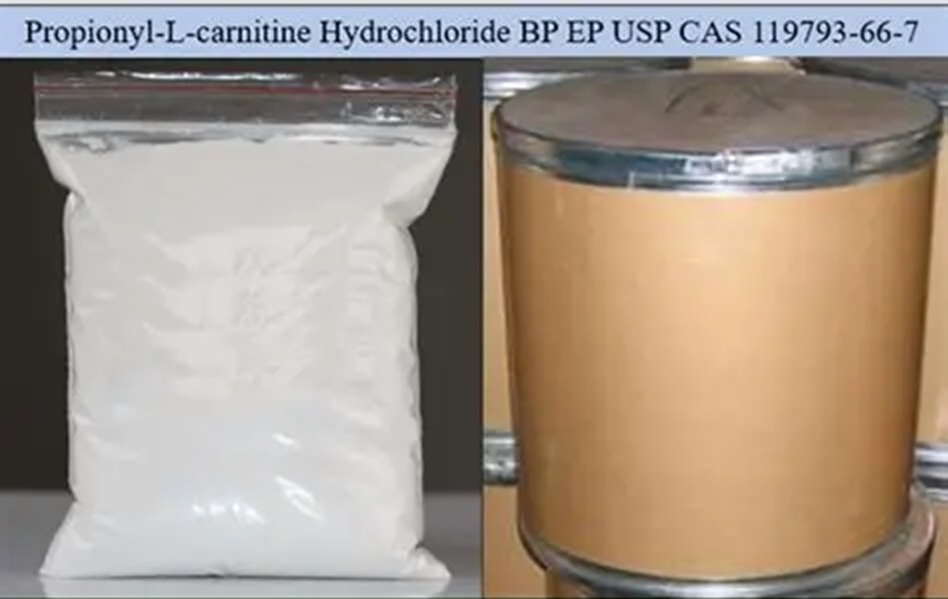
| Physical State (20°C) | Solid (white to off-white crystalline powder) |
| Odor | Characteristic, slightly acidic |
| Hygroscopicity | Low (does not readily absorb moisture) |
| Pharmaceutical Status | Prescription drug in some EU countries; dietary supplement in USA and others |
SECTION 2: PHYSICAL AND CHEMICAL PROPERTIES
| Property | Value | Test Method |
|---|---|---|
| Appearance | White to off-white crystalline powder | Visual |
| Odor | Characteristic, slightly acidic | Olfactometric |
| Molecular Weight (HCl Salt) | 253.72 g/mol | Calculated |
| Active L-Carnitine Content | ~74% (as base) | HPLC |
| Melting Point | 165-170°C (with decomposition) | DSC |
| Solubility in Water | Freely soluble (>100 g/L at 20°C) | Ph. Eur. |
| Solubility in Ethanol | Slightly soluble | Ph. Eur. |
| Solubility in Organic Solvents | Practically insoluble in acetone, chloroform, ether | Ph. Eur. |
| pH (1% aqueous solution) | 4.5 - 6.0 | pH Meter |
| Specific Optical Rotation | -18° to -22° (c=1, H2O) | Polarimetry |
| Loss on Drying | ≤ 0.5% | Gravimetric (105°C) |
| Residue on Ignition | ≤ 0.1% | Gravimetric |
| Heavy Metals (as Pb) | ≤ 10 ppm | ICP-MS |
SECTION 3: L-CARNITINE FORMS COMPARISON
| Property | Propionyl-L-Carnitine | L-Carnitine Base | L-Carnitine Tartrate | Acetyl-L-Carnitine (ALCAR) | L-Carnitine Fumarate |
|---|---|---|---|---|---|
| CAS Number | 119793-66-7 (HCl) | 541-15-1 | 36687-82-8 | 3040-38-8 | 90471-79-7 |
| Molecular Weight | 253.72 (HCl) | 161.20 | 472.49 | 203.24 | Variable |
| Primary Use | Cardiovascular, vascular health | Deficiency, general use | Sports, fat metabolism | Brain, neuropathy, cognition | Energy production, heart health |
| Vasodilation / NO Enhancement | ++++ | – | – | + | + |
| Peripheral Artery Disease | Clinical evidence | None | None | None | None |
| Bioavailability | ~15% | ~15-18% | ~15-20% | ~20-25% | High |
| Blood-Brain Barrier Crossing | Partial | Minimal | No | Yes | Minimal |
| Krebs Cycle Support | Yes (via succinyl-CoA) | No | No | Partial (acetyl) | Yes (fumarate) |
| Gastric Tolerance | Good | Low | Moderate | Good | Good |
| Pharmaceutical Preparations | Yes (prescription) | Yes | Supplement | Supplement | Supplement |
| Hygroscopicity | Low | High | Low | Low | Low |
| Taste | Slightly acidic | Acidic | Tart, slightly acidic | Slightly acidic | Slightly acidic |
SECTION 4: UNIQUE CHARACTERISTICS OF PROPIONYL-L-CARNITINE
| Characteristic | Description |
|---|---|
| Propionyl Group | Contains a propionyl group esterified to the beta-hydroxyl of carnitine |
| Metabolic Fate | Metabolized to propionyl-CoA, which enters the Krebs cycle via succinyl-CoA |
| Vasodilation | Enhances nitric oxide (NO) production and vasodilation; this effect is absent or very weak in other carnitine types |
| Anti-ischemic Effect | Improves blood flow to cardiac muscle |
| Target Tissue | More active in vascular endothelium and cardiac muscle rather than skeletal muscle |
| Cardiovascular Potential | Most promising carnitine form for cardiovascular system: clinical studies in peripheral artery disease, intermittent claudication, heart failure, and angina |
SECTION 5: MECHANISM OF ACTION
| Parameter | Description |
|---|---|
| Primary Mechanism | Enhances mitochondrial fatty acid oxidation by facilitating long-chain fatty acid transport across the inner mitochondrial membrane |
| Secondary Mechanism | Provides propionyl-CoA as an anaplerotic substrate for the Krebs cycle, replenishing cycle intermediates (succinyl-CoA) |
| Tertiary Mechanism | Increases nitric oxide (NO) production in vascular endothelium, leading to vasodilation |
| Net Effect | Improved cellular energy metabolism combined with enhanced tissue perfusion |
| Pharmacological Target | Vascular endothelium, cardiac myocytes, skeletal muscle mitochondria |
SECTION 6: APPLICATIONS AND CLINICAL EVIDENCE
| Application Area | Detail | Evidence Level |
|---|---|---|
| Peripheral Artery Disease (PAD) | Intermittent claudication, increases walking distance | High (meta-analysis) |
| Stable Angina Pectoris | Increases exercise tolerance, reduces ST-segment depression | Moderate-High |
| Congestive Heart Failure | May improve systolic function | Moderate |
| Cardiomyopathy | Adjunctive in dilated cardiomyopathy | Low-Moderate |
| Diabetic Microangiopathy | Potential to improve blood flow | Low |
| Chronic Obstructive Pulmonary Disease (COPD) | Muscle function and exercise capacity | Low |
| Sports / Endurance | Improves oxygen utilization by increasing blood flow | Low-Moderate |
Note: In some European countries, PLC is available as a prescription drug for peripheral artery disease (e.g., some formulations of Carnitene). In the USA, it is widely sold as a dietary supplement.
SECTION 7: QUALITY SPECIFICATIONS
| Parameter | Specification | Test Method |
|---|---|---|
| Appearance | White to off-white crystalline powder | Visual |
| Identification (IR) | Conforms to reference standard | Ph. Eur. |
| Identification (HPLC) | Retention time matches standard | HPLC |
| Assay (Anhydrous Basis) | 98.0 - 102.0% | HPLC or Non-aqueous Titration |
| Specific Optical Rotation | -18° to -22° (c=1, H2O) | Polarimetry |
| pH (1% solution) | 4.5 - 6.0 | pH Meter |
| Loss on Drying | ≤ 0.5% | Gravimetric (105°C, 3 hours) |
| Residue on Ignition | ≤ 0.1% | Gravimetric (600°C) |
| Chloride Content | 13.5 - 14.5% | Argentometric Titration |
| Heavy Metals (as Pb) | ≤ 10 ppm | ICP-MS |
| Lead (Pb) | ≤ 2 ppm | ICP-MS |
| Arsenic (As) | ≤ 3 ppm | ICP-MS |
| Mercury (Hg) | ≤ 1 ppm | ICP-MS |
| Cadmium (Cd) | ≤ 1 ppm | ICP-MS |
| Residual Solvents | Conforms to Ph. Eur./USP | HS-GC |
| Related Substances (Total) | ≤ 1.0% | HPLC |
| Propionic Acid | ≤ 0.5% | HPLC |
| L-Carnitine (Free) | ≤ 0.5% | HPLC |
| Microbial Total Count | ≤ 100 CFU/g | Ph. Eur. |
| Yeast and Mold | ≤ 10 CFU/g | Ph. Eur. |
| E. coli | Negative in 1g | Ph. Eur. |
| Salmonella spp. | Negative in 25g | Ph. Eur. |
SECTION 8: USAGE PROTOCOLS AND DOSAGE RECIPES
| Condition | Dosage | Timing | Duration |
|---|---|---|---|
| Peripheral Artery Disease (Intermittent Claudication) | 500-1000 mg 2-3 times/day (total 1-2 g) | With meals | 6-12 months |
| Stable Angina | 500-1000 mg twice daily | Morning and evening | 4-12 months |
| Heart Failure (Adjunctive) | 500-1500 mg/day (divided) | Morning and noon | 3-6 months |
| Sports / Endurance | 500-1000 mg | 45-60 minutes before exercise | 4-8 weeks |
SECTION 9: SIDE EFFECTS AND SAFETY PROFILE
| Side Effect | Frequency |
|---|---|
| Mild gastric discomfort, nausea | ~1-5% |
| Diarrhea (at high doses) | Rare |
| Body odor (fishy odor – very rare) | <1% |
| Headache | Rare |
Contraindications:
-
Seizure disorders (theoretical risk, but lower than ALCAR)
-
Pregnancy / lactation – insufficient data available
Drug Interactions:
-
Anticoagulants (warfarin): Very low theoretical interaction risk
-
Acetylsalicylic acid: Safe for concomitant use
-
No significant cytochrome P450 interactions reported
SECTION 10: TOXICOLOGICAL INFORMATION
| Parameter | Value |
|---|---|
| Acute Oral Toxicity (LD50, Rat) | > 5,000 mg/kg |
| Subchronic Toxicity | No adverse effects at therapeutic doses |
| Carcinogenicity | Not classified |
| Mutagenicity | Negative in standard tests (Ames test) |
| Reproductive Toxicity | No evidence of adverse effects (limited data) |
| ADI (Acceptable Daily Intake) | Not established; up to 2 g/day clinically safe |
SECTION 11: ALTERNATIVES AND COMPARATIVE POSITIONING
| Alternative | Effect | Difference from PLC |
|---|---|---|
| L-Carnitine Base | Fatty acid transport | No vasodilation effect |
| Citrulline / Arginine | NO production, vasodilation | No direct mitochondrial effect |
| Coenzyme Q10 | Mitochondrial energy | No vasodilation |
| Ginkgo biloba | Peripheral circulation | Different mechanism, weaker evidence |
| L-Carnitine + Vitamin E | Cardioprotective | Not as effective as PLC |
| Acetyl-L-Carnitine (ALCAR) | Neuroprotection, cognition | Primarily targets brain; minimal vascular effect |
| L-Carnitine Tartrate | Sports performance, fat metabolism | No cardiovascular/vascular benefits |
SECTION 12: STABILITY AND STORAGE
| Parameter | Information |
|---|---|
| Storage Conditions | Cool (15-25°C), dry, protected from light |
| Container Requirements | Tightly closed, light-resistant containers |
| Keep Away From | Excessive heat, moisture, direct sunlight |
| Shelf Life | 36 months (unopened original packaging under appropriate conditions) |
| Stability Note | Low hygroscopicity; stable under normal storage conditions |
| Incompatibilities | Strong oxidizing agents, strong bases |
SECTION 13: PACKAGING OPTIONS
| Packaging Type | Quantity | Material |
|---|---|---|
| Aluminum foil pouch | 1 kg | Laminated aluminum |
| Aluminum foil pouch | 5 kg | Laminated aluminum |
| Fiber drum with PE liner | 25 kg | Fiberboard + PE |
| HDPE drum | 25 kg | HDPE |
| Bulk container | 50 kg | Fiber drum with PE liner |
SECTION 14: TRANSPORTATION INFORMATION
| Parameter | Information |
|---|---|
| UN Number | Not regulated (not a hazardous substance) |
| Hazard Class | Not applicable |
| Packing Group | Not applicable |
| ADR/RID | Not regulated |
| IMDG Code | Not regulated |
| IATA (Air) | Not regulated |
| Marine Pollutant | No |
| Transport Temperature | Ambient (15-25°C) |
SECTION 15: REGULATORY STATUS
| Region / Authority | Status |
|---|---|
| European Union | Prescription drug in some countries (e.g., Italy) for PAD; dietary supplement in others |
| USA (FDA) | Dietary supplement ingredient; NDI notification may apply |
| Turkey | Dietary supplement ingredient |
| JECFA (FAO/WHO) | Evaluated as carnitine derivative |
| Codex Alimentarius | Not specifically listed |
| Kosher | Available upon request |
| Halal | Available upon request |
SECTION 16: FREQUENTLY ASKED QUESTIONS
Q1: What is the difference between propionyl-L-carnitine and L-carnitine?
A: PLC has a propionyl group attached. This group provides vasodilatory effects and makes it more effective for circulatory problems such as peripheral artery disease.
Q2: Is it beneficial for athletes?
A: In endurance sports, PLC can improve oxygen utilization by increasing blood flow. However, for fat burning, L-Carnitine Tartrate is more suitable; for mental focus, ALCAR is preferred.
Q3: Who should use PLC?
A: Especially individuals with leg pain while walking (intermittent claudication), chest pain (angina), and heart failure. Physician consultation is strongly recommended.
Q4: What about overdose?
A: Doses above 3 g/day may cause gastrointestinal issues. Clinical studies have found 2 g/day to be safe.
Q5: Can PLC be taken with other carnitine forms?
A: Yes, but total carnitine intake should be monitored. Stacking PLC with ALCAR or L-Carnitine Tartrate is common in comprehensive protocols.
Q6: Does PLC cause a fishy body odor?
A: Very rarely (<1%) and much less frequently than L-Carnitine base or high-dose choline supplements.
SECTION 17: OTHER NAMES AND SYNONYMS
| Type | Name |
|---|---|
| Chemical Names | Propionyl-L-carnitine Hydrochloride, (2R)-3-Carboxy-2-(propanoyloxy)-N,N,N-trimethylpropan-1-aminium chloride |
| Common Names | PLC, Propionyl-L-Carnitine HCl, Levocarnitine Propionyl Hydrochloride |
| Trade Names | Carnitene (certain formulations), Propionyl-L-Carnitine |
| CAS Number | 119793-66-7 |
| Molecular Formula | C10H20ClNO4 |
SECTION 18: COMPLETE L-CARNITINE FORMS REFERENCE TABLE
| Form | CAS Number | Molecular Formula | Primary Use |
|---|---|---|---|
| L-Carnitine Base (Free Form) | 541-15-1 | C7H15NO3 | General deficiency, clinical carnitine deficiency |
| L-Carnitine Tartrate | 36687-82-8 | C7H15NO3 + C4H6O6 | Sports, performance, fat metabolism |
| Acetyl-L-Carnitine (ALCAR) | 3040-38-8 | C9H17NO4 | Brain, nervous system, cognition, neuropathy |
| Propionyl-L-Carnitine HCl | 119793-66-7 | C10H20ClNO4 | Cardiovascular, vascular health, PAD |
| L-Carnitine Fumarate | 90471-79-7 | Variable | Energy production, heart health |
SECTION 19: SUMMARY TABLE
| Parameter | Value |
|---|---|
| Product | Propionyl-L-Carnitine Hydrochloride (PLC) |
| CAS Number | 119793-66-7 |
| Molecular Formula | C10H20ClNO4 |
| Molecular Weight | 253.72 g/mol |
| Appearance | White to off-white crystalline powder |
| Solubility | Freely soluble in water (>100 g/L) |
| pH (1% solution) | 4.5 - 6.0 |
| Active Carnitine Content | ~74% (as base) |
| Primary Function | Cardiovascular support, vasodilation, mitochondrial energy |
| Typical Dosage | 1-2 g/day (divided doses) |
| Shelf Life | 36 months (unopened original packaging) |
| Regulatory | Prescription drug (some EU); Dietary supplement (USA, Turkey) |
SECTION 20: CRITICAL WARNINGS AND BEST PRACTICES
CRITICAL SAFETY WARNINGS:
-
Not a Substitute for Standard Cardiovascular Care: PLC is an adjunctive therapy and should not replace prescribed medications for heart failure, angina, or peripheral artery disease without physician approval.
-
Physician Consultation Required: Patients with cardiovascular conditions should consult their physician before starting PLC supplementation.
-
Seizure Disorders: Although risk is lower than with ALCAR, individuals with seizure disorders should exercise caution.
-
Pregnancy and Lactation: Insufficient safety data; use only under medical supervision.
-
Surgical Patients: Discontinue use at least 2 weeks before scheduled surgery due to theoretical effects on blood flow and coagulation.
BEST PRACTICE RECOMMENDATIONS:
-
Divide Daily Dose: For optimal tolerance and absorption, divide the total daily dose into 2-3 administrations with meals.
-
Long-Term Use: Cardiovascular benefits typically require 3-12 months of consistent use; short-term use may not yield noticeable results.
-
Combine with Exercise: For PAD and claudication, combine PLC supplementation with supervised walking exercise programs for maximum benefit.
-
Quality Verification: Due to its pharmaceutical-grade nature, always source PLC from GMP-certified manufacturers with third-party testing.
-
Monitor Response: Track walking distance, angina frequency, or exercise tolerance before and during supplementation to assess individual response.
-
Store Properly: While PLC has low hygroscopicity, store in tightly closed containers away from moisture to maintain product integrity.
LEGAL DISCLAIMER:
The information provided in this document is presented in good faith based on our current knowledge and experience; however, since all usage conditions are beyond our control, it does not constitute a binding specification or warranty. This Technical Data Sheet is for informational purposes only and does not constitute medical advice. Users are obligated to test the suitability for their own applications. For complete safety, storage, handling, transportation, disposal, and regulatory compliance information, refer to the official Safety Data Sheet (SDS/MSDS) provided by the manufacturer/supplier. This product is not intended to diagnose, treat, cure, or prevent any disease. Always consult a qualified healthcare professional before starting any supplementation regimen.