We unleash your business potential by maximize the business innovation.
Send EmailSodium Alpha-olefin Sulfonate, AOS, 68439-57-6
SODIUM ALPHA-OLEFIN SULFONATE (AOS)
1. PRODUCT DEFINITION AND CHEMICAL IDENTITY
| Parameter | Description |
|---|---|
| Chemical Name | Sodium Alpha-Olefin Sulfonate |
| Common Abbreviation | AOS |
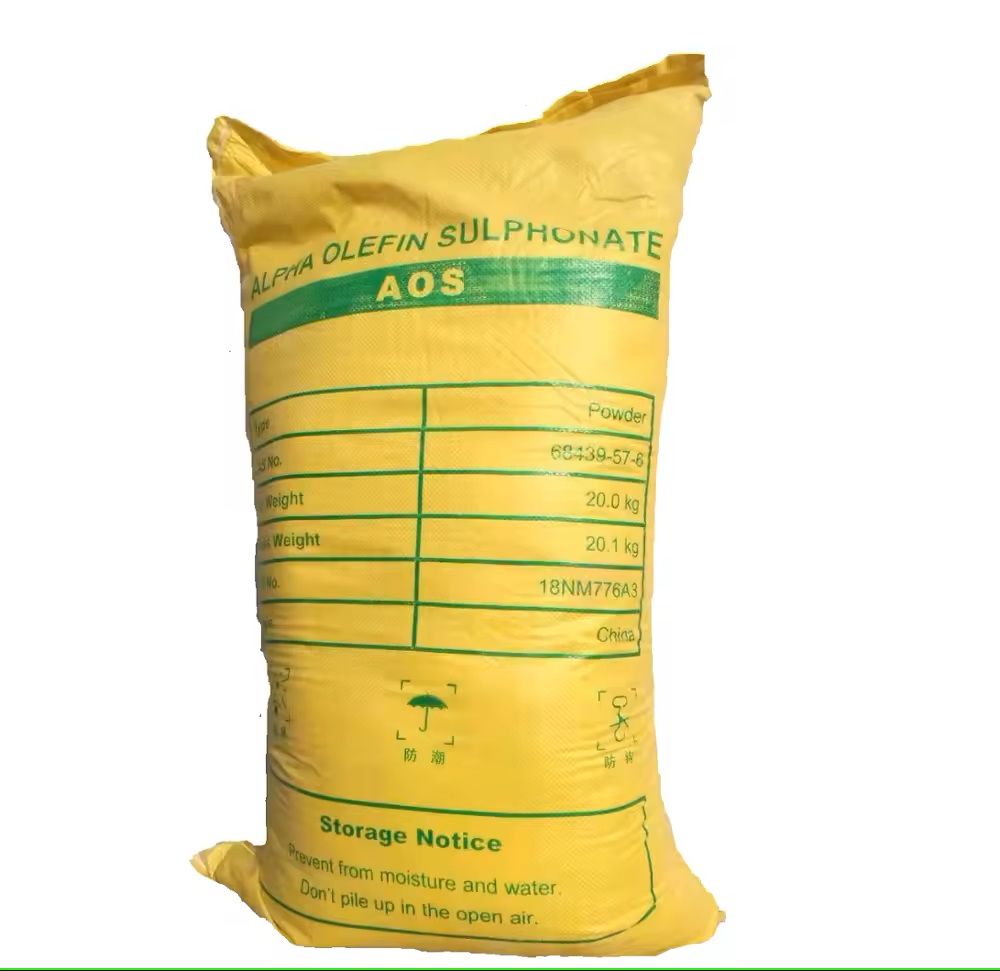
| CAS Number | 68439-57-6 |
| EINECS Number | 270-407-8 |
| Molecular Formula | CₙH₂ₙ₋₁SO₃Na (n = 14–16, mixture) |
| Chemical Class | Anionic Surfactant |
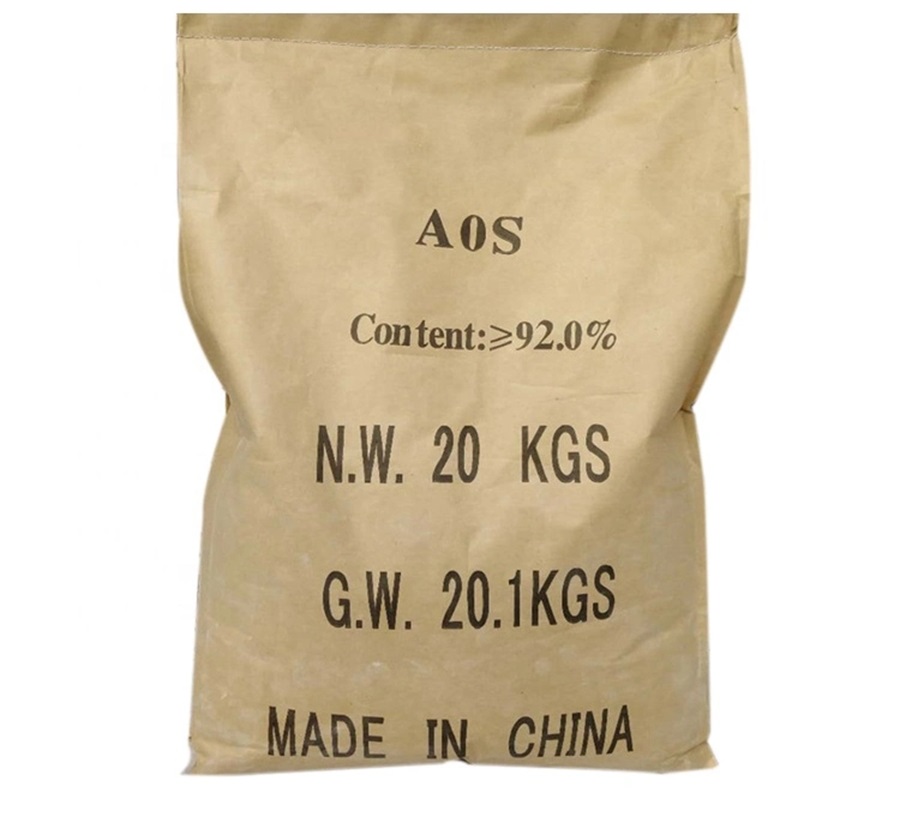
| Appearance | White or pale yellow powder, granules, or viscous liquid (depending on concentration) |
Note: Sodium Alpha-Olefin Sulfonate is a high-performance anionic surfactant produced by the sulfonation of linear alpha-olefins (typically C14-C16), followed by neutralization with sodium hydroxide. It is known for its excellent foaming power, strong wetting and emulsifying properties, and high stability in both acidic and alkaline formulations. It is widely used in personal care, household cleaning, and industrial applications as a primary or secondary surfactant.
2. PHYSICAL AND CHEMICAL PROPERTIES
| Property | Value / Description |
|---|---|
| Physical form | White or pale yellow powder, granules, or viscous liquid (concentration dependent) |
| Odour | Faint, characteristic odour |
| Solubility in water | Soluble; forms a clear to slightly hazy solution |
| pH (10% aqueous solution) | 7.0 – 9.5 |
| Active Matter Content | 30% or 35–40% for liquid solutions; 90–95% for powder form |
| Foaming Power | High; produces stable foam even in hard water |
| Wetting Power | Strong wetting and emulsifying properties |
| Biodegradability | Readily biodegradable (meets OECD 301 criteria) |
| Ionic Character | Anionic |
| Stability | Stable over a wide pH range; compatible with acidic and alkaline formulations |
3. FUNCTIONAL PROPERTIES AND MODE OF ACTION
-
High Foaming Power and Stability: AOS generates a rich, dense, and stable foam very quickly, even in the presence of hard water ions (Ca²⁺, Mg²⁺) and soils. This makes it an excellent primary or secondary foaming agent in shampoos, body washes, and liquid soaps.
-
Strong Cleaning and Degreasing: Effectively removes oily soils and particulate dirt from fabrics and hard surfaces. Its wetting and emulsifying properties are excellent, making it a powerful degreaser.
-
Mildness and Skin Compatibility: Compared to traditional SLS (Sodium Lauryl Sulfate), AOS has a significantly lower irritation potential, making it suitable for mild personal care formulations.
-
Versatile Compatibility: Highly compatible with other anionic, non-ionic, and amphoteric co-surfactants (such as Cocamidopropyl Betaine and SLES), allowing for synergistic performance and easy viscosity building.
-
Broad pH Stability: Maintains its surfactant properties effectively in both mildly acidic and alkaline formulations, making it suitable for a wide range of household and industrial cleaning products.
4. ALTERNATIVE NAMES AND SYNONYMS
| Category | Names |
|---|---|
| Common Names | Sodium Alpha-Olefin Sulfonate, AOS, Alpha Olefin Sulfonate |
| Product Forms | AOS Powder, AOS Liquid, AOS Granules |
5. SECTORAL APPLICATIONS AND USAGE RATES
| Sector | Application | Typical Usage / Notes |
|---|---|---|
| Personal Care & Cosmetics | Shampoos, shower gels, liquid soaps, facial cleansers, bath foams | 2 – 15% (as active); serves as a primary or secondary foaming and cleansing agent |
| Household Cleaning | Laundry detergents (liquid and powder), dishwashing liquids, hard surface cleaners | 5 – 25% (as active); valued for its high foaming and strong degreasing power |
| Industrial & Institutional Cleaning | Metal surface cleaners, vehicle washing products, heavy-duty degreasers | 5 – 30% (as active); effective in removing greasy and oily soils |
| Construction Materials | Foaming agent in the production of lightweight concrete and gypsum | 0.5 – 2% (as active); used to generate stable air voids in lightweight building materials |
6. PRODUCTION METHOD (Summary)
-
Sulfonation: A linear alpha-olefin (typically C14-C16) is reacted with sulfur trioxide (SO₃) in a continuous thin-film sulfonation reactor.
-
Neutralization: The resulting sulfonic acid intermediate is immediately neutralized with sodium hydroxide (NaOH).
-
Result: The final product is a mixture of alkene sulfonates and hydroxy alkane sulfonates, known collectively as Sodium Alpha-Olefin Sulfonate (AOS).
7. ADVANTAGES AND DISADVANTAGES
| Advantages | Disadvantages |
|---|---|
| High foaming power and excellent foam stability, even in hard water | The powder form requires careful handling to avoid dust inhalation |
| Strong cleaning, wetting, and degreasing properties | High active liquid forms (>40%) can be very viscous and may require gentle warming for easy handling |
| Mild to the skin; lower irritation potential than SLS | |
| Readily biodegradable; environmentally friendly | |
| Cost-effective alternative to SLES (Sodium Lauryl Ether Sulfate) | |
| Excellent compatibility with other surfactant types |
8. TYPICAL SPECIFICATIONS
| Parameter | Specification |
|---|---|
| CAS No. | 68439-57-6 |
| EINECS No. | 270-407-8 |
| Appearance | White to pale yellow powder, granules, or liquid |
| Active Matter (%) | 30 – 95% (grade dependent) |
| pH (10% solution) | 7.0 – 9.5 |
| Solubility | Soluble in water |
| Biodegradability | Readily biodegradable |
| Shelf Life | 24 months under recommended conditions |
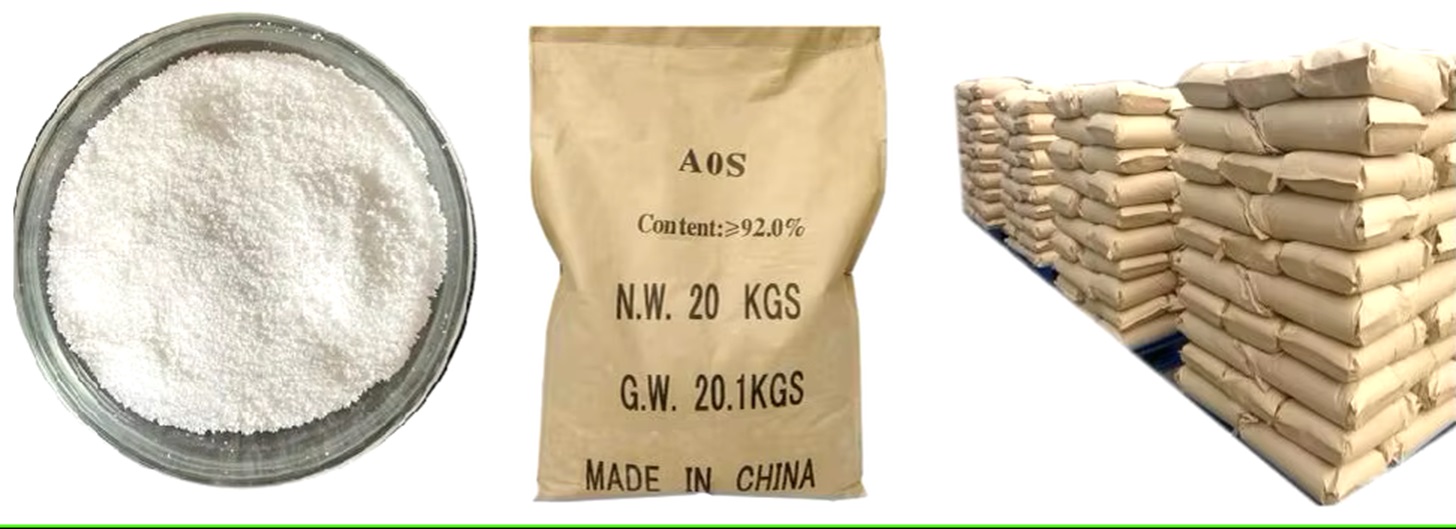
| Packaging | 200 kg plastic drums (liquid) / 25 kg kraft bags (powder) |
9. SAFETY, STORAGE, AND REGULATORY INFORMATION
-
GHS Classification: Not classified as a hazardous substance or mixture. The concentrated powder may cause mild mechanical irritation to the skin and eyes upon prolonged contact.
-
Toxicity: Low acute toxicity; considered safe for use in cosmetic and detergent formulations at typical concentrations.
-
First Aid: In case of skin or eye contact, rinse immediately with plenty of water.
-
Regulatory Compliance:
-
Registered under EU REACH.
-
Biodegradable according to OECD 301 standards.
-
Compliant with EU Cosmetics Regulation and Detergents Regulation.
-
-
Storage:
-
Store at room temperature in a dry and well-ventilated area.
-
Keep containers tightly sealed and protect from direct sunlight, moisture, and strong oxidizing agents.
-
-
Shelf Life: 24 months under recommended storage conditions.
-
Personal Protective Equipment (PPE): When handling bulk quantities, use nitrile gloves, safety goggles, and protective clothing.
10. QUICK REFERENCE TABLE
| Property | Value / Description |
|---|---|
| Common Name | AOS (Sodium Alpha-Olefin Sulfonate) |
| CAS | 68439-57-6 |
| Class | Anionic Surfactant |
| Appearance | White to pale yellow powder, granules, or liquid |
| Active Matter | 30 – 95% (grade dependent) |
| pH (10% sol.) | 7.0 – 9.5 |
| Main Functions | Foaming, cleansing, wetting, and degreasing agent |
| Key Benefit | Excellent hard water tolerance, high foaming, and cost-effective |