We unleash your business potential by maximize the business innovation.
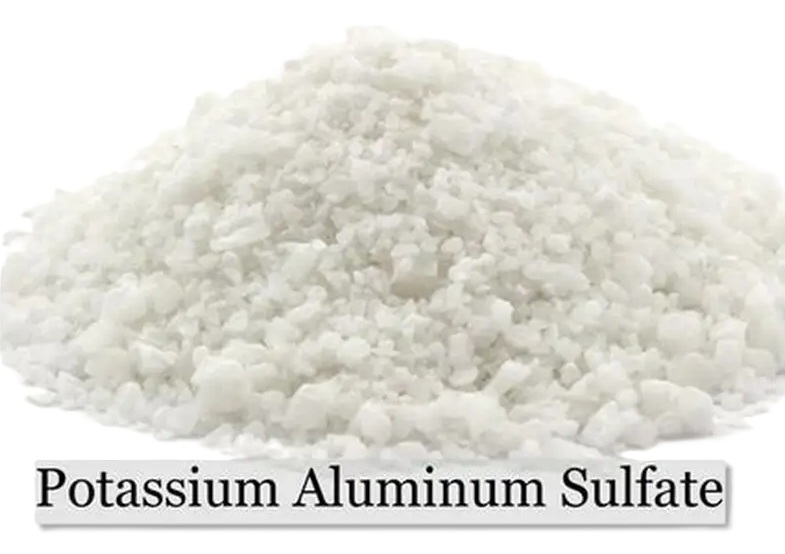
Send EmailPotassium Aluminium Sulfate, Potassium Alum, Potash Alum, Alum Potassium, Kalinite, E522, 7784-24-9
| Product Name | POTASSIUM ALUMINIUM SULFATE DODECAHYDRATE |
|---|---|
| CAS Number | 7784-24-9 |
| Molecular Formula | AlK(SO₄)₂ · 12H₂O |
| Synonyms | Potassium Alum, Potash Alum, Alum Potas, Kalinite |
| Molecular Weight | 474.39 g/mol |
1. PHYSICAL AND CHEMICAL PROPERTIES
| Parameter | Specification / Value |
|---|---|
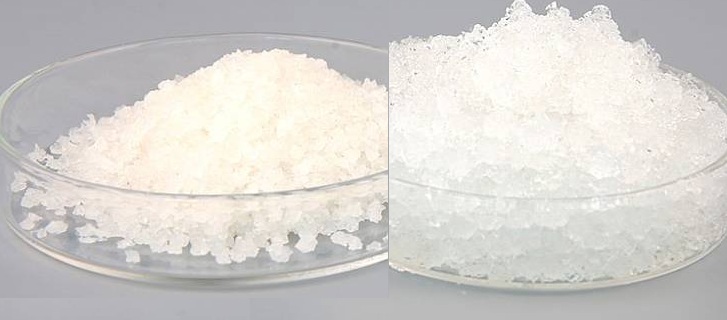
| Appearance / Physical State | Crystalline powder, granules, or large crystal pieces |
| Color | White, colorless, or slightly opaque |
| Odor | Odorless |
| Taste | Sweetish, astringent, metallic |
| pH (10% Aqueous Solution @ 20°C) | 2.5 – 4.0 |
| Melting Point | 92–93 °C (Melts in its own water of crystallization) |
| Boiling Point | ~200 °C (Loses water of crystallization; becomes anhydrous) |
| Density | ~1.73 – 1.75 g/cm³ |
| Solubility (Water) | Soluble in cold water (~140 g/L @ 20°C); significantly more soluble in hot water |
| Solubility (Other) | Practically insoluble in organic solvents (alcohol, acetone, etc.); soluble in dilute acids |
| Hygroscopy | Slightly hygroscopic (may exhibit slight efflorescence on the surface in dry air) |
| Stability | Stable under normal conditions. Begins to slowly lose water of crystallization above 60°C. |
2. CHEMICAL COMPOSITION (PURITY CRITERIA - Typical Analysis)
| Component / Parameter | Specification (Weight %) |
|---|---|
| Purity (AlK(SO₄)₂ · 12H₂O) | Min. 99.0 – 99.5 |
| Water Insoluble Matter | Max. 0.05 |
| Chloride (Cl) | Max. 0.002 |
| Ammonium (NH₄) | Max. 0.005 |
| Iron (Fe) | Max. 0.03 |
| Heavy Metals (as Pb) | Max. 0.002 |
| Arsenic (As) | Max. 0.0003 |
| Selenium (Se) | Max. 0.003 |
3. STORAGE AND HANDLING RECOMMENDATIONS
-
Storage Conditions: Store in a cool, dry, and well-ventilated area. Keep containers tightly closed. Protect from moisture and excessive heat (above 40°C).
-
Incompatible Materials: Strong oxidizing agents, strong alkalis, wet/corrosive metals (steel, aluminum).
-
Shelf Life: Minimum 24 months in the original, unopened packaging under specified storage conditions.
-
Transportation: Not classified as hazardous for transport according to regulatory standards.
4. TYPICAL APPLICATION AREAS
-
Water Treatment: Used as a flocculant (coagulant) and sedimentation agent in potable water and wastewater treatment.
-
Food Industry (E522): Used as a firming agent in cheese making, pickles, and canned goods, and as an acid regulator in baking powders.
-
Paper Industry: Paper sizing and wastewater treatment.
-
Textile Industry: Mordant (dye fixative) in dyeing and finishing processes, waterproofing, and flame retardant finishes.
-
Leather Industry: Tanning auxiliary (especially for white furs).
-
Cosmetics / Personal Care: Shaving creams, styptic pencils, natural deodorant stones (alternative to ammonium alum).
-
Laboratory / Education: Crystal growing experiments.
Disclaimer: This document is for informational purposes only and does not constitute a product quality specification. For health, safety, and environmental information, please consult the Safety Data Sheet (SDS). For specific suitability for your intended use, please contact the manufacturer or supplier.
1. SECTORAL APPLICATIONS AND SAMPLE RECIPES
A. Food Industry (E522)
Potassium alum is primarily used as a firming agent and stabilizer.
-
Pickling and Canning (Crispness Agent):
-
Recipe: When making cucumber pickles, add 0.5 – 1 gram of potassium alum per liter of brine to keep the cucumbers crunchy for months. (Note: Due to potential gastrointestinal irritation at higher doses, calcium chloride is now more commonly preferred commercially.)
-
-
Cheese Making (Acidity Regulator):
-
Recipe: In white cheese (feta-type) production, adding 1 teaspoon (approx. 3–4 g) to 5 liters of milk results in a firmer, more durable curd.
-
B. Cosmetics and Personal Care
The most widespread uses are natural deodorant stones and post-shave styptic pencils.
-
Natural Deodorant Spray (Formulation):
-
Phase A (Water): 90 g
-
Phase B (Active): 6 g Potassium Alum (powder)
-
Phase C (Humectant/Fragrance): 3 g Vegetable Glycerin, 1 g Essential oil (optional)
-
Method: Dissolve the alum in water, add glycerin and optional fragrance, and pour into a spray bottle.
-
-
Aftershave Styptic Pencil:
-
Sold directly as a pure, compressed white solid. When wetted and applied to a small cut, it constricts blood vessels and stops bleeding almost instantly.
-
C. Textile and Dyeing (Mordant - Dye Fixative)
Used in natural dyeing of animal and plant fibers (wool, cotton, linen) to improve color fastness and brightness.
-
Wool Mordanting Recipe:
-
Weight of Fiber (WOF): 10–20% Alum.
-
Calculation: 10–20 grams of Potassium Alum per 100 grams of dry wool.
-
Process: Dissolve alum in hot water, add the pre-wetted wool, and simmer (below boiling) for about 1 hour. This ensures bright, lightfast, and washfast colors.
-
D. Water Treatment (Flocculation)
Used to remove turbidity by causing suspended particles to clump together and settle.
-
Basic Flocculation Recipe:
-
Dosage: 10–30 mg/L (equivalent to 10–30 grams per 1 ton of water).
-
Process: Alum hydrolyzes in water to form aluminum hydroxide flocs. Effective treatment requires the water pH to be between 6.5 and 8.0. Adjust pH with lime or soda ash if necessary.
-
E. Flame Retardant (Impregnation)
Used in combination with borax to impart flame-retardant properties to wood, cardboard, or textiles.
-
Flame Retardant Solution for Wood/Fabric:
-
Formula: 10% Potassium Alum + 15% Borax + 75% Water.
-
Process: Dip the material in the solution or brush it on, then allow it to dry. When exposed to heat, it releases its water of crystallization and melts, forming a protective barrier.
-
2. ALTERNATIVES AND SUBSTITUTES
Choosing the correct substitute depends on the specific industry and desired outcome.
| Sector / Application | Alternative to Potassium Alum | Reason for Preference |
|---|---|---|
| Food (Firming Agent) | Calcium Chloride (E509) | Considered safer, non-toxic at higher doses. Provides the same crispness in pickles without the astringent taste. |
| Cosmetics (Deodorant) | Ammonium Alum (Ammonium Aluminium Sulphate) | Slightly lower pH, stronger antibacterial effect. More common in crystal deodorant stones on the market. |
| Water Treatment (Coagulant) | PAC (Polyaluminium Chloride) | Works over a wider pH range, produces less sludge volume, more effective in cold water, and requires lower dosages. |
| Mordant (Dye Fixation) | Aluminium Acetate | Bonds far better to cellulose fibers like cotton and linen, yielding brighter, clearer colors compared to alum. |
| Paper Sizing | AKD (Alkyl Ketene Dimer) / ASA (Alkenyl Succinic Anhydride) | Used in modern neutral/alkaline papermaking; provides permanent, covalent water resistance. Alum-based sizing is acidic and causes paper degradation over time. |
3. GLOBAL AND REGIONAL OTHER NAMES
The substance is known by various names commercially and traditionally around the world.
-
Common English:
-
Potassium Alum
-
Potash Alum (most common commercial name)
-
Alum Potassium
-
Kalinite (mineral form)
-
-
European Languages:
-
German: Kalialaun, Alumen
-
French: Alun de potassium
-
Spanish: Alumbre de potasio
-
Italian: Allume di potassio
-
-
Asian and Middle Eastern Languages:
-
Arabic: الشب (Al-Shabb)
-
Hindi: फिटकरी (Phitkari) — widely used in households across India
-
Indonesian/Malay: Tawas
-
Chinese: 明矾 (Míngfán)
-
Japanese: 焼きミョウバン (Yaki Myōban - burnt alum)
-
-
Historical/Archaic:
-
Alumen (Roman era)
-
Roche alum
-