We unleash your business potential by maximize the business innovation.
Send EmailCalcium Gluconate, Calcium D-gluconate, E578, 299-28-5
Calcium Gluconate
1. Product Description
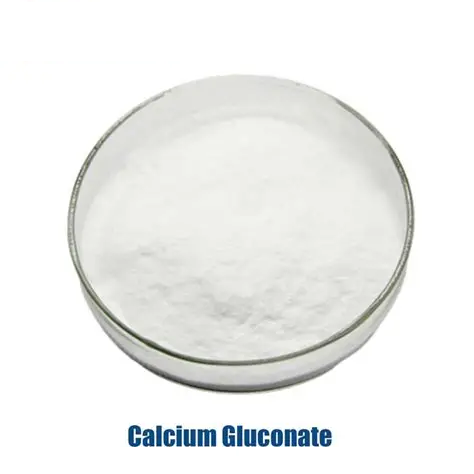
Calcium gluconate is the calcium salt of gluconic acid. It appears as a white, crystalline powder or granular form. It is generally odorless and tasteless. Commercially, it is typically available as the monohydrate form, though anhydrous forms exist. It is a Generally Recognized As Safe (GRAS) substance.
2. Chemical and Physical Properties
-
Chemical Name: Calcium Gluconate (or Calcium D-gluconate)
-
Molecular Formula:
-
Anhydrous: C₁₂H₂₂CaO₁₄
-
Monohydrate: C₁₂H₂₂CaO₁₄·H₂O
-
-
Molecular Weight: 430.37 g/mol (Anhydrous) or 448.40 g/mol (Monohydrate)
-
CAS Number: 299-28-5
-
EINECS Number: 206-075-8
-
Food Additive Code: E 578
-
Appearance: White, crystalline powder or granules
-
Odor: Odorless
-
Melting Point: Decomposes upon melting, typically between 178°C and 201°C.
-
Density: 0.30 - 0.65 g/cm³ (bulk density)
-
pKa: 6-7
3. Solubility Information
-
Water Solubility:
-
Slowly and sparingly soluble in cold water (approx. 3.3-3.5 g/100 mL at 25°C).
-
More freely soluble in boiling water (approx. 1 g / 5 mL).
-
-
Organic Solvent Solubility:
-
Insoluble in ethanol, ether, and other organic solvents.
-
4. Specifications and Standards
The product is manufactured in compliance with various international pharmacopoeias and food chemical codex standards.
-
Compliance Standards: USP (United States Pharmacopeia), FCC (Food Chemicals Codex), BP (British Pharmacopoeia), EP (European Pharmacopoeia).
-
Typical Specifications:
-
Assay (Purity): 98.0% - 102.0% (USP/FCC basis)
-
Appearance: White, crystalline powder or granules
-
Solubility: Passes test per USP/EP requirements
-
Loss on Drying: < 2.0%
-
Heavy Metals: Conforms to standard limits (e.g., Pb < 10 ppm)
-
5. Applications
Calcium gluconate has a wide range of applications across various industries:
-
Food Industry:
-
Used for food fortification as a source of calcium.
-
Functions as a pH regulator, buffering agent, firming agent, and sequestrant.
-
Commonly found in infant formulas, cereals, sports drinks, and high-calcium concentrates.
-
-
Pharmaceutical Industry:
-
Used in the treatment of hypocalcemia (low blood calcium).
-
Serves as a cardioprotective agent in the treatment of hyperkalemia (high blood potassium) and magnesium toxicity.
-
Utilized in the preparation of oral and injectable dosage forms.
-
Effective in the treatment of hydrofluoric acid burns (forms insoluble calcium fluoride).
-
-
Veterinary Medicine:
-
Used in the treatment of hypocalcemic conditions such as milk fever (parturient paresis) in cattle.
-
-
Cosmetics:
-
Used in skincare products as a moisturizer and soothing agent.
-
-
Other Uses:
-
Anti-caking agent in water treatment and coffee processing.
-
Inert ingredient in pesticide formulations.
-
6. Safety and Handling
-
Hazard Classification: Calcium gluconate is not classified as a hazardous substance under normal conditions of use. Inhalation of dust or contact with skin/eyes may cause slight mechanical irritation.
-
Personal Protective Equipment (PPE): Ensure adequate ventilation to prevent dust formation. Use a dust mask, safety glasses, and gloves where necessary.
-
First Aid Measures:
-
Inhalation: Remove to fresh air. Seek medical attention if breathing difficulties occur.
-
Skin Contact: Wash thoroughly with soap and water.
-
Eye Contact: Rinse cautiously with water for several minutes. Remove contact lenses if present and easy to do. Continue rinsing. Seek medical advice if irritation persists.
-
Ingestion: Rinse mouth with water. Seek medical attention if feeling unwell.
-
7. Storage and Stability
-
Storage Conditions: Calcium gluconate is stable in air. Store at room temperature in a dry, well-closed container. For long-term storage, 4°C or -20°C is recommended.
-
Stability: Incompatible with strong oxidizing agents.
-
Shelf Life: Stable within the manufacturer's specified shelf life (typically 2-3 years) when stored properly.
Note: This technical data sheet is for general informational purposes only. For specific applications, the manufacturer's specific product specification sheet and Safety Data Sheet (SDS) should be consulted as the primary reference.
1. Sectoral Market Share and Usage Rates
The calcium gluconate market shows steady growth according to various research firms. Below are data points from two different market analyses along with sectoral distribution.
Market Size and Growth Outlook
-
Kings Research (2024-2032): The global market was estimated at USD 102.33 billion in 2024. It is expected to reach USD 165.85 billion by 2032, growing at a CAGR of 6.32% .
-
Data Bridge Market Research (2025-2033): The market size was valued at USD 79.65 million in 2025 and is projected to reach USD 123.17 million by 2033, with a CAGR of 5.60% .
Note: The significant numerical difference between the two reports may stem from variations in market definition scope, geographical coverage, or unit differences (e.g., million vs. billion). Please focus on the trends and percentage shares.
Sectoral Usage Ratios (Market Share Distribution)
| Sector (Segment) | Global Market Share (2025) | Details |
|---|---|---|
| Pharmaceutical | ~ 58.4% | Holds the largest share due to widespread use in intravenous calcium therapies, hypocalcemia treatment, and emergency interventions. |
| Food & Beverage | Data not specified | Rapidly increasing use in fortification of functional foods and beverages. A key driver of market growth. |
| Nutraceuticals (Dietary Supplements) | Data not specified | Common use as a supplement, particularly for bone health and addressing calcium deficiency. |
| Personal Care & Cosmetics | Data not specified | Used as a soothing and moisturizing agent in skincare products. This segment is also noted for significant growth potential. |
2. Sectoral Applications, Formulations, and Dosages
Calcium gluconate applications require different recipes and dosages depending on the intended use. Below is a detailed breakdown by sector.
A. Food and Beverage Sector (Fortification)
In this sector, there is no strict "recipe" but rather formulation targets to meet calcium requirements. The goal is to contribute to the recommended daily intake of calcium.
-
Example Applications:
-
Sports Drinks & Functional Waters: Calcium gluconate is preferred in beverages due to its good solubility and neutral taste.
-
Plant-Based Milks (Almond, Soy, Oat): Widely used to fortify these products as alternatives to cow's milk.
-
Fruit Juices and Cereal Products: Offers advantages such as not lowering pH significantly and not forming sediment.
-
B. Pharmaceutical Sector (Therapeutic Use)
Use in the pharmaceutical sector requires precise dosages and medical supervision.
| Application | Dosage / Formulation | Explanation |
|---|---|---|
| Hypocalcemia (Calcium Deficiency) Treatment | Adult (IV bolus): Initial 1000 - 2000 mg, followed by 1000 - 2000 mg every 6 hours. Adult (Continuous infusion): 5.4 - 21.5 mg/kg/hour. Pediatric (>1 month): Initial 29-60 mg/kg IV, followed by 29-60 mg/kg IV bolus every 6 hours OR continuous infusion of 8-13 mg/kg/hour. |
Administered intravenously for severe and acute symptoms. |
| Cardiac Arrest (Off-label) | 1.5 - 3 g IV, administered over 2-5 minutes. | Used only in the presence of hyperkalemia, hypocalcemia, or hypermagnesemia. |
| Hydrofluoric Acid Burns (Off-label) | Topical Gel: Mix 2.5 g calcium gluconate powder into 100 mL of water-based lubricant (e.g., K-Y Jelly) OR mix 25 mL of 10% calcium gluconate solution into 75 mL lubricant. | Apply to the burn area after rinsing with water for 15-30 minutes. |
| Injectable Solution Preparation | Example 1: 294 g Calcium Gluconate Monohydrate + 13.5 g Calcium Glucarate Tetrahydrate + 3 L Water for Injection. Example 2 (USP 10%): Each mL contains 98 mg Calcium Gluconate Monohydrate, 4.6 mg Calcium Saccharate Tetrahydrate, and Water for Injection q.s. |
Auxiliary stabilizers (e.g., calcium saccharate) are used to obtain a stable solution. |
C. Nutraceuticals (Dietary Supplements)
The aim is to support daily calcium intake. Doses are generally calculated based on "elemental calcium." 1 g of calcium gluconate provides approximately 93 mg of elemental calcium.
-
Recommended Daily Allowance (RDA) for Elemental Calcium:
-
Adults (19-50 years): 1000 mg/day
-
Adult Females (51+ years): 1200 mg/day
-
Pregnancy and Lactation: 1000 mg/day
-
D. Veterinary Sector
-
Milk Fever (Hypocalcemia) Treatment: In cattle, intravenous calcium gluconate solution is administered for sudden calcium drop postpartum.
3. Alternative Names and Synonyms
Calcium gluconate is referred to by various names in different sectors and regulations.
| Type | Names and Descriptions |
|---|---|
| Chemical Name | Calcium Gluconate Calcium di-D-gluconate D-Gluconic acid, calcium salt |
| Food Additive Code | E 578 (European Union) INS 578 (International Numbering System) |
| Pharmaceutical/Brand Names | Trade names include Calciofon, Calglucon, Glucobiogen. |
| Related Compounds | Calcium Lactate Gluconate (GLOCAL): The calcium salt of lactic acid and gluconic acid, used in effervescent calcium tablets. |