We unleash your business potential by maximize the business innovation.
Send EmailPolyisobutylene, Polyisobutene, Polybutene, PIB, HR-PIB, 9003-27-4
Polyisobutylene (PIB)
CAS Number: 9003-27-4
Chemical Formula: (C₄H₈)ₙ
Synonyms: Polyisobutene, Polybutene, PIB, HR-PIB (High Reactive PIB), Hydrogenated PIB, Conventional PIB
Production Method: Cationic polymerization of isobutene (and other C4 olefins)
Physical Forms: Free-flowing liquid → honey-like viscosity → adhesive semi-solid → elastomeric solid (depending on molecular weight)
1. CHEMICAL IDENTITY
| Parameter | Information |
|---|---|
| Product Name | Polyisobutylene |
| CAS Number | 9003-27-4 |
| Chemical Formula | (C₄H₈)ₙ |
| Repeat Unit | -CH₂-C(CH₃)₂- |
| Polymer Type | Saturated hydrocarbon polymer (except reactive end groups in HR-PIB) |
| Synonyms | Polyisobutene, Polybutene, PIB, HR-PIB (High Reactive PIB), Hydrogenated PIB, Conventional PIB |
| Production Method | Cationic polymerization of isobutene (and other C4 olefins) |
2. PHYSICAL FORMS AND APPEARANCE
| Parameter | Description |
|---|---|
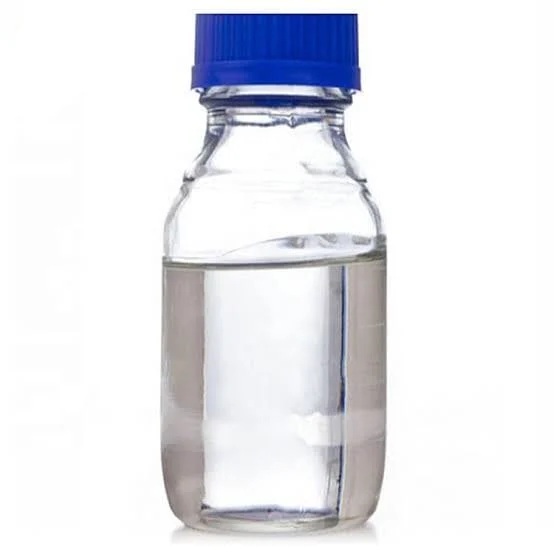
| Appearance (all grades) | Clear, transparent, free of sediment |
| Low Molecular Weight | Free-flowing liquid |
| Medium Molecular Weight | Honey-like viscous liquid |
| High Molecular Weight | Tacky, semi-solid to elastomeric solid |
Key Feature: PIB can be produced in different physical forms (low-viscosity liquid, high-viscosity adhesive liquid, semi-solid, solid) by controlling the molecular chain length.
3. KINEMATIC VISCOSITY CLASSES
| Viscosity Class | Min. Viscosity (cSt) | Max. Viscosity (cSt) | Test Temperature (°C) |
|---|---|---|---|
| Low 1 | 3.0 | 3.7 | 20 |
| Low 2 | 3.9 | 5.0 | 40 |
| Low 3 | 5.8 | 7.2 | 20 |
| Medium 1 | 13.5 | 16.5 | 40 |
| Medium 2 | 24.0 | 30.0 | 100 |
| Medium 3 | 11.0 | 14.0 | 100 |
| High 1 | 14.5 | 16.0 | 100 |
| High 2 | 27.5 | 33.5 | 100 |
| High 3 | 48.5 | 55.5 | 100 |
| Very High 1 | 100 | 115 | 125 |
| Very High 2 | 200 | 235 | 300 |
| Very High 3 | 605 | 670 | 800 |
| Semi-Solid / Elastomeric 1 | 2300 | 2700 | 400 |
| Semi-Solid / Elastomeric 2 | 2900 | 3200 | 500 |
| Semi-Solid / Elastomeric 3 | 3900 | 4200 | 600 |
| Semi-Solid / Elastomeric 4 | 3900 | 4600 | 700 |
| Semi-Solid / Elastomeric 5 | 11100 | 13300 | 100 |
| Semi-Solid / Elastomeric 6 | 36000 | 45000 | 100 |
Note: Test temperature varies with viscosity. Low viscosities measured at lower temperatures (20-40°C); high viscosities measured at higher temperatures (100-400°C). For high molecular weight PIB, typical test temperature is 100°C.
4. MOLECULAR WEIGHT AND DISTRIBUTION
| Parameter | Test Method | Typical Range |
|---|---|---|
| Number Average Molecular Weight (Mn) | GPC (ASTM D 3536 type) | 180 – 6,000 Da |
| Weight Average Molecular Weight (Mw) | GPC | 300 – 10,000 Da |
| Polydispersity Index (Mw/Mn) | GPC | 1.60 – 1.80 |
5. COLOR, FLASH POINT AND WATER CONTENT
| Parameter | Test Method | Typical Value / Limit |
|---|---|---|
| Color (Pt-Co / Hazen) | ASTM D 1209 | ≤ 50 (some high viscosity grades ≤ 150-160) |
| Flash Point (Closed Cup) | ASTM D 93 | Min. 65°C – 180°C (depends on viscosity) |
| Water Content | ASTM E 1064 (Karl Fischer) | Max. 40 ppm |
| Appearance | Visual | Clear, transparent, sediment-free |
6. CHEMICAL PURITY AND REACTIVITY
| Parameter | Test Method | Typical Value / Limit |
|---|---|---|
| Acid Number (mg KOH/g) | ASTM D 974 | < 0.05 – < 0.15 |
| Bromine Number (g Br₂/100g) | ASTM D 2710 / IP 129 | 3 – 87 (higher in low MW, lower in high MW) |
| Chlorine Content (ppm) | XRF | 40 – 130 (typically < 100) |
7. PHYSICAL DENSITY AND THERMAL PROPERTIES
| Parameter | Test Method | Typical Range |
|---|---|---|
| Density (15.5°C) | ASTM D 1298 | 0.788 – 0.921 g/cm³ |
| Glass Transition Temperature (Tg) | DSC | -69.6°C to -66.9°C (typically ≈ -67°C) |
8. KEY PROPERTIES
| Property | Description |
|---|---|
| Permanent Non-Drying | Does not harden or skin over with oxidation or UV exposure |
| Colorless and Stainless | Water-white appearance; does not stain surfaces |
| Solubility | Soluble in aliphatic, aromatic, and chlorinated hydrocarbons; insoluble in water, alcohol, acetone, esters |
| Compatibility | Good compatibility with many organic materials (polyolefins, rubbers, paraffinic oils) |
| Hydrophobicity | Completely water-repellent; can be emulsified |
| Adhesion and Flexibility | Adhesive, transparent, extensible structure |
| Electrical Insulation | Excellent dielectric properties |
| Antioxidant | Natural resistance to oxidation |
| Lubrication | Good lubricant; non-corrosive |
| Toxicology | Non-toxic |
| Reactivity | Reactive terminal olefinic groups (especially low-medium MW); suitable for alkylation, maleic anhydride modification |
| Stability | Stable to light and air under ambient conditions |
| Evaporation Loss | Low evaporation loss |
| Viscosity Index | High viscosity index (low viscosity change over wide temperature range) |
| Pour Point | Low pour point (cold fluidity) |
| High Temperature Behavior | Leaves no residue or soot after decomposition |
9. PRODUCTION PROCESS
| Step | Description |
|---|---|
| Raw Material | Isobutene (isobutylene) from C4 refinery streams |
| Catalyst | Lewis acid (e.g., AlCl₃, BF₃) for cationic polymerization |
| Reaction | Isobutene → cationic polymerization → Polyisobutylene |
| HR-PIB Production | Special catalyst system yields high vinylidene content (>70%) terminal double bonds |
| Hydrogenation | Saturation of double bonds → Hydrogenated PIB (non-reactive, more stable) |
| Purification | Catalyst removal, stripping, filtration |
10. APPLICATIONS – ADHESIVES AND SEALANTS
| Application | Typical Usage (%) | Which PIB? | Reason |
|---|---|---|---|
| Hot Melt Adhesives (HMA) | 10 – 30% | Medium MW (Mn 1300-2500) | Provides tack and flexibility; extends open time |
| Pressure Sensitive Adhesives (PSA) | 5 – 15% | Low-Medium MW (Mn 800-1500) | Permanent tack; low Tg (-70°C) |
| Insulating Glass (IG) Primary Seal | 80 – 95% | High MW (Mn > 30,000) | Gas barrier (butane, xenon); moisture resistance |
| Automotive Sealants (Body Sealing) | 15 – 40% | Medium MW (Mn 2000-4000) | Vibration damping; corrosion protection |
11. APPLICATIONS – LUBRICANTS AND GREASES
| Application | Typical Usage (%) | Which PIB? | Reason |
|---|---|---|---|
| Motor Oil (Viscosity Index Improver – VII) | 5 – 15% | Low MW (Mn 500-1500) | High viscosity index (>135); shear stability |
| Industrial Grease (Thickener) | 10 – 30% | High MW (Mn 3000-6000) | Thick structure; water resistance |
| Metalworking Fluids | 1 – 5% | Low MW (Mn 400-800) | Lubricity; evaporates without residue |
12. APPLICATIONS – PLASTICS AND PACKAGING
| Application | Typical Usage (%) | Which PIB? | Reason |
|---|---|---|---|
| Stretch Film (Cling Layer) | 2 – 8% (surface) | Medium MW (Mn 1200-2000) | Provides cling to pallet; permanent non-drying |
| PVC Plastisol (Plasticizer Aid) | 5 – 20% | Low MW (Mn 600-1000) | Permanent flexibility; low temperature performance |
| Polypropylene (PP) Modification | 5 – 15% | High MW (Mn > 30,000) | Improves impact resistance; toughening |
13. APPLICATIONS – COSMETICS AND PERSONAL CARE
| Application | Typical Usage (%) | Which PIB? | Reason |
|---|---|---|---|
| Lipstick | 5 – 15% | Hydrogenated low MW (Mn 500-1500) | Emollient; gloss; long-lasting; FDA approved |
| Sunscreen | 2 – 10% | Low MW | Water resistance; film former; SPF stabilization |
| Hair Gel/Spray | 1 – 5% | Low MW | Flexible hold; shine; good spreadability |
14. APPLICATIONS – FUEL ADDITIVES (HR-PIB – High Reactive PIB)
| Application | Typical Usage (%) | Which PIB? | Reason |
|---|---|---|---|
| Gasoline Injector Cleaner | 10 – 30% (in additive package) | Reactive PIB (Mn ~1000) | High vinylidene content (>70%); low chlorine (<50 ppm) |
| Diesel Dispersant Additive | 5 – 20% | Reactive PIB (Mn 800-1200) | Disperses soot particles; thermal stability |
15. OTHER APPLICATIONS
| Industry | Application | PIB Type |
|---|---|---|
| Electrical | Cable filling compounds (water blocking) | High MW |
| Rubber | Butyl rubber production (copolymer with isoprene) | Medium MW |
| Construction | Roofing membranes, waterproofing | High MW |
| Pharmaceutical | Controlled release matrices | Hydrogenated low MW |
| Food Packaging | Cheese coating, fruit coating (FDA approved grades) | Hydrogenated low MW |
16. PIB TYPE SELECTION GUIDE
| Selection Criteria | Low MW (300-1000) | Medium MW (1000-3000) | High MW (>30,000) | Reactive PIB (Mn 800-1300) |
|---|---|---|---|---|
| Viscosity (100°C) | 4 – 50 cSt | 200 – 4000 cSt | Solid / Semi-solid | 100 – 300 cSt |
| Tack | Low | Medium – High | Very high (tape-like) | Medium |
| Elasticity (Tg) | ~ -70°C | ~ -67°C | ~ -65°C | ~ -67°C |
| Gas Permeability | High (permeable) | Medium | Very low (barrier) | Medium |
| Reactivity | Low | Low | None (saturated) | Very high (vinylidene) |
| Solubility | All hydrocarbons | All hydrocarbons | Aromatics only / hot oils | All hydrocarbons |
| Primary Use | VII, metalworking, oils | Adhesives, cling, sealants | Seals, cable, barrier | Fuel additives |
17. SELECTION QUESTIONS TO ASK
| Question | Answer Leads To |
|---|---|
| What viscosity do I need? | Low cSt liquid / Honey-like / Semi-solid / Solid |
| Is permanent tack required? | Yes → Medium/High MW; No → Low MW |
| Will it undergo chemical reaction? | Yes → Reactive PIB; No → Conventional |
| Does it contact food/skin? | Yes → Hydrogenated, low MW, low chlorine |
| Is gas barrier required? | Yes → High MW elastomer |
| Will it operate at high temperature without residue? | Low MW evaporates cleanly; High MW degrades |
18. COMPATIBILITY AND SOLUBILITY
| Solvent | Solubility |
|---|---|
| Aliphatic Hydrocarbons (hexane, heptane) | Soluble (low-medium MW) |
| Aromatic Hydrocarbons (toluene, xylene) | Soluble |
| Chlorinated Hydrocarbons | Soluble |
| Water | Insoluble |
| Alcohols | Insoluble |
| Acetone | Insoluble |
| Esters | Insoluble |
Compatibility: Compatible with polyolefins, natural rubber, synthetic rubbers (SBR, butyl), paraffinic and naphthenic oils.
19. STORAGE AND HANDLING
| Parameter | Requirement |
|---|---|
| Storage Temperature | 15-30°C (cool, dry) |
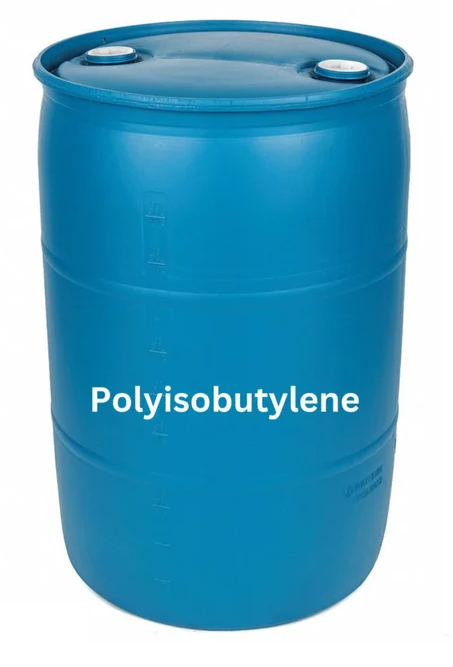
| Container | Original sealed container (drums, IBC, bulk tanks) |
| Light Protection | Protect from direct sunlight |
| Heat Protection | Keep away from heat sources and open flames |
| Ventilation | Good ventilation (low viscosity grades are flammable) |
| Shelf Life | 36 months (3 years) in original unopened container |
| Special Precautions | Low viscosity grades: flammable liquid; high viscosity grades: non-flammable but combustible |
20. SUMMARY AND CRITICAL INFORMATION
Description: Polyisobutylene (PIB, CAS 9003-27-4) is a synthetic hydrocarbon polymer produced by cationic polymerization of isobutene. It is available in a wide range of physical forms from free-flowing liquid to honey-like viscous liquid to adhesive semi-solid and elastomeric solid, depending on molecular weight. PIB is clear, transparent, colorless, and odorless. It offers permanent non-drying properties, excellent water repellency, good adhesion, high electrical insulation, and low toxicity.
Key Advantages:
-
Permanent non-drying (does not harden or skin over)
-
Colorless and non-staining
-
Excellent water repellency (hydrophobic)
-
Good adhesion to many surfaces
-
High flexibility and extensibility
-
High viscosity index (lubricants)
-
Low glass transition temperature (Tg ~ -67°C)
-
Non-toxic (approved for food contact)
-
Excellent electrical insulation
-
Low gas permeability (high MW grades)
-
Leaves no residue after decomposition (low MW grades)
Key Limitations/Precautions:
-
Low MW grades are flammable (flash point as low as 65°C)
-
Insoluble in water, alcohols, acetone, esters
-
High MW grades have limited solubility (aromatics only)
-
Can cause surface slipperiness if spilled
-
Aspiration hazard if ingested (liquid forms)
Major Applications by Sector:
| Sector | Applications |
|---|---|
| Adhesives & Sealants | HMA, PSA, IG sealants, automotive sealants |
| Lubricants & Greases | Viscosity index improver (VII), grease thickener, metalworking fluids |
| Plastics & Packaging | Stretch film cling layer, PVC plastisol, PP modification |
| Cosmetics | Lipsticks, sunscreens, hair products |
| Fuel Additives | Gasoline injector cleaner (HR-PIB), diesel dispersant (HR-PIB) |
| Electrical | Cable filling compounds |
| Construction | Roofing membranes, waterproofing |
Selection Guide Summary:
| Need | Recommended PIB Type |
|---|---|
| Viscosity index improver (motor oil) | Low MW (500-1500) |
| Permanent tack (PSA) | Medium MW (800-1500) |
| Gas barrier (insulating glass) | High MW (>30,000) |
| Chemical reaction (fuel additives) | Reactive PIB (HR-PIB) |
| Food/skin contact | Hydrogenated low MW |
| Clean evaporation (metalworking) | Low MW (400-800) |
Storage: Cool, dry, protected from sunlight; 36 months shelf life.
Safety Summary:
-
Low MW grades: flammable liquid (GHS classification may apply)
-
High MW grades: non-hazardous under normal use
-
Non-toxic, non-carcinogenic
-
Low skin/eye irritation
-
Avoid aspiration (ingestion of liquid forms)
Conclusion: Polyisobutylene (PIB) is a versatile synthetic polymer with a unique combination of properties: permanent non-drying, excellent adhesion, high flexibility, water repellency, and non-toxicity. Its molecular weight can be precisely controlled to produce products ranging from low-viscosity fluids to high-strength elastomers. This versatility makes PIB essential in adhesives (PSA, HMA), sealants (IG, automotive), lubricants (VII, greases), packaging (stretch film cling), cosmetics (lipsticks, sunscreens), and fuel additives (HR-PIB for injector cleaners). With regulatory approvals (FDA, REACH, EU 10/2011) and excellent safety profile, PIB is a trusted material across multiple industries.