We unleash your business potential by maximize the business innovation.
Send Email1-Hexanol, n-Hexyl Alcohol, Hexyl Alcohol, Caproyl Alcohol, C6 Alcohol, 111-27-3
TECHNICAL DATA SHEET (TDS) – 1-HEXANOL (n-Hexyl Alcohol, C6 Alcohol)
1. PRODUCT DEFINITION AND CHEMICAL IDENTITY
| Parameter | Description |
|---|---|
| Chemical Name (IUPAC) | Hexan-1-ol |
| Common Name | 1-Hexanol |
| Other Names | n-Hexyl alcohol, Hexyl alcohol, Caproyl alcohol, C6 alcohol |
| CAS Number | 111-27-3 |
| EINECS Number | 203-852-3 |
| Molecular Formula | C₆H₁₄O (CH₃(CH₂)₅OH) |
| Molecular Weight | 102.17 g/mol |
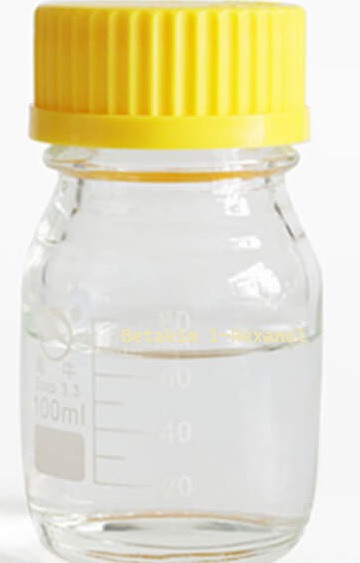
| Appearance | Clear, colourless liquid |
| Odour | Characteristic, sweetish, alcohol-like |
2. PHYSICAL AND CHEMICAL PROPERTIES
| Property | Value |
|---|---|
| Physical state | Liquid |
| Density (20 °C) | 0.814 – 0.819 g/cm³ |
| Freezing/melting point | –44.6 °C |
| Boiling point | 156 – 158 °C (at 760 mmHg) |
| Flash point (closed cup) | 63 °C |
| Auto-ignition temperature | ~290 °C |
| Vapour pressure (20 °C) | 0.13 kPa (1.0 mmHg) |
| Viscosity (20 °C) | ~4.6 mPa·s |
| Refractive index (n²⁰/D) | 1.416 – 1.418 |
| Solubility in water (20 °C) | 5.9 g/L (sparingly soluble) |
| Solubility in organic solvents | Fully miscible with ethanol, ether, acetone, chloroform |
| Partition coefficient (log P) | 2.03 (octanol/water) |
| pH (aqueous solution) | ~7 (neutral) |
| Evaporation rate (butyl acetate = 1) | ~0.1 |
3. TYPICAL TECHNICAL SPECIFICATIONS
| Test | Specification |
|---|---|
| Purity (GC, %) | ≥ 99.0 (typically 99.5) |
| Water content (KF, %) | ≤ 0.10 |
| Colour (Pt-Co, APHA) | ≤ 10 |
| Acidity (as acetic acid, %) | ≤ 0.01 |
| Distillation range (95% vol.) | 155 – 158 °C |
4. FUNCTIONAL PROPERTIES
-
Intermediate for esters: Reacts with acids (phthalic, adipic, etc.) to form plasticizers, synthetic lubricants, and emulsifiers.
-
Fragrance ingredient: Contributes fruity, woody, floral notes in perfumery; used in soaps, detergents, lotions, and shampoos.
-
Surfactant building block: Alkyl sulfate or sulfonate derivatives used as wetting agents, dispersants, and detergents.
-
Medium-evaporating solvent: For paints, coatings, resins, and printing inks where controlled evaporation and good solubility are required.
-
Analytical standard: Used in GC and HPLC calibration due to its well-defined peak and purity.
-
Food additive: Permitted in some regions as a flavouring agent (FEMA 2567).
-
High-temperature lubricant feedstock: Esters of 1-hexanol offer thermal and oxidative stability for specialty lubricants.
5. SECTORAL APPLICATIONS, USAGE RATES, AND EXAMPLE FORMULATIONS
| Sector | Purpose | Typical Usage / Notes |
|---|---|---|
| Plasticizers | Synthesis of hexyl phthalate, hexyl adipate, etc. for PVC and polymers | Stoichiometric reaction with dibasic acids or anhydrides; serves as the alcohol component |
| Fragrance & Flavours | Fruity, green, apple, cognac notes in perfumes, cosmetics, and food flavourings | 0.1–5% in fragrance concentrate; traces in food (ppm level) |
| Surfactants | Feedstock for hexyl sulfates and other anionic surfactants | Used as a chain length modifier; final surfactant typically 1–5% in cleaning products |
| Coatings & Inks | Medium-boiling solvent for alkyd paints, stoving enamels, and printing inks | 2–10% of solvent blend |
| Metal Extraction | Solvent for metal ion extraction and purification processes | Up to 20% in organic phase |
| Analytical | Calibration standard for GC and HPLC | Pure, reference grade |
| Synthetic Lubricants | Ester base stocks for compressor oils, hydraulic fluids | Reacted with polyols or dibasic acids; ester content 95%+ |
Example Formulations:
-
Fruity Fragrance Accord (for fine perfume):
-
1-Hexanol: 3.0%
-
Ethyl acetate: 5.0%
-
Amyl acetate: 1.5%
-
Geraniol: 10.0%
-
Ethanol: 80.5%
Impressions of apple, pear, and green notes.
-
-
Alkyd Paint Solvent Blend:
-
White spirit: 60%
-
Xylene: 25%
-
1-Hexanol: 10% (tail solvent, improves flow)
-
Butyl glycol: 5%
Provides a good balance of evaporation, flow, and gloss.
-
-
Hexyl Sulfate Surfactant Preparation (laboratory scale):
-
1-Hexanol + chlorosulfonic acid → hexyl sulfate acid (controlled temperature)
-
Neutralize with NaOH to form sodium hexyl sulfate.
-
Used as a short-chain analogue of sodium lauryl sulfate for high electrolyte systems.
-
6. ALTERNATIVES AND COMPARISON
| Alternative | Chemical Type | Comparison |
|---|---|---|
| n-Butanol | C4 alcohol | Faster evaporation, stronger odour, cheaper |
| 2-Ethylhexanol | C8 branched alcohol | Lower volatility, better for plasticizers; 1-hexanol offers different odour profile |
| n-Octanol | C8 linear alcohol | More waxy odour, higher boiling point, less water solubility |
| Cyclohexanol | Cyclic C6 alcohol | Camphoraceous odour, different solvent power |
| Isoamyl alcohol | C5 branched alcohol | Fruity, brandy notes; used in similar fragrance applications but more volatile |
7. REGULATORY STATUS AND SAFETY
-
GHS Classification (CLP Regulation):
-
Signal word: Warning
-
Hazard statements:
-
H226: Flammable liquid and vapour.
-
H315: Causes skin irritation.
-
H319: Causes serious eye irritation.
-
H335: May cause respiratory irritation.
-
-
Precautionary statements: P210, P261, P264, P271, P280, P302+P352, P304+P340, P305+P351+P338, P312, P332+P313, P337+P313, P403+P233, P405, P501.
-
-
Transport (ADR/RID): Class 3 (Flammable liquid), UN 2282, Packing group III.
-
NFPA 704: Health: 1, Flammability: 2, Reactivity: 0.
-
Food status: FEMA GRAS No. 2567; permitted as a flavouring agent in certain jurisdictions. Check local regulations.
-
Environmental: Readily biodegradable (>60% in 28 days); low bioaccumulation potential (log P 2.03).
-
Storage: Store in tightly closed containers in a cool, dry, well-ventilated area (15–30 °C). Inert gas blanket (nitrogen) may be used. Keep away from heat, sparks, open flames, strong oxidisers, acid chlorides, anhydrides.
-
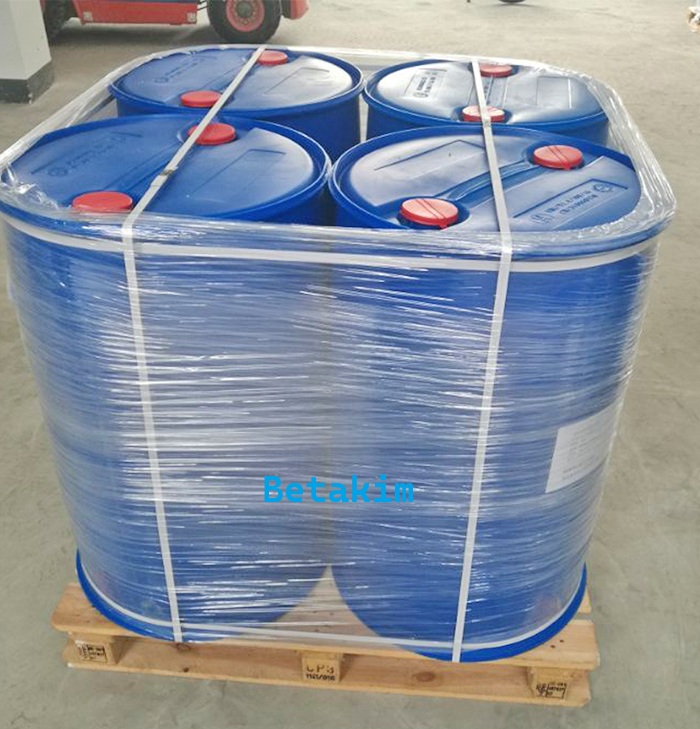
Packaging: 170 kg steel drums, 850 kg IBCs, bulk tankers. Compatible materials: stainless steel, carbon steel, aluminium, polyethylene.
8. TOXICOLOGICAL AND ECOTOXICOLOGICAL DATA
| Parameter | Value |
|---|---|
| Acute oral toxicity (LD50, rat) | ~4590 mg/kg |
| Acute dermal toxicity (LD50, rabbit) | > 2000 mg/kg |
| Inhalation toxicity (LC50, rat, 4 h) | > 5.7 mg/L |
| Skin irritation | Mild to moderate |
| Eye irritation | Moderate |
| Mutagenicity | Negative (Ames test) |
| Fish toxicity (96 h LC50) | 50–100 mg/L (Leuciscus idus) |
| Biodegradation | Readily biodegradable |
9. FREQUENTLY ASKED QUESTIONS
Q1. Is 1-hexanol soluble in water?
It is sparingly soluble – about 5.9 g/L at 20 °C. It is, however, fully miscible with most organic solvents.
Q2. Can I use 1-hexanol in a perfume?
Yes, it is a common ingredient in fruity and floral fragrance compositions. It can be used directly in perfume oils or as a building block for hexyl esters like hexyl acetate.
Q3. What is the shelf life of 1-hexanol?
At least 24 months when stored properly in original sealed containers at 15–30 °C.
Q4. In which plasticizers is 1-hexanol used?
Mainly in hexyl phthalate and hexyl adipate, which are used as low-temperature plasticizers or as co-plasticizers to improve flexibility at low temperatures.
Q5. How does it compare to 2-ethylhexanol?
2-Ethylhexanol is a branched C8 alcohol and is the dominant alcohol for general-purpose plasticizers (DOP, DOTP). 1-Hexanol is used where lower molecular weight esters, specific solvency, or a different odour profile is desired.
10. QUICK REFERENCE TABLE
| Property | Value |
|---|---|
| CAS | 111-27-3 |
| Formula | C₆H₁₄O |
| Molecular weight | 102.17 g/mol |
| Boiling point | 157 °C |
| Flash point | 63 °C |
| Density | 0.817 g/cm³ |
| Water solubility | 5.9 g/L |
| Main uses | Fragrances, plasticizers, surfactants, solvent |