We unleash your business potential by maximize the business innovation.
Send EmailCarboxymethyl Starch, Carboxy Methyl Starch, Modified Starch, Starch Ether, CMS, 9057-06-1
CARBOXYMETHYL STARCH (CMS)
Carboxymethyl Starch / Modified Starch / Starch Ether
CAS Number: 9057-06-1
1. IDENTIFICATION
| Property | Information |
|---|---|
| Product Name | Carboxymethyl Starch (CMS) |
| Synonyms | Modified starch, Starch ether, CMS, Carboxymethyl modified starch |
| Chemical Type | Anionic polymeric starch ether derivative |
| CAS Number | 9057-06-1 |
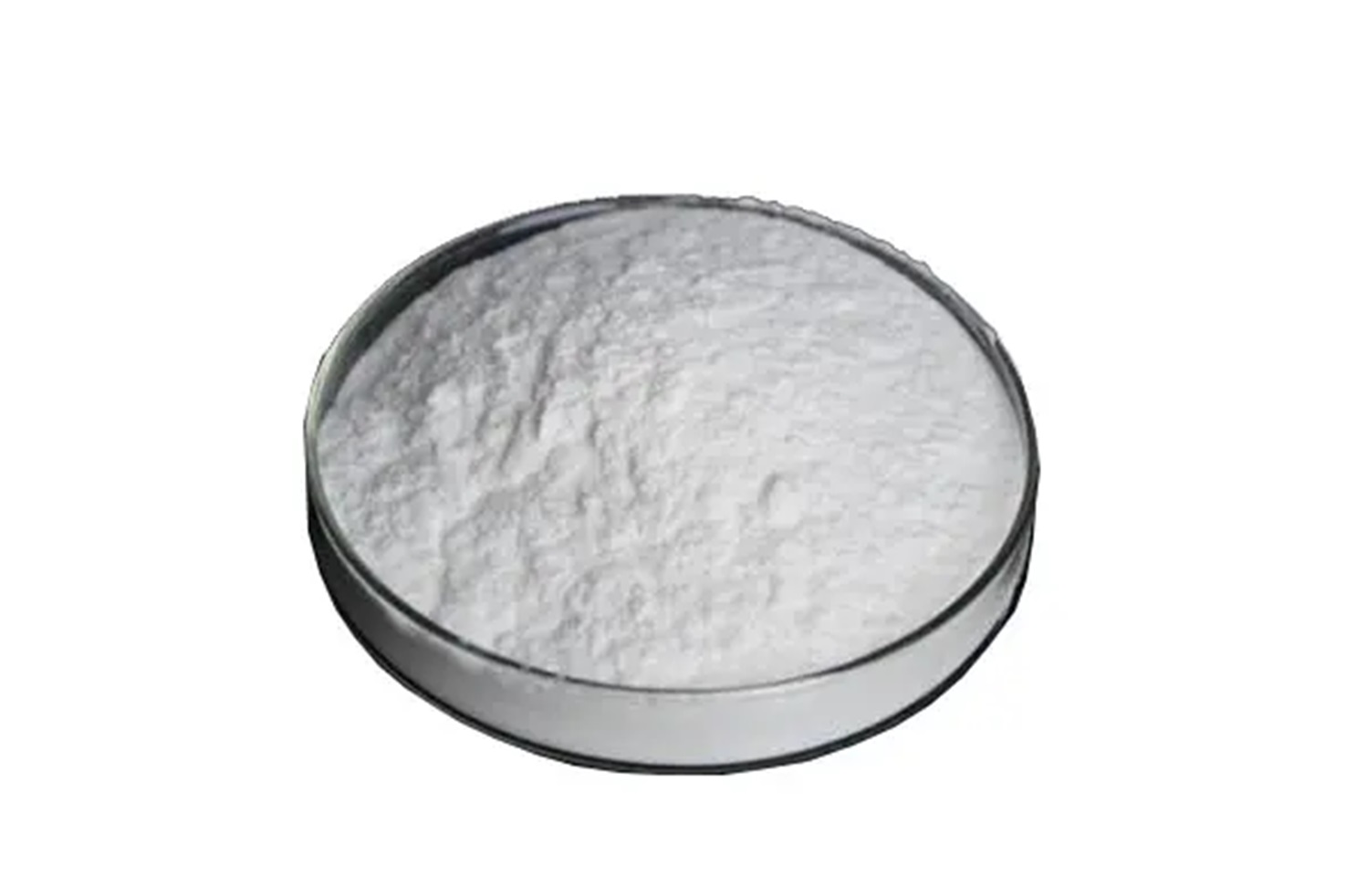
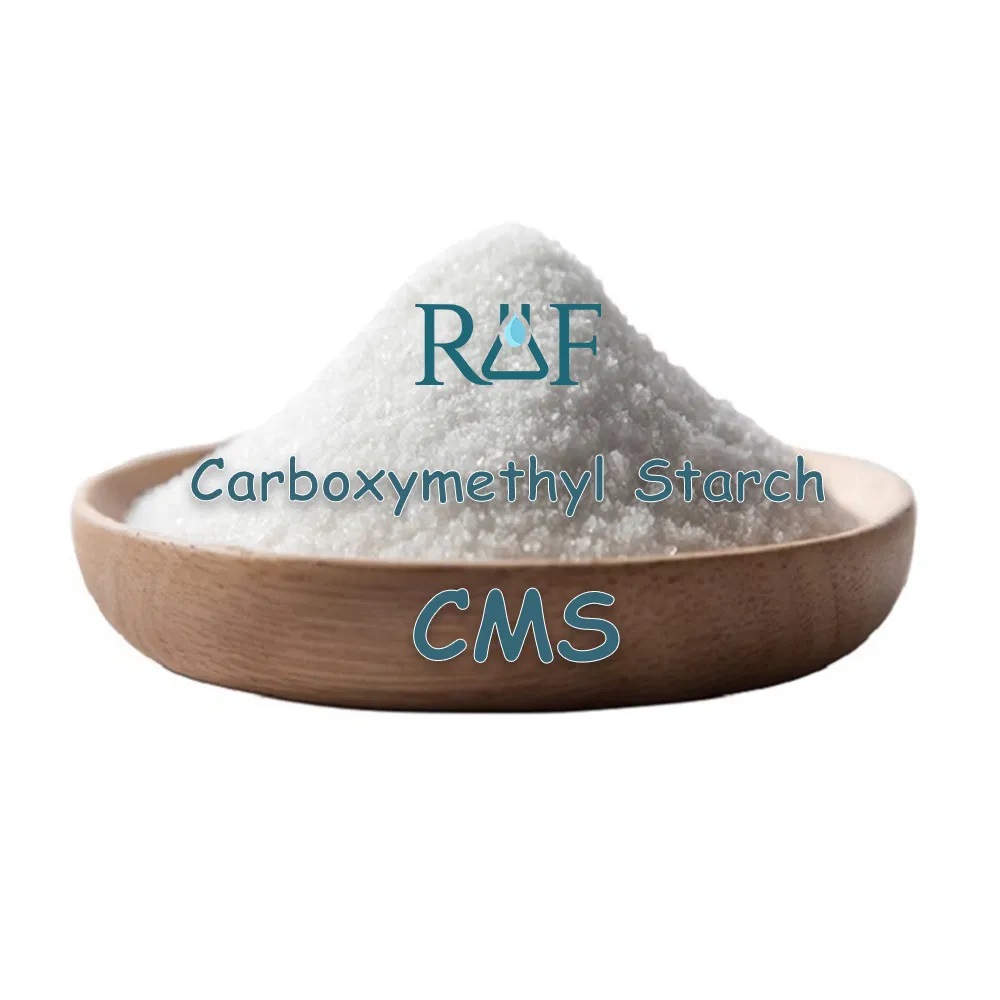
| Appearance | White to slightly yellowish powder |
| Odor | Odorless |
| Taste | Tasteless |
2. PHYSICAL PROPERTIES
| Property | Value |
|---|---|
| Physical State (20°C) | Solid (powder) |
| Appearance | White to slightly yellowish, free-flowing powder |
| Odor | Odorless |
| Solubility in Water | Soluble (forms colloidal solution) |
| Solubility in Organic Solvents | Insoluble in alcohol, ether, chloroform |
| pH (1% solution) | Typically 6.0 – 8.5 (neutral to slightly alkaline) |
| Bulk Density | 0.4 – 0.8 g/cm³ (typical) |
| Hygroscopicity | Absorbs heat and moisture |
3. CHEMICAL PROPERTIES
| Property | Information |
|---|---|
| Chemical Type | Starch ether / Carboxymethyl starch |
| Ionic Character | Anionic |
| Molecular Weight | Variable (depends on degree of substitution and starch source) |
| Degree of Substitution (DS) | 0.2 – 0.8 (typical industrial grade) |
| Reactivity | Chemically inert; does not react with most chemicals |
| pH Stability | Stable over a wide pH range (2 – 12) |
| Thermal Stability | Degrades at high temperatures (>200°C) |
| Toxicity | Non-toxic, safe for use in food and pharmaceutical applications |
Key Features:
-
Water-soluble anionic polymer
-
Forms viscous colloidal solutions
-
Thickening, suspending, dispersing, emulsifying, binding, water-retention, and film-forming properties
-
Non-toxic, odorless, tasteless
-
Heat and moisture absorbent
4. GRADES & TYPES
| Grade | Viscosity (mPa·s) | Degree of Substitution | Applications |
|---|---|---|---|
| High Viscosity CMS | 1,000 – 5,000+ | Low to medium | Thickener, textile printing, drilling fluids |
| Medium Viscosity CMS | 300 – 1,000 | Medium | Coatings, adhesives, personal care |
| Low Viscosity CMS | 20 – 300 | High | Paper coating, pharmaceutical binders |
| Food Grade CMS | 100 – 1,000 | Medium | Food thickening, stabilization |
| Pharmaceutical Grade | 50 – 500 | Medium to high | Tablet binder, disintegrant |
| Industrial Grade | 200 – 2,000 | Low to medium | Oil drilling, textiles, construction |
5. FUNCTIONAL PROPERTIES
| Property | Description |
|---|---|
| Thickening | Increases viscosity of aqueous systems |
| Suspension | Keeps solid particles suspended in liquid |
| Dispersion | Helps disperse solid particles uniformly |
| Emulsification | Stabilizes oil-in-water emulsions |
| Binding / Adhesion | Provides adhesive and binding properties |
| Water Retention | Holds water; reduces water loss |
| Film Formation | Forms flexible, transparent films |
| Stabilization | Stabilizes formulations against separation |
| Protective Colloid | Acts as a protective colloid in dispersions |
6. APPLICATIONS
6.1. Textile Industry
| Application | Function |
|---|---|
| Warp Sizing | Sizing agent for textile yarns |
| Textile Printing | Thickener for reactive dye printing pastes |
| Fabric Finishing | Improves fabric handle and feel |
| Reactive Dye Printing | Replaces sodium alginate partially or completely |
Advantages in Textile Printing:
-
Soft hand feel after printing
-
Clear print outlines
-
High color yield
-
Easy wash-off
-
Good flowability
6.2. Oil & Gas Drilling
| Application | Function |
|---|---|
| Drilling Fluids (Mud) | Viscosifier, fluid loss control agent |
| Workover & Completion Fluids | Rheology modifier |
| Fracturing Fluids | Thickener, proppant suspension |
Benefits:
-
Controls fluid loss
-
Stabilizes borehole
-
Suspends cuttings
-
Compatible with other drilling fluid additives
6.3. Food Industry
| Application | Function |
|---|---|
| Sauces & Dressings | Thickener, stabilizer |
| Dairy Products | Stabilizer, texture improver |
| Bakery Products | Water retention, texture enhancement |
| Processed Meats | Binder, water retention |
| Soups & Gravies | Thickener |
| Ice Cream | Stabilizer, prevents ice crystal formation |
6.4. Pharmaceutical Industry
| Application | Function |
|---|---|
| Tablet Binder | Binds tablet ingredients together |
| Tablet Disintegrant | Promotes tablet disintegration |
| Suspensions | Suspending agent |
| Topical Gels | Gelling agent |
| Excipient | General pharmaceutical excipient |
6.5. Cosmetics & Personal Care
| Application | Function |
|---|---|
| Creams & Lotions | Thickener, stabilizer, emulsifier |
| Shampoos & Body Washes | Viscosity modifier, foam stabilizer |
| Toothpaste | Binder, thickener |
| Hair Care Products | Conditioning agent, thickener |
| Face Masks | Film former, thickener |
6.6. Paper Industry
| Application | Function |
|---|---|
| Paper Surface Sizing | Improves paper strength and printability |
| Dry Strength Agent | Increases paper dry strength |
| Coating Binder | Binder for paper coatings |
| Cardboard Production | Improves board strength |
6.7. Construction & Building Materials
| Application | Function |
|---|---|
| Tile Adhesives | Thickener, water retention |
| Cement-based Mortars | Rheology modifier, water retention |
| Gypsum Plasters | Thickener, water retention |
| Paints & Coatings | Rheology modifier, stabilizer |
6.8. Environmental Engineering
| Application | Function |
|---|---|
| Wastewater Treatment | Coagulant aid, flocculant |
| Sludge Dewatering | Conditioning agent |
6.9. Other Applications
| Application | Function |
|---|---|
| Detergents | Soil suspension, anti-redeposition agent |
| Adhesives | Binder, thickener |
| Pesticides | Suspending agent, stabilizer |
| Ceramics | Binder, plasticizer |
7. TEXTILE PRINTING – COMPARISON WITH SODIUM ALGINATE
| Property | CMS (Carboxymethyl Starch) | Sodium Alginate |
|---|---|---|
| Cost | Lower | Higher |
| Viscosity | Adjustable (low to high) | High |
| Color Yield | High | High |
| Hand Feel (after printing) | Soft | Very soft |
| Wash-off | Good | Excellent |
| Sharpness of Print | Good | Excellent |
| Availability | Widely available | Limited |
| Compatibility with Reactive Dyes | Good | Excellent |
| Partial Replacement | Can replace 30-70% | – |
8. QUALITY SPECIFICATIONS (TYPICAL – Industrial Grade)
| Parameter | Specification |
|---|---|
| Appearance | White to slightly yellowish powder |
| Degree of Substitution (DS) | 0.2 – 0.8 |
| Viscosity (2% solution, 20°C) | 100 – 2,000 mPa·s (varies by grade) |
| pH (1% solution) | 6.0 – 8.5 |
| Moisture Content | ≤ 10% |
| Ash Content | ≤ 10% |
| Chloride (as NaCl) | ≤ 5% |
| Glycolate (as Sodium Glycolate) | ≤ 2% |
| Heavy Metals | ≤ 10 ppm (food/pharma grade) |
9. STORAGE & HANDLING
| Parameter | Information |
|---|---|
| Storage Conditions | Cool, dry, well-ventilated area |
| Protect From | Heat, moisture, direct sunlight |
| Container Requirements | Plastic-lined woven bags or paper-plastic composite bags |
| Shelf Life | 2 years (24 months) when stored properly |
| Stacking Limit | Maximum 20 layers |
| Hygroscopicity | Absorbs moisture – keep container tightly sealed |
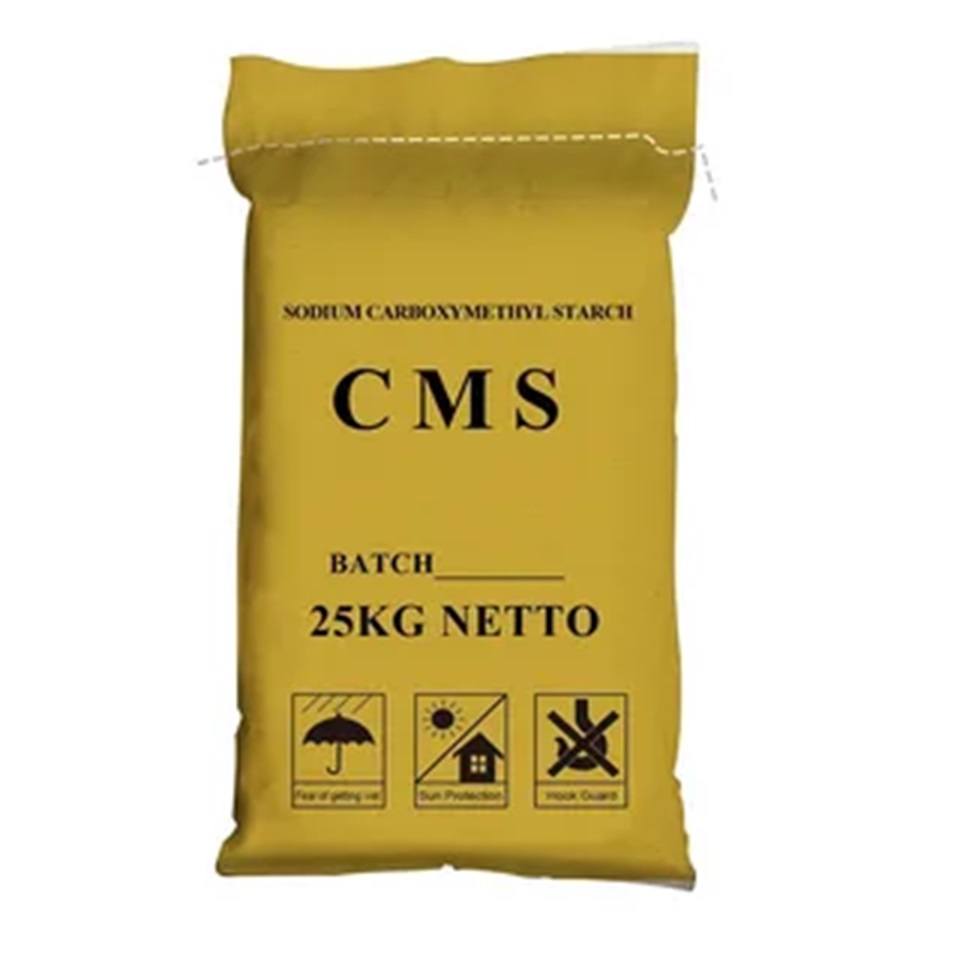
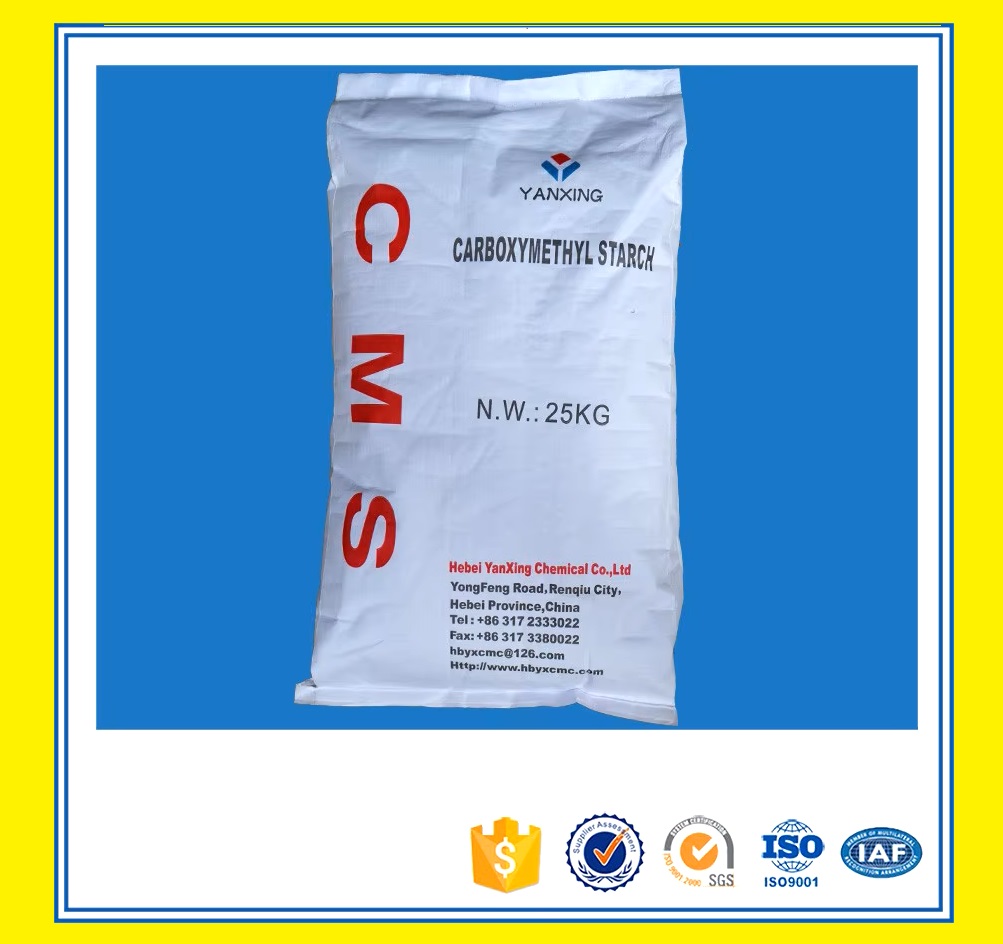
| Packaging Options | 25 kg plastic-lined woven bags, paper-plastic composite bags, or custom packaging |
10. SAFETY & HEALTH INFORMATION
| Parameter | Information |
|---|---|
| Toxicity | Non-toxic; safe for food and pharmaceutical use |
| Skin Irritation | Not an irritant |
| Eye Irritation | May cause mechanical irritation (dust) |
| Inhalation | Avoid breathing dust |
| GHS Classification | Not classified as hazardous (generally) |
First Aid Measures
| Exposure Route | Action |
|---|---|
| Inhalation | Remove to fresh air. |
| Skin Contact | Wash with soap and water. |
| Eye Contact | Rinse with plenty of water for 15 minutes. |
| Ingestion | Rinse mouth. Drink water. No specific antidote. |
11. ENVIRONMENTAL INFORMATION
| Parameter | Information |
|---|---|
| Biodegradability | Readily biodegradable |
| Aquatic Toxicity | Low (non-toxic to aquatic life) |
| Waste Disposal | Dispose according to local regulations; can be incinerated or landfilled |
12. REGULATORY INFORMATION
| Region | Status |
|---|---|
| Food Grade | Approved as food additive (varies by country – E number not assigned for CMS typically) |
| Pharmaceutical | Approved excipient (pharmacopeia grades available) |
| FDA | Generally recognized as safe (GRAS) for food applications |
| REACH (EU) | Registered for industrial uses |
| Turkey (KKDIK) | Compliant with local regulations |
13. SYNONYMS & OTHER NAMES
| Turkish Name | English Name |
|---|---|
| Karboksimetil Nişasta | Carboxymethyl Starch |
| Karboksimetil Nişasta Sodyum Tuzu | Sodium Carboxymethyl Starch |
| CMS | CMS |
| Modifiye Nişasta | Modified Starch |
| Nişasta Eteri | Starch Ether |
| Karboksimetil Selüloz Nişasta | Carboxymethyl Cellulose Starch (incorrect – different from CMC) |
Database Identifiers:
-
CAS: 9057-06-1
-
EC: Not assigned (polymer)
14. COMPARISON WITH CARBOXYMETHYL CELLULOSE (CMC)
| Property | CMS (Carboxymethyl Starch) | CMC (Carboxymethyl Cellulose) |
|---|---|---|
| Source | Starch (corn, potato, wheat) | Cellulose (wood pulp, cotton) |
| Cost | Lower | Higher |
| Viscosity (at same concentration) | Lower | Higher |
| Salt Tolerance | Better | Moderate |
| Acid Tolerance | Better | Moderate |
| Biological Origin | Grain-based | Plant fiber-based |
| Primary Applications | Textiles, drilling, food | Food, pharma, cosmetics |
15. PRODUCTION PROCESS
| Stage | Description |
|---|---|
| 1. Starch Source | Natural starch (corn, potato, wheat, tapioca) is used as raw material |
| 2. Alkaline Activation | Starch is treated with alkali (NaOH) to activate hydroxyl groups |
| 3. Etherification | Activated starch reacts with sodium monochloroacetate (SMCA) |
| 4. Carboxymethylation | Carboxymethyl groups (-CH₂COOH) are introduced into starch molecules |
| 5. Neutralization | Excess alkali is neutralized (typically with acid) |
| 6. Washing | By-products (salt, glycolate) are washed away |
| 7. Drying | Purified CMS is dried |
| 8. Milling | Dried product is milled to desired particle size |
| 9. Packaging | Final product is packaged |
Reaction Equation (Simplified):
Starch-OH + ClCH₂COONa + NaOH → Starch-O-CH₂COONa + NaCl + H₂O
16. SUMMARY
Carboxymethyl Starch (CMS, CAS 9057-06-1) is a water-soluble, anionic polymeric starch ether derivative. It is non-toxic, odorless, tasteless, and exhibits excellent thickening, suspending, dispersing, emulsifying, binding, water-retention, and film-forming properties.
Key Features:
| Feature | Description |
|---|---|
| Appearance | White to slightly yellowish powder |
| Solubility | Soluble in water; insoluble in organic solvents |
| Ionic Character | Anionic |
| Toxicity | Non-toxic |
| pH Stability | Stable over wide pH range (2-12) |
| Functionality | Thickener, stabilizer, binder, film former, water retention |
Main Application Areas:
| Sector | Applications |
|---|---|
| Textile | Warp sizing, reactive dye printing paste, finishing |
| Oil & Gas | Drilling fluids (viscosifier, fluid loss control) |
| Food | Thickener, stabilizer in sauces, dairy, bakery |
| Pharmaceutical | Tablet binder, disintegrant, suspending agent |
| Cosmetics | Thickener, stabilizer, emulsifier |
| Paper | Surface sizing, dry strength agent |
| Construction | Tile adhesives, cement-based mortars |
| Environment | Wastewater treatment, flocculant |
17. IMPORTANT NOTES
-
Not Sodium CMC: CMS (Carboxymethyl Starch) is different from CMC (Carboxymethyl Cellulose). CMS is derived from starch (grain-based), while CMC is derived from cellulose (plant fiber-based). CMS is generally lower in cost and has different rheological properties.
-
Degree of Substitution (DS): The degree of substitution affects water solubility, viscosity, and stability. Higher DS gives better solubility but may reduce viscosity. Typical industrial CMS has DS of 0.2-0.8.
-
Viscosity Grades: CMS is available in various viscosity grades (low, medium, high). Select the appropriate grade based on your application requirements.
-
Textile Printing Advantage: In reactive dye printing, CMS can partially or fully replace sodium alginate, reducing costs while maintaining good print quality, soft hand feel, and high color yield.
-
Hygroscopic Nature: CMS absorbs moisture from air. Keep containers tightly sealed when not in use to prevent caking and degradation.
-
Shelf Life: Properly stored CMS has a shelf life of 2 years. Protect from heat and moisture.
-
Food Grade Availability: Food grade CMS is available for food applications. Verify regulatory approval in your country before use in food products.
-
Pharmaceutical Use: CMS is used as a tablet binder and disintegrant. It is listed in pharmacopeias (e.g., USP/NF, Ph. Eur.) as "Sodium Starch Glycolate" for some grades.
-
Salt Tolerance: CMS has good tolerance to electrolytes (salts), making it suitable for high-salinity applications such as drilling fluids and certain food systems.
-
Cold Water Soluble: CMS dissolves readily in cold water, unlike native starch which requires heating. This is a key advantage for many applications.
Important Disclaimer: This Technical Data Sheet (TDS) is for informational purposes only. For complete safety, handling, storage, and regulatory compliance information, always refer to the official Safety Data Sheet (SDS) provided by the manufacturer/supplier.