We unleash your business potential by maximize the business innovation.
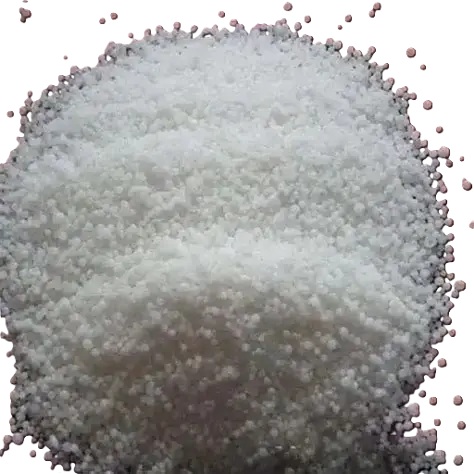
Send EmailCaustic Soda Beads, Beaded Caustic Soda, Caustic Soda Prills, Caustic Soda Pearls, Sodium Hydroxide, 1310-73-2
CAUSTIC SODA PEARLS (SODIUM HYDROXIDE - NaOH)
PRODUCT IDENTIFICATION INFORMATION
| Parameter | Information |
|---|---|
| Product Name | Caustic Soda Pearls |
| Chemical Name (IUPAC) | Sodium Hydroxide |
| Synonyms (Turkish) | Boncuk Kostik, Pelet Kostik, Pril Kostik, Sud Kostik, Sodyum Hidroksit Boncuk |
| Synonyms (English) | Caustic Soda Pearls, Caustic Soda Prills, Sodium Hydroxide Beads, Solid Caustic Soda, Beaded Caustic Soda |
| CAS Number | 1310-73-2 |
| EC Number (EINECS) | 215-185-5 |
| Molecular Formula | NaOH |
| Molecular Weight | 39.997 g/mol |
| Appearance | White, spherical beads (pearls/prills) |
CHEMICAL STRUCTURE
Sodium Hydroxide (NaOH)
Na⁺ — OH⁻
Molecular Formula: NaOH
SMILES: [OH-].[Na+]
InChI: InChI=1S/Na.H2O/h;1H2/q+1;/p-1
InChIKey: HEMHJVSKTPXQMS-UHFFFAOYSA-M
Structure: Ionic compound; Sodium cation (Na⁺) and hydroxide anion (OH⁻); Strongly basic character.
SECTION 1: CHEMICAL IDENTITY AND DESCRIPTION
| Parameter | Information |
|---|---|
| Product Name | Caustic Soda Pearls |
| Chemical Name (IUPAC) | Sodium Hydroxide |
| Synonyms (Turkish) | Boncuk Kostik, Pelet Kostik, Pril Kostik, Sud Kostik, Sodyum Hidroksit Boncuk |
| Synonyms (English) | Caustic Soda Pearls, Caustic Soda Prills, Sodium Hydroxide Beads, Solid Caustic Soda, Beaded Caustic Soda |
| CAS Number | 1310-73-2 |
| EC Number (EINECS) | 215-185-5 |
| Molecular Formula | NaOH |
| Molecular Weight | 39.997 g/mol |
| Chemical Class | Inorganic compound; Strong base; Metal hydroxide; Alkali |
| Physical State (20°C) | Solid (spherical beads/pearls/prills) |
| Odor | Odorless |
| Color | White |
| Taste | Sharp, bitter, soapy (do not ingest!) |
SECTION 2: PHYSICAL AND CHEMICAL PROPERTIES
| Property | Value | Test Method / Note |
|---|---|---|
| Appearance | White, spherical beads (pearls/prills) | Visual |
| Odor | Odorless | Olfactometric |
| Molecular Weight | 39.997 g/mol | Calculated |
| Density (20°C) | 2.13 g/cm³ | ASTM D4052 |
| Melting Point | 318°C | DSC |
| Boiling Point | 1,388°C | – |
| Solubility in Water (0°C) | 42 g/100 mL (exothermic) | General Method |
| Solubility in Water (20°C) | 109 g/100 mL (exothermic) | General Method |
| Solubility in Water (100°C) | 347 g/100 mL (exothermic) | General Method |
| Solubility in Alcohol | Limited solubility | General Method |
| pH (1% Solution) | ~13 – 14 (strongly basic) | pH Meter |
| Vapor Pressure | Negligible | – |
| Hygroscopicity | VERY HIGH (absorbs moisture) | – |
| Deliquescence | Absorbs moisture and CO₂ from air, liquefies | – |
| Thermal Stability | Stable up to high temperatures | – |
| Carbonation | Reacts with CO₂ to form sodium carbonate | – |
| Heat of Dissolution | ~44.5 kJ/mol (exothermic) | – |
| Flowability | High (pearl form) | – |
| Dusting | Low (pearl form) | – |
SECTION 3: SODIUM HYDROXIDE FORMS COMPARISON
| Property | Caustic Soda Pearls | Caustic Soda Flakes | Liquid Caustic Soda | Caustic Soda Powder |
|---|---|---|---|---|
| Form | Spherical beads | Thin flakes | Liquid (48-50% NaOH) | Fine powder |
| NaOH Content | ≥ 99% | ≥ 98% | 48 – 50% | ≥ 98% |
| Dusting | Very low | Moderate | None | High |
| Flowability | Excellent | Good | Excellent | Poor |
| Auto-Dosing Systems | Excellent compatibility | Moderate compatibility | Excellent compatibility | Poor |
| Dissolution Rate | Fast | Moderate | Ready | Very fast |
| Transport Cost | Low (solid) | Low (solid) | High (water transport) | Low (solid) |
| Hygroscopicity | High | High | – | Very high |
| Primary Use | Industrial, food, pharmaceutical | Industrial | Industrial, water treatment | Industrial |
SECTION 4: CHEMICAL PROPERTIES AND REACTIVITY
| Parameter | Information |
|---|---|
| Chemical Character | Strong base (alkali); Strong hydroxide ion source; Corrosive; Hygroscopic |
| Stability | Stable under normal conditions; Absorbs moisture and CO₂ from air (carbonation); Stable up to high temperatures |
| Reactivity | Reacts with acids to form salt and water (exothermic neutralization); Reacts with fats to form soap (saponification); Reacts with amphoteric metals to form hydrogen gas; Reacts with CO₂ to form sodium carbonate |
| Incompatible Materials | Acids (violent exothermic reaction), aluminum (H₂ gas), zinc (H₂ gas), tin (H₂ gas), brass (H₂ gas), strong oxidizing agents, organic materials (corrodes) |
| Polymerization | Does not polymerize |
| Decomposition Products (Heating) | Sodium oxide (Na₂O) and water (at very high temperatures) |
| Acid Neutralization | NaOH + HCl → NaCl + H₂O (exothermic) |
| Saponification Reaction | NaOH + Fat → Soap + Glycerin |
| Carbonation | 2NaOH + CO₂ → Na₂CO₃ + H₂O |
| Amphoteric Metal Reaction | 2Al + 2NaOH + 6H₂O → 2Na[Al(OH)₄] + 3H₂↑ |
| Hydrolysis | Fully ionizes in water to Na⁺ and OH⁻ ions |
| Heat of Dissolution | Exothermic (releases heat) |
| pH Effect | Raises pH to 14 in water |
SECTION 5: PRODUCTION METHOD (PEARL/PRIL FORM)
Method 1: Chlor-Alkali Electrolysis (Membrane Cell Technology)
Reaction: 2NaCl + 2H₂O → 2NaOH + Cl₂↑ + H₂↑
Description: Refined salt (NaCl) is dissolved in pure water to form saturated brine; The solution is purified to remove impurities (calcium, magnesium); It is sent to electrolysis cells with ion-selective membranes; Direct current is applied; The cell produces 32% liquid caustic soda (NaOH solution); Chlorine gas (Cl₂) and hydrogen gas (H₂) are released as by-products.
Method 2: Concentration (Evaporation)
Process: 32% NaOH → 50% NaOH (concentration)
Description: The dilute solution from electrolysis is concentrated in multi-stage vacuum evaporators to remove water, producing 50% concentrated solution; This solution is fed to fusion furnaces (molten salt kettles) for final concentration.
Method 3: Pearlization / Prilling (THE MOST CRITICAL STEP)
Process: Molten NaOH → Dropping → Cooling → Pearls
Description: Molten NaOH (approximately 320-350°C) is dropped downward through special perforated baskets or spraying nozzles at the top of a tall Prilling Tower; The droplets free-fall through a stream of dry and cold air blown upward from the bottom of the tower; During free-fall, the droplets solidify; Due to surface tension, perfectly round pearl (pellet) forms are created; This method produces the highest purity (up to 99%) and lowest moisture content.
Method 4: Cooling and Packaging
Process: Pearls → Cooling → Packaging
Description: Pearls collected at the tower bottom are cooled to ambient temperature in heat exchangers; Due to their hygroscopic (moisture-absorbing) nature, they are packaged in special kraft bags with aluminum foil laminate and moisture barriers (typically 25 kg).
By-products: The released Chlorine Gas (Cl₂) is used in PVC and disinfectant production; Hydrogen Gas (H₂) is used for energy generation or hydrogen peroxide production.
SECTION 6: FUNCTIONAL PROPERTIES AND MECHANISM OF ACTION
| Property | Description |
|---|---|
| Strong Base / pH Regulator | Fully ionizes in water to provide high pH; Neutralizes acidic solutions; Raises pH to 14; Used in water treatment and process control |
| Saponifying Agent | Reacts with fats and fatty acids to form soap (saponification); Used in industrial and household soap production; Removes greasy soils |
| Mercerizing Agent (Textile) | Swells and modifies cotton fiber structure; Imparts luster, strength, and dye uptake capacity to fibers; Used at 15-25% concentration |
| Desizing / Scouring (Textile) | Removes natural oils, waxes, and impurities from raw fabric; Used with wetting agents and detergents; Used at 2-4% concentration |
| Lignin Solvent (Paper) | Dissolves wood lignin in the Kraft process; Liberates cellulose fibers; Critical in pulp and paper production |
| Debittering (Food) | Removes bitter components from olives, cocoa, and other foods; Food grade (E524) must be used; Used at 1.5-2.5% concentration |
| Industrial Cleaning / CIP | Saponifies proteins and fats for cleaning; Used in food plant line cleaning (CIP); Used at 1-2% concentration |
| Resin Regeneration (Water Treatment) | Regenerates ion exchange resins; Used in water softening; Restores resin to original form |
| Chemical Synthesis Reagent | Used as reagent in organic and inorganic syntheses; Critical in production of detergents, dyes, pharmaceuticals, and other chemicals |
| Bauxite Refining (Aluminum) | Used in aluminum oxide (Al₂O₃) extraction from bauxite ore (Bayer process); First step in aluminum production |
SECTION 7: MAIN APPLICATION AREAS AND DOSAGES
| Industry | Application Area | Recommended Concentration | Mixing Ratio (Caustic : Water) |
|---|---|---|---|
| Food Industry | Olive Debittering | 1.5 – 2.5% | 1.5 – 2.5 kg / 100 L Water |
| Food Industry | Pretzel / Bagel Surface Glazing | 0.5 – 1.0% | 0.5 – 1.0 kg / 100 L Water |
| Textile | Mercerization (Cotton Brightening) | 15 – 25% | 15 – 25 kg / 100 L Water |
| Textile | Desizing and Scouring | 2 – 4% | 2 – 4 kg / 100 L Water |
| Industrial Cleaning | Heavy Oil and Grease Removal | 5 – 10% | 5 – 10 kg / 100 L Water |
| CIP (Clean-in-Place) | Food Plant Line Cleaning | 1 – 2% | 1 – 2 kg / 100 L Water |
| Water Treatment | pH Balancing (Neutralization) | 0.05 – 0.1% | 50 – 100 g / 100 L Water |
| Pulp & Paper | Kraft Pulping | 8 – 12% (Na₂O equivalent) | Calculated for process digesters |
| Soap Making | Cold Process Soap | Stoichiometric Ratio | Varies by oil type |
| Drain Opening | Household / Industrial Clogs | 15 – 20% | 200 g directly to drain |
SECTION 8: INDUSTRY SUITABILITY AND QUALITY STANDARDS
| Industry | Application Area | Required Quality | Mandatory Certification & Standard |
|---|---|---|---|
| Textile | Mercerization, pretreatment | Technical Grade | ISO 9001, REACH |
| Pulp & Paper | Kraft process, de-inking | Technical Grade | ISO 9001, REACH |
| Chemicals & Detergents | Soap, bleach, LABSA neutralization | Technical Grade | ISO 9001, REACH |
| Water Treatment | pH adjustment, resin regeneration | Technical Grade | ISO 14001, REACH |
| Food Industry | Olive debittering, cocoa processing, pretzels | Food Grade | FCC, E524, ISO 22000, HACCP |
| Pharmaceutical & Cosmetics | API synthesis, pH adjustment | Pharmaceutical Grade | GMP, USP-NF, EP |
| Petroleum & Metals | Drilling mud, aluminum production | Technical Grade | ISO 9001 |
Critical Warning: Caustic soda used in food or pharmaceutical industries must be analyzed for heavy metal content (Mercury, Lead, Arsenic).
SECTION 9: QUALITY SPECIFICATIONS (TYPICAL)
| Parameter | Technical Grade | Food Grade (E524) | Pharmaceutical Grade (USP/EP) | Test Method |
|---|---|---|---|---|
| Appearance | White beads | White beads | White beads | Visual |
| Assay (NaOH) | ≥ 99.0% | ≥ 99.0% | ≥ 99.0% | Titrimetric |
| Sodium Carbonate (Na₂CO₃) | ≤ 0.5% | ≤ 0.5% | ≤ 0.5% | Titrimetric |
| Sodium Chloride (NaCl) | ≤ 0.05% | ≤ 0.03% | ≤ 0.02% | Titrimetric |
| Sodium Sulfate (Na₂SO₄) | ≤ 0.05% | ≤ 0.03% | ≤ 0.02% | Gravimetric |
| Iron (Fe) | ≤ 10 ppm | ≤ 5 ppm | ≤ 2 ppm | AAS / ICP |
| Lead (Pb) | ≤ 5 ppm | ≤ 2 ppm | ≤ 1 ppm | AAS / ICP |
| Arsenic (As) | ≤ 3 ppm | ≤ 1 ppm | ≤ 0.5 ppm | AAS / ICP |
| Mercury (Hg) | ≤ 1 ppm | ≤ 0.5 ppm | ≤ 0.1 ppm | AAS / ICP |
| Cadmium (Cd) | ≤ 1 ppm | ≤ 0.5 ppm | ≤ 0.2 ppm | AAS / ICP |
| Moisture Content | ≤ 0.5% | ≤ 0.3% | ≤ 0.2% | Gravimetric |
| Particle Size (Beads) | 0.5 – 2.5 mm | 0.5 – 2.5 mm | 0.5 – 2.5 mm | Sieve Analysis |
SECTION 10: TOXICOLOGICAL PROFILE
| Parameter | Value |
|---|---|
| Acute Oral Toxicity (LD50, Rat) | ~ 500 mg/kg (high toxicity; corrosive) |
| Acute Dermal Toxicity | Causes severe burns; Corrosive |
| Acute Inhalation Toxicity | Severe respiratory tract irritation and damage |
| Skin Irritation | Causes severe skin burns and ulcers (H314) |
| Eye Irritation | Causes serious eye damage (H318) |
| Respiratory Irritation | Severe respiratory tract irritation and damage |
| Chronic Toxicity | Prolonged exposure causes skin ulcers, respiratory problems |
| Carcinogenicity | Not classified as carcinogenic |
| Mutagenicity | Not classified as mutagenic |
| Reproductive Toxicity | Not classified as reproductive toxic |
| Target Organs | Eyes, skin, respiratory system, gastrointestinal system |
| Occupational Exposure Limit (8h TWA) | ACGIH TLV: 2 mg/m³ (ceiling limit) |
| Special Toxicity Note | Corrosive – causes severe burns; Ingestion causes severe internal burns; Keep away from skin and mucous membranes; Airborne NaOH particles can cause lung damage; Food grade products are still not safe for direct consumption – avoid ingestion |
SECTION 11: GHS CLASSIFICATION AND LABELING
GHS Classification (in accordance with CLP and UN GHS):
| Hazard Class | Category | H-Statement |
|---|---|---|
| Skin Corrosion/Irritation | Category 1A | H314 |
| Serious Eye Damage | Category 1 | H318 |
| Aquatic Toxicity (Chronic) | Category 3 | H412 |
Signal Word: DANGER
Hazard Pictograms: GHS05 (Corrosion)
Hazard Statements (H-Codes):
| Code | Statement |
|---|---|
| H314 | Causes severe skin burns and eye damage |
| H318 | Causes serious eye damage |
| H412 | Harmful to aquatic life with long-lasting effects |
NFPA 704 Hazard Classification:
| Health | Flammability | Reactivity | Special |
|---|---|---|---|
| 3 | 0 | 1 | - |
| (Serious health hazard – corrosive) | (Will not burn) | (Moderate reactivity – H₂ with metals) | (None) |
UN Number: UN 1823 (Sodium hydroxide, solid)
Hazard Class: 8 (Corrosive substances)
SECTION 12: PRECAUTIONARY STATEMENTS (P-CODES)
| Code | Statement |
|---|---|
| P260 | Do not breathe dust/fume/gas/mist/vapors/spray |
| P264 | Wash hands thoroughly after handling |
| P280 | Wear protective gloves/protective clothing/eye protection/face protection |
| P301+P330+P331 | IF SWALLOWED: Rinse mouth. Do NOT induce vomiting |
| P303+P361+P353 | IF ON SKIN (or hair): Remove immediately all contaminated clothing. Rinse skin with water/shower |
| P304+P340 | IF INHALED: Remove person to fresh air and keep comfortable for breathing |
| P305+P351+P338 | IF IN EYES: Rinse cautiously with water for several minutes. Remove contact lenses if present and continue rinsing |
| P310 | Immediately call a POISON CENTER/doctor |
| P363 | Wash contaminated clothing before reuse |
| P403+P233 | Store in a well-ventilated place. Keep container tightly closed |
| P501 | Dispose of contents/container in accordance with local/regional/national/international regulations |
SECTION 13: FIRST AID MEASURES
| Exposure Route | Action to Take |
|---|---|
| Inhalation | Remove to fresh air immediately. If breathing is difficult, give oxygen. If breathing stops, perform artificial respiration. Seek immediate medical attention. |
| Skin Contact | Remove contaminated clothing immediately. Rinse skin with plenty of water for at least 15 minutes. Seek medical attention for chemical burns. |
| Eye Contact | Rinse immediately with plenty of water for at least 15 minutes. Keep eyelids open. Remove contact lenses if present. Seek immediate medical attention. |
| Ingestion | Rinse mouth. Do NOT induce vomiting. Drink water or milk (to dilute). Seek immediate medical attention. |
| General | Corrosive – causes severe burns; All exposures require immediate medical attention. |
SECTION 14: FIREFIGHTING MEASURES
| Parameter | Information |
|---|---|
| Fire Hazard | Not flammable. |
| Hazards Arising from Fire | May react with metals to form hydrogen gas (explosive); May release toxic sodium oxide fumes when heated |
| Suitable Extinguishing Media | Use extinguishing media suitable for surrounding fire. Water spray, CO₂, dry chemical powder, foam. |
| Unsuitable Extinguishing Media | None |
| Special Protective Equipment | Self-contained breathing apparatus (SCBA), full protective clothing (acid-resistant). |
| Special Precautions | Prevent dust from entering sewers and waterways. Avoid contact with water (exothermic reaction). |
SECTION 15: STORAGE AND SHELF LIFE
| Parameter | Information |
|---|---|
| Storage Conditions | Store in a cool, dry, well-ventilated area; PROTECT FROM MOISTURE and CO₂; Keep away from acids and reactive metals. |
| Container Requirements | Tightly closed, moisture-proof containers (PE-lined kraft bags, HDPE drums). Aluminum foil-laminated moisture barrier bags. |
| Materials to Protect From | Moisture, carbon dioxide (CO₂), acids, aluminum, zinc, tin, brass |
| Shelf Life | 24 – 36 months (in unopened original packaging, under proper storage conditions). |
| Stability Note | Very hygroscopic – absorbs moisture from air; Reacts with CO₂ to form sodium carbonate; Effectiveness decreases if left open; Keep container tightly closed after opening. |
| Special Storage Requirements | Store separately from acids; Store in a dry and well-ventilated area; Use moisture-barrier containers; Opened bags must be resealed immediately. |
SECTION 16: PACKAGING OPTIONS
| Packaging Type | Quantity | Material |
|---|---|---|
| Moisture Barrier Kraft Bag | 25 kg | Aluminum foil-laminated, PE-lined kraft paper bag |
| PE Bag | 5 kg, 10 kg, 25 kg | PE bag (inner-lined, sealed, moisture-proof) |
| Plastic Drum | 25 kg, 50 kg | HDPE / Polypropylene (moisture-proof) |
| Fiber Drum | 25 kg, 50 kg | PE-lined fiberboard drum |
| FIBC / Big Bag | 500 kg, 1000 kg | PE-lined, moisture-resistant PP woven bag (with inner liner) |
| IBC Container | 1000 kg | Corrosion-resistant coated HDPE |
SECTION 17: TRANSPORT INFORMATION
| Parameter | Information |
|---|---|
| UN Number | UN 1823 (Sodium hydroxide, solid) |
| Hazard Class | 8 (Corrosive substances) |
| Packing Group | II |
| ADR/RID | Class 8, PG II, UN 1823 |
| IMDG Code | Class 8, PG II, UN 1823 (Marine Pollutant: Yes) |
| IATA (Air) | Class 8, PG II, UN 1823 |
| Marine Pollutant | Yes |
| Transport Temperature | Ambient temperature; Protect from moisture. |
SECTION 18: REGULATORY STATUS
| Region / Authority | Status |
|---|---|
| European Union | REACH registered; Corrosive substance classification (H314); Food additive E524 (food grade) |
| USA (TSCA) | Listed (TSCA Inventory) |
| USA (FDA) | Approved as food additive (21 CFR – food grade); Approved as pharmaceutical excipient (USP-NF) |
| USA (EPA) | Regulated as hazardous substance (corrosive) |
| Turkey | Industrial chemical; Subject to KKDIK regulation; Food additive E524; Corrosive substance |
| IARC | Not classified |
| NTP | Not listed |
| OSHA | Regulated as corrosive; PEL: 2 mg/m³ (ceiling) |
| California (Prop 65) | Not listed |
| FCC (Food Chemicals Codex) | Listed (E524 – food grade) |
SECTION 19: OTHER NAMES AND SYNONYMS
| Type | Name |
|---|---|
| Turkish Names | Boncuk Kostik, Pelet Kostik, Pril Kostik, Sud Kostik, Sodyum Hidroksit Boncuk |
| English Names | Caustic Soda Pearls, Caustic Soda Prills, Sodium Hydroxide Beads, Solid Caustic Soda, Beaded Caustic Soda |
| Chemical Names | Sodium Hydroxide; NaOH; Caustic Soda; White Caustic |
| CAS Number | 1310-73-2 |
| EC Number | 215-185-5 |
| Molecular Formula | NaOH |
| HS Code | 2815.11 |
| E Number | E524 (food grade) |
| Synonyms | Caustic Soda, Lye, Sodium Hydrate, White Caustic, Sodium Hydroxide Pearls |
SECTION 20: SUMMARY TABLE
| Parameter | Value |
|---|---|
| Product | Caustic Soda Pearls (Sodium Hydroxide) |
| CAS Number | 1310-73-2 |
| Molecular Formula | NaOH |
| Molecular Weight | 39.997 g/mol |
| Appearance | White, spherical beads (pearls/prills) |
| Density | 2.13 g/cm³ |
| Melting Point | 318°C |
| Solubility in Water (20°C) | 109 g/100 mL (exothermic) |
| pH (1% Solution) | ~13 – 14 |
| Primary Function | Strong base, pH regulator, saponifier |
| Main Application Areas | Textile, paper, food (E524), detergents, water treatment, chemicals, pharmaceuticals, aluminum production |
| Shelf Life | 24 – 36 months |
| GHS Signal Word | DANGER |
| UN Number | UN 1823 (Solid, corrosive) |
| Special Properties | Very hygroscopic; Exothermic dissolution; Corrosive; Carbonates; Pearl form: low dust, high flowability |
SECTION 21: CRITICAL WARNINGS AND BEST PRACTICES
CRITICAL WARNINGS:
-
Causes severe skin burns and eye damage (H314). Corrosive substance. Avoid skin and eye contact. Wear full protective equipment.
-
Causes serious eye damage (H318). Wear chemical splash goggles. In case of eye contact, rinse with plenty of water and seek immediate medical attention.
-
Exothermic dissolution in water. ALWAYS ADD CAUSTIC TO WATER, NEVER ADD WATER TO CAUSTIC. Otherwise, suddenly boiling water may cause corrosive liquid to splash with explosion risk.
-
Not flammable but may react with metals (aluminum, zinc, tin, brass) to form hydrogen gas (explosive).
-
Hygroscopic – absorbs moisture from air. Store in tightly closed, moisture-proof containers.
-
Reacts with CO₂ – forms sodium carbonate (Na₂CO₃). Effectiveness decreases if left open.
-
Incompatibilities: Acids (violent exothermic reaction), aluminum (H₂ gas), zinc (H₂ gas), tin (H₂ gas), brass (H₂ gas), strong oxidizing agents.
-
Hygiene Requirement: Wash hands thoroughly after handling. Do not eat, drink, or smoke while using.
-
Food grade (E524) products are still not safe for direct consumption – for processing only.
BEST PRACTICE RECOMMENDATIONS:
Solution Preparation (CRITICAL):
-
ALWAYS ADD CAUSTIC TO WATER, NEVER ADD WATER TO CAUSTIC.
-
Caustic pearls must be added slowly to cold water with stirring.
-
Temperature can suddenly rise above 90°C during dissolution.
-
Container must be stainless steel (316L) or plastic (glass containers not recommended).
-
Use splash shields during mixing (splashing risk).
Storage:
-
Store in a cool, dry, well-ventilated area (<30°C).
-
Store in tightly closed, moisture-proof containers (PE-lined bags, HDPE drums).
-
Keep away from aluminum, zinc, tin, and brass.
-
Store separately from acids.
-
Opened bags must be resealed immediately.
-
Avoid humid areas.
Personal Protective Equipment:
-
Chemical-resistant gloves (nitrile, neoprene, butyl, PVC).
-
Chemical splash goggles (face shield recommended).
-
Acid-resistant protective clothing (special fabric, protective apron).
-
NIOSH-approved N95 or higher dust mask.
-
Safety shower and eyewash station nearby.
-
Closed systems and adequate ventilation.
Hygiene:
-
Wash hands thoroughly after handling.
-
Do not eat, drink, or smoke while using.
-
Remove contaminated clothing and wash before reuse.
-
Shower after handling.
Spill Management:
-
Evacuate area; Wear full protective equipment; Ventilate area.
-
Sweep or shovel dry (avoid contact with water – exothermic).
-
Place in suitable sealed container.
-
Neutralize with acid (PPE first!).
-
Do not allow entry into drains or waterways.
Disposal:
-
Dispose of in accordance with local, regional, and national regulations.
-
Work with licensed waste management companies for neutralization and safe disposal.
-
Do not discharge to sewers (pH imbalance, environmental hazard).
SPECIAL NOTE ON FOOD GRADE (E524) USE:
Caustic soda pearls are approved as food grade with E524 code:
-
Approved Uses: Olive processing (debittering), cocoa alkalization, pretzel/bagel surface glazing, surface treatment of food products.
-
Mandatory Purity: Heavy metal content strictly controlled (Pb ≤ 2 ppm, As ≤ 1 ppm, Hg ≤ 0.5 ppm).
-
Certifications: FCC (Food Chemicals Codex), E524, ISO 22000, HACCP.
-
Post-Processing: After food processing, products must be rinsed at least 3-4 times with drinking water.
-
Warning: Not safe for direct consumption – for processing only.
SPECIAL NOTE ON HEAT OF DISSOLUTION CALCULATIONS:
Caustic soda pearls dissolve exothermically in water (releases heat):
-
Heat of Dissolution: ~44.5 kJ/mol NaOH (or ~1,100 kJ/kg NaOH).
-
Temperature Rise: 1 kg NaOH dissolved in 10 L water raises temperature approximately 25-30°C.
-
Practical Effect: Cold water must be used when preparing solutions; Temperature may reach 90°C during mixing; Container must be stainless steel or plastic; Glass containers may break due to thermal shock.
-
Safety: ALWAYS ADD CAUSTIC TO WATER, NEVER ADD WATER TO CAUSTIC.
LEGAL DISCLAIMER:
The information provided in this document is based on our current knowledge and experience and is presented in good faith. However, as all conditions of use are beyond our control, it does not constitute a binding specification or warranty. This Technical Data Sheet is for informational purposes only. Users are responsible for testing the suitability for their own applications. For complete safety, storage, use, handling, waste, and regulatory compliance information, please refer to the official Safety Data Sheet (SDS/MSDS) provided by the manufacturer/supplier. Prior to using any chemical substance, the Material Safety Data Sheet (MSDS/SDS) must be reviewed and a chemical engineer should be consulted.