We unleash your business potential by maximize the business innovation.
Send EmailConcrete Bleeding Control Admixture, Concrete Water Retention Agent, Anionic Polyacrylamide, APAM, 9003-05-8
CONCRETE WATER RETENTION AGENT (BLEEDING CONTROL ADMIXTURE)
Product Name: Concrete Water Retention Agent
Other Names: Bleeding Control Admixture, Stabilizer, Suspension Agent
Active Ingredient: Anionic Polyacrylamide (APAM)
CAS Number: 9003-05-8
Chemical Class: Synthetic water-soluble polymer
SECTION 1: PRODUCT IDENTIFICATION AND DEFINITION
| Parameter | Information |
|---|---|
| Product Name | Concrete Water Retention Agent |
| Other Names | Bleeding Control Admixture, Stabilizer, Suspension Agent, Anti-Segregation Admixture |
| Active Ingredient | Anionic Polyacrylamide (APAM) |
| CAS Number | 9003-05-8 |
| Chemical Class | Synthetic water-soluble polymer, polyelectrolyte |
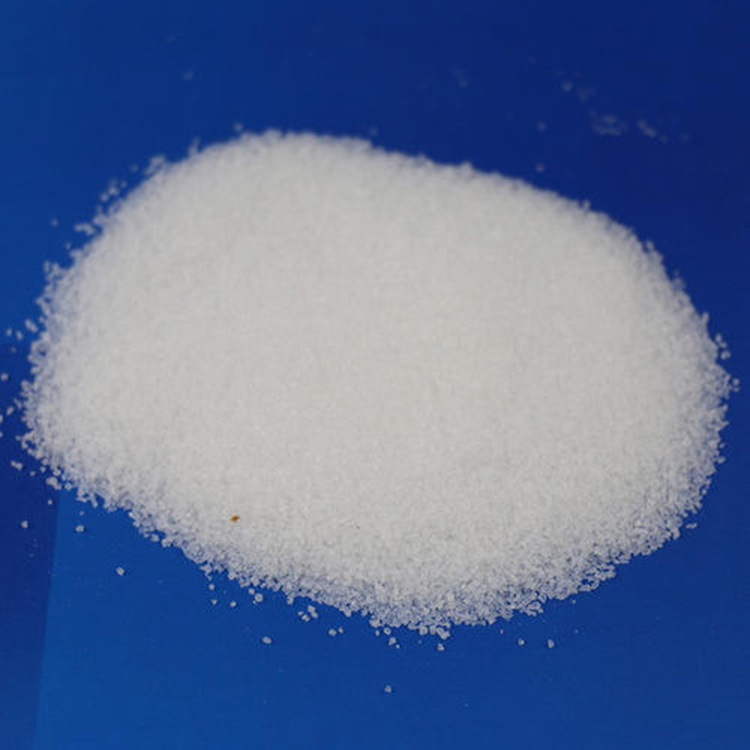
| Appearance | White powder or liquid solution |
| Primary Function | Reduces bleeding (water migration to surface), controls segregation, improves cohesion and homogeneity of fresh concrete |
SECTION 2: CHEMICAL COMPOSITION AND MECHANISM
2.1. Active Ingredient
| Parameter | Information |
|---|---|
| Chemical Name | Anionic Polyacrylamide (APAM) |
| CAS Number | 9003-05-8 |
| Molecular Weight | Variable (high molecular weight typical) |
| Charge Type | Anionic (negatively charged) |
| Functionality | Increases viscosity of mix water; binds fine particles; reduces free water mobility |
2.2. Mechanism of Action
| Mechanism | Description |
|---|---|
| Viscosity Enhancement | Increases the viscosity of the cement paste, preventing free water from migrating to the surface |
| Particle Bridging | Long polymer chains bridge between cement and fine aggregate particles, enhancing cohesion |
| Water Binding | Absorbs and retains free water within the paste matrix |
| Segregation Prevention | Prevents separation of coarse aggregates from the paste |
| Surface Tension Modification | Modifies surface tension of water to reduce bleed channels |
SECTION 3: PHYSICAL PROPERTIES
| Property | Typical Value (Powder) | Typical Value (Liquid) |
|---|---|---|
| Appearance | White to light yellow powder | Clear to slightly hazy liquid |
| Odor | Odorless | Odorless |
| Bulk Density | 0.6 – 0.9 g/cm³ | ~1.0 – 1.2 g/cm³ |
| Solubility | Slowly soluble in cold water; readily soluble in warm water | Fully soluble |
| pH (1% solution) | 6.0 – 8.0 | 6.0 – 8.0 |
| Viscosity (1% solution) | High (200 – 1000 cP) | Variable (depends on concentration) |
| Charge Density | 20 – 40% (anionic) | 20 – 40% (anionic) |
| Molecular Weight | 5 – 20 million g/mol | 5 – 20 million g/mol |
| Chloride Content | None (chloride-free) | None (chloride-free) |
SECTION 4: PRODUCT TYPES AND COMPARISON
4.1. Types of Water Retention Agents
| Type | Active Ingredient | Key Features |
|---|---|---|
| Cellulose Derivatives | Methylcellulose, HPMC, HEC | Good water retention; viscosity modification |
| Synthetic Polymers | Polyacrylamide (APAM), Polyacrylates | Strong water binding; excellent bleeding control |
| Modified Polysaccharides | Welan gum, Diutan gum | Thixotropic properties; shear-thinning behavior |
| Combination Products | Polymer blends with superplasticizers | Balanced workability and stability |
4.2. Comparison with Other Admixtures for Bleeding Control
| Admixture Type | Dosage (% cement) | Bleeding Control | Advantages | Disadvantages |
|---|---|---|---|---|
| Lignosulfonate-based | 0.2 – 0.3% | Weak – primarily improves workability | Low cost, easy availability | Weak bleeding control; lower final strength |
| SNF (Naphthalene-based) | 0.5 – 1.2% | Moderate – reduces water migration but slump loss risk | Strong water reduction; widely available | Cement-sensitive; time-dependent slump loss |
| SMF (Melamine-based) | 0.5 – 1.0% | Moderate – early strength; partially reduces bleeding | High early strength; suitable for precast | Higher cost; limited long-term slump retention |
| PCE (Polycarboxylate Ether) | 0.2 – 0.8% | Very Good – especially effective in SCC and HPC | Superior slump retention; high efficiency | More expensive; careful mix design required |
| Stabilizer/Water Retention Agent | 0.05 – 0.2% | Directly Targets Bleeding and Segregation | Improves homogeneity; enhances surface quality | Limited effect on strength; used with other admixtures |
SECTION 5: PERFORMANCE BENEFITS
| Benefit | Description |
|---|---|
| Bleeding Reduction | Prevents free water from rising to the concrete surface, minimizing bleed channels |
| Segregation Prevention | Prevents separation of coarse aggregates from the cement paste |
| Improved Homogeneity | Ensures uniform distribution of all mix components |
| Enhanced Surface Quality | Produces smoother, more uniform surfaces without water films |
| Increased Durability | Better hydration due to controlled water loss; higher final strength |
| Crack Prevention | Reduces plastic shrinkage cracks by preventing surface water evaporation |
| Improved Workability | Enhances pumpability and placement characteristics |
| Compatibility | Works synergistically with superplasticizers (especially PCE-based) |
SECTION 6: APPLICATION AREAS
| Application | Description |
|---|---|
| Self-Compacting Concrete (SCC) | Maintains stability in highly flowable mixes |
| High-Performance Concrete (HPC) | Prevents bleeding in low w/c ratio mixes |
| Decorative Concrete | Improves surface quality and appearance |
| Thin Section Concrete | Prevents bleeding in thin elements |
| Pumped Concrete | Improves pumpability and reduces blockages |
| Underwater Concrete | Prevents washout and segregation |
| Mass Concrete | Controls bleeding in large pours |
| Precast Concrete | Improves surface finish and reduces rework |
SECTION 7: TYPICAL DOSAGE AND PREPARATION
7.1. Recommended Dosage
| Parameter | Value |
|---|---|
| Typical Dosage Range | 0.05 – 0.2% of cement weight |
| Optimal Dosage | Determined by trial mixes; depends on mix design and temperature |
| Maximum Dosage | Not to exceed manufacturer's recommendation |
7.2. Preparation Instructions
| Form | Preparation Method |
|---|---|
| Powder Form | Dissolve in water to form homogeneous solution; add to concrete mix during batching |
| Liquid Form | Add directly to mixing water or concrete mixer during batching |
7.3. Mixing Instructions
| Step | Description |
|---|---|
| 1 | Add the water retention agent to the mix water or during the mixing cycle |
| 2 | Ensure thorough mixing (minimum 60 seconds after addition) |
| 3 | Adjust superplasticizer dosage if needed to maintain workability |
SECTION 8: QUALITY SPECIFICATIONS
| Parameter | Specification |
|---|---|
| Appearance | White to light yellow powder or clear liquid |
| Active Content | ≥ 90% (powder) |
| Moisture | ≤ 10% (powder) |
| pH (1% solution) | 6.0 – 8.0 |
| Viscosity (1% solution) | ≥ 200 cP |
| Chloride Content | ≤ 0.1% |
| Heavy Metals | ≤ 10 ppm |
| Anionic Charge | 20 – 40% |
SECTION 9: SAMPLE MIX DESIGN (C25/30, Pumpable Concrete)
| Component | Quantity | Notes |
|---|---|---|
| Cement | 350 kg/m³ | CEM I or CEM II |
| Water | 175 kg/m³ | w/c ratio ≈ 0.50 |
| Fine Aggregate (Sand) | 750 kg/m³ | 0-4 mm |
| Coarse Aggregate (Gravel/Crushed Stone) | 1050 kg/m³ | 4-32 mm |
| PCE-based Superplasticizer | 0.8% of cement weight | Maintains workability |
| Water Retention Agent | 0.1% of cement weight | Controls bleeding and segregation |
| Air-Entraining Agent (Optional) | 0.02% of cement weight | For freeze-thaw resistance |
SECTION 10: TROUBLESHOOTING GUIDE
| Problem | Causes | Solutions |
|---|---|---|
| Bleeding | High water content; low fines; admixture incompatibility | - Reduce w/c ratio - Use water retention/stabilizer admixture - Increase fine aggregate proportion |
| Segregation | Excess water; insufficient cohesion; heavy coarse aggregates | - Add stabilizer admixture - Improve aggregate gradation - Reduce water content |
| Slump Loss | Admixture incompatibility; hot weather; long transport time | - Use PCE-based superplasticizer - Add retarder admixture - Optimize transport time |
| Plastic Shrinkage Cracks | Rapid surface evaporation; wind; sun | - Use water retention admixture - Apply curing compounds - Protect from wind and sun |
| Setting Issues | Admixture dosage errors; cement type incompatibility | - Adjust dosage per TDS - Conduct cement-admixture compatibility tests |
SECTION 11: STORAGE AND SHELF LIFE
| Parameter | Information |
|---|---|
| Storage Conditions | Cool (5-35°C), dry, well-ventilated area |
| Container Requirements | Tightly closed, original packaging |
| Protect From | Moisture, heat, direct sunlight, freezing |
| Shelf Life (Powder) | 12-24 months (unopened original packaging) |
| Shelf Life (Liquid) | 6-12 months (unopened original packaging) |
SECTION 12: PACKAGING OPTIONS
| Packaging Type | Quantity | Material |
|---|---|---|
| Multilayer Paper Bag (Powder) | 25 kg | PE-lined kraft paper |
| Plastic Container (Liquid) | 25 kg | HDPE |
| Plastic Drum (Liquid) | 250 kg | HDPE |
| IBC Tote (Liquid) | 1000 – 1400 kg | HDPE |
| Big-Bag (Powder) | 500 – 1000 kg | Polypropylene (with PE liner) |
SECTION 13: SAFETY AND HEALTH INFORMATION
13.1. Classification
| Parameter | Information |
|---|---|
| GHS Classification | Not classified as hazardous (may vary by formulation) |
| Eye Irritation | Mild irritant (powder) |
| Skin Irritation | Mild irritant (powder) |
| Inhalation | Dust may cause respiratory irritation |
13.2. Precautionary Statements
| Code | Statement |
|---|---|
| P261 | Avoid breathing dust |
| P280 | Wear protective gloves and eye protection |
| P305+P351+P338 | IF IN EYES: Rinse cautiously with water for several minutes |
SECTION 14: SUMMARY AND CRITICAL NOTES
Product Summary
| Parameter | Value |
|---|---|
| Product | Concrete Water Retention Agent (Bleeding Control Admixture) |
| Active Ingredient | Anionic Polyacrylamide (APAM) |
| CAS Number | 9003-05-8 |
| Typical Dosage | 0.05 – 0.2% of cement weight |
| Primary Function | Reduces bleeding, controls segregation, improves homogeneity |
Critical Notes
-
Bleeding Control: Water retention agents are specifically designed to prevent bleeding (water migration to the surface) and segregation in fresh concrete.
-
Best Performance: The most effective bleeding control is achieved with a PCE superplasticizer + stabilizer combination.
-
Economical Solutions: Lignosulfonate and SNF admixtures offer limited bleeding control at lower cost.
-
Precast Applications: SMF admixtures provide high early strength but limited long-term slump retention.
-
Surface Quality: Stabilizers are particularly important for decorative concrete and thin sections where surface appearance is critical.
-
Compatibility: These admixtures are typically used in combination with superplasticizers (especially PCE-based).
-
Dosage Sensitivity: Overdosing can extend setting time and negatively affect strength; always follow manufacturer's technical data sheet.
-
Application: Add during mixing; ensure thorough distribution for uniform performance.
-
Alternative Methods: Other approaches to reduce bleeding include reducing w/c ratio, increasing fine aggregate proportion, and optimizing aggregate gradation.
IMPORTANT DECLARATION: This Technical Data Sheet (TDS) is for informational purposes only and has been prepared based on available technical data. The user is responsible for determining the product's suitability for their specific application and for complying with all local, national, and international regulations. For complete safety, storage, use, transport, waste, and regulatory compliance information, refer to the official Safety Data Sheet (SDS/MSDS) provided by the manufacturer/supplier.