We unleash your business potential by maximize the business innovation.
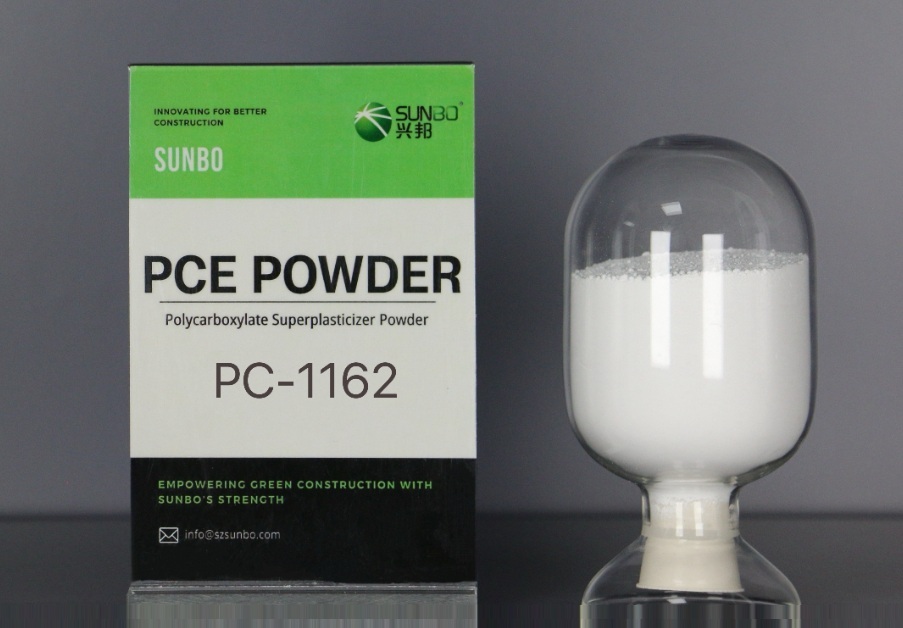
Send EmailWater-reducing Polycarboxylate Superplasticizer Powder, Polycarboxylate Superplasticizer, PCE Superplasticizer, PCE, PC-1162, 37199-81-8
Synonyms / Other Names
-
PCE Superplasticizer
-
Polycarboxylate Ether Superplasticizer
-
Liquiment® 1641 F, Liquiment® 5581 F (commercial names)
-
PCS 16, PCS
-
Polycarboxylate Based Superplasticizer (Solid Type)
-
Polycarboxylate Ether (PCE)
-
Polikarboksilat Süperplastikizatörü (Turkish)
-
Policarboxilato / Policabossilato / Polycarboxylats (various languages)
CAS Numbers
-
CAS No. 37199-81-8 → Commonly referenced for polycarboxylate-based superplasticizers
Product Overview
-
Type: Water-reducing polycarboxylate superplasticizer powder
-
Applications: Ordinary concrete, pumped concrete, self-compacting concrete, precast components, and high-strength concrete
-
Performance:
-
Improves concrete workability
-
Reduces water consumption
-
Increases strength
-
Compatible with other admixtures
-
Technical Data
| Property | Value |
|---|---|
| Appearance | White to light yellow powder |
| Bulk density | 400–700 g/cm³ |
| Moisture content | ≤5% |
| pH (20% solution) | 7–9 |
| Chloride ion content | ≤0.05% |
| Water reduction rate | ≥25% |
| Recommended dosage | 0.06%–2% |
Advantages
-
Stable strength development
-
Good adaptability to different raw materials
Applications
-
Concrete construction
-
Precast concrete
-
Tunnel construction
-
Ready-mix concrete
This additive is positioned as a versatile solution for modern concrete projects, especially where high strength, durability, and efficiency are required.
Powder vs. Liquid Polycarboxylate Superplasticizers
| Criteria | Powder (PCE Powder) | Liquid (PCE Solution) |
|---|---|---|
| Concentration | Very high (often >95% active content) | Typically 40–50% solids, diluted |
| Transport & Storage | Lightweight, lower shipping cost, long shelf life | Heavy due to water content, higher shipping cost |
| Shelf Life | Long, stable if kept dry | Shorter, sensitive to temperature and microbial growth |
| Ease of Use | Needs pre-dissolving in water before use | Ready-to-use, easy dosing in concrete plants |
| Applications | International trade, long-term storage, projects requiring high concentration | Local ready-mix plants, daily dosing, fast operations |
| Cost Impact | More economical for bulk shipping and storage | More practical for on-site use, but higher logistics cost |
Comparison Table
| Parameter | PC-1162 (Sunbo Additives) | Liquiment® 1641 F (BASF) | Liquiment® / Melflux® 5581 F (BASF) |
|---|---|---|---|
| Form | Powder | Powder (solid type PCE) | Powder (classic all-round PCE) |
| Appearance | White to light yellow powder | White powder | White powder |
| Bulk Density | 400–700 g/cm³ | – | – |
| Moisture Content | ≤5% | – | – |
| pH (20% solution) | 7–9 | – | – |
| Chloride Ion Content | ≤0.05% | – | – |
| Water Reduction Rate | ≥25% | High efficiency | High water reduction, excellent fluidification |
| Recommended Dosage | 0.06%–2% | – | – |
| Advantages | Stable strength development, adaptable to raw materials | Solid-type PCE, widely used in cement admixtures | High dosage efficiency, early strength, low retardation, best fluidification of sulphates |
| Applications | Ordinary concrete, pumped concrete, SCC, precast, high-strength | Cement admixtures, concrete superplasticizer | Flowable dry mortars, self-leveling underlayments, grouts, screeds, repair mortars |
Key Insights
-
PC-1162: More general-purpose, designed for concrete (ready-mix, SCC, precast, high-strength).
-
Liquiment® 1641 F: A solid-type PCE used broadly in cement admixtures; versatile but less specialized in mortar systems.
-
Liquiment® / Melflux® 5581 F: Optimized for dry mortar applications (self-leveling, grouts, screeds). Strong in early strength development and fluidification of sulphates.
In short:
-
If your focus is concrete production (ready-mix, SCC, precast) → PC-1162 is more suitable.
-
If you need broad cement admixture compatibility → Liquiment® 1641 F works well.
-
If your projects involve dry mortar systems (floor screeds, repair mortars, SLU) → Liquiment® / Melflux® 5581 F is the better choice.
Sectoral Suitability & Dosage Rates
| Sector / Application | PC-1162 (Sunbo) | Liquiment® 1641 F (BASF) | Liquiment® / Melflux® 5581 F (BASF) | Melflux® Series (General) |
|---|---|---|---|---|
| Ready-Mix Concrete | 0.06% – 2% | 0.05% – 1% | – | 0.05% – 2% |
| Pumped Concrete | 0.06% – 2% | – | – | 0.05% – 2% |
| Self-Compacting Concrete (SCC) | 0.06% – 2% | – | – | 0.05% – 2% |
| Precast Concrete | 0.06% – 2% | – | – | 0.05% – 2% |
| High-Strength Concrete | 0.06% – 2% | – | – | 0.05% – 2% |
| Cement Additives | – | 0.05% – 1% | – | 0.05% – 2% |
| Dry Mortar Systems (Screeds, Grouts, Repair Mortars) | – | – | 0.05% – 1% | 0.05% – 2% |
| Self-Leveling Underlayments (SLU) | – | – | 0.05% – 1% | 0.05% – 2% |
Key Takeaways
-
PC-1162 → Best suited for concrete applications (ready-mix, SCC, precast, high-strength).
-
Liquiment® 1641 F → Optimized for cement-based admixtures, versatile in blended systems.
-
Liquiment® / Melflux® 5581 F → Designed for dry mortar systems (floor screeds, grouts, repair mortars), with strong early strength and fluidity benefits.
-
Melflux® Series → Broad portfolio covering both concrete and mortar applications, offering flexibility across dosage ranges.
Preparation
-
PC-1162 is supplied in powder form.
-
Before use, it should be pre-dissolved in clean water by slowly adding the powder while stirring.
-
A mechanical mixer is recommended to ensure a homogeneous solution.
Dissolution
-
The working solution is typically prepared at 20–40% solid content.
-
The pH should be maintained in the range of 7–9.
-
Dissolution should be carried out at room temperature; avoid high temperatures to preserve stability.
Usage
-
Recommended dosage: 0.06% – 2% of cement weight.
-
Dosage depends on cement type, water-to-cement ratio, and the desired workability and strength.
-
For best performance, add PC-1162 in solution form directly into the concrete mix.
-
Compatible with other admixtures, but pre-testing is advised to confirm synergy.
Storage
-
Store in a dry, cool, and well-ventilated warehouse.
-
Protect from moisture; once the package is opened, consume quickly to avoid clumping.
-
Shelf life: 24 months in original packaging under proper storage conditions.
-
Avoid direct sunlight and high temperatures.
Summary:
-
Preparation → Pre-dissolve in water with mechanical mixing.
-
Dissolution → 20–40% solution, room temperature, pH 7–9.
-
Usage → 0.06–2% dosage, add as solution.
-
Storage → Dry, cool, ventilated place; shelf life 24 months.
Frequently Asked Questions (FAQ)
1. What is the main difference between PC series, Liquiment®, and Melflux® products?
-
PC series (e.g., PC-1162) → Primarily designed for concrete applications (ready-mix, SCC, precast, high-strength).
-
Liquiment® 1641 F → A general-purpose polycarboxylate superplasticizer optimized for cement-based admixtures.
-
Melflux® 5581 F and Melflux® series → Specially developed for dry mortar systems (floor screeds, grouts, repair mortars, SLU), offering strong early strength and fluidity.
2. Which product is suitable for which sector?
-
Concrete (ready-mix, SCC, precast, high-strength) → PC series
-
Cement admixtures → Liquiment® 1641 F
-
Dry mortar systems (screeds, grouts, repair mortars, SLU) → Melflux® 5581 F / Melflux® series
3. What are the recommended dosage ranges?
-
PC series (PC-1162): 0.06% – 2%
-
Liquiment® 1641 F: 0.05% – 1%
-
Melflux® 5581 F / Melflux® series: 0.05% – 2% Dosage depends on cement type, water-to-cement ratio, and the desired workability/strength.
4. Should I choose powder or liquid form?
-
Powder form → Longer shelf life, lower transport cost, ideal for international trade and storage.
-
Liquid form → Ready-to-use, easier dosing, preferred in local ready-mix concrete plants for daily operations.
5. What is the CAS number?
-
The most commonly referenced CAS number is 37199-81-8.
-
Note: Polycarboxylate superplasticizers are polymeric blends, so CAS numbers may vary depending on the monomer base (TPEG, HPEG, APEG, MPEG).