We unleash your business potential by maximize the business innovation.
Send EmailHydroxypropyl Cellulose, Low-Substituted Hydroxypropyl Cellulose, HPC, L-HPC, 9004-64-2
HYDROXYPROPYL CELLULOSE (HPC)
PRODUCT IDENTIFICATION INFORMATION
| Parameter | Information |
|---|---|
| Product Name | Hydroxypropyl Cellulose |
| Chemical Name | Hydroxypropyl Cellulose |
| Synonyms (Turkish) | Hidroksipropil Selüloz, HPC, L-HPC, Hipromelloz, Düşük Substitüe Hidroksipropil Selüloz |
| Synonyms (English) | Hydroxypropyl Cellulose, HPC, L-HPC, KLUCEL, Hyprolose, Low-Substituted Hydroxypropyl Cellulose |
| CAS Number | 9004-64-2 |
| Molecular Formula | C₃H₇O* (variable, polymer) |
| Molecular Weight | 59.08708 g/mol (monomer unit); Polymer: 80,000 – 1,250,000 g/mol |
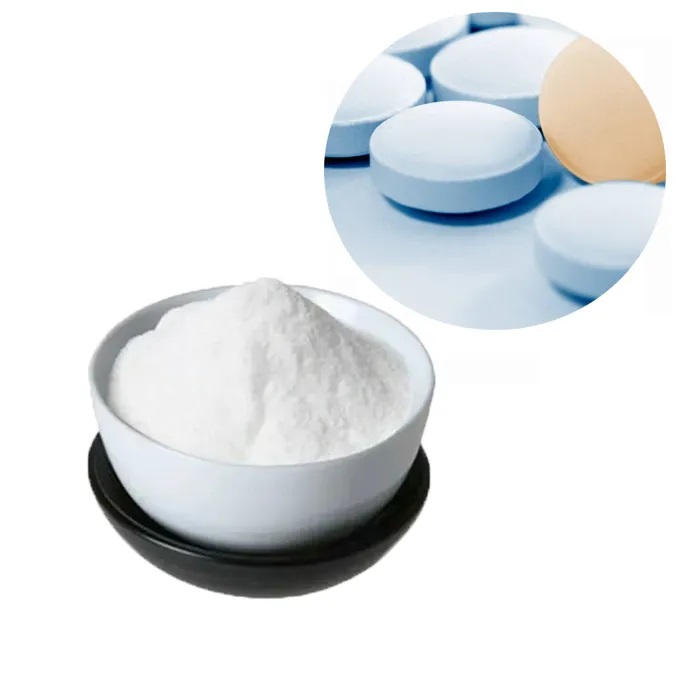
| Appearance | White to off-white powder |
| Odor | Odorless |
CHEMICAL STRUCTURE
Hydroxypropyl Cellulose Structure:
        CH₂OR
        |
    O — C — H      R = H or CH₂CH(OH)CH₃
    |   |   |
    H — C — O — H
        |
        CH₂OR
Structure Description:
-
Cellulose ether derivative.
-
Hydroxypropyl groups (-CH₂CH(OH)CH₃) are attached to the cellulose backbone.
-
Degree of substitution (DS) and molar substitution (MS) determine properties.
-
Non-ionic, water-soluble cellulose ether.
SECTION 1: CHEMICAL IDENTITY AND DESCRIPTION
| Parameter | Information |
|---|---|
| Product Name | Hydroxypropyl Cellulose |
| Chemical Name | Hydroxypropyl Cellulose |
| Synonyms (Turkish) | Hidroksipropil Selüloz, HPC, L-HPC, Hipromelloz, Düşük Substitüe Hidroksipropil Selüloz |
| Synonyms (English) | Hydroxypropyl Cellulose, HPC, L-HPC, KLUCEL, Hyprolose, Low-Substituted Hydroxypropyl Cellulose |
| CAS Number | 9004-64-2 |
| CB Number | CB0241870 |
| MDL Number | MFCD00132688 |
| Molecular Formula | C₃H₇O* (variable, polymer) |
| Molecular Weight | 59.08708 g/mol (monomer unit); Polymer: 80,000 – 1,250,000 g/mol |
| Chemical Class | Cellulose ether; Non-ionic polymer; Pharmaceutical excipient |
| Source | Semi-synthetic (derived from natural cellulose) |
| Physical State (20°C) | Solid (powder) |
| Odor | Odorless |
| Color | White to off-white |
| Taste | Tasteless |
SECTION 2: PHYSICAL AND CHEMICAL PROPERTIES
| Property | Value | Test Method / Note |
|---|---|---|
| Appearance | White to off-white powder | Visual |
| Odor | Odorless | Olfactometric |
| Molecular Weight | 80,000 – 1,250,000 g/mol (varies by grade) | GPC |
| Density | 0.5 g/mL (25°C) | ASTM D4052 |
| Melting Point | 371.06°C | DSC |
| Refractive Index | 1.5600 | – |
| pH (20 g/L, 25°C) | 5.0 – 7.5 | pH Meter |
| pH Range | 5.0 – 8.5 | – |
| Viscosity (2%, H₂O, 20°C) | 3.0 – 6.0 mPa·s (varies by grade) | Brookfield |
| Viscosity Range | 1.5 – 1,500 mPa·s (depending on molecular weight) | – |
| Solubility in Water | Soluble (room temperature) | General Method |
| Solubility in Methanol | Soluble | General Method |
| Solubility in Ethanol | Soluble | General Method |
| Solubility in Polar Organic Solvents | Soluble | General Method |
| Solubility in Non-Polar Solvents | Insoluble | General Method |
| Thermal Gelation | Forms gel upon heating (thermoreversible) | – |
| Stability | Stable; Incompatible with strong oxidizing agents | – |
| Hygroscopicity | Moderately hygroscopic | – |
| Heavy Metals (as Pb) | ≤ 10 ppm | AAS / ICP |
| Arsenic (As) | ≤ 2 ppm | AAS / ICP |
| Lead (Pb) | ≤ 2 ppm | AAS / ICP |
| Loss on Drying | ≤ 5.0% | Gravimetric |
| Sulfated Ash | ≤ 0.5% | Gravimetric |
| Degree of Substitution (DS) | ~0.4 – 1.0 (varies by grade) | – |
| Molar Substitution (MS) | ~2.0 – 4.0 (varies by grade) | – |
SECTION 3: HYDROXYPROPYL CELLULOSE vs OTHER CELLULOSE ETHERS
| Property | Hydroxypropyl Cellulose (HPC) | Hydroxypropyl Methylcellulose (HPMC) | Carboxymethylcellulose (CMC) | Methylcellulose (MC) |
|---|---|---|---|---|
| CAS Number | 9004-64-2 | 9004-65-3 | 9000-11-7 | 9004-67-5 |
| Ionic Charge | Non-ionic | Non-ionic | Anionic | Non-ionic |
| Solubility | Cold water, polar solvents | Cold water | Cold water, hot water | Cold water |
| Thermal Gelation | Yes (thermoreversible) | Yes (thermoreversible) | No | Yes |
| Organic Solvent Solubility | Yes | Limited | No | No |
| Surface Activity | Moderate | Low | High | Low |
| Viscosity Range | Wide (1.5 – 1,500 mPa·s) | Wide | Wide | Moderate |
| Main Application | Pharma, coatings, cosmetics | Pharma, food, construction | Food, pharma, cosmetics | Pharma, food, cosmetics |
| FDA Status | 21 CFR 172.870, 73.1001 | 21 CFR 172.874 | 21 CFR 182.1745 | 21 CFR 172.874 |
SECTION 4: MECHANISM OF ACTION
| Property | Description |
|---|---|
| Thickening Agent | Increases viscosity of aqueous solutions; Long polymer chains entangle and restrict flow; Concentration-dependent viscosity. |
| Binding Agent | Acts as a binder in tablet formulations; Provides cohesive strength to powder mixtures; Ensures tablet integrity. |
| Film Former | Forms clear, flexible films upon drying; Provides barrier properties; Used in coatings and capsules. |
| Suspension Stabilizer | Prevents sedimentation of suspended particles; Increases medium viscosity; Slows particle settling. |
| Mucoadhesive | Adheres to mucosal surfaces; Provides prolonged contact time; Used in ophthalmic formulations. |
| Emulsion Stabilizer | Stabilizes oil-in-water emulsions; Prevents coalescence and separation; Forms protective film around droplets. |
| Gelation | Forms thermoreversible gels upon heating; Useful in controlled-release formulations; Unique property of HPC. |
SECTION 5: PRODUCTION PROCESS
Industrial Production Method:
Process Flow:
Cellulose (Wood Pulp/Cotton Linters) → Alkali Treatment (NaOH) → Propylene Oxide Reaction → Etherification → Neutralization → Washing → Drying → Milling → Final Product
Step-by-Step Description:
-
Alkali Treatment: Cellulose is treated with sodium hydroxide solution to form alkali cellulose.
-
Etherification: Alkali cellulose is reacted with propylene oxide under pressure and controlled temperature.
-
Neutralization: The reaction mixture is neutralized with acid to adjust pH.
-
Washing: Product is washed with water and/or organic solvents to remove by-products and impurities.
-
Drying: Purified product is dried to achieve desired moisture content.
-
Milling: Dried product is milled to achieve desired particle size distribution.
-
Final Product: Various grades with different molecular weights and substitution levels are produced.
SECTION 6: FUNCTIONAL PROPERTIES
| Property | Description |
|---|---|
| Thickener | Increases viscosity in aqueous systems; Provides desired rheological properties; Used in pharmaceuticals, cosmetics, and foods. |
| Binder | Binds powder particles in tablet formulations; Ensures tablet hardness and integrity; Used in wet and dry granulation. |
| Film Former | Forms clear, flexible films; Used in tablet coatings; Capsule shell component; Provides protective barrier. |
| Stabilizer | Stabilizes suspensions and emulsions; Prevents sedimentation; Ensures uniform product distribution. |
| Lubricant | Reduces friction in ophthalmic formulations; Provides lubrication for dry eyes; Used in artificial tears. |
| Matrix Former | Forms hydrophilic matrices for controlled release; Regulates drug release rates; Used in sustained-release formulations. |
| Mucoadhesive | Adheres to mucosal surfaces; Prolongs residence time; Enhances drug absorption. |
SECTION 7: MAIN APPLICATION AREAS
| Industry / Application | Function | Typical Use |
|---|---|---|
| Pharmaceutical | Binder, thickener, film former, matrix former | Tablet binders (wet/dry granulation), tablet coatings, capsule shells, sustained-release matrices, ophthalmic solutions (artificial tears), topical gels; Usage: 2-20% of formulation. |
| Cosmetics | Thickener, emulsifier, film former | Shampoos, conditioners, creams, lotions, toothpaste, hair styling products, skin care; Usage: 0.5-5%. |
| Food Industry | Thickener, stabilizer, emulsifier | Sauces, dressings, dairy products, frozen desserts, baked goods; Usage: 0.1-2% (subject to regulations). |
| Coatings & Paints | Thickener, rheology modifier | Water-based paints, coatings, adhesives, printing inks; Improves flow and leveling. |
| Biotechnology | Separation matrix | Capillary/microchip electrophoresis for DNA separation; Sieving matrix for nucleic acids. |
| Cultural Heritage | Consolidant | Book and paper conservation (e.g., Cellugel); Structural reinforcement of degraded materials. |
| Personal Care | Film former, hair fixative | Hair sprays, mousses, gels; Provides hold and shine. |
| Ophthalmic | Lubricant, viscosity enhancer | Artificial tears (treatment of dry eye syndrome, keratoconjunctivitis sicca, corneal erosions, neuroparalytic keratitis). |
SECTION 8: SAMPLE FORMULATIONS
Pharmaceutical Tablet Binder (Wet Granulation):
| Component | Amount |
|---|---|
| Hydroxypropyl Cellulose (HPC) | 2 – 5% |
| Active Pharmaceutical Ingredient (API) | As required |
| Fillers (Lactose, MCC) | As required |
| Disintegrants | As required |
| Lubricants | As required |
Instructions: Dissolve HPC in water or ethanol/water mixture to form binder solution; Add to powder blend during granulation; Dry, mill, and compress into tablets.
Ophthalmic Solution (Artificial Tears):
| Component | Amount |
|---|---|
| Hydroxypropyl Cellulose (HPC) | 0.5 – 2% |
| Purified Water | To 100% |
| Preservatives (optional) | As required |
| pH Adjusters | As required |
| Osmotic Agents | As required |
Instructions: Dissolve HPC in water with stirring; Adjust pH to 5.0-7.5; Add preservatives if required; Sterilize by filtration; Package in sterile containers.
SECTION 9: QUALITY SPECIFICATIONS
| Parameter | Pharmaceutical Grade | Cosmetic Grade | Food Grade | Test Method |
|---|---|---|---|---|
| Appearance | White to off-white powder | White to off-white powder | White to off-white powder | Visual |
| Purity (HPC) | ≥ 99.0% | ≥ 98.0% | ≥ 99.0% | HPLC / Titrimetric |
| Loss on Drying | ≤ 5.0% | ≤ 5.0% | ≤ 5.0% | Gravimetric |
| Sulfated Ash | ≤ 0.5% | ≤ 1.0% | ≤ 0.5% | Gravimetric |
| pH (20 g/L, 25°C) | 5.0 – 7.5 | 5.0 – 7.5 | 5.0 – 7.5 | pH Meter |
| Viscosity | Specified per grade | Specified per grade | Specified per grade | Brookfield |
| Heavy Metals (as Pb) | ≤ 10 ppm | ≤ 10 ppm | ≤ 10 ppm | AAS / ICP |
| Arsenic (As) | ≤ 2 ppm | ≤ 2 ppm | ≤ 2 ppm | AAS / ICP |
| Lead (Pb) | ≤ 2 ppm | ≤ 2 ppm | ≤ 2 ppm | AAS / ICP |
| Microbial Count | ≤ 1000 CFU/g | ≤ 1000 CFU/g | ≤ 1000 CFU/g | Microbiological |
| Salmonella | Negative | Negative | Negative | Microbiological |
| E. coli | Negative | Negative | Negative | Microbiological |
SECTION 10: TOXICOLOGICAL PROFILE
| Parameter | Value |
|---|---|
| Acute Oral Toxicity (LD50, Rat) | > 5,000 mg/kg (low toxicity) |
| Acute Dermal Toxicity | Low toxicity; Non-irritating |
| Skin Irritation | Non-irritating |
| Eye Irritation | Mildly irritating; May cause transient discomfort |
| Inhalation Toxicity | Low toxicity; May cause respiratory irritation (powder) |
| Chronic Toxicity | Low toxicity; No significant systemic effects |
| Carcinogenicity | Not classified as carcinogenic |
| Mutagenicity | Not mutagenic |
| Reproductive Toxicity | No reproductive toxicity at normal levels |
| Allergenicity | Low allergenicity |
| Acceptable Daily Intake (ADI) | Not specified (GRAS status; considered safe at typical usage levels) |
| Special Toxicity Note | GRAS (Generally Recognized as Safe) by FDA; Approved as pharmaceutical excipient; Considered safe for use in pharmaceuticals, cosmetics, and foods at recommended levels; Non-toxic and non-irritating; May cause mild eye irritation (transient). |
SECTION 11: GHS CLASSIFICATION AND LABELING
GHS Classification (in accordance with CLP and UN GHS):
| Hazard Class | Category | H-Statement |
|---|---|---|
| Not classified as hazardous according to CLP criteria | – | – |
Signal Word: None (Not classified as hazardous)
Hazard Pictograms: None
NFPA 704 Hazard Classification:
| Health | Flammability | Reactivity | Special |
|---|---|---|---|
| 0 | 1 | 0 | - |
| (Minimal health hazard) | (Combustible) | (Stable) | (None) |
SECTION 12: PRECAUTIONARY STATEMENTS (P-CODES)
| Code | Statement |
|---|---|
| P264 | Wash hands thoroughly after handling |
| P280 | Wear protective gloves/protective clothing/eye protection/face protection |
| P302+P352 | IF ON SKIN: Wash with plenty of soap and water |
| P304+P340 | IF INHALED: Remove person to fresh air and keep comfortable for breathing |
| P305+P351+P338 | IF IN EYES: Rinse cautiously with water for several minutes. Remove contact lenses if present and continue rinsing |
| P332+P313 | If skin irritation occurs: Get medical advice/attention |
| P337+P313 | If eye irritation persists: Get medical advice/attention |
| P403+P233 | Store in a well-ventilated place. Keep container tightly closed |
| P501 | Dispose of contents/container in accordance with local/regional/national/international regulations |
SECTION 13: FIRST AID MEASURES
| Exposure Route | Action to Take |
|---|---|
| Inhalation | Remove to fresh air. If respiratory irritation develops, seek medical attention. |
| Skin Contact | Wash with plenty of soap and water. Remove contaminated clothing. If irritation persists, get medical attention. |
| Eye Contact | Rinse immediately with plenty of water for at least 15 minutes. Keep eyelids open. Remove contact lenses if present. If irritation persists, seek medical attention. |
| Ingestion | Rinse mouth. Drink plenty of water. Seek medical attention if large quantities are ingested. |
SECTION 14: FIREFIGHTING MEASURES
| Parameter | Information |
|---|---|
| Fire Hazard | Combustible organic material. May form explosive dust-air mixtures. |
| Hazards Arising from Fire | Thermal decomposition produces carbon monoxide, carbon dioxide, and irritating fumes. |
| Suitable Extinguishing Media | Water spray, CO₂, dry chemical powder, foam. |
| Unsuitable Extinguishing Media | Water jet (may spread dust) |
| Special Protective Equipment | Self-contained breathing apparatus (SCBA), full protective clothing. |
| Special Precautions | Prevent dust from entering sewers and waterways. Avoid dust cloud formation. |
SECTION 15: STORAGE AND SHELF LIFE
| Parameter | Information |
|---|---|
| Storage Conditions | Store in a cool, dry, well-ventilated area; PROTECT FROM MOISTURE and HEAT; Keep away from direct sunlight. |
| Container Requirements | Tightly closed, moisture-proof containers (PE-lined bags, HDPE containers). |
| Materials to Protect From | Moisture, heat, strong oxidizing agents |
| Shelf Life | 24 – 48 months (in unopened original packaging, under proper storage conditions). |
| Stability Note | Stable under recommended storage conditions; Hygroscopic (absorbs moisture); May absorb moisture and deteriorate if exposed to high humidity; Protect from heat. |
| Special Storage Requirements | Store in a dark, cool, dry place; Avoid exposure to moisture and air; Opened containers must be resealed immediately. |
SECTION 16: PACKAGING OPTIONS
| Packaging Type | Quantity | Material |
|---|---|---|
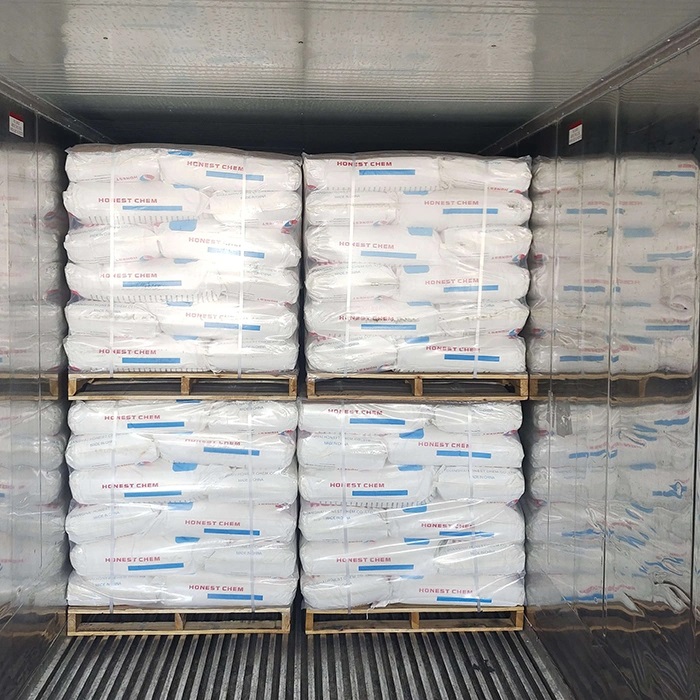
| PE-Lined Paper Bag | 10 kg, 20 kg, 25 kg | PE-lined kraft paper bag (moisture-proof) |
| Plastic Bag | 5 kg, 10 kg, 25 kg | PE bag (inner-lined, sealed, moisture-proof) |
| Fiber Drum | 20 kg, 25 kg | PE-lined fiberboard drum |
| Plastic Drum | 25 kg, 50 kg | HDPE / Polypropylene (moisture-proof) |
| Aluminum Foil Bag | 1 kg, 5 kg, 10 kg | Aluminum foil laminated bag (light and moisture-proof) |
| FIBC / Big Bag | 500 kg, 1000 kg | PE-lined, moisture-resistant PP woven bag |
SECTION 17: TRANSPORT INFORMATION
| Parameter | Information |
|---|---|
| UN Number | Not regulated (non-hazardous) |
| Hazard Class | Not applicable |
| Packing Group | Not applicable |
| ADR/RID | Not regulated |
| IMDG Code | Not regulated (non-hazardous) |
| IATA (Air) | Not regulated (non-hazardous) |
| Marine Pollutant | No |
| Transport Temperature | Ambient temperature; Protect from moisture and heat. |
SECTION 18: REGULATORY STATUS
| Region / Authority | Status |
|---|---|
| European Union | Approved for use in food, pharmaceutical, and cosmetic applications; REACH registered. |
| USA (TSCA) | Listed (TSCA Inventory) |
| USA (FDA) | GRAS (Generally Recognized as Safe) ; 21 CFR 172.870 (Direct food additive); 21 CFR 73.1001 (Color additive - indirect); Pharmaceutical excipient (USP/NF). |
| Turkey | Approved for use in food, pharmaceutical, and cosmetic applications; Ministry of Agriculture approval required for food use; KKDIK regulation compliance required. |
| EFSA | Approved for use as food additive; Specifications established. |
| JECFA | Approved for use as food additive; Specifications established. |
| USP/NF | Hydroxypropyl Cellulose monograph listed. |
| EP (European Pharmacopoeia) | Hydroxypropyl Cellulose monograph listed. |
| IARC | Not classified (non-carcinogenic) |
| NTP | Not listed |
| OSHA | Regulated as nuisance dust |
| California (Prop 65) | Not listed |
| Halal | Yes (with certification) |
| Kosher | Yes (with certification) |
| Vegan | Yes (cellulose source, no animal ingredients) |
SECTION 19: OTHER NAMES AND SYNONYMS
| Type | Name |
|---|---|
| Turkish Names | Hidroksipropil Selüloz, HPC, L-HPC, Hipromelloz, Düşük Substitüe Hidroksipropil Selüloz |
| English Names | Hydroxypropyl Cellulose, HPC, L-HPC, KLUCEL, Hyprolose, Low-Substituted Hydroxypropyl Cellulose |
| Trade Names | KLUCEL (Ashland), L-HPC, HP Cellulose |
| CAS Number | 9004-64-2 |
| CB Number | CB0241870 |
| MDL Number | MFCD00132688 |
| FDA UNII | (Multiple entries depending on molecular weight) |
| HS Code | 3912.39 |
SECTION 20: SUMMARY TABLE
| Parameter | Value |
|---|---|
| Product | Hydroxypropyl Cellulose (HPC) |
| CAS Number | 9004-64-2 |
| Molecular Formula | C₃H₇O* (variable, polymer) |
| Molecular Weight | 80,000 – 1,250,000 g/mol |
| Appearance | White to off-white powder |
| Solubility | Water, methanol, ethanol, polar solvents |
| Viscosity | 1.5 – 1,500 mPa·s (grade dependent) |
| pH (20 g/L, 25°C) | 5.0 – 7.5 |
| Primary Function | Thickener, binder, film former, stabilizer |
| Main Application Areas | Pharmaceuticals, cosmetics, food, coatings, biotechnology, cultural heritage |
| Shelf Life | 24 – 48 months |
| GHS Signal Word | None (Not classified as hazardous) |
| UN Number | Not regulated |
| Special Properties | Non-ionic cellulose ether; Water and organic solvent soluble; Thermoreversible gelation; GRAS status; FDA approved; USP/EP compliant; Vegan and Halal certified. |
SECTION 21: CRITICAL WARNINGS AND BEST PRACTICES
CRITICAL WARNINGS:
-
GRAS Status: Generally Recognized as Safe (GRAS) by FDA; Approved for use in pharmaceuticals, cosmetics, and foods.
-
Non-Toxic: Low toxicity; Non-irritating to skin; May cause mild eye irritation (transient).
-
Hygroscopic: Absorbs moisture from air; Store in tightly closed containers.
-
Combustible Dust: May form explosive dust-air mixtures; Avoid dust cloud formation.
-
Thermoreversible Gelation: Unique property of HPC; Forms gel upon heating; Useful in controlled-release and topical formulations.
-
Viscosity Depends on Molecular Weight: Different grades available for different applications; Choose appropriate grade based on desired viscosity.
-
Wide Application Range: Pharmaceuticals (binder, film former, matrix former), cosmetics (thickener, emulsifier), food (stabilizer), biotechnology (DNA separation), cultural heritage (paper conservation).
-
Ophthalmic Use: Used in artificial tears; Provides lubrication for dry eyes; Treatment of keratoconjunctivitis sicca, corneal erosions, neuroparalytic keratitis.
-
Vegan: Derived from cellulose (plant source); Suitable for vegan and vegetarian applications.
BEST PRACTICE RECOMMENDATIONS:
-
Pharmaceutical Applications: Use as binder in wet and dry granulation; Dosage: 2-5% of formulation; Dissolve in water or ethanol/water mixture; Also used as film former, matrix former, and mucoadhesive agent.
-
Ophthalmic Applications: Use as lubricant and viscosity enhancer; Dosage: 0.5-2%; Dissolve in purified water; Adjust pH to 5.0-7.5; Sterilize by filtration.
-
Cosmetic Applications: Use as thickener, emulsifier, and film former; Dosage: 0.5-5%; Dissolve in aqueous phase with agitation; Add active ingredients after dissolution.
-
Food Applications: Use as thickener and stabilizer; Dosage: 0.1-2%; Follow local regulatory requirements (Turkish Food Codex, EFSA, FDA).
-
Handling: Use in well-ventilated areas; Avoid dust formation; Use dust masks when handling powder; Use gloves and safety goggles.
-
Personal Protective Equipment: Dust mask (N95/FFP2 or higher) if dust is generated, safety goggles, chemical-resistant gloves, protective clothing.
-
Hygiene: Wash hands thoroughly after handling; Do not eat, drink, or smoke while using; Remove contaminated clothing and wash before reuse.
-
Storage: Store in tightly closed, moisture-proof containers; Store in a cool, dry, well-ventilated area; Protect from moisture and heat; Opened containers must be resealed immediately; Shelf life: 24-48 months under proper conditions.
-
Spill Management: Sweep or vacuum (HEPA) and place in suitable sealed container; Avoid dust formation; Do not allow entry into drains or waterways.
-
Disposal: Dispose of in accordance with local, regional, and national regulations; Non-hazardous waste; Can be incinerated in compliance with regulations.
DETECTION METHODS:
| Method | Description | Advantages | Disadvantages |
|---|---|---|---|
| HPLC | Quantitative analysis of hydroxypropyl content | Accurate, reliable | High cost, requires expertise |
| Viscosity Measurement | Quality control parameter | Simple, standard method | Varies with grade |
| Degree of Substitution | Chemical characterization | Determines properties | Requires expertise |
| FTIR | Functional group identification | Fast, non-destructive | Requires reference spectra |
| Thermal Analysis (DSC/TGA) | Thermal properties characterization | Determines gelation temperature | Requires specialized equipment |
HYDROXYPROPYL CELLULOSE (HPC) vs ALTERNATIVES COMPARISON:
| Product | Chemical Name / E Code | Application | Strength | Weakness | Status |
|---|---|---|---|---|---|
| Hydroxypropyl Cellulose (HPC) | Cellulose ether | Pharma, cosmetics, food | Organic solvent soluble, thermoreversible gelation | Higher cost, hygroscopic | Widely approved |
| HPMC | Hydroxypropyl Methylcellulose | Pharma, food, cosmetics | Versatile, good film former | Limited organic solubility | Widely approved |
| CMC | Carboxymethylcellulose | Food, pharma, cosmetics | Low cost, anionic | Incompatibility with cations | Widely approved |
| MC | Methylcellulose | Pharma, food, cosmetics | Good gelation properties | Limited organic solubility | Widely approved |
| PVA | Polyvinyl Alcohol | Pharma, cosmetics | Good film former | Synthetic origin | Widely approved |
| PVP | Polyvinylpyrrolidone | Pharma, cosmetics | Good binder, solubility | Hygroscopic | Widely approved |
LEGAL DISCLAIMER:
The information provided in this document is based on our current knowledge and experience and is presented in good faith. However, as all conditions of use are beyond our control, it does not constitute a binding specification or warranty. This Technical Data Sheet is for informational purposes only. Users are responsible for testing the suitability for their own applications and for complying with all local, regional, and national regulations. For complete safety, storage, use, handling, waste, and regulatory compliance information, please refer to the official Safety Data Sheet (SDS/MSDS) provided by the manufacturer/supplier.