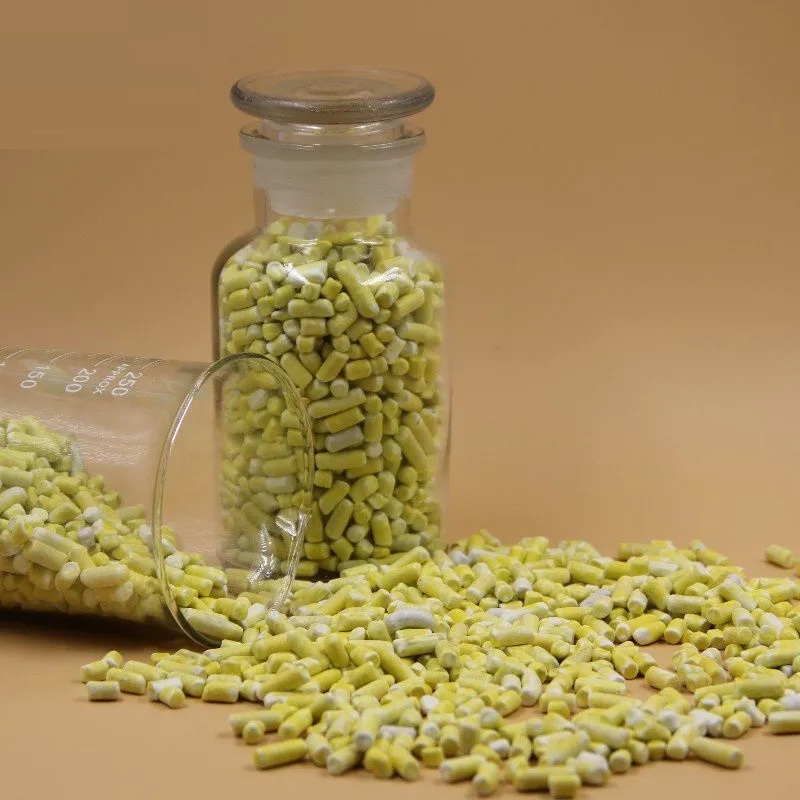
Sodium Isopropyl Xanthate, Sodium Isopropyl Dithiocarbonate, Sodium Isopropyl Xanthogenate, Sodium Isopropylxanthate, SIPX, 140-93-2
SODIUM ISOPROPYL XANTHATE (SIPX)
Product Name: Sodium Isopropyl Xanthate
Other Names: Sodium Isopropyl Dithiocarbonate, Sodium Isopropyl Xanthogenate, Isopropylxanthic Acid Sodium Salt, SIPX, Sodium Isopropylxanthate
CAS Number: 140-93-2
Chemical Formula: (CH₃)₂CHOCSSNa
Molecular Weight: ~158.21 g/mol
Chemical Class: Xanthate (Dithiocarbonate) – Flotation Reagent
Origin: Synthetic, flotation reagent
SECTION 1: PRODUCT IDENTIFICATION AND DEFINITION
| Parameter |
Information |
| Product Name |
Sodium Isopropyl Xanthate |
| Other Names |
Sodium Isopropyl Dithiocarbonate, Sodium Isopropyl Xanthogenate, Isopropylxanthic Acid Sodium Salt, SIPX, Sodium Isopropylxanthate, Sodium O-Isopropyl Dithiocarbonate |
| CAS Number |
140-93-2 |
| Chemical Formula |
(CH₃)₂CHOCSSNa |
| Molecular Weight |
~158.21 g/mol |
| Chemical Class |
Xanthate (Dithiocarbonate) – Flotation Reagent |
| Origin |
Synthetic, flotation reagent |
| Appearance |
Yellowish powder, granules, or pellets |
| Odor |
Characteristic pungent, sharp odor |
| Solubility |
Freely soluble in water; forms alkaline solution |
| Physical Form |
Powder, granules, or pellets depending on production method |
SECTION 2: PHYSICAL AND CHEMICAL PROPERTIES
| Property |
Value |
| Appearance |
Yellowish powder, granules, or pellets |
| Odor |
Characteristic pungent, sharp, unpleasant odor |
| Molecular Weight |
~158.21 g/mol |
| Chemical Formula |
(CH₃)₂CHOCSSNa |
| pH (1% solution) |
8 – 11 |
| Density |
~1.1 g/cm³ |
| Solubility |
Freely soluble in water |
| Stability |
Stable under recommended storage conditions |
| Hygroscopicity |
Hygroscopic (absorbs moisture from air) |
| Decomposition Temperature |
> 200 °C |
| Bulk Density |
~0.6 – 0.9 g/cm³ |
| Melting Point |
Decomposes before melting |
SECTION 3: CHEMICAL STRUCTURE AND PROPERTIES
3.1. Chemical Structure
| Parameter |
Information |
| Chemical Name |
Sodium O-Isopropyl Dithiocarbonate |
| IUPAC Name |
Sodium propan-2-yloxymethanedithioate |
| SMILES |
CC(C)OC(=S)[S-].[Na+] |
| Alkyl Group |
Isopropyl – C₃ (3-carbon branched chain) |
| Functional Group |
Dithiocarbonate (xanthate) – OCSS⁻ |
| Chain Type |
Branched chain |
3.2. Chemical Properties
| Property |
Description |
| pH Stability |
Stable in alkaline conditions; decomposes rapidly in acidic environments (pH < 7) |
| Reaction with Metal Ions |
Forms insoluble complexes with heavy metal ions |
| Hydrolysis |
Hydrolyzes to produce xanthic acid and isopropyl alcohol |
| Oxidation |
Oxidizes to dixanthogen in the presence of oxygen |
| Aqueous Stability |
Degrades over time; faster degradation in acidic conditions; degradation rate: 5.11 × 10⁻⁴ h⁻¹ at 25°C |
SECTION 4: MECHANISM OF ACTION IN FLOTATION
4.1. Collector Mechanism
| Mechanism |
Description |
| Adsorption |
SIPX adsorbs onto the surface of sulfide minerals through chemisorption (formation of metal-xanthate complexes) |
| Hydrophobicity |
The adsorbed SIPX layer makes the mineral surface hydrophobic, allowing it to attach to air bubbles |
| Isopropyl Chain |
The 3-carbon isopropyl chain provides moderate-strong collecting power with good affinity for various minerals |
| Flotation |
Hydrophobic mineral particles attach to air bubbles and rise to the surface for collection |
4.2. Collecting Power Comparison (Xanthate Series)
| Xanthate Type |
Alkyl Chain |
Collecting Power |
Selectivity |
Typical Application |
| Sodium Ethyl Xanthate (SEX) |
Ethyl (C₂) |
Weakest |
Highest |
Selective flotation |
| Potassium Ethyl Xanthate (KEX) |
Ethyl (C₂) |
Weak |
High |
Selective flotation |
| Sodium Isopropyl Xanthate (SIPX) |
Isopropyl (C₃) |
Moderate-Strong |
Moderate-High |
Gold, copper sulfides |
| Sodium Isobutyl Xanthate (SIBX) |
Isobutyl (C₄) |
Strong |
Moderate |
Lead, zinc sulfides |
| Potassium Amyl Xanthate (PAX) |
Amyl (C₅) |
Strongest |
Lowest |
Difficult ores |
| Sodium Hexyl Xanthate (SHX) |
Hexyl (C₆) |
Very Strong |
Very Low |
Refractory ores |
SECTION 5: DETAILED COMPARISON WITH OTHER XANTHATES
| Parameter |
SEX (140-90-9) |
KEX (140-89-6) |
SIPX (140-93-2) |
SIBX (25306-75-6) |
PAX (2720-73-2) |
SHX (35042-31-6) |
| Alkyl Chain |
Ethyl (C₂) |
Ethyl (C₂) |
Isopropyl (C₃) |
Isobutyl (C₄) |
Amyl (C₅) |
Hexyl (C₆) |
| Collecting Power |
Weakest |
Weak |
Moderate-Strong |
Strong |
Strongest |
Very Strong |
| Selectivity |
Highest |
High |
Moderate-High |
Moderate |
Lowest |
Very Low |
| Degradation Rate (h⁻¹ at 25°C) |
4.07 × 10⁻⁴ |
- |
5.11 × 10⁻⁴ |
7.05 × 10⁻⁴ |
- |
- |
| Primary Application |
Cu, Pb, Zn sulfides |
Cu, Zn ores |
Au, Cu sulfides |
Pb, Zn sulfides |
Au, Cu, Ni, pyrite |
Refractory ores |
| Chain Type |
Linear |
Linear |
Branched |
Branched |
Linear |
Linear |
| Suitable Ores |
Selective flotation |
Selective flotation |
Wide range |
Balanced |
Difficult ores |
Very difficult ores |
SECTION 6: APPLICATION AREAS
6.1. Mineral Processing (Flotation)
| Application |
Description |
| Gold Ores |
Widely used in flotation of gold-bearing sulfide minerals; SIPX is a preferred collector for gold flotation |
| Copper Ores |
Flotation of chalcopyrite (CuFeS₂) and other copper sulfide minerals |
| Lead Ores |
Flotation of galena (PbS) |
| Zinc Ores |
Flotation of sphalerite (ZnS) with activators |
| Mixed Sulfide Ores |
Effective for ores containing multiple sulfide minerals |
| Silver Ores |
Flotation of silver-containing sulfide minerals |
| Complex Sulfide Ores |
Where moderate selectivity is acceptable |
6.2. Other Applications
| Application |
Description |
| Hydrometallurgy |
Used as a precipitant in metal recovery processes |
| Rubber Industry |
Used as a vulcanization accelerator and sulfidation promoter |
| Analytical Chemistry |
Reagent for metal ion detection and precipitation |
| Chemical Industry |
Intermediate in organic synthesis |
SECTION 7: ADVANTAGES AND DISADVANTAGES
7.1. Advantages
| Advantage |
Description |
| Strong Collector |
Effective for difficult sulfide ores; stronger than SEX and KEX |
| Versatile |
Used in both mining and chemical industries |
| Broad Mineral Affinity |
Suitable for mixed sulfide ores with various mineral types |
| Good Selectivity |
More selective than SIBX and PAX; provides acceptable concentrate grades |
| Wide Application |
Effective in gold, copper, lead, and zinc flotation |
| Cost-Effective |
Balanced performance at reasonable cost |
| Compatibility |
Works well with frothers and other modifiers |
7.2. Disadvantages
| Disadvantage |
Description |
| Less Selective than Short-Chain Xanthates |
Less selective than SEX and KEX; may collect non-target minerals |
| Environmental Risk |
Degradation releases carbon disulfide (CS₂), which is toxic and environmentally hazardous |
| Hazardous Substance |
Requires strict handling and storage protocols |
| Sensitive |
Sensitive to heat, moisture, light, and acidic conditions |
| Pungent Odor |
Strong, unpleasant odor during handling |
| Degradation |
Degrades ~1.25x faster than SEX at 25°C |
SECTION 8: TYPICAL DOSAGE AND APPLICATION
8.1. Recommended Dosage
| Parameter |
Value |
| Typical Dosage Range |
50 – 300 g/t of ore (depending on ore type and conditions) |
| Optimal Dosage |
Determined by flotation test work |
| Addition Point |
Added to the grinding circuit or conditioning tank |
| Solution Strength |
Typically 5-10% aqueous solution |
8.2. Application Instructions
| Step |
Description |
| 1 |
Prepare SIPX solution by dissolving in water (typically 5-10% solution) |
| 2 |
Add to the flotation circuit at the designated addition point |
| 3 |
Condition the pulp for 2-5 minutes for optimal adsorption |
| 4 |
Adjust dosage based on ore characteristics and flotation response |
| 5 |
Use solutions within 3-5 days to prevent decomposition |
8.3. Xanthate Selection Guide by Application
| Application |
Recommended Xanthate |
Reason |
| Selective Flotation |
SEX, KEX |
Highest selectivity required |
| Gold Ores |
SIPX, PAX |
SIPX is widely used for gold flotation |
| Copper Sulfides |
SIPX, SEX |
SIPX provides good recovery with acceptable selectivity |
| Lead Ores (Galena) |
SIBX, PAX |
Stronger collector may be needed |
| Zinc Ores (Sphalerite) |
SIBX, PAX |
With activators |
| Mixed Sulfide Ores |
SIPX, SIBX |
SIPX offers broad mineral affinity |
| Refractory Ores |
PAX, SHX |
Maximum collecting power required |
| Bulk Sulfide Flotation |
PAX, SIBX |
Strong collecting power needed |
SECTION 9: QUALITY SPECIFICATIONS
| Parameter |
Specification |
| Appearance |
Yellowish powder, granules, or pellets |
| Purity (Active Content) |
≥ 90.0% |
| Free Alkali (as NaOH) |
≤ 0.5% |
| Moisture |
≤ 4.0% |
| Insoluble Matter |
≤ 0.5% |
| pH (1% solution) |
8 – 11 |
| Sulfide Content |
< 0.5% |
| Heavy Metals (as Pb) |
< 10 ppm |
| HS Code |
2930902000 |
SECTION 10: PACKAGING OPTIONS
| Packaging Type |
Quantity |
Material |
| Plastic Drum |
100 – 200 kg |
HDPE |
| Fiber Drum |
100 – 150 kg |
HDPE + PE liner |
| Multi-layer Bag |
25 kg |
PE-lined kraft paper |
| Big-Bag |
500 – 1000 kg |
Polypropylene (with PE liner) |
SECTION 11: STORAGE AND SHELF LIFE
| Parameter |
Information |
| Storage Conditions |
Cool (<15-25°C), dry, well-ventilated area; away from direct sunlight |
| Container Requirements |
Tightly closed, original packaging |
| Protect From |
Heat, moisture, direct sunlight, acidic conditions, oxidizing agents |
| Shelf Life |
6-12 months (unopened original packaging) |
| Stability Note |
Decomposes in acidic conditions; sensitive to heat and moisture; decomposes to carbon disulfide (CS₂) |
SECTION 12: SAFETY AND HEALTH INFORMATION
12.1. Classification
| Parameter |
Information |
| GHS Classification |
Self-heating substances (Category 2), Acute Toxicity (Category 4), Skin Irritation (Category 2), Eye Irritation (Category 2A), Reproductive Toxicity (Category 2), Specific Target Organ Toxicity (Category 2/3) |
| Signal Word |
WARNING |
| UN Number |
3342 |
| Hazard Class |
4.2 (Substances liable to spontaneous combustion) |
12.2. Hazard Statements
| Code |
Statement |
| H252 |
Self-heating in large quantities; may catch fire |
| H302 |
Harmful if swallowed |
| H315 |
Causes skin irritation |
| H319 |
Causes serious eye irritation |
| H335 |
May cause respiratory irritation |
| H361 |
Suspected of damaging fertility or the unborn child |
| H373 |
May cause damage to organs through prolonged or repeated exposure |
12.3. Precautionary Statements
| Code |
Statement |
| P201 |
Obtain special instructions before use |
| P235+P410 |
Keep cool. Protect from sunlight. |
| P261 |
Avoid breathing dust |
| P280 |
Wear protective gloves, protective clothing, eye/face protection |
| P301+P312 |
IF SWALLOWED: Call a POISON CENTER/doctor if you feel unwell |
| P305+P351+P338 |
IF IN EYES: Rinse cautiously with water for several minutes |
| P308+P313 |
IF exposed or concerned: Get medical advice/attention |
| P403+P233 |
Store in a well-ventilated place. Keep container tightly closed |
12.4. Toxicological Information
| Parameter |
Value |
| Oral LD50 (Rat) |
Acute Oral Toxicity – Category 4 (Harmful if swallowed) |
| Dermal LD50 (Rabbit) |
Acute Dermal Toxicity – Category 4 |
| Skin Irritation |
Category 2 (Causes skin irritation) |
| Eye Irritation |
Category 2A (Causes serious eye irritation) |
| Inhalation |
May cause respiratory irritation |
SECTION 13: ENVIRONMENTAL INFORMATION
| Parameter |
Information |
| Decomposition |
Decomposes to carbon disulfide (CS₂), which is toxic and environmentally hazardous |
| Aquatic Toxicity |
Toxic to aquatic organisms |
| Persistence |
Degrades in the environment; may persist under certain conditions |
| Environmental Precautions |
Prevent entry into drains, soil, and surface waters |
SECTION 14: TRANSPORT INFORMATION
| Parameter |
Information |
| UN Number |
3342 |
| UN Proper Shipping Name |
XANTHATES (Sodium Isopropyl Xanthate) |
| Hazard Class |
4.2 (Substances liable to spontaneous combustion) |
| Packing Group |
II or III (depending on formulation) |
| ADR/RID |
Regulated |
| IMDG Code |
Regulated |
| IATA (Air) |
Regulated |
SECTION 15: REGULATORY STATUS
| Parameter |
Information |
| TSCA (USA) |
Yes |
| EINECS |
205-432-0 |
| HS Code |
2930902000 |
SECTION 16: SUMMARY AND CRITICAL NOTES
Product Summary
| Parameter |
Value |
| Product |
Sodium Isopropyl Xanthate (SIPX) |
| CAS Number |
140-93-2 |
| Chemical Formula |
(CH₃)₂CHOCSSNa |
| Appearance |
Yellowish powder, granules, or pellets |
| Primary Function |
Collector for sulfide minerals in froth flotation |
| Key Feature |
Moderate-strong collecting power with good selectivity |
Critical Notes
-
Moderate-Strong Collector: SIPX provides stronger collecting power than SEX/KEX while maintaining better selectivity than SIBX/PAX.
-
Branched Chain: The isopropyl (branched C₃) structure offers different adsorption characteristics and selectivity patterns compared to linear xanthates.
-
Primary Applications: Gold ores (widely used), copper sulfides (chalcopyrite), lead (galena), zinc (sphalerite with activators), and mixed sulfide ores.
-
Stronger than SEX/KEX: SIPX has a longer alkyl chain (C₃ vs C₂), providing stronger collecting power while maintaining reasonable selectivity.
-
More Selective than SIBX/PAX: SIPX offers better selectivity than SIBX and PAX, resulting in higher concentrate grades.
-
Gold Flotation: SIPX is one of the most widely used collectors for gold-bearing sulfide ores globally.
-
Mechanism: SIPX adsorbs onto sulfide mineral surfaces through chemisorption; binding strength is moderate compared to the xanthate series.
-
Decomposition: Decomposes in acidic conditions (pH <7) to carbon disulfide (CS₂); must be stored in alkaline conditions.
-
Degradation Rate: SIPX degrades at 5.11 × 10⁻⁴ h⁻¹ at 25°C, approximately 1.25x faster than SEX (4.07 × 10⁻⁴ h⁻¹).
-
Safety: Self-heating substance (Category 2); flammable; toxic; requires careful handling and storage.
-
Environmental: Decomposition products (CS₂) are toxic to the environment.
-
Chain Length Rule: As alkyl chain length increases, collecting power increases, but selectivity decreases. SIPX (C₃, branched) represents a popular balance point for many operations.
-
Isomer Comparison: Isopropyl (branched C₃) vs. propyl (linear C₃) – branched isomers generally offer different selectivity and frothing characteristics.
-
Solution Stability: SIPX solutions should be used within 3-5 days to prevent decomposition into carbon disulfide.
-
Industry Standard: SIPX is one of the most widely used xanthates globally, particularly in gold and copper flotation circuits.
IMPORTANT DECLARATION: This Technical Data Sheet (TDS) is for informational purposes only and has been prepared based on available technical data. The user is responsible for determining the product's suitability for their specific application and for complying with all local, national, and international regulations. For complete safety, storage, use, transport, waste, and regulatory compliance information, refer to the official Safety Data Sheet (SDS/MSDS) provided by the manufacturer/supplier.