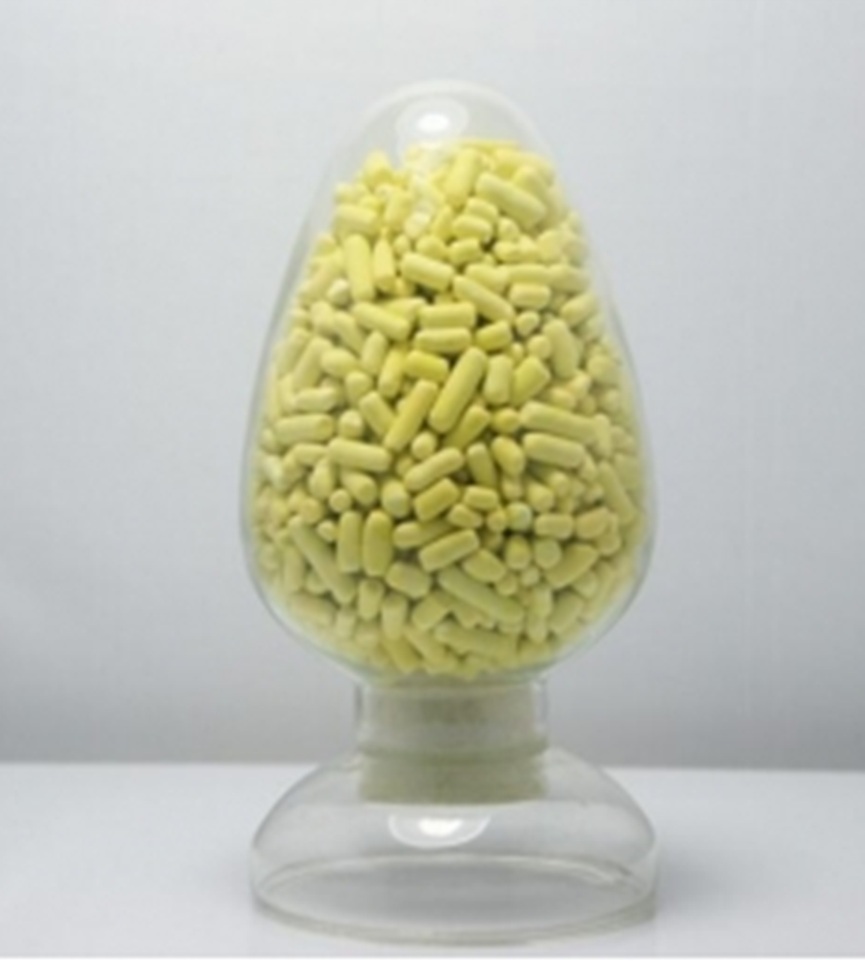
Potassium Ethyl Xanthate, Potassium Ethyl Xanthogenate, Potassium Ethyl Dithiocarbonate, Potassium Xanthogenate, KEX, 140-89-6
POTASSIUM ETHYL XANTHATE (KEX)
Product Name: Potassium Ethyl Xanthate
Other Names: Potassium O-Ethyl Dithiocarbonate, Potassium Ethyl Xanthogenate, Potassium Ethyl Dithiocarbonate, Ethylxanthic Acid Potassium Salt, Potassium Xanthogenate, KEX
CAS Number: 140-89-6
EC Number (EINECS): 205-439-3
Chemical Formula: C₃H₅KOS₂
Molecular Weight: ~160.29 g/mol
Chemical Class: Xanthate (Dithiocarbonate) – Flotation Reagent
Origin: Synthetic, flotation reagent
SECTION 1: PRODUCT IDENTIFICATION AND DEFINITION
| Parameter |
Information |
| Product Name |
Potassium Ethyl Xanthate |
| Other Names |
Potassium O-Ethyl Dithiocarbonate, Potassium Ethyl Xanthogenate, Potassium Ethyl Dithiocarbonate, Ethylxanthic Acid Potassium Salt, Potassium Xanthogenate, KEX, Potassium Ethylxanthate |
| CAS Number |
140-89-6 |
| EC Number (EINECS) |
205-439-3 |
| Chemical Formula |
C₃H₅KOS₂ |
| Molecular Weight |
~160.29 g/mol |
| Chemical Class |
Xanthate (Dithiocarbonate) – Flotation Reagent |
| Origin |
Synthetic, flotation reagent |
| Appearance |
White to pale yellow powder, crystals, or pellets |
| Odor |
Characteristic pungent, slightly rotten smell |
| Solubility |
Soluble in water and ethanol; insoluble in ether |
| Physical Form |
Powder, crystals, or pellets depending on production method |
SECTION 2: PHYSICAL AND CHEMICAL PROPERTIES
| Property |
Value |
| Appearance |
White to pale yellow powder or crystals |
| Odor |
Characteristic pungent, slightly rotten smell |
| Molecular Weight |
~160.29 g/mol |
| Chemical Formula |
C₃H₅KOS₂ |
| Melting Point |
205 – 214°C (decomposes before boiling) |
| Density |
1.558 – 1.588 g/cm³ |
| pH (1% solution) |
9 – 10 (100g/l, H₂O, 20°C) |
| Solubility |
Soluble in water and ethanol; insoluble in ether |
| Stability |
Stable under recommended storage conditions; light sensitive |
| Hygroscopicity |
Hygroscopic (absorbs moisture from air) |
| Flash Point |
96°C |
| Decomposition Temperature |
> 200°C |
| Storage Temperature |
Recommended in a cool and dark place, <15°C |
SECTION 3: CHEMICAL STRUCTURE AND PROPERTIES
3.1. Chemical Structure
| Parameter |
Information |
| Chemical Name |
Potassium O-Ethyl Dithiocarbonate |
| IUPAC Name |
Potassium ethoxymethanedithioate |
| SMILES |
CCOC(=S)[S-].[K+] |
| InChI Key |
JCBJVAJGLKENNC-UHFFFAOYSA-M |
| Alkyl Group |
Ethyl – C₂ (2-carbon chain) |
| Functional Group |
Dithiocarbonate (xanthate) – OCSS⁻ |
| Chain Type |
Linear |
3.2. Chemical Properties
| Property |
Description |
| pH Stability |
Stable in alkaline conditions; decomposes rapidly in acidic environments (pH < 7) |
| Reaction with Metal Ions |
Forms insoluble complexes with heavy metal ions (Cu²⁺, Pb²⁺, Zn²⁺) |
| Hydrolysis |
Hydrolyzes to produce xanthic acid and ethanol |
| Oxidation |
Oxidizes to dixanthogen in the presence of oxygen |
| Incompatible Materials |
Strong acids, strong bases, strong oxidizing agents, water |
| Hazardous Decomposition Products |
Carbon oxides, sulfur oxides, potassium oxides (under fire conditions) |
SECTION 4: MECHANISM OF ACTION IN FLOTATION
4.1. Collector Mechanism
KEX is a collector reagent used in mineral flotation . Its mechanism involves:
| Mechanism |
Description |
| Adsorption |
KEX adsorbs onto the surface of sulfide minerals through chemisorption, forming metal-xanthate complexes on the mineral surface |
| Hydrophobicity |
The adsorbed KEX layer makes the mineral surface hydrophobic, allowing it to attach to air bubbles |
| Short Ethyl Chain |
The 2-carbon ethyl chain provides high selectivity, making it suitable for ores where precision separation is needed |
| Flotation |
Hydrophobic mineral particles attach to air bubbles and rise to the surface for collection |
4.2. Collecting Power Comparison (Xanthate Series)
| Xanthate Type |
Alkyl Chain |
Collecting Power |
Selectivity |
Typical Application |
| Sodium Ethyl Xanthate (SEX) |
Ethyl (C₂) |
Weakest |
Highest |
Selective flotation |
| Potassium Ethyl Xanthate (KEX) |
Ethyl (C₂) |
Weak |
High |
Selective flotation (Cu, Zn) |
| Sodium Isopropyl Xanthate (SIPX) |
Isopropyl (C₃) |
Moderate-Strong |
Moderate-High |
Gold, copper sulfides |
| Sodium Isobutyl Xanthate (SIBX) |
Isobutyl (C₄) |
Strong |
Moderate |
Lead, zinc sulfides |
| Potassium Amyl Xanthate (PAX) |
Amyl (C₅) |
Strongest |
Lowest |
Difficult ores |
| Sodium Hexyl Xanthate (SHX) |
Hexyl (C₆) |
Very Strong |
Very Low |
Refractory ores |
SECTION 5: APPLICATION AREAS
5.1. Mineral Processing (Flotation)
| Application |
Description |
| Copper Ores |
Flotation of chalcopyrite (CuFeS₂) and other copper sulfide minerals; KEX selectively binds to Cu²⁺ ions |
| Zinc Ores |
Flotation of sphalerite (ZnS), often with activators like copper sulfate |
| Lead Ores |
Flotation of galena (PbS) |
| Mixed Sulfide Ores |
When selective separation is required |
| Selective Flotation |
KEX is preferred when high selectivity is the primary requirement |
5.2. Other Industrial Applications
| Application |
Description |
| Chemical Synthesis |
Used as a reagent in organic synthesis (e.g., oxazole ring construction) |
| Palladium Scavenger |
Used as a powerful palladium scavenger |
| Analytical Chemistry |
Reagent for metal ion detection and precipitation |
SECTION 6: ADVANTAGES AND DISADVANTAGES
6.1. Advantages
| Advantage |
Description |
| High Selectivity |
Reduces unwanted mineral recovery; suitable for ores requiring precision separation |
| Stable Potassium Salt |
Better shelf life and stability compared to sodium form (SEX) |
| Versatile Forms |
Available as powder, crystals, or pellets; adaptable to different processing setups |
| Wide pH Range |
Adaptable across a wide pH range, making it suitable for various mineral processing scenarios |
| Proven Performance |
Well-established and widely used reagent in the mining industry |
6.2. Disadvantages
| Disadvantage |
Description |
| Lower Collecting Strength |
Less effective compared to longer-chain xanthates (like PAX, SIBX) |
| Not Suitable for Refractory Ores |
Not ideal for difficult ores where stronger collectors are needed |
| Environmental Concerns |
Degradation can release carbon disulfide (CS₂), which is toxic; can be toxic to aquatic life if discharged untreated |
| Hazardous Substance |
Requires strict handling and storage protocols; flammable solid |
| Light Sensitivity |
Sensitive to light; requires storage in dark conditions |
SECTION 7: TYPICAL DOSAGE AND APPLICATION
7.1. Recommended Dosage
| Parameter |
Value |
| Typical Dosage Range |
50 – 300 g/t of ore (depending on ore type and conditions) |
| Optimal Dosage |
Determined by flotation test work |
| Addition Point |
Added to the grinding circuit or conditioning tank |
| Solution Strength |
Typically 5-10% aqueous solution |
7.2. Application Instructions
| Step |
Description |
| 1 |
Prepare KEX solution by dissolving in water (typically 5-10% solution) |
| 2 |
Add to the flotation circuit at the designated addition point |
| 3 |
Conduct flotation at the optimal pH to ensure the xanthate remains stable and effectively collects target minerals |
| 4 |
Adjust dosage based on ore characteristics and flotation response |
| 5 |
Monitor concentration carefully; excessive amounts can lead to flotation of undesirable minerals |
7.3. Xanthate Selection Guide by Application
| Application |
Recommended Xanthate |
Reason |
| Selective Flotation |
KEX, SEX |
Highest selectivity required |
| Copper Sulfides |
KEX, SEX |
KEX selectively binds to Cu²⁺ ions |
| Zinc Ores |
KEX, SIPX |
KEX with activators |
| Lead Ores (Galena) |
SIBX, PAX |
Stronger collector may be needed |
| Gold Ores |
SIPX, PAX |
Stronger collectors recommended |
| Mixed Sulfide Ores |
SIPX, SIBX |
Moderate strength needed |
| Refractory Ores |
PAX, SHX |
Maximum collecting power required |
SECTION 8: QUALITY SPECIFICATIONS
| Parameter |
Specification |
| Appearance |
White to pale yellow powder or crystals |
| Purity (Active Content) |
≥ 95.0% – 97.0% |
| Free Alkali |
To pass test |
| Moisture |
≤ 1.0% |
| Insoluble Matter |
≤ 0.5% |
| pH (1% solution) |
9 – 10 |
| Sensitiveness |
Colorimetric test: Turn pale red with molybdenum |
| Loss on Drying |
1% max |
| HS Code |
2930902000 |
SECTION 9: PACKAGING OPTIONS
| Packaging Type |
Quantity |
Material |
| Plastic Drum |
100 – 200 kg |
HDPE |
| Fiber Drum |
100 – 150 kg |
HDPE + PE liner |
| Multi-layer Bag |
25 kg |
PE-lined kraft paper |
| Glass Bottle |
25g – 500g |
Laboratory packaging |
| Big-Bag |
500 – 1000 kg |
Polypropylene (with PE liner) |
SECTION 10: STORAGE AND SHELF LIFE
| Parameter |
Information |
| Storage Conditions |
Cool (<15°C), dry, well-ventilated area; away from direct sunlight; recommended in a cool and dark place |
| Container Requirements |
Tightly closed, original packaging |
| Protect From |
Heat, moisture, direct sunlight, acidic conditions, oxidizing agents, strong bases |
| Shelf Life |
6-12 months (unopened original packaging) |
| Stability Note |
Light sensitive; decomposes in acidic conditions; sensitive to heat and moisture; decomposes to carbon disulfide (CS₂) |
SECTION 11: SAFETY AND HEALTH INFORMATION
11.1. Classification
| Parameter |
Information |
| GHS Classification |
Flammable solid (Category 1), Acute Toxicity (Category 4), Skin Irritation (Category 2), Eye Irritation (Category 2A) |
| Signal Word |
DANGER |
| UN Number |
3342 |
| Hazard Class |
4.2 (Substances liable to spontaneous combustion) |
11.2. Hazard Statements
| Code |
Statement |
| H228 |
Flammable solid |
| H302 |
Harmful if swallowed |
| H315 |
Causes skin irritation |
| H319 |
Causes serious eye irritation |
| H335 |
May cause respiratory irritation |
11.3. Precautionary Statements
| Code |
Statement |
| P210 |
Keep away from heat, sparks, open flames, hot surfaces – No smoking |
| P261 |
Avoid breathing dust/fume/gas/mist/vapours/spray |
| P280 |
Wear protective gloves, protective clothing, eye/face protection |
| P305+P351+P338 |
IF IN EYES: Rinse cautiously with water for several minutes; remove contact lenses; continue rinsing |
| P301+P312+P330 |
IF SWALLOWED: Call a POISON CENTER/doctor if you feel unwell; rinse mouth |
| P405 |
Store locked up |
11.4. Toxicological Information
| Parameter |
Value |
| Oral LD50 (Rat) |
~1,700 mg/kg (Acute Oral Toxicity – Category 4) |
| Skin Irritation |
Category 2 (Causes skin irritation) |
| Eye Irritation |
Category 2A (Causes serious eye irritation) |
| Inhalation |
May cause respiratory irritation |
SECTION 12: ENVIRONMENTAL INFORMATION
| Parameter |
Information |
| Decomposition |
Decomposes to carbon disulfide (CS₂), which is toxic and environmentally hazardous |
| Aquatic Toxicity |
Toxic to aquatic life if discharged untreated into water bodies |
| Persistence |
Degrades in the environment; may persist under certain conditions |
| Environmental Precautions |
Prevent entry into drains, soil, and surface waters; modern flotation plants implement advanced wastewater treatment technologies |
SECTION 13: TRANSPORT INFORMATION
| Parameter |
Information |
| UN Number |
3342 |
| UN Proper Shipping Name |
XANTHATES (Potassium Ethyl Xanthate) |
| Hazard Class |
4.2 (Substances liable to spontaneous combustion) |
| Packing Group |
II |
| ADR/RID |
Regulated |
| IMDG Code |
Regulated |
| IATA (Air) |
Regulated |
SECTION 14: REGULATORY STATUS
| Parameter |
Information |
| TSCA (USA) |
Yes |
| EINECS |
205-439-3 |
| RTECS Number |
FG1575000 |
| HS Code |
2930902000 |
| Merck Index |
14, 7696 / 15, 7813 |
SECTION 15: SUMMARY AND CRITICAL NOTES
Product Summary
| Parameter |
Value |
| Product |
Potassium Ethyl Xanthate (KEX) |
| CAS Number |
140-89-6 |
| Chemical Formula |
C₃H₅KOS₂ |
| Appearance |
White to pale yellow powder or crystals |
| Primary Function |
Collector for sulfide minerals in froth flotation |
| Key Feature |
High selectivity; stable potassium salt form |
| Typical Purity |
≥ 95.0% – 97.0% |
Critical Notes
-
High Selectivity: KEX has the shortest alkyl chain (C₂) among common xanthates, providing the highest selectivity. It is used when precision separation is required over maximum recovery .
-
Stable Potassium Salt: The potassium salt form is more stable and has better shelf life compared to sodium ethyl xanthate (SEX), making it preferred for storage and handling.
-
Primary Applications: Copper ores (chalcopyrite), zinc ores (sphalerite with activators), lead ores (galena), and selective flotation of sulfide minerals .
-
Mechanism: KEX adsorbs onto sulfide mineral surfaces through chemisorption, forming metal-xanthate complexes; it selectively binds to Cu²⁺ ions in copper flotation .
-
Selectivity vs. Strength: As alkyl chain length increases, collecting power increases but selectivity decreases. KEX (C₂) is at the selectivity end of the spectrum; PAX (C₅) is at the strength end.
-
Decomposition: Decomposes in acidic conditions (pH < 7) to carbon disulfide (CS₂); must be stored in alkaline conditions .
-
Safety: Flammable solid; harmful if swallowed; causes skin and eye irritation; requires careful handling and storage .
-
Environmental: Decomposition products (CS₂) are toxic to the environment; KEX can be toxic to aquatic life if released untreated .
-
Storage: Light sensitive; store in a cool, dark place (<15°C) in tightly closed containers .
-
Dosage Control: Concentration must be carefully monitored; excessive amounts can lead to flotation of undesirable minerals .
-
pH Dependence: Conducting flotation at the optimal pH ensures the xanthate remains stable and effectively collects target minerals .
-
Incompatible Materials: Strong acids, strong bases, strong oxidizing agents, and water .
-
Application in Synthesis: Used in organic synthesis (e.g., oxazole ring construction) and as a palladium scavenger .
-
Industry Standard: KEX is one of the most widely used xanthates in the mining industry, particularly in selective flotation circuits.
-
Environmental Management: Modern flotation plants are implementing advanced wastewater treatment technologies to mitigate potential environmental risks associated with xanthate use .
IMPORTANT DECLARATION: This Technical Data Sheet (TDS) is for informational purposes only and has been prepared based on available technical data. The user is responsible for determining the product's suitability for their specific application and for complying with all local, national, and international regulations. For complete safety, storage, use, transport, waste, and regulatory compliance information, refer to the official Safety Data Sheet (SDS/MSDS) provided by the manufacturer/supplier.