We unleash your business potential by maximize the business innovation.
Send EmailAramid Fabric, Meta Aramid Fabric, Para Aramid Fabric, Kevlar Fabric, Flame Retardant Fabric
ARAMID FABRIC
PRODUCT DEFINITION AND CLASSIFICATION
General Definition
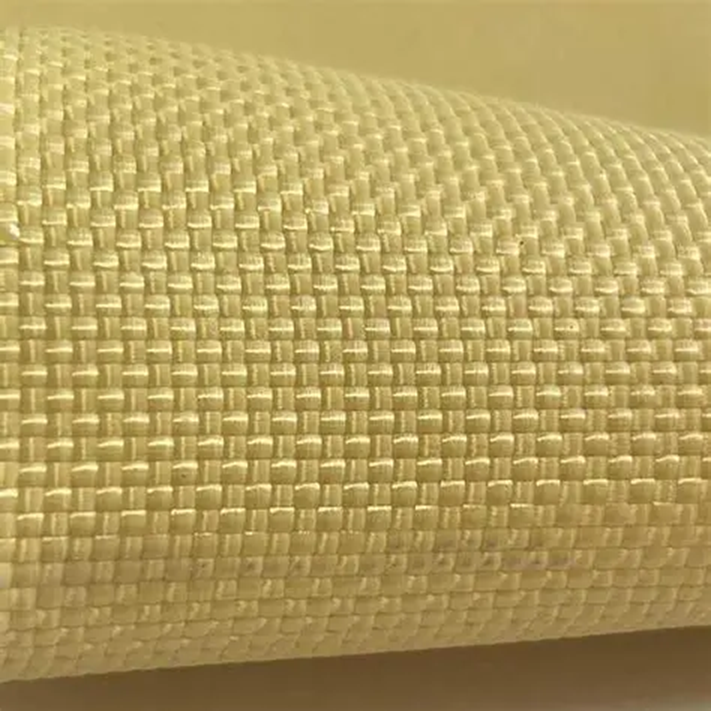
Aramid fabric is a high-performance technical textile known for its exceptional resistance to heat, abrasion, and impact. Aramid fibers are synthetic fibers produced from aromatic polyamides and are commercially known under trade names such as Nomex® (meta-aramid) and Kevlar® (para-aramid).
Chemical Identity
| Parameter | Meta-Aramid | Para-Aramid |
|---|---|---|
| Chemical Name | Poly(meta-phenylene isophthalamide) | Poly(para-phenylene terephthalamide) |
| Trade Names | Nomex®, Teijinconex®, Conex® | Kevlar®, Twaron®, Technora® |
| Molecular Structure | Meta-linked aromatic polyamide | Para-linked aromatic polyamide |
| Chain Arrangement | More flexible, less symmetrical | More symmetrical, crystalline |
| Glass Transition Temp (Tg) | ~270°C | ~345°C |
| Decomposition Temperature | ~370°C | ~500°C |
SECTION 1: ARAMID FIBER COMPARISON TABLE
| Property | Meta-Aramid (Nomex® etc.) | Para-Aramid (Kevlar® etc.) | Kevlar® (Brand Name) |
|---|---|---|---|
| Structure | Aromatic polyamide chains more flexible, less symmetrical molecular arrangement | Molecular chains more symmetrical and crystalline in structure | Produced from para-aramid fibers |
| Heat Resistance | Stable at 200–400°C | Resistant to high temperatures | Steel-like strength |
| Tensile Strength | Medium – High | Very High | Up to 3.6 GPa |
| Elongation at Break | ~15-25% | ~3-5% | Low elongation |
| Density | 1.38 g/cm³ | 1.44 g/cm³ | 1.44 g/cm³ |
| Electrical Insulation | Excellent | Good | Good |
| Chemical Resistance | High | Medium – High | High |
| Flame Retardancy | Yes (inherent) | Yes (inherent) | Yes (inherent) |
| Moisture Absorption | ~4-6% | ~1-4% | Low (~3.5%) |
| UV Resistance | Good | Poor | Poor (requires protection) |
| Main Applications | Heat protection, electrical insulation | Ballistic protection, composites | Body armor, helmets, sports equipment |
SECTION 2: KEY PROPERTIES
Heat Resistance
| Parameter | Value |
|---|---|
| Continuous Operating Temperature (Meta-Aramid) | 200-250°C |
| Continuous Operating Temperature (Para-Aramid) | 150-200°C |
| Maximum Short-Term Temperature | Maintains structural integrity up to 500°C |
| Flame Spread | Self-extinguishing (LOI > 28) |
| Melting Point | Does not melt, decomposes |
| High Temperature Dimensional Stability | Very good (low shrinkage) |
Mechanical Properties
| Parameter | Meta-Aramid | Para-Aramid |
|---|---|---|
| Tensile Strength | 300-600 MPa | 2,500-3,600 MPa |
| Modulus of Elasticity | 5-15 GPa | 70-130 GPa |
| Elongation at Break | 15-25% | 3-5% |
| Impact Resistance | High | Very High |
| Abrasion Resistance | Good | Excellent |
| Cut Resistance | Medium | High |
Chemical Properties
| Property | Value |
|---|---|
| Chemical Character | Aromatic polyamide |
| Organic Solvent Resistance | High |
| Acid Resistance | Medium (degrades in strong acids) |
| Base Resistance | Medium (degrades in strong bases) |
| Oxidation Resistance | High |
| Hydrolysis Resistance | Medium (decreases with prolonged moisture) |
SECTION 3: FABRIC STRUCTURES
Woven Aramid Fabric
| Property | Description |
|---|---|
| Structure | Formed by interlacing warp and weft yarns in specific patterns |
| Tensile Strength | Very high |
| Elongation | Low (does not stretch) |
| Fabric Character | Stiff and stable |
| Abrasion Resistance | Excellent |
| Tear Resistance | High |
| Air Permeability | Low |
| Flexibility | Low |
| Main Applications | Ballistic protection (bulletproof vests), industrial workwear, composite reinforcements |
Weave Patterns:
| Pattern Type | Property | Application |
|---|---|---|
| Plain Weave | Simplest, symmetrical | General protective clothing |
| Twill Weave | More flexible, good coverage | Ballistic protection, industrial |
| Satin Weave | High flexibility, shiny | Tactical clothing |
| Ripstop | Reinforced against tearing | Military uniforms |
Knitted Aramid Fabric
| Property | Description |
|---|---|
| Structure | Formed by interlocking yarns in loops |
| Tensile Strength | Medium |
| Elongation | High |
| Fabric Character | Flexible and comfortable |
| Air Permeability | High |
| Flexibility | High |
| Impact Energy Dissipation | High |
| Weight | Lighter |
| Main Applications | Protective gloves, sports equipment, flexible workwear requiring comfort |
SECTION 4: FABRIC COLOR OPTIONS
| Color | Code | Description | Application Area |
|---|---|---|---|
| 🖤 Black | RAL 9005 | Preferred in tactical and industrial use | Military, security, tactical equipment |
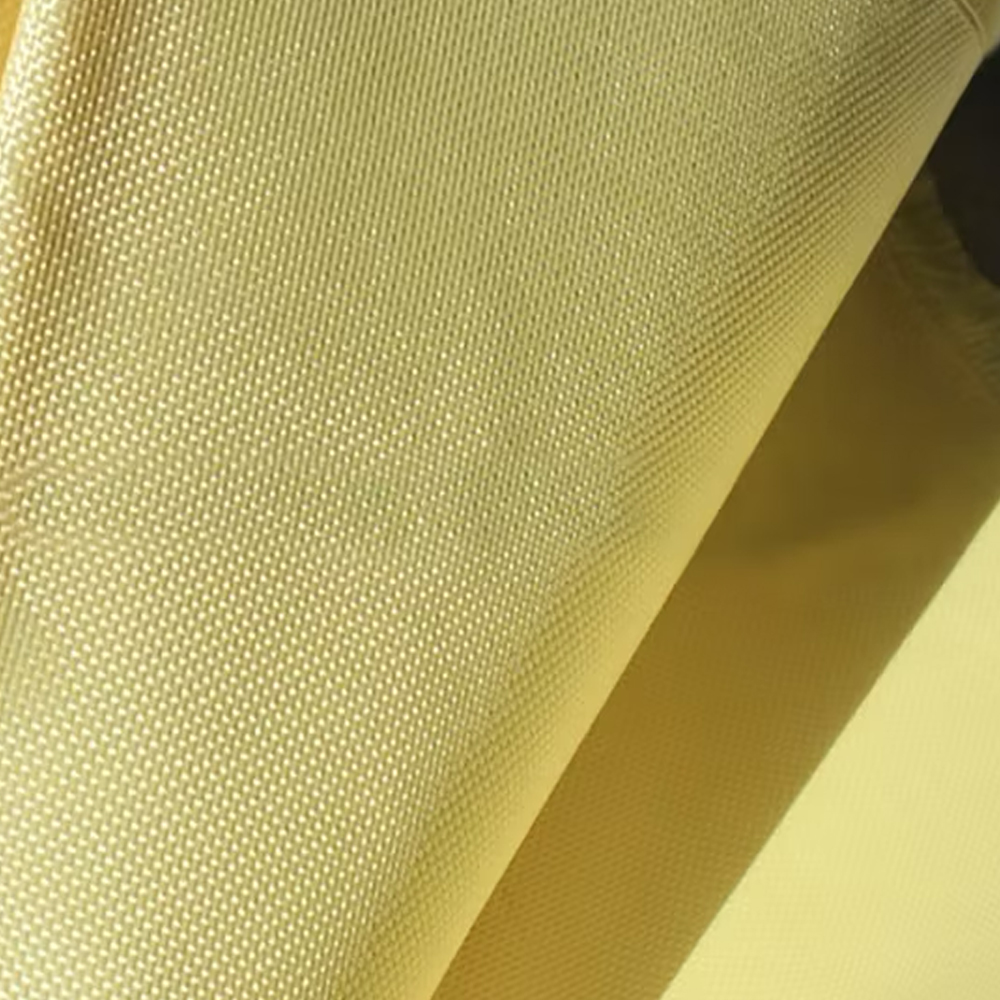
| 💛 Yellow/Gold | RAL 1018 | Kevlar®'s most famous classic color | Ballistic protection, defense industry |
| 🤍 White/Natural | RAL 9010 | Typical starting color for Nomex® | Firefighter clothing, can be dyed later |
| 🔵 Blue | RAL 5017 | Frequently used in work coveralls and uniforms | Industrial workwear |
| 🟢 Green | RAL 6003 | Used in military and outdoor applications | Hunting, forestry, military camouflage |
| 🟠 Orange | RAL 2004 | In protective clothing requiring high visibility | Firefighting, search and rescue |
| 🔴 Red | RAL 3020 | Preferred in special and limited applications | Special purpose protective equipment |
| ⚫ Gray | RAL 7001 | Modern industrial designs | Technical clothing |
Color Notes:
-
Kevlar® (para-aramid): Typically produced in yellow/gold color, difficult to dye.
-
Nomex® (meta-aramid): Mostly starts as white/natural, can be dyed in different colors.
-
Industrial and military applications: Black, green, blue colors are prominent.
-
High visibility required areas: Orange, yellow, red are preferred.
SECTION 5: APPLICATION AREAS
| Sector | Application | Aramid Type Used |
|---|---|---|
| Personal Protective Equipment | Firefighter clothing | Meta-Aramid (Nomex®) |
| Military uniforms | Meta-Aramid / Para-Aramid | |
| Industrial worker coveralls | Meta-Aramid | |
| Ballistic protection (bulletproof vests) | Para-Aramid (Kevlar®) | |
| Protective gloves | Para-Aramid | |
| Industrial Applications | Hose reinforcement | Para-Aramid |
| Composite materials | Para-Aramid | |
| Couplings and gaskets | Meta-Aramid | |
| Filtration systems | Meta-Aramid | |
| Automotive | Brake pads | Para-Aramid |
| Packaging materials | Para-Aramid | |
| Engine components | Meta-Aramid | |
| Aerospace | Aircraft interior insulation | Meta-Aramid |
| Composite structural elements | Para-Aramid | |
| Cable protection | Meta-Aramid | |
| Sports Equipment | Helmets | Para-Aramid |
| Bicycle tires | Para-Aramid | |
| Ski and snowboard equipment | Para-Aramid |
SECTION 6: TECHNICAL SPECIFICATIONS
Meta-Aramid (Nomex®) Typical Values
| Parameter | Value |
|---|---|
| Fiber Type | Meta-aramid |
| Density | 1.38 g/cm³ |
| Tensile Strength | 300-500 MPa |
| Modulus of Elasticity | 5-12 GPa |
| Elongation at Break | 15-25% |
| Glass Transition Temperature (Tg) | ~270°C |
| Decomposition Temperature | ~370°C |
| LOI (Limiting Oxygen Index) | 28-32 |
| Moisture Absorption | ~4-6% |
| Electrical Insulation | Excellent |
Para-Aramid (Kevlar®) Typical Values
| Parameter | Kevlar® 29 | Kevlar® 49 | Kevlar® 129 |
|---|---|---|---|
| Density | 1.44 g/cm³ | 1.44 g/cm³ | 1.44 g/cm³ |
| Tensile Strength | 2.9 GPa | 3.6 GPa | 3.2 GPa |
| Modulus of Elasticity | 70 GPa | 130 GPa | 80 GPa |
| Elongation at Break | 3.6% | 2.4% | 3.3% |
| Decomposition Temperature | ~500°C | ~500°C | ~500°C |
| LOI | 29 | 29 | 29 |
| Moisture Absorption | ~3.5% | ~3.5% | ~3.5% |
SECTION 7: ADVANTAGES AND DISADVANTAGES
Advantages
| Advantage | Description |
|---|---|
| 🔥 Heat Resistance | Maintains structural integrity up to 500°C |
| 🛡️ Flame Retardancy | Self-extinguishing, does not melt, no dripping |
| 💪 Mechanical Strength | Steel-like strength-to-weight ratio |
| 🧪 Chemical Resistance | Stable against most solvents and chemicals |
| 🪶 Lightweight | Low density, lightweight construction |
| 🔌 Electrical Insulation | Excellent dielectric properties |
| ⌛ Long Service Life | High durability, extended service life |
Disadvantages
| Disadvantage | Description |
|---|---|
| ☀️ UV Sensitivity | Para-aramid degrades in UV light (requires protection) |
| 💧 Hydrolysis Sensitivity | Prolonged moisture exposure causes strength loss |
| 🧵 Difficult Dyeing | Para-aramid is difficult to dye (limited color options) |
| 💰 High Cost | Expensive raw material and production costs |
| ✂️ Cutting Difficulty | High cut resistance, processing difficulty |
| 🔄 Recycling Difficulty | Difficult to recycle |
SECTION 8: COMPARATIVE TABLE
| Property | Meta-Aramid | Para-Aramid | Kevlar® |
|---|---|---|---|
| Heat Resistance | ★★★★★ | ★★★★☆ | ★★★★☆ |
| Mechanical Strength | ★★★☆☆ | ★★★★★ | ★★★★★ |
| Flexibility | ★★★★☆ | ★★★☆☆ | ★★★☆☆ |
| Chemical Resistance | ★★★★☆ | ★★★☆☆ | ★★★☆☆ |
| UV Resistance | ★★★★☆ | ★★☆☆☆ | ★★☆☆☆ |
| Moisture Absorption | ★★★☆☆ | ★★★★☆ | ★★★★☆ |
| Flame Retardancy | ★★★★★ | ★★★★★ | ★★★★★ |
| Electrical Insulation | ★★★★★ | ★★★☆☆ | ★★★☆☆ |
| Dyeability | ★★★★☆ | ★☆☆☆☆ | ★☆☆☆☆ |
| Cost | ★★★☆☆ | ★★☆☆☆ | ★★☆☆☆ |
| Main Application | Heat Protection | Ballistic Protection | Body Armor |
SECTION 9: CARE AND USAGE RECOMMENDATIONS
Washing Instructions
| Parameter | Recommendation |
|---|---|
| Washing Temperature | ≤ 60°C (meta-aramid), ≤ 40°C (para-aramid) |
| Detergent | Neutral pH, bleach-free |
| Bleach | DO NOT USE |
| Drying | Low temperature drying, avoid direct sunlight |
| Ironing | Low temperature (<150°C) |
| Dry Cleaning | Recommended (with specified solvents) |
Usage Warnings
| Warning | Description |
|---|---|
| UV Protection | Do not expose to prolonged sunlight |
| Moisture | Do not store in prolonged humid environments |
| Chemical Contact | Protect from strong acids and bases |
| Abrasion | Replace products showing signs of wear |
| Storage | Store in cool, dry, and dark environment |
SECTION 10: SUMMARY TABLE
| Parameter | Meta-Aramid | Para-Aramid |
|---|---|---|
| Trade Names | Nomex®, Teijinconex® | Kevlar®, Twaron® |
| Heat Resistance | 200-400°C | 150-500°C |
| Tensile Strength | 300-600 MPa | 2,500-3,600 MPa |
| Modulus of Elasticity | 5-15 GPa | 70-130 GPa |
| Elongation at Break | 15-25% | 3-5% |
| Density | 1.38 g/cm³ | 1.44 g/cm³ |
| LOI | 28-32 | 29 |
| Main Application | Heat protection, insulation | Ballistic protection, composites |
| Typical Color | White, dyeable | Yellow/Gold |
SECTION 11: CRITICAL WARNINGS AND BEST PRACTICES
CRITICAL WARNINGS:
UV Sensitivity: Para-aramid (Kevlar®) fibers lose strength under prolonged UV exposure; protect from direct sunlight.
Heat and Flame: Both aramid types are flame retardant; however, prolonged high temperature (>400°C) causes degradation.
Chemical Incompatibility: Strong acids (H₂SO₄, HNO₃) and strong bases (NaOH) degrade aramid fibers.
Washing: Chlorine bleach and high temperatures cause fiber damage.
BEST PRACTICE RECOMMENDATIONS:
Selection: If heat protection is priority, choose meta-aramid; if mechanical strength is priority, choose para-aramid.
Design: Select woven or knitted structure according to application requirements.
Maintenance: Wash and care according to manufacturer instructions.
Storage: Store in cool, dry, UV-protected environment.
Inspection: Regularly inspect for wear, tears, and color fading.
LEGAL DISCLAIMER:
The information provided in this document is based on our current knowledge and experience and is presented in good faith; however, as all conditions of use are beyond our control, it does not constitute a binding specification or warranty. This Technical Data Sheet is for informational purposes only. Users are responsible for testing the suitability for their own applications. All trademarks (Kevlar®, Nomex®, Twaron®, Teijinconex®, etc.) are the property of their respective owners.