We unleash your business potential by maximize the business innovation.
Send EmailPara Toluene Sulfonamide, Tosylamide, Para Methyl Benzene Sulfon Amide, p-Toluenesulfonamide, p-Tosylamide, PTSA, 70-55-3
PARA TOLUENE SULFONAMIDE (PTSA)
Para Toluene Sulfonamide / p-Toluenesulfonamide / p-Tosylamide / 4-Methylbenzenesulfonamide / Tosylamide
CAS Number: 70-55-3
EC Number: 200-741-1
1. PRODUCT IDENTIFICATION AND CHEMICAL IDENTITY
| Parameter | Description |
|---|---|
| Chemical Name (IUPAC) | 4-Methylbenzenesulfonamide |
| Other Names | p-Toluenesulfonamide, p-Tosylamide, Tosylamide, PTSA, 4-Toluenesulfonamide, Toluene-4-sulfonamide, p-Methylbenzenesulfonamide, Plasticizer 15 |
| CAS Number | 70-55-3 |
| EC Number (EINECS) | 200-741-1 |
| Molecular Formula | C₇H₉NO₂S |
| Molecular Weight | 171.22 g/mol |
| Chemical Class | Sulfonamide (organic sulfur compound) |
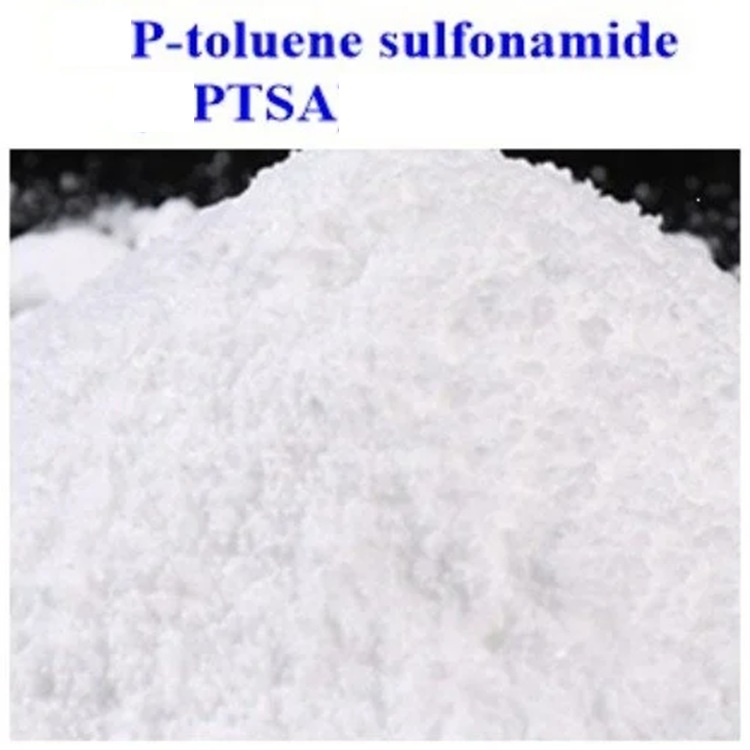
| Appearance | White crystalline powder or flakes |
| Odor | Odorless |
| MDL Number | MFCD00011692 |
| RTECS | XT5075000 |
Para Toluene Sulfonamide (p-Toluenesulfonamide) is an important aromatic sulfonamide compound that serves as a key building block in organic synthesis. It is a derivative of benzenesulfonamide with a methyl group (-CH₃) at the 4-position of the benzene ring. This compound appears as white crystalline powder or flakes, is odorless, and has low solubility in water (0.32 g/100 mL at 25°C) but is soluble in alcohol, DMSO, and other organic solvents. It is chemically stable under normal conditions and maintains its stability in neutral, acidic, and basic environments. p-Toluenesulfonamide is known as the major degradation product of Chloramine-T and is also used as an intermediate in saccharin production.
2. PHYSICAL AND CHEMICAL PROPERTIES
| Property | Value |
|---|---|
| Molecular Formula | C₇H₉NO₂S |
| Molecular Weight | 171.22 g/mol |
| Appearance | White crystalline powder or flakes |
| Odor | Odorless |
| Melting Point | 134-140°C (varies with purity; anhydrous 138.5°C, hydrated 105°C) |
| Boiling Point | 221°C (at 10 mmHg) |
| Density (Estimated) | 1.2495 g/cm³ |
| Vapor Density (Air=1) | 5.9 |
| Flash Point | 202°C |
| Water Solubility (25°C) | 0.32 g/100 mL (3.160 mg/L) |
| Organic Solvent Solubility | Soluble in alcohols; soluble in DMSO |
| LogP (Octanol/Water) | 0.82 |
| pKa (20°C) | 10.17 |
| Vapor Pressure (25°C) | Negligible |
| Henry's Law Constant | 2.1×10¹ mol/(m³·Pa) (25°C) |
| Refractive Index (Estimated) | 1.6100 |
p-Toluenesulfonamide is a white crystalline solid in the form of flakes or powder, and is odorless. The melting point ranges from 134-140°C, with the anhydrous form melting at 138.5°C and the hydrated form at 105°C. The boiling point is 221°C at 10 mmHg pressure. The flash point is 202°C, indicating its combustible nature. Water solubility at 25°C is 0.32 g/100 mL, making it sparingly soluble in water, but it is readily soluble in alcohol and DMSO. The LogP value of 0.82 indicates moderate hydrophobic character. The pKa value of 10.17 indicates weak acidic properties.
3. CHEMICAL PROPERTIES AND REACTIONS
p-Toluenesulfonamide is an organic compound containing a sulfonamide group (-SO₂NH₂), which enables various chemical reactions.
Acid-Base Properties:
The sulfonamide group exhibits weak acidic character (pKa 10.17). It can react with strong bases to form salts.
Nucleophilic Reactions:
The sulfonamide group undergoes alkylation and acylation reactions due to the nucleophilic nature of the amine group. This property is utilized in the synthesis of N-tosyl imines and other sulfonamide derivatives.
Thermal Decomposition:
When heated (above 105°C), it decomposes releasing nitrogen gas. This property enables its use as a blowing agent. Gas evolution is approximately 130 mL/g.
Combustion:
Burning produces toxic and irritating gases (nitrogen oxides and sulfur oxides).
Reactivity:
Reacts violently with strong acids, bases, and oxidizing agents.
4. PRODUCTION METHODS
p-Toluenesulfonamide is produced industrially by various methods:
| Method | Description |
|---|---|
| Amination of Toluene Sulfonyl Chloride | Reaction of p-toluenesulfonyl chloride (tosyl chloride) with ammonia or ammonium hydroxide is the most common method. |
| Degradation of Chloramine-T | Formed as a degradation product of Chloramine-T (N-chloro-p-toluenesulfonamide). This is the major degradation product of Chloramine-T. |
| By-product of Saccharin Production | Formed as an intermediate during saccharin production. |
5. APPLICATIONS AND INDUSTRIAL USES
p-Toluenesulfonamide has a wide range of industrial applications due to its versatile chemical properties.
5.1. Plasticizer and Polymer Additive
| Application | Description |
|---|---|
| Plasticizer for Thermoset Plastics | Used as an excellent solid plasticizer for phenolic resins, melamine resins, urea-formaldehyde resins, and polyamide resins. Improves processability, ensures homogeneous solidification, and provides good gloss. |
| Polymer Stabilizer | Modifies physical properties and enhances performance of polymers. |
| Epoxy Resins | Used in epoxy resin formulations to improve properties. |
5.2. Electroplating (Nickel Brightener)
| Application | Description |
|---|---|
| Bright Nickel Plating | Used as a primary brightener in nickel plating baths. Typical usage: 0.2-0.3 g/L. Adsorbs on the electrode to improve coating structure and provide brightening effect. |
| Multi-layer Nickel Plating | Used in multi-layer nickel plating for uniform bright deposits. |
5.3. Organic Synthesis and Chemical Intermediate
| Application | Description |
|---|---|
| N-Tosyl Imine Precursor | Used as a precursor in the synthesis of N-tosyl imines. |
| Sulfonamide Synthesis | Used as a nitrogen source in the synthesis of biologically active sulfonamide derivatives. |
| Saccharin Production | Used as an intermediate in the production of the artificial sweetener saccharin. |
| Catalyst Precursor | Used as a starting material in the synthesis of various catalysts. |
| Vinyl Aziridine Ring Opening | Used as a nucleophile in tetrabutylammonium fluoride (TBAF)-catalyzed vinyl aziridine ring-opening reactions. |
| Selective Aziridination of Olefins | Used as a reagent in selective aziridination of olefins catalyzed by dirhodium(II) caprolactamate. |
5.4. Other Applications
| Application | Description |
|---|---|
| Fungicide and Mildewcide | Used as a fungicide and mildewcide in paints and coatings. |
| Disinfectant | Used in disinfectant production. |
| Blowing Agent | Used as a blowing agent due to nitrogen gas release upon heating. Provides fine cell foam structure. |
| Fluorescent Dyes | Used in the synthesis of fluorescent dyes. |
| Research Applications | Investigated in China as an experimental anticancer drug in combination with other drugs for lung cancer treatment via local injection. |
6. SAFETY AND TOXICOLOGY
6.1. Toxicological Data
| Parameter | Value |
|---|---|
| Acute Toxicity (Oral, Rat) | Low toxicity |
| Skin Irritation | Mild irritant |
| Eye Irritation | Mechanical irritation, redness, pain |
| Inhalation | Dust inhalation may be discomforting |
| Mutagenicity | Not mutagenic in Salmonella typhimurium (Ames test negative) |
| Carcinogenicity | Not classified |
| NTP Toxicity Studies | No treatment-related lesions observed in F344/NTac rats or B6C3F1/N mice in 14-week feeding studies |
6.2. Health Effects
| Exposure | Effect |
|---|---|
| Inhalation (Dust) | May cause respiratory irritation (H335) |
| Skin Contact | Causes skin irritation (H315) |
| Eye Contact | Causes serious eye irritation (H319); mechanical irritation, redness, pain |
| Ingestion | Low toxicity; large amounts may cause gastrointestinal discomfort |
NTP Toxicity Studies Summary:
In 14-week feeding studies conducted by the National Toxicology Program (NTP):
-
F344/NTac Rats: The most sensitive parameters were increased relative kidney weight in male rats (LOEL: 2,500 ppm; 200 mg/kg) and decreased body weight in female rats (LOEL: 10,000 ppm; 780 mg/kg).
-
B6C3F1/N Mice: Increased relative lung weight in male mice (LOEL: 10,000 ppm; 1,760 mg/kg) and increased absolute and relative liver and kidney weights in female mice (LOEL: 10,000 ppm; 1,890 mg/kg) were observed.
-
Genetic Toxicology: p-Toluenesulfonamide was not mutagenic in Salmonella typhimurium (TA98, TA100, TA102) with or without metabolic activation. No increase in micronuclei was observed in mouse or rat peripheral blood in in vivo studies.
7. FIRST AID MEASURES
| Exposure Route | Action |
|---|---|
| Inhalation | Move person to fresh air. If irritation persists, seek medical attention. |
| Skin Contact | Wash with plenty of soap and water. Remove contaminated clothing. |
| Eye Contact | Rinse immediately with plenty of water for at least 15 minutes. Remove contact lenses if present. If irritation persists, seek medical attention. |
| Ingestion | Rinse mouth with water. Drink plenty of water. Do NOT induce vomiting. Seek medical attention if large amounts are swallowed. |
8. SAFETY INFORMATION (GHS CLASSIFICATION)
| Hazard Class | Category |
|---|---|
| Skin Irritation | Category 2 (H315) |
| Eye Irritation | Category 2 (H319) |
| Specific Target Organ Toxicity - Single Exposure | Category 3 (Respiratory irritation - H335) |
Signal Word: WARNING
Hazard Statements (H-Codes):
| Code | Statement |
|---|---|
| H315 | Causes skin irritation |
| H319 | Causes serious eye irritation |
| H335 | May cause respiratory irritation |
Precautionary Statements (P-Codes):
| Code | Statement |
|---|---|
| P261 | Avoid breathing dust |
| P264 | Wash thoroughly after handling |
| P271 | Use only outdoors or in a well-ventilated area |
| P280 | Wear protective gloves, protective clothing, eye/face protection |
| P302+P352 | IF ON SKIN: Wash with plenty of soap and water |
| P304+P340 | IF INHALED: Remove person to fresh air and keep comfortable for breathing |
| P305+P351+P338 | IF IN EYES: Rinse cautiously with water for several minutes. Remove contact lenses if present and easy to do. Continue rinsing |
| P332+P313 | If skin irritation occurs: Get medical attention |
| P337+P313 | If eye irritation persists: Get medical attention |
| P362 | Take off contaminated clothing and wash before reuse |
| P405 | Store locked up |
| P501 | Dispose of contents/container in accordance with local/regional/national/international regulations |
9. FIREFIGHTING MEASURES
| Parameter | Information |
|---|---|
| Flammability | Combustible |
| Flash Point | 202°C |
| Extinguishing Media | Water fog, foam, CO₂, dry chemical powder |
| Special Hazards | Burning produces toxic and irritating fumes (nitrogen oxides, sulfur oxides) |
| Protective Equipment | Self-contained breathing apparatus (SCBA), full protective clothing |
| Reactivity | Reacts violently with acids, bases, and strong oxidizing agents |
10. ACCIDENTAL RELEASE MEASURES
| Parameter | Information |
|---|---|
| Personal Protection | Wear appropriate PPE (dust mask, goggles, protective clothing, gloves) |
| Ventilation | Increase ventilation; evacuate area if necessary |
| Containment | Stop source if safe; contain powder to prevent spread |
| Cleaning Methods | Dampen and sweep to avoid dust generation; use wet methods to suppress dust; collect in closed containers |
| Environmental Precautions | Prevent entry into drains, sewers, and water bodies |
| Waste Disposal | Dispose of according to local, state, and federal regulations |
11. STORAGE AND HANDLING
| Parameter | Information |
|---|---|
| Storage Conditions | Cool, dry, well-ventilated area; store below 30°C |
| Container Requirements | Tightly closed containers |
| Materials to Avoid | Strong acids, strong bases, strong oxidizing agents |
| Shelf Life | 24-36 months under proper storage conditions |
| Hygroscopicity | Low |
| Handling Notes | Avoid dust generation; avoid contact with skin and eyes |
| Packaging Options | 25 kg bags, drums, FIBCs |
12. TRANSPORT INFORMATION
| Parameter | Information |
|---|---|
| UN Number | Not applicable (not classified as dangerous good) |
| Hazard Class | Not a dangerous good |
| Packing Group | III (when classified as flammable solid) |
| Proper Shipping Name | p-Toluenesulfonamide |
| Marine Pollutant | No |
| ADR/RID Label | Not applicable |
13. REGULATORY INFORMATION
| Region | Status |
|---|---|
| EU | REACH registered |
| Turkey (KKDİK) | Mandatory compliance; requires registration |
| USA (TSCA) | Listed |
| Canada (DSL) | Listed |
| Australia (AICS) | Listed |
| Japan (ENCS) | Listed |
| Korea (KECL) | Listed |
| China (IECSC) | Listed |
Regulatory Status:
| Status | Information |
|---|---|
| FDA Compliance | Approved for use in food packaging adhesives (limited) |
| EU Compliance | REACH registered; approved for use as plasticizer and skin care additive in cosmetic products |
| IARC Classification | Not classified |
| HS Code | 29350090 |
| RTECS | XT5075000 |
| WGK Germany | 1 (slight hazard to water) |
| TSCA | Yes |
| EINECS | 200-741-1 |
14. OTHER NAMES AND SYNONYMS
| Category | Names / Identifiers |
|---|---|
| Chemical Names | 4-Methylbenzenesulfonamide, Toluene-4-sulfonamide, 4-Toluenesulfonamide |
| Synonyms | p-Toluenesulfonamide, p-Tosylamide, Tosylamide, PTSA, Tosylamide, Plasticizer 15, p-Toluenesulfamide, 4-Methylphenylsulfonamide, p-Tolylsulfonamide |
| Abbreviations | PTSA, p-TSA, TSH (not to be confused with p-toluenesulfonyl hydrazide) |
Database Identifiers:
| Database | Identifier |
|---|---|
| CAS | 70-55-3 |
| EC (EINECS) | 200-741-1 |
| MDL | MFCD00011692 |
| PubChem CID | 71886 |
| RTECS | XT5075000 |
| UN | Not applicable |
| HS Code | 29350090 |
| BRN | 472689 |
| ChEBI | 416087 |
15. ENVIRONMENTAL INFORMATION
| Parameter | Information |
|---|---|
| Aquatic Toxicity | Low toxicity |
| Biodegradability | Limited information available |
| Bioaccumulation | Low potential (LogP 0.82) |
| Mobility in Soil | Moderate (sparingly soluble in water) |
| Environmental Fate | Limited environmental persistence |
| Waste Disposal | Dispose of according to local regulations; incineration recommended |
16. RAW MATERIALS AND DERIVATIVE PRODUCTS
16.1. Raw Materials (Upstream)
| Raw Material | Description |
|---|---|
| Toluene Sulfonyl Chloride | Primary raw material (tosyl chloride) |
| Ammonia | For amination reaction |
| Chloramine-T | For production via degradation |
16.2. Derivative Products (Downstream)
| Derivative | Application |
|---|---|
| Saccharin | Artificial sweetener |
| N-Tosyl Imines | Organic synthesis intermediates |
| Sulfonamide Derivatives | Pharmaceuticals, pesticides |
| Fluorescent Dyes | Dyes and pigments |
| Blowing Agents | Polymer foam production |
17. APPLICATION SUMMARY TABLE
| Industry | Application | Function |
|---|---|---|
| Plastics and Polymers | Thermoset resins (phenolic, melamine, urea-formaldehyde, polyamide) | Solid plasticizer, processability enhancer |
| Electroplating | Bright nickel plating | Primary brightener (0.2-0.3 g/L) |
| Organic Synthesis | N-tosyl imines, sulfonamide derivatives, saccharin | Intermediate, nitrogen source |
| Paints and Coatings | Paints, coatings | Fungicide, mildewcide |
| Cosmetics | Cosmetic products | Plasticizer, skin care additive |
| Research | Cancer research | Experimental anticancer agent |
18. OTHER INDUSTRIAL APPLICATIONS
| Application | Description |
|---|---|
| Disinfectant Production | Used in disinfectant formulations |
| Fluorescent Dye Synthesis | Used in fluorescent dye production |
| Blowing Agent | Releases nitrogen gas upon heating to create foam |
| Wood Processing | Used as a wood polish |
| Pesticide Intermediate | Used as an intermediate in pesticide synthesis |
19. QUALITY CONTROL PARAMETERS
| Parameter | Specification |
|---|---|
| Purity | ≥ 98.0% (HPLC) |
| Appearance | White crystalline powder or flakes |
| Melting Point | 134-140°C |
| Color | White |
| Odor | Odorless |
| Moisture Content | ≤ 0.5% |
| Residue on Ignition | ≤ 0.1% |
| Heavy Metals (Pb) | ≤ 10 ppm |
20. SUMMARY AND CRITICAL WARNINGS
SUMMARY:
p-Toluenesulfonamide (C₇H₉NO₂S, CAS 70-55-3) is an important aromatic sulfonamide compound serving as a key building block in organic synthesis. It appears as a white crystalline powder or flakes, is odorless, and has low solubility in water (0.32 g/100 mL at 25°C) but is soluble in alcohol and DMSO. The melting point is 134-140°C, boiling point is 221°C (at 10 mmHg), and flash point is 202°C. It is the major degradation product of Chloramine-T and is used as an intermediate in saccharin production. It is used as a solid plasticizer for thermoset plastics (phenolic, melamine, urea-formaldehyde, polyamide), as a primary brightener in nickel plating (0.2-0.3 g/L), as a precursor for N-tosyl imines, and as a nitrogen source in sulfonamide synthesis. It is also used as a fungicide, mildewcide, disinfectant, and blowing agent. It is FDA approved for use in food packaging adhesives. Toxicologically, it has low toxicity; it may cause skin, eye, and respiratory irritation. NTP studies have shown it is not mutagenic. It is combustible and burning produces toxic nitrogen and sulfur oxides. It should be stored below 30°C in cool, dry, well-ventilated areas.
Key Properties:
| Property | Value |
|---|---|
| Appearance | White crystalline powder or flakes |
| Chemical Formula | C₇H₉NO₂S |
| Molecular Weight | 171.22 g/mol |
| CAS Number | 70-55-3 |
| Melting Point | 134-140°C |
| Water Solubility (25°C) | 0.32 g/100 mL |
| LogP | 0.82 |
| Primary Use | Plasticizer, nickel brightener, organic synthesis intermediate |
Major Application Areas:
| Industry | Applications |
|---|---|
| Plastics and Polymers | Solid plasticizer for thermoset resins |
| Electroplating | Primary brightener for bright nickel plating |
| Organic Synthesis | N-tosyl imines, saccharin, sulfonamide derivatives |
| Paints and Coatings | Fungicide, mildewcide |
| Cosmetics | Plasticizer, skin care additive |
Key Safety Points:
-
IRRITANT: Causes skin, eye, and respiratory irritation (H315, H319, H335)
-
COMBUSTIBLE: Flash point 202°C; burning produces toxic fumes
-
REACTIVE: Reacts with strong acids, bases, and oxidizing agents
-
STORAGE: Store below 30°C in cool, dry, well-ventilated area
-
PPE REQUIRED: Dust mask, safety goggles, protective gloves (for powder handling)
-
FDA APPROVED: Approved for use in food packaging adhesives (limited)
CRITICAL WARNINGS:
Use as Plasticizer: p-Toluenesulfonamide is an excellent solid plasticizer for phenolic, melamine, urea-formaldehyde, and polyamide resins. It improves processability, ensures homogeneous solidification, and provides good gloss. When used in thermoset plastics, it enhances mechanical properties and surface quality.
Electroplating Application: As a primary brightener in nickel plating baths, p-toluenesulfonamide is typically used at 0.2-0.3 g/L concentration. It adsorbs on the electrode to improve coating structure and provide brightening effect. It is used in multi-layer nickel plating for uniform bright deposits.
Saccharin Production: p-Toluenesulfonamide is an important intermediate in the production of the artificial sweetener saccharin. This application represents one of the compound's most significant chemical intermediate roles.
N-Tosyl Imine Synthesis: In organic synthesis, p-toluenesulfonamide is used as a precursor for the synthesis of N-tosyl imines (aldimines). These compounds are valuable intermediates in the synthesis of various heterocyclic compounds and pharmaceutical intermediates.
Safety and Toxicology: NTP studies have shown p-toluenesulfonamide has a low toxicity profile. No treatment-related lesions were observed in F344/NTac rats or B6C3F1/N mice in 14-week feeding studies. It was not mutagenic in Salmonella typhimurium (Ames test negative). No increase in micronuclei was observed in mouse or rat peripheral blood in in vivo studies.
Fungicide and Mildewcide: Used as a fungicide and mildewcide in paints, coatings, and wood treatment products. This property particularly enhances product durability in outdoor applications and high-humidity environments by providing antifungal properties to coatings.
Blowing Agent: Upon heating (above 105°C), it releases nitrogen gas for foam formation. Gas evolution is approximately 130 mL/g. This property is used in polymer foam production and fine cell foam formation. The nitrogen gas released during thermal decomposition creates a homogeneous, fine-celled foam structure.
Cosmetic Applications: Used as a plasticizer and skin care additive in cosmetic products. Under EU regulations, its use in cosmetic products as a plasticizer and skin care additive is approved.
FDA Approval: p-Toluenesulfonamide is FDA approved for use in food packaging adhesives (limited). This approval ensures safe use in food contact materials. Use in food packaging adhesives is subject to specific migration limits.
Thermal Stability: p-Toluenesulfonamide decomposes above 105°C releasing nitrogen gas. This property enables its use as a blowing agent. Thermal decomposition gas evolution is approximately 130 mL/g. Processing temperatures should be maintained below this value.
Reactivity Warnings: Reacts violently with strong acids, bases, and oxidizing agents. Contact with these substances should be avoided. It may decompose in acidic or basic environments releasing toxic gases.
Environmental Considerations: Environmental persistence is limited and toxicity is low. LogP value of 0.82 indicates low bioaccumulation potential. Low water solubility limits mobility in aquatic environments.
Transport and Storage: Not classified as a dangerous good, but should be stored carefully due to its combustible nature. Should be kept in cool, dry, well-ventilated areas away from ignition sources. Packaging: 25 kg bags, drums, or FIBCs.
Important Disclaimer: This Technical Data Sheet (TDS) is for informational purposes only. The information provided is based on available data and is believed to be accurate. However, the user is solely responsible for determining the suitability of the product for their specific application and for complying with all applicable regulations and safety requirements. For complete safety, handling, storage, and regulatory compliance information, always refer to the official Safety Data Sheet (SDS/MSDS) provided by the manufacturer/supplier. Users are responsible for testing the product in their own processes and applications. All local, national, and international regulations must be followed when working with p-toluenesulfonamide.