We unleash your business potential by maximize the business innovation.
Send EmailPara Toluene Sulfon Amide, Para Tosyl Amine, Para Methyl Benzene Sulfon Amide, p-Toluenesulfonamide, p-Tosylamide, PTSA, 70-55-3
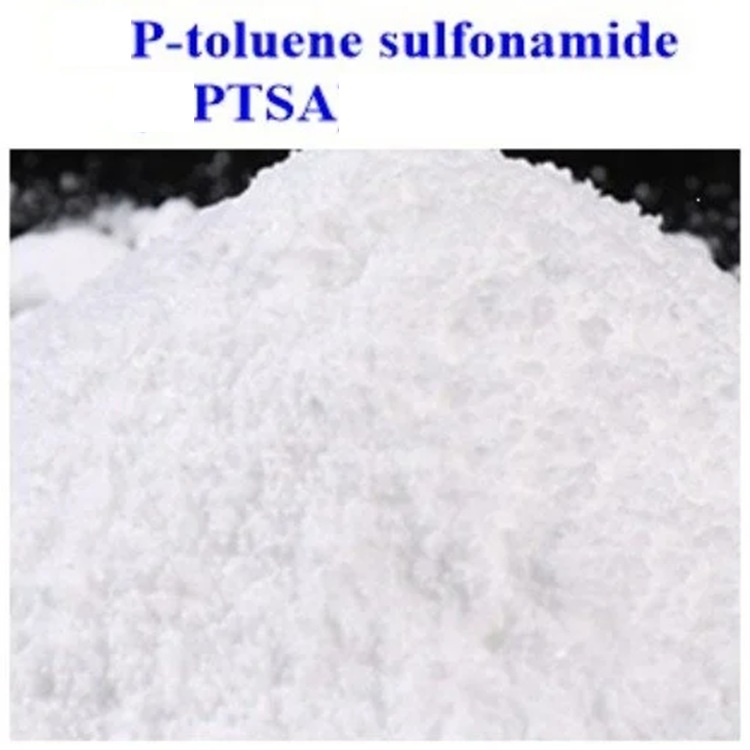
p-Toluenesulfonamide (p-Tosylamide)
-
Formula: CH₃C₆H₄SO₂NH₂
-
Nature: Neutral crystalline solid, used as a functional reagent.
-
Sectoral Applications:
-
Pharmaceuticals: Protecting group for amines, precursor for sulfonamide derivatives.
-
Polymer Chemistry: Building block for specialty polymers.
-
Fine Chemicals: Selective reagent in organic synthesis.
-
-
Usage Amounts:
-
Applied in stoichiometric quantities (equal to or slightly more than the amine substrate).
-
Excess reagent may complicate downstream purification.
-
Key Difference in Practice
-
PTSA: Sector-wide catalyst, small amounts but strong effect.
-
p-Toluenesulfonamide: Sector-specific reagent, used in full stoichiometric proportions.
Here’s a sectoral compliance and usage suitability table for both p-Toluenesulfonic Acid (PTSA) and p-Toluenesulfonamide (p-Tosylamide):
| Sector | PTSA (p-Toluenesulfonic Acid) | p-Toluenesulfonamide (p-Tosylamide) |
|---|---|---|
| Chemicals & Polymers | Widely accepted as a catalyst in esterification, transesterification, and resin production. Usage: catalytic amounts (0.5–5%). | Used as a building block for specialty polymers. Usage: stoichiometric with target amines. |
| Textiles & Dyes | Suitable for reactive dye synthesis and textile finishing processes. Compliance: REACH registered, but requires handling precautions. | Limited direct textile use; more relevant in intermediate synthesis. |
| Pharmaceuticals | Not directly used in drug formulations; mainly in intermediate synthesis. Must comply with GMP restrictions. | Highly relevant: protecting group for amines, precursor for sulfonamide drugs. Usage: stoichiometric. |
| Food & Ingredients | Not approved as a direct additive. Only indirect role in synthesis of intermediates. | Not suitable for food applications; restricted to fine chemical synthesis. |
| Regulatory Compliance | REACH registered in EU; requires hazard labeling (corrosive, irritant). | REACH registered; classified as irritant. Must comply with workplace exposure limits. |
Key Takeaways
-
PTSA → Strong acid catalyst, sectorally suitable for chemical, polymer, textile industries. Usage is low concentration but requires strict handling.
-
p-Toluenesulfonamide → Sectorally suitable for pharmaceuticals and fine chemicals, used in stoichiometric amounts as a protecting group or intermediate.
p-Toluenesulfonamide (p-Tosylamide)
-
CAS Number: 70-55-3
-
Other Names:
-
p-Tosylamide
-
4-Methylbenzenesulfonamide
-
p-Methylbenzenesulfonamide
-
Tosylamine
-
Sectoral Uses & Why It’s Preferred
-
Pharmaceuticals
-
Used as a protecting group for amines and precursor for sulfonamide drugs.
-
Preferred for its stability, selectivity, and ease of removal in deprotection steps.
-
-
Polymers & Plastics
-
Acts as a building block in specialty polymer synthesis.
-
Preferred for thermal stability and functional group control.
-
-
Agrochemicals
-
Intermediate in pesticide and herbicide synthesis.
-
Preferred for controlled reactivity and reliable synthesis pathways.
-
-
Cosmetics & Fine Chemicals
-
Occasionally used in specialty formulations as an intermediate.
-
Preferred for regulatory compliance (REACH registered) and predictable reactivity.
-
Processes
-
Protection/Deprotection Reactions: Temporarily blocks amine groups to allow selective transformations.
-
Sulfonamide Derivative Synthesis: Key step in producing antibacterial drugs and other therapeutic agents.
-
Polymerization: Used in preparing functional monomers for advanced materials.
Production
-
Starting Material: p-Toluenesulfonyl chloride (derived from p-Toluenesulfonic acid).
-
Reaction: Amidation with ammonia or amines → yields p-Toluenesulfonamide.
-
Product: White crystalline solid, typically >95% purity.
Alternatives
-
Benzenesulfonamide
-
Methanesulfonamide
-
Other aromatic sulfonamides
Comparative Suitability Table
| Feature / Sector | p-Toluenesulfonamide | Benzenesulfonamide | Methanesulfonamide |
|---|---|---|---|
| Pharmaceuticals | Highly preferred; selective amine protection, precursor for sulfonamide drugs | Less selective, lower preference | Limited use, less stable |
| Polymers | Strong building block, high stability | Rarely used | Lower thermal stability |
| Agrochemicals | Suitable for pesticide/herbicide synthesis | Possible but costlier | Less effective |
| Cosmetics/Fine Chemicals | Controlled use, REACH compliant | Rarely applied | Limited application |
| Production Ease | Simple amidation from tosyl chloride | More complex synthesis | Easier synthesis but weaker performance |
| Regulatory Compliance | REACH registered, irritant classification | REACH compliant | REACH compliant |
Summary:
-
p-Toluenesulfonamide is the most suitable option for pharmaceutical and polymer sectors, thanks to its stability and selectivity.
-
Alternatives (benzenesulfonamide, methanesulfonamide) can be used in certain processes but generally offer lower performance or sectoral relevance.