We unleash your business potential by maximize the business innovation.
Send EmailBetaine Anhydrous, Trimethyl Glycine, Glycine Betaine, TMG, 107-43-7
BETAINE ANHYDROUS (TRIMETHYLGLYCINE)
1. PRODUCT DEFINITION AND CHEMICAL IDENTITY
| Parameter | Description |
|---|---|
| Chemical Name (IUPAC) | 1-Carboxy-N,N,N-trimethylmethanaminium hydroxide inner salt |
| Common Name | Betaine Anhydrous, Trimethylglycine (TMG), Glycine Betaine |
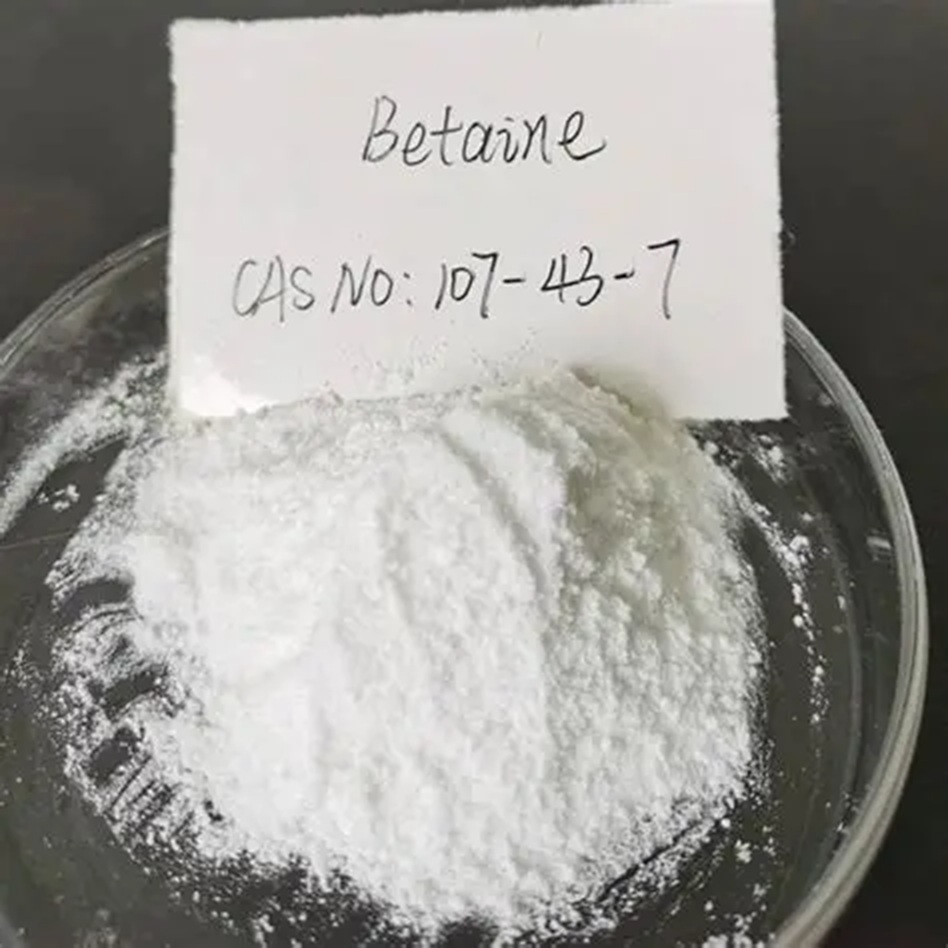
| CAS Number | 107-43-7 |
| EC Number | 203-490-6 |
| Molecular Formula | C₅H₁₁NO₂ |
| Molecular Weight | 117.15 g/mol |
| Appearance | White crystalline powder |
| Odour | Odourless |
Note: Betaine anhydrous is the pure, zwitterionic (inner salt) form of trimethylglycine, a naturally occurring compound found in high concentrations in sugar beets, spinach, whole grains, seafood, and wine. Unlike its hydrochloride salt, it is pH neutral. It is a potent methyl donor and osmoprotectant, playing a critical role in liver health, cardiovascular function, and cellular hydration. It is widely used in pharmaceuticals, sports nutrition, animal feed, and functional foods.
2. PHYSICAL AND CHEMICAL PROPERTIES
| Property | Value / Description |
|---|---|
| Physical form | White, free-flowing crystalline powder |
| Molecular Weight | 117.15 g/mol |
| Melting point | ~293 °C (decomposes) |
| Solubility in water | Freely soluble (high solubility) |
| pH (aqueous solution) | Neutral (~5.0 – 7.0) |
| Hygroscopy | Slightly hygroscopic |
| Stability | Stable under normal conditions; decomposes at high temperatures |
3. FUNCTIONAL PROPERTIES AND BIOLOGICAL ROLE
-
Potent Methyl Donor: Betaine donates one of its three methyl groups in the remethylation of homocysteine to methionine, a reaction catalyzed by betaine-homocysteine methyltransferase (BHMT). This process is crucial for lowering circulating homocysteine levels, a risk factor for cardiovascular disease, and for supporting overall methylation capacity in the body.
-
Hepatoprotective Agent (Liver Health): By supporting the methionine cycle, betaine helps maintain hepatic levels of S-adenosylmethionine (SAMe), the body's primary methyl donor. It promotes the export of triglycerides from the liver, effectively reducing hepatic fat accumulation. This makes it a key therapeutic agent in managing non-alcoholic fatty liver disease (NAFLD).
-
Osmoprotectant (Cellular Hydration): Betaine is a highly effective organic osmolyte. It accumulates in cells under conditions of osmotic stress (dehydration, high salinity) without disrupting enzyme function or cellular metabolism. It stabilizes the native protein structure, maintaining cellular water balance and integrity.
-
Ergogenic Aid (Sports Nutrition): Betaine anhydrous is a popular sports supplement. Clinical research suggests it can improve muscular endurance, increase power output, and enhance recovery by promoting cellular hydration and supporting the creatine synthesis pathway.
4. COMPARISON: BETAINE ANHYDROUS VS. BETAINE HYDROCHLORIDE
| Property | Betaine Anhydrous (CAS 107-43-7) | Betaine Hydrochloride (CAS 590-46-5) |
|---|---|---|
| Chemical Form | Zwitterion (inner salt) | Hydrochloride salt |
| Molecular Weight | 117.15 g/mol | 153.61 g/mol |
| pH | Neutral (~5-7) | Strongly Acidic (~1) |
| Primary Function | Methyl donor, osmoprotectant, liver and cardiovascular health, sports performance | Digestive aid (source of HCl), mild methyl donor |
| Target Audience | Individuals seeking liver, heart, or sports performance support | Individuals with low stomach acid (hypochlorhydria) seeking digestive support |
| Solubility | Highly soluble in water | Highly soluble in water and ethanol |
| Common Forms | Powder, tablets, capsules | Powder, capsules, feed premix |
5. SECTORAL APPLICATIONS AND USAGE RATES
| Sector | Application | Typical Usage / Notes |
|---|---|---|
| Pharmaceutical / Medical | Treatment of homocystinuria (FDA-approved drug "Cystadane"); adjunctive therapy for lowering homocysteine and supporting liver health | 3 – 6 g per day for homocystinuria; 500 – 3000 mg per day for general cardiovascular and liver support |
| Sports Nutrition | Pre-workout and recovery supplements to improve muscular endurance, power output, and lean body mass | 1.5 – 3.0 g per day (typically divided into 1-2 doses) |
| Animal Feed | Feed additive for poultry and livestock to improve growth rate, feed efficiency, and nutrient absorption; can partially replace methionine and choline chloride in diets | Varies by species and life stage; typically 0.1 – 2.0 kg per ton of feed |
| Food & Nutraceuticals | Functional food ingredient for heart and liver health; naturally present in sugar beets, spinach, and whole grains | Formulation-dependent |
6. ALTERNATIVE NAMES AND SYNONYMS
| Category | Names |
|---|---|
| Systematic / Common Names | Betaine Anhydrous, Trimethylglycine (TMG), Glycine Betaine, 1-Carboxy-N,N,N-trimethylmethanaminium inner salt |
| Brand Names (Pharma) | Cystadane (FDA-approved for homocystinuria) |
7. ADVANTAGES AND DISADVANTAGES
| Advantages | Disadvantages |
|---|---|
| pH neutral; gentle on the stomach and suitable for long-term, high-dose use | High doses (>3 g) can cause mild gastrointestinal upset (nausea, diarrhea) in some individuals |
| Potent, multi-target health benefits for liver, heart, and muscles | Slightly hygroscopic; must be kept in sealed containers |
| FDA-approved for a specific medical condition (homocystinuria) | Has a naturally slightly sweet taste, which some users may find unpalatable in pure powder form |
| Well-researched with a strong safety profile |
8. SAFETY, STORAGE, AND REGULATORY INFORMATION
-
GHS Classification: Not classified as a hazardous substance or mixture.
-
Safety Profile: Generally recognized as safe (GRAS) for its intended uses. Very low acute oral toxicity. At recommended doses, side effects are rare and usually mild (gastrointestinal discomfort). Should not be taken concurrently with NSAIDs or cortisone derivatives without medical advice, as there is a theoretical risk of increased gastric irritation.
-
Storage:
-
Store in a cool (<25 °C), dry, and well-ventilated area.
-
Keep containers tightly sealed and protected from moisture; the product is slightly hygroscopic.
-
-
Shelf Life: At least 24 months in original, sealed packaging under proper storage conditions.
-
Personal Protection: For handling bulk quantities, standard nitrile gloves and a dust mask to avoid mechanical irritation are sufficient.
9. FREQUENTLY ASKED QUESTIONS
Q1: What is the main difference between betaine anhydrous and betaine HCl?
Betaine anhydrous is the pure, neutral form, making it ideal for systemic health benefits like liver function, heart health, and sports performance. Betaine HCl is an acidic salt form primarily used as a digestive aid because it provides a supplemental source of hydrochloric acid for the stomach.
Q2: Can I take betaine anhydrous for fatty liver?
Yes, it is one of the most well-researched benefits of betaine. As a methyl donor, it helps the liver process and export fats, thereby reducing hepatic fat accumulation. It is a key component of many liver support protocols for non-alcoholic fatty liver disease (NAFLD).
Q3: Why is betaine anhydrous used in sports supplements?
It functions as an osmoprotectant, helping muscle cells maintain hydration and volume during intense exercise. This cellular hydration is linked to improved endurance, greater power output, and enhanced muscle recovery. It also supports the body's natural creatine production.
Q4: Is betaine anhydrous natural?
Yes, the compound itself is naturally occurring and is found in many foods, most famously in sugar beets (from which it gets its name). The commercial product is a nature-identical, highly purified form of this molecule.
10. QUICK REFERENCE TABLE
| Property | Value |
|---|---|
| CAS | 107-43-7 |
| Formula | C₅H₁₁NO₂ |
| Molecular Weight | 117.15 g/mol |
| Appearance | White crystalline powder |
| pH | Neutral (~5-7) |
| Main Functions | Methyl donor, osmoprotectant, liver and cardiovascular support |
| Key Benefit | pH-neutral, multi-system health support (liver, heart, muscle) |