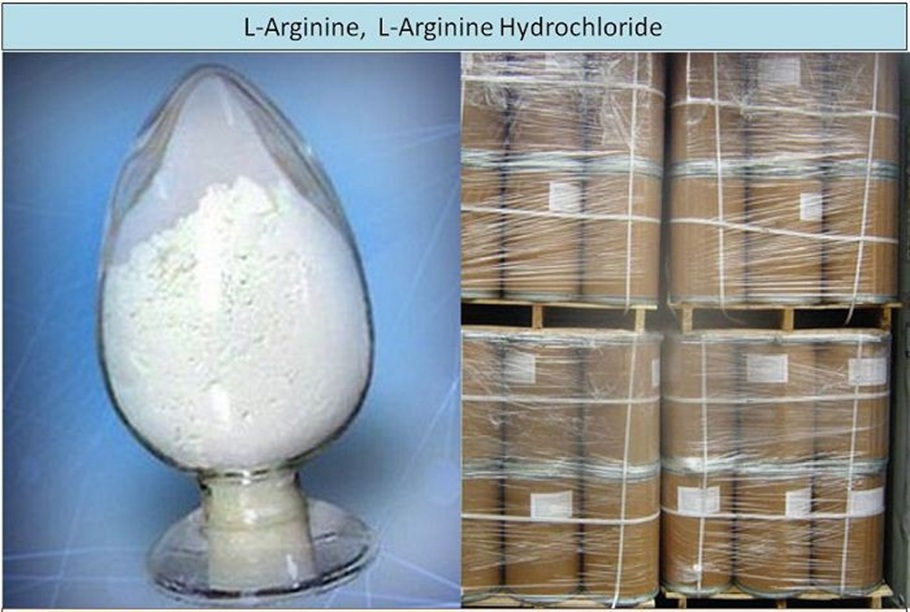
We unleash your business potential by maximize the business innovation.
Send EmailArginine Hydrochloride, L-Arginine Hydrochloride, L-Arginine HCl, 1119-34-2
L-Arginine Hydrochloride (L-Arginine HCl)
CAS Number: 1119-34-2
Chemical Formula: C₆H₁₄N₄O₂·HCl
Molecular Weight: 210.66 g/mol
EC Number: 214-275-1
Synonyms: L-Arginine HCl, Arginine Hydrochloride, Arginine HCl, (S)-2-Amino-5-guanidinopentanoic acid hydrochloride, L-Arginine monohydrochloride
1. CHEMICAL IDENTITY
| Parameter | Information |
|---|---|
| Product Name | L-Arginine Hydrochloride |
| IUPAC Name | (S)-2-Amino-5-guanidinopentanoic acid hydrochloride |
| CAS Number | 1119-34-2 |
| Molecular Formula | C₆H₁₄N₄O₂·HCl |
| Molecular Weight | 210.66 g/mol |
| EC Number | 214-275-1 |
| Chemical Class | Amino Acid Salt, Nutrition Supplement |
| Structure | L-Arginine (basic amino acid) + Hydrochloric acid (HCl) salt form |
2. PHYSICAL PROPERTIES
| Parameter | Value |
|---|---|
| Physical State | Solid |
| Color | White to off-white |
| Appearance | Crystalline powder |
| Odor | Characteristic (slightly acidic) |
| Taste | Slightly salty to bitter |
| Melting Point | ~230-240°C (decomposes) |
| Density (20°C) | ~1.45 g/cm³ |
| pH (1% solution, 25°C) | 5.0 – 6.5 (slightly acidic) |
| Hygroscopicity | Low to moderate (more stable than free base) |
| Particle Size (typical) | 100% through 40 mesh; varies by grade |
3. SOLUBILITY PROPERTIES
| Solvent | Solubility (20°C) |
|---|---|
| Water | Very high solubility (~250-300 g/L) |
| Ethanol | Slightly soluble |
| Methanol | Slightly soluble |
| Acetone | Insoluble |
| Ether | Insoluble |
| Phosphate Buffer (pH 7.4) | Freely soluble |
Note: L-Arginine HCl has significantly higher water solubility than free base L-Arginine, making it ideal for liquid formulations and high-concentration solutions.
4. CHEMICAL STRUCTURE
| Component | Structure |
|---|---|
| L-Arginine (Free Base) | C₆H₁₄N₄O₂ |
| Hydrochloride Salt | HCl addition |
| Molecular Formula (Salt) | C₆H₁₄N₄O₂·HCl |
| Guanidino Group | NH₂-C(=NH)-NH- (critical for NO synthesis) |
| Amino Group (α) | NH₂ (at carbon 2) |
| Carboxyl Group | COOH |
Structural Note: The hydrochloride salt form improves solubility, stability, and handling characteristics compared to the free base form. The HCl group does not interfere with the biological activity of arginine.
5. SPECIFICATIONS (Typical – High Quality Grade)
| Parameter | Specification | Method |
|---|---|---|
| Assay (L-Arginine HCl, dried basis) | 98.5 – 101.0% | HPLC/Titration |
| L-Arginine Content (as free base) | ~79-81% | Titration |
| Chloride Content (Cl) | 16.5 – 17.5% | Titration |
| Moisture (Karl Fischer) | ≤1.0% | Karl Fischer |
| pH (1% solution, 25°C) | 5.0 – 6.5 | Potentiometric |
| Specific Rotation ([α]²⁰/D) | +21.0° to +23.5° | Polarimeter |
| Heavy Metals (as Pb) | ≤10 ppm | AAS/ICP |
| Arsenic (As) | ≤1.5 ppm | AAS |
| Lead (Pb) | ≤1.5 ppm | AAS |
| Cadmium (Cd) | ≤1.0 ppm | AAS |
| Mercury (Hg) | ≤0.1 ppm | AAS |
| Residue on Ignition | ≤0.5% | Gravimetric |
| Loss on Drying | ≤1.0% | Gravimetric |
| Chloride (Cl) | 16.5 – 17.5% | Titration |
| Ammonium (NH₄) | ≤0.02% | Nessler |
| Sulfate (SO₄) | ≤0.03% | Gravimetric |
| Iron (Fe) | ≤10 ppm | AAS |
| Microbial Total Plate Count | ≤1,000 cfu/g | Plate Count |
| Yeast and Mold | ≤100 cfu/g | Plate Count |
| E. coli | Negative | PCR/Culture |
| Salmonella | Negative | PCR/Culture |
| Staphylococcus aureus | Negative | PCR/Culture |
6. COMPARISON: L-Arginine HCl vs. L-Arginine (Free Base)
| Property | L-Arginine HCl (1119-34-2) | L-Arginine Free Base (74-79-3) |
|---|---|---|
| Molecular Weight | 210.66 g/mol | 174.20 g/mol |
| Water Solubility | Very high (~250-300 g/L) | Moderate (~150 g/L) |
| pH (1% solution) | 5.0 – 6.5 (slightly acidic) | 10.5 – 11.5 (strongly basic) |
| Stability | More stable (longer shelf life) | Less stable (absorbs CO₂) |
| Hygroscopicity | Low to moderate | High |
| Taste | Less bitter, slightly salty | Bitter |
| Common Use | Sports nutrition, food supplements | Medical, research |
| Cost per gram | Slightly higher | Lower |
| Arginine Content (active) | ~79-81% | 100% |
Key Advantage of HCl Salt: Higher solubility, better stability, and more neutral pH (suitable for oral formulations).
7. MECHANISM OF ACTION
| Pathway | Effect |
|---|---|
| Nitric Oxide (NO) Pathway | L-Arginine → Nitric Oxide Synthase (NOS) → Nitric Oxide (NO) → Vasodilation → Increased blood flow and oxygen delivery |
| Protein Synthesis | Essential coding amino acid incorporated directly into proteins → Muscle growth and tissue repair |
| Growth Hormone Stimulation | Stimulates pituitary gland → Increased growth hormone release → Anabolic effects |
| Urea Cycle (Ammonia Detoxification) | Participates in the urea cycle → Converts toxic ammonia to urea → Reduced fatigue |
| Collagen Synthesis | Arginine supports proline and hydroxyproline synthesis → Wound healing |
8. APPLICATIONS – SPORTS NUTRITION
| Application | Function |
|---|---|
| Pre-Workout Supplements | Primary ingredient for "pump" effect; increases blood flow to muscles |
| Muscle Growth Formulas | Supports protein synthesis and growth hormone release |
| Endurance Supplements | Delays fatigue; improves oxygen delivery |
| Post-Workout Recovery | Accelerates muscle repair; reduces soreness |
| BCAA Stacks | Often combined with BCAAs, Citrulline, and Glutamine |
| Creatine Combinations | Synergistic effect for strength and power |
Typical Sports Nutrition Dose: 3,000 – 6,000 mg per serving
9. APPLICATIONS – PHARMACEUTICAL AND MEDICAL
| Application | Mechanism |
|---|---|
| Cardiovascular Support | Improves endothelial function; regulates blood pressure |
| Pituitary Function Testing | Intravenous administration for growth hormone stimulation tests |
| Wound Healing | Promotes collagen synthesis and tissue regeneration |
| Liver Support | Aids ammonia detoxification; treats hyperammonemia |
| Immune Function | Supports T-cell function and immune response |
| Nitric Oxide Deficiency | Supplement for individuals with low NO production |
Clinical Dose Range: 3,000 – 20,000 mg/day (under medical supervision)
10. APPLICATIONS – FUNCTIONAL FOODS AND BEVERAGES
| Product Type | Function |
|---|---|
| Sports Drinks | Performance enhancement; electrolyte balance |
| Protein Bars | Muscle recovery and growth support |
| Functional Waters | Hydration with NO-boosting benefits |
| Ready-to-Drink Shakes | Pre-workout or post-workout nutrition |
| Effervescent Tablets | Convenient dosing format |
11. APPLICATIONS – CELL CULTURE AND RESEARCH
| Application | Function |
|---|---|
| Cell Culture Media | Essential amino acid supplement for mammalian cell growth |
| NO Pathway Research | Substrate for nitric oxide synthase studies |
| Protein Synthesis Studies | Tracer studies for protein metabolism |
| Biotechnology | Production of recombinant proteins |
Typical Cell Culture Concentration: 0.1 – 1.0 mM (depending on cell line)
12. APPLICATIONS – VETERINARY AND ANIMAL NUTRITION
| Application | Function |
|---|---|
| Animal Feed Supplements | Amino acid source for growth promotion |
| Equine Nutrition | Performance enhancement in horses |
| Poultry and Swine | Growth and immune support |
| Aquaculture | Fish and shrimp feed supplementation |
13. SYNERGISTIC COMBINATIONS
| Ingredient | Synergy Effect |
|---|---|
| Citrulline Malate | Increased plasma arginine levels (arginine recycling) |
| Creatine Monohydrate | Strength and power; ATP recycling |
| Beta-Alanine | Delayed muscle fatigue; carnosine synthesis |
| L-Glutamine | Immune support; muscle recovery |
| BCAAs (Leucine, Isoleucine, Valine) | Enhanced protein synthesis |
| Taurine | Hydration; muscle function |
| Nitrate (Beetroot Extract) | Additive NO production |
14. RECOMMENDED DOSAGE
| User Type | Daily Dose | Timing | Duration |
|---|---|---|---|
| Recreational Athlete | 3,000 – 5,000 mg | 30-60 min pre-workout | Ongoing |
| Competitive Athlete | 5,000 – 8,000 mg | Split dose (morning + pre-workout) | 8-12 weeks |
| Bodybuilding | 6,000 – 10,000 mg | Split doses | 12 weeks |
| Clinical Use (Cardiovascular) | 3,000 – 6,000 mg | Divided doses | As directed |
| Medical (Pituitary Testing) | 25,000 – 30,000 mg (IV) | Single dose | Medical supervision |
Note: Always follow manufacturer recommendations and consult a healthcare professional before starting supplementation.
15. SAFETY AND TOXICOLOGICAL PROFILE
| Parameter | Value |
|---|---|
| Acute oral toxicity (rat, LD₅₀) | >10,000 mg/kg (very low toxicity) |
| Acute dermal toxicity (rabbit, LD₅₀) | >2,000 mg/kg |
| Acute inhalation (rat, LC₅₀) | Not applicable (powder, low dust hazard) |
| Skin irritation | Non-irritating |
| Eye irritation | Mildly irritating (powder) |
| Skin sensitization | Not a sensitizer |
| Genotoxicity | Negative (Ames test) |
| Carcinogenicity | Not classified as carcinogenic |
| Reproductive toxicity | No evidence at recommended doses |
GHS Classification: Not classified as hazardous under normal conditions of use.
16. POTENTIAL SIDE EFFECTS
| Effect | Frequency | Notes |
|---|---|---|
| Mild gastrointestinal discomfort | Low | Diarrhea, nausea, bloating (at high doses) |
| Headache | Low | Vasodilation effect (usually mild) |
| Low blood pressure | Rare | Caution in hypotensive individuals |
| Allergic reaction | Very rare | Rash, itching (discontinue use) |
| Arginine-induced diarrhea | Rare | Above 20 g/day |
Contraindications:
-
Hypotension (low blood pressure)
-
Herpes simplex (arginine may trigger outbreaks)
-
After heart attack (consult physician)
-
Liver or kidney disease (consult physician)
-
Asthma (may worsen symptoms in some individuals)
17. DRUG INTERACTIONS
| Drug Class | Interaction |
|---|---|
| Antihypertensives | May enhance blood pressure-lowering effects (additive) |
| Nitrates (Nitroglycerin) | Increased risk of hypotension |
| Sildenafil (Viagra®) | Potential additive hypotensive effect |
| Blood thinners (Warfarin) | Limited data; monitor INR |
| Diuretics | May affect electrolyte balance |
| Potassium-sparing diuretics | Possible hyperkalemia risk |
18. STORAGE AND HANDLING
| Parameter | Requirement |
|---|---|
| Storage Temperature | 15-25°C (room temperature) |
| Humidity | Low humidity (<50% RH) |
| Container | Tightly sealed (airtight) |
| Light Protection | Protect from direct sunlight |
| Shelf Life (proper storage) | 24-36 months |
| Signs of Degradation | Clumping, discoloration (yellowing), off-odor |
| Special Precautions | Keep away from strong oxidizers. No special ventilation required. |
19. TRANSPORT INFORMATION
| Parameter | Information |
|---|---|
| UN Number | Not regulated (non-hazardous) |
| Transport Class | Not classified as dangerous goods |
| Packing Group | Not applicable |
| Marine Pollutant | No |
| IATA (Air) | Not restricted |
| IMDG (Sea) | Not regulated |
20. SUMMARY AND CRITICAL INFORMATION
Description: L-Arginine Hydrochloride (L-Arginine HCl, CAS 1119-34-2) is the hydrochloride salt form of the amino acid L-Arginine. It is a white to off-white crystalline powder with very high water solubility and improved stability compared to the free base form. It serves as a precursor for nitric oxide (NO) synthesis, supports protein synthesis, stimulates growth hormone release, and aids ammonia detoxification.
Key Advantages (vs. Free Base):
| Advantage | Benefit |
|---|---|
| Higher water solubility | Ideal for liquid formulations and high-concentration solutions |
| Improved stability | Longer shelf life (24-36 months) |
| Neutral to slightly acidic pH | Better compatibility with oral formulations (less GI irritation) |
| Less bitter taste | Improved palatability for supplements |
| Lower hygroscopicity | Easier handling and storage |
Key Biological Functions:
-
Nitric oxide (NO) precursor → Vasodilation → Increased blood flow ("pump")
-
Protein synthesis → Muscle growth and repair
-
Growth hormone stimulation → Anabolic effects
-
Urea cycle support → Ammonia detoxification → Reduced fatigue
Major Applications:
| Sector | Applications |
|---|---|
| Sports Nutrition | Pre-workout, muscle growth, endurance, recovery |
| Pharmaceutical | Cardiovascular support, pituitary testing, wound healing, liver support |
| Functional Foods | Sports drinks, protein bars, functional waters |
| Cell Culture | Media supplement for mammalian cells |
| Veterinary | Animal feed, equine performance |
Typical Dosing:
| Application | Dose |
|---|---|
| Sports nutrition | 3,000 – 6,000 mg/day |
| Cardiovascular support | 3,000 – 6,000 mg/day |
| Clinical (oral) | 3,000 – 20,000 mg/day |
| Pituitary testing (IV) | 25,000 – 30,000 mg (single dose) |
Safety Summary:
-
Very low acute toxicity (LD₅₀ oral >10,000 mg/kg)
-
Generally safe at recommended doses (3-6 g/day)
-
Not classified as hazardous under normal use
-
Contraindicated in hypotensive individuals and those with herpes simplex
-
Always consult healthcare professional before supplementation
Comparison to Other Arginine Forms:
| Property | L-Arginine HCl | L-Arginine Free Base | AAKG |
|---|---|---|---|
| Solubility | Very high | Moderate | High |
| Stability | High | Low | High |
| pH | 5.0-6.5 | 10.5-11.5 | 6.0-7.5 |
| Taste | Acceptable | Bitter | Acceptable |
| Best For | High-concentration liquids | Medical use | Pre-workout pump |
Conclusion: L-Arginine Hydrochloride is the preferred form of arginine for sports nutrition and food supplement applications due to its high water solubility, improved stability, and better palatability compared to the free base form. It effectively supports nitric oxide production, blood flow, muscle growth, and exercise performance. The hydrochloride salt format allows for higher concentration formulations, longer shelf life, and more consistent dosing. It is safe, well-tolerated, and widely used in pre-workout supplements, protein blends, and functional beverages.