We unleash your business potential by maximize the business innovation.
Send EmailBCAA, Branched-Chain Amino Acid, L-Leucine, L-Isoleucine, L-Valine, 61-90-5, 73-32-5, 72-18-4
Branched-Chain Amino Acids (BCAA)
Product Name: Branched-Chain Amino Acids (BCAA)
Components: L-Leucine, L-Isoleucine, L-Valine
Common Ratio: 2:1:1 (Leucine:Isoleucine:Valine) – other ratios available (4:1:1, 8:1:1, 10:1:1)
Chemical Class: Essential Amino Acids, Branched-Chain Amino Acids
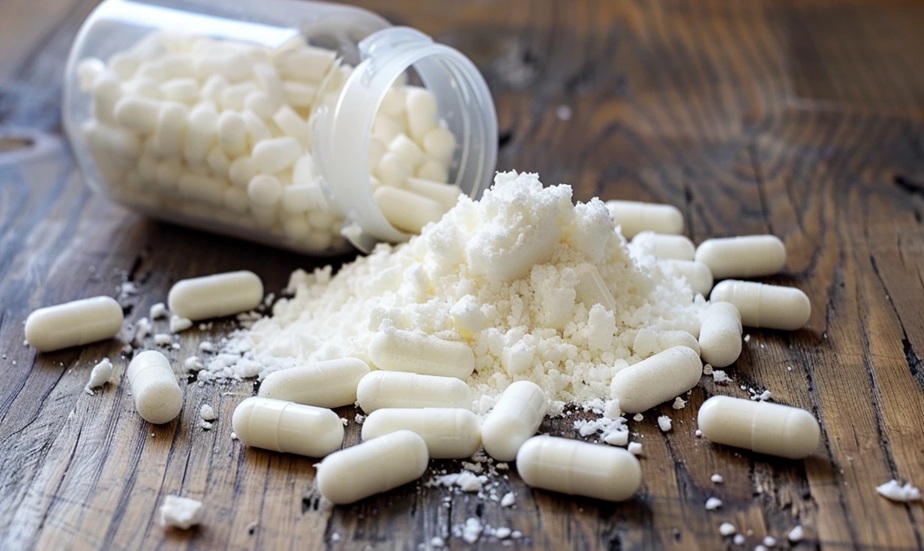
Physical Form: White to off-white crystalline powder
1. INDIVIDUAL COMPONENT IDENTITIES
| Component | CAS Number | Molecular Formula | Molecular Weight | EC Number |
|---|---|---|---|---|
| L-Leucine | 61-90-5 | C₆H₁₃NO₂ | 131.17 g/mol | 200-522-0 |
| L-Isoleucine | 73-32-5 | C₆H₁₃NO₂ | 131.17 g/mol | 200-798-2 |
| L-Valine | 72-18-4 | C₅H₁₁NO₂ | 117.15 g/mol | 200-773-6 |
2. PHYSICAL PROPERTIES (Common for all three BCAA components)
| Parameter | L-Leucine | L-Isoleucine | L-Valine |
|---|---|---|---|
| Physical State | Solid | Solid | Solid |
| Color | White to off-white | White to off-white | White to off-white |
| Appearance | Crystalline powder | Crystalline powder | Crystalline powder |
| Odor | Slight characteristic | Slight characteristic | Slight characteristic |
| Taste | Bitter | Bitter | Bitter |
| Melting Point | ~293-295°C (dec.) | ~285-288°C (dec.) | ~295-300°C (dec.) |
| Density (20°C) | ~1.29 g/cm³ | ~1.29 g/cm³ | ~1.23 g/cm³ |
| pH (1% solution) | 5.5 – 6.5 | 5.5 – 6.5 | 5.5 – 6.5 |
3. SOLUBILITY PROPERTIES
| Solvent | L-Leucine | L-Isoleucine | L-Valine |
|---|---|---|---|
| Water (20°C) | Slightly soluble (~24 g/L) | Slightly soluble (~41 g/L) | Slightly soluble (~88 g/L) |
| Ethanol | Very slightly soluble | Very slightly soluble | Very slightly soluble |
| Methanol | Slightly soluble | Slightly soluble | Slightly soluble |
| Acetone | Insoluble | Insoluble | Insoluble |
| Ether | Insoluble | Insoluble | Insoluble |
| Dilute HCl | Soluble | Soluble | Soluble |
Note: BCAA components have relatively low water solubility compared to other amino acids. This can affect formulation strategies for liquid products.
4. CHEMICAL STRUCTURE
| Component | Structure | Branched-Chain Feature |
|---|---|---|
| L-Leucine | (CH₃)₂CH-CH₂-CH(NH₂)-COOH | Isobutyl side chain |
| L-Isoleucine | CH₃-CH₂-CH(CH₃)-CH(NH₂)-COOH | Sec-butyl side chain |
| L-Valine | (CH₃)₂CH-CH(NH₂)-COOH | Isopropyl side chain |
Structural Note: All three amino acids have an aliphatic branched side chain (isopropyl, isobutyl, or sec-butyl), which is responsible for their unique metabolic properties and hydrophobic character.
5. TYPICAL BCAA MIXTURE SPECIFICATIONS (2:1:1 Ratio)
| Parameter | Specification | Method |
|---|---|---|
| L-Leucine Content | 40-50% (2 parts) | HPLC |
| L-Isoleucine Content | 18-22% (1 part) | HPLC |
| L-Valine Content | 18-22% (1 part) | HPLC |
| Total BCAA Purity (dried basis) | ≥98.0% | HPLC |
| Moisture (Karl Fischer) | ≤5.0% | Karl Fischer |
| pH (1% solution, 25°C) | 5.0 – 6.5 | Potentiometric |
| Specific Rotation ([α]²⁰/D) | +14.0° to +17.0° (mixture) | Polarimeter |
| Heavy Metals (as Pb) | ≤10 ppm | AAS/ICP |
| Arsenic (As) | ≤1.5 ppm | AAS |
| Lead (Pb) | ≤1.5 ppm | AAS |
| Cadmium (Cd) | ≤1.0 ppm | AAS |
| Mercury (Hg) | ≤0.1 ppm | AAS |
| Residue on Ignition | ≤0.5% | Gravimetric |
| Loss on Drying | ≤5.0% | Gravimetric |
| Chloride (Cl) | ≤0.05% | Titration |
| Sulfate (SO₄) | ≤0.05% | Gravimetric |
| Ammonium (NH₄) | ≤0.02% | Nessler |
| Microbial Total Plate Count | ≤1,000 cfu/g | Plate Count |
| Yeast and Mold | ≤100 cfu/g | Plate Count |
| E. coli | Negative | PCR/Culture |
| Salmonella | Negative | PCR/Culture |
6. AVAILABLE RATIOS AND GRADES
| Ratio (L-Leu:L-Ile:L-Val) | Typical Use | Characteristics |
|---|---|---|
| 2:1:1 | Standard sports nutrition | Balanced, most researched |
| 4:1:1 | Muscle growth focused | Higher leucine content |
| 8:1:1 | Muscle growth focused | Very high leucine |
| 10:1:1 | Specialized formulas | Maximum leucine |
| Instantized BCAA | Beverage applications | Improved solubility |
| Pharmaceutical Grade | Clinical research | Higher purity (>99%) |
7. MECHANISM OF ACTION
| Component | Primary Mechanism | Effect |
|---|---|---|
| L-Leucine | Activates mTOR pathway (via Sestrin2 binding) → Initiates muscle protein synthesis | Muscle growth, anabolic signal |
| L-Isoleucine | Supports glucose uptake into cells; inhibits muscle protein breakdown | Energy production, anti-catabolic |
| L-Valine | Competes with tryptophan for brain uptake; reduces serotonin production | Delayed central fatigue |
| All BCAA | Direct oxidation in skeletal muscle during exercise (bypasses liver) | Alternative energy source when glycogen depleted |
Key Point: Leucine is the primary regulator of muscle protein synthesis. Isoleucine and Valine support energy production and reduce muscle breakdown.
8. BIOLOGICAL ROLES AND BENEFITS
| Role | Description |
|---|---|
| Muscle Protein Synthesis | Leucine activates mTOR pathway → Directly stimulates muscle protein synthesis (critical for muscle growth and repair) |
| Anti-Catabolic Effect | Reduces muscle protein breakdown, especially during caloric deficit or intense training |
| Exercise Energy Source | Directly oxidized in skeletal muscle during prolonged exercise → Alternative fuel when glycogen stores are low |
| Central Fatigue Reduction | Competes with tryptophan for blood-brain barrier transport → Reduces serotonin production → Delays perception of fatigue |
| Muscle Recovery | Speeds post-exercise recovery; reduces muscle soreness (DOMS) |
| Blood Glucose Regulation | Isoleucine and Valine support glucose uptake into muscle tissue |
9. NATURAL FOOD SOURCES
| Food Source | BCAA Content (per 100g) |
|---|---|
| Chicken breast | ~6-7 g |
| Beef (lean) | ~5-6 g |
| Fish (tuna, salmon) | ~5-6 g |
| Eggs | ~2-3 g |
| Milk (whole) | ~2 g |
| Greek yogurt | ~2-3 g |
| Whey protein powder | ~15-20 g |
| Lentils | ~3-4 g |
| Nuts (peanuts, almonds) | ~2-3 g |
10. APPLICATIONS – SPORTS NUTRITION
| Application | Function | Typical Dose per Serving |
|---|---|---|
| Pre-Workout Supplements | Reduces muscle breakdown; provides energy; delays fatigue | 5-10 g |
| Intra-Workout Supplements | Direct energy source during prolonged exercise | 5-10 g |
| Post-Workout Recovery | Stimulates muscle protein synthesis; accelerates repair | 5-10 g |
| Muscle Growth Formulas | Anabolic support (especially with leucine) | 5-10 g |
| Weight Loss Support | Preserves muscle mass during calorie restriction | 5-10 g |
| Endurance Products | Delays central fatigue; provides alternative fuel | 5-10 g |
| Electrolyte Blends | Combined with electrolytes for hydration + BCAA | 3-5 g |
Typical Daily Dose: 5 – 20 g/day depending on training intensity and goals.
11. APPLICATIONS – FUNCTIONAL FOODS AND BEVERAGES
| Product Type | Function |
|---|---|
| Sports Drinks | Intra-workout energy and recovery |
| Protein Bars | Muscle recovery and growth support (often combined with protein) |
| Ready-to-Drink Shakes | Convenient BCAA supplementation |
| Energy Gels | Quick BCAA and carbohydrate source during endurance events |
| Instantized BCAA Powders | Easy mixing for water or sports drinks |
Formulation Note: BCAA's bitter taste requires masking with flavoring agents (sweeteners, fruit flavors, masking agents) in beverage applications.
12. APPLICATIONS – CLINICAL AND MEDICAL RESEARCH
| Application | Mechanism | Status |
|---|---|---|
| Sarcopenia (Age-Related Muscle Loss) | Stimulates muscle protein synthesis in elderly | Research stage |
| Cancer Cachexia | Prevents muscle wasting in cancer patients | Limited clinical use |
| Liver Cirrhosis | Improves nitrogen balance; reduces hepatic encephalopathy | Some clinical use |
| Post-Surgical Recovery | Accelerates muscle repair and recovery | Research stage |
| Burn/Trauma Patients | Reduces muscle catabolism | Limited use |
| Phenylketonuria (PKU) | Alternative protein source (BCAA without phenylalanine) | Specialty product |
13. APPLICATIONS – CELL CULTURE AND RESEARCH
| Application | Function |
|---|---|
| Cell Culture Media | Essential amino acid supplement for mammalian cell growth |
| Metabolism Research | Protein synthesis and degradation studies |
| Exercise Physiology Research | Fatigue and recovery mechanism studies |
| Aging Research | Sarcopenia and muscle wasting models |
14. SYNERGISTIC COMBINATIONS
| Ingredient | Synergy Effect |
|---|---|
| Glutamine | Enhanced muscle recovery; immune support |
| Creatine Monohydrate | Strength and power; ATP recycling |
| Citrulline Malate | Increased blood flow; reduced fatigue |
| Beta-Alanine | Delayed muscle fatigue; improved endurance |
| Electrolytes (Sodium, Potassium, Magnesium) | Hydration support for endurance athletes |
| Carbohydrates (Dextrose, Maltodextrin) | Enhanced BCAA uptake; immediate energy |
| Whey Protein | Complete amino acid profile; synergistic protein synthesis |
15. RECOMMENDED DOSAGE
| User Type | Daily Dose | Timing | Duration |
|---|---|---|---|
| Recreational Athlete | 5 – 10 g | Pre or post-workout | Ongoing |
| Competitive Athlete | 10 – 15 g | Split: pre + intra + post | Throughout training cycles |
| Bodybuilder | 15 – 20 g | Split: morning + pre + post | Ongoing |
| Endurance Athlete | 10 – 15 g | Intra-workout (during long sessions) | As needed |
| Weight Loss (Muscle Preservation) | 10 – 15 g | Between meals | As directed |
Note: Always follow manufacturer recommendations and consult a healthcare professional.
16. SAFETY AND TOXICOLOGICAL PROFILE
| Parameter | Value |
|---|---|
| Acute oral toxicity (rat, LD₅₀) | >5,000 mg/kg (very low toxicity) |
| Skin irritation | Non-irritating |
| Eye irritation | Mildly irritating (powder) |
| Skin sensitization | Not a sensitizer |
| Genotoxicity | Negative |
| Carcinogenicity | Not classified as carcinogenic |
| Reproductive toxicity | No evidence at recommended doses |
GHS Classification: Not classified as hazardous under normal conditions of use.
17. POTENTIAL SIDE EFFECTS AND CONTRAINDICATIONS
| Effect | Frequency | Notes |
|---|---|---|
| Mild gastrointestinal discomfort | Low | Nausea, bloating (at very high doses >20g) |
| Bitter taste | Always | Requires flavor masking in beverages |
| Fatigue reduction | Desired effect | Possible overstimulation in sensitive individuals |
| Blood ammonia increase | Rare (high doses) | Theoretical concern in liver disease |
Contraindications:
-
Maple Syrup Urine Disease (MSUD) – Genetic disorder preventing BCAA metabolism
-
Liver cirrhosis (severe) – Consult physician
-
Pregnant or nursing women – Consult physician (insufficient research)
Note: BCAA supplementation is generally considered safe for healthy individuals at recommended doses (5-20 g/day).
18. INSTANTIZED BCAA FOR BEVERAGE APPLICATIONS
| Property | Standard BCAA | Instantized BCAA |
|---|---|---|
| Solubility in cold water | Low (tends to float/settle) | High |
| Dispersion | Poor (clumping) | Excellent (instant dispersion) |
| Mouthfeel | Gritty | Smooth |
| Processing | Standard mixing | Special agglomeration/lecithin coating |
| Cost | Lower | Higher |
| Best For | Capsules, tablets, bars | Ready-to-drink beverages, powders |
19. STORAGE AND HANDLING
| Parameter | Requirement |
|---|---|
| Storage Temperature | 15-25°C (room temperature) |
| Humidity | Low humidity (<50% RH) |
| Container | Tightly sealed (airtight) |
| Light Protection | Protect from direct sunlight |
| Shelf Life (proper storage) | 24-36 months |
| Signs of Degradation | Clumping, discoloration (yellowing), off-odor |
| Special Precautions | Keep away from strong oxidizers. No special ventilation required. |
20. SUMMARY AND CRITICAL INFORMATION
Description: Branched-Chain Amino Acids (BCAA) are a mixture of three essential amino acids – L-Leucine, L-Isoleucine, and L-Valine – characterized by aliphatic branched side chains. The human body cannot synthesize them, so they must be obtained through diet or supplementation. BCAA are uniquely metabolized directly in skeletal muscle (rather than the liver), allowing them to serve as an immediate energy source during exercise and directly stimulate muscle protein synthesis.
Key Advantages:
-
Directly stimulates muscle protein synthesis (Leucine → mTOR pathway)
-
Provides alternative energy source during prolonged exercise
-
Reduces muscle protein breakdown (anti-catabolic effect)
-
Delays central fatigue (competes with tryptophan for brain uptake)
-
Accelerates post-exercise recovery and reduces DOMS
-
Preserves muscle mass during caloric restriction
-
Well-researched safety profile
Key Limitations/Considerations:
-
Bitter taste (requires flavor masking in beverages)
-
Low water solubility (instantized grades improve solubility)
-
Not a complete protein (lacks other essential amino acids)
-
Contraindicated in Maple Syrup Urine Disease (MSUD)
Major Applications:
| Sector | Primary Uses |
|---|---|
| Sports Nutrition | Pre/intra/post-workout; muscle growth; recovery; endurance |
| Functional Foods | Sports drinks, protein bars, ready-to-drink shakes |
| Clinical Research | Sarcopenia, cachexia, liver disease (research stage) |
Typical Ratio (Leu:Ile:Val): 2:1:1 (most common and researched)
Typical Daily Dose: 5 – 20 g
Synergistic Ingredients: Glutamine, Creatine, Citrulline, Electrolytes, Carbohydrates
Safety Summary:
-
Very low acute toxicity (LD₅₀ >5,000 mg/kg)
-
Generally safe at recommended doses (5-20 g/day)
-
Not classified as hazardous under normal use
-
Contraindicated in Maple Syrup Urine Disease (MSUD)
-
Consult physician for liver disease, pregnancy, nursing
Conclusion: BCAA (L-Leucine, L-Isoleucine, L-Valine) are among the most researched and widely used supplements in sports nutrition. Their unique ability to be metabolized directly in skeletal muscle provides three key benefits: direct stimulation of muscle protein synthesis (via leucine), an alternative energy source during prolonged exercise, and reduced central fatigue. The standard 2:1:1 ratio (Leucine:Isoleucine:Valine) is the most common and clinically supported formulation. While BCAA are not a complete protein, they are highly effective when used strategically around exercise to enhance muscle growth, improve recovery, and preserve muscle mass during caloric restriction. With a strong safety profile and decades of research, BCAA remain a cornerstone ingredient in pre-workout, intra-workout, and post-workout supplements.