We unleash your business potential by maximize the business innovation.
Send EmailCalcium Metal, Metallic Calcium, Elemental Calcium, Deoxidizer Calcium, Calcium Element, Ca Metal, 7440-70-2
CALCIUM METAL
Product Name: Calcium Metal
Other Names: Metallic Calcium, Elemental Calcium, Deoxidizer Calcium, Calcium Element, Ca Metal
CAS Number: 7440-70-2
Chemical Symbol: Ca
Atomic Number: 20
Atomic Weight: 40.078 g/mol
Chemical Class: Alkaline earth metal (Group 2)
SECTION 1: PRODUCT IDENTIFICATION AND CHEMICAL IDENTITY
| Parameter | Information |
|---|---|
| Product Name | Calcium Metal |
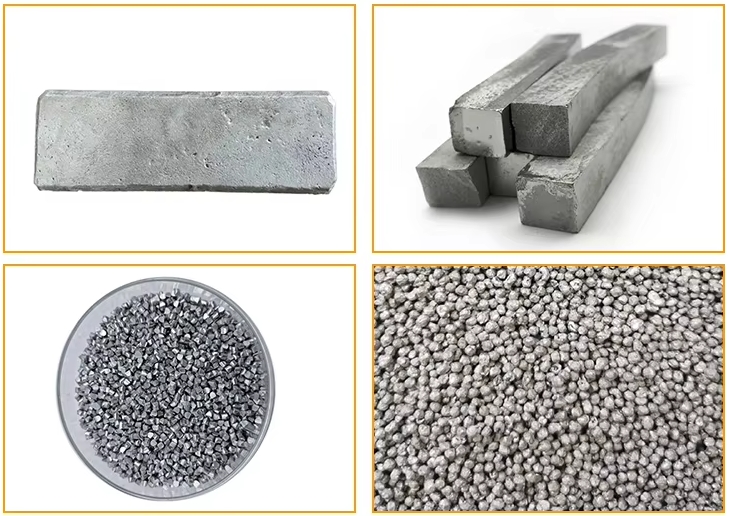
| Other Names | Metallic Calcium, Elemental Calcium, Deoxidizer Calcium, Calcium Element, Ca Metal, Calcium Metal Granules/Lumps/Ingots |
| CAS Number | 7440-70-2 |
| Chemical Symbol | Ca |
| Atomic Number | 20 |
| Atomic Weight | 40.078 g/mol |
| Chemical Class | Alkaline earth metal (Group 2) |
| Periodic Table Group | 2 (IIA) |
| Period | 4 |
| Electron Configuration | [Ar] 4s² |
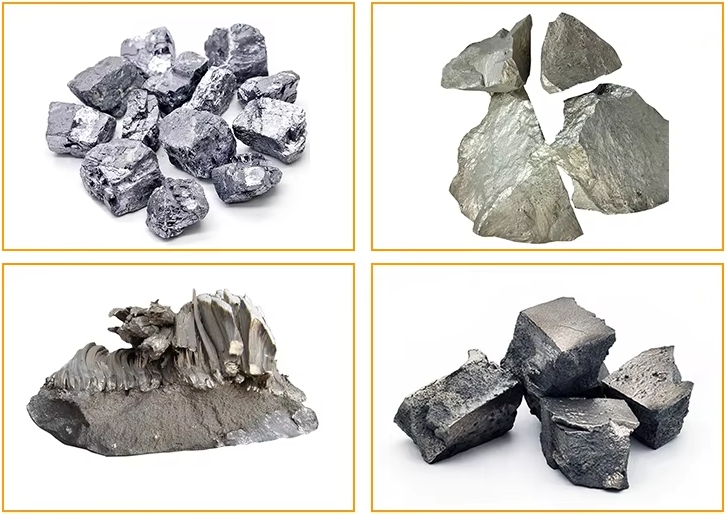
| Appearance | Pale yellow-grey, silvery white metal |
| Occurrence in Nature | Not found in pure form; found in calcite, aragonite, dolomite, marble, limestone, gypsum, fluorite, and apatite minerals |
| Abundance in Earth's Crust | 3.6 – 4.2% (5th most abundant element) |
SECTION 2: PHYSICAL AND CHEMICAL PROPERTIES
| Property | Value |
|---|---|
| Appearance | Pale yellow-grey, silvery white metal |
| Density (20°C) | 1.55 g/cm³ |
| Melting Point | 842 °C |
| Boiling Point | 1484 °C |
| Heat of Fusion | 8.54 kJ/mol |
| Heat of Vaporization | 154.7 kJ/mol |
| Specific Heat Capacity (25°C) | 25.929 J/mol·K |
| Molar Volume | 26.20 cm³/mol |
| Thermal Conductivity (300 K) | 201 W/m·K |
| Electrical Resistivity (20°C) | 33.6 nΩ·m |
| Hardness (Mohs) | 1.75 |
| Brinell Hardness | 167 MPa |
| Color | Silvery white; forms a dull greyish oxide layer in air |
| Odor | Odorless |
| Reactivity | Rapidly oxidizes in air and moisture; reacts with water to release hydrogen gas |
| Storage | Stored under mineral oil or in argon atmosphere |
| Magnetic Properties | Paramagnetic |
| Crystal Structure | Face-centered cubic (FCC) |
SECTION 3: CHEMICAL REACTIONS AND PROPERTIES
3.1. Reaction with Water
Calcium metal reacts vigorously with water to form calcium hydroxide and hydrogen gas:
-
Ca + 2H₂O → Ca(OH)₂ + H₂ ↑
3.2. Reaction with Oxygen
Rapidly oxidizes in air:
-
2Ca + O₂ → 2CaO
3.3. Reaction with Acids
Reacts with dilute acids to form salts and hydrogen gas:
-
Ca + 2HCl → CaCl₂ + H₂ ↑
3.4. Reaction with Halogens
Reacts with halogens (F₂, Cl₂, Br₂, I₂) to form calcium halides:
-
Ca + Cl₂ → CaCl₂
-
Ca + Br₂ → CaBr₂
3.5. Reaction with Hydrogen
Reacts with hydrogen at high temperature to form calcium hydride:
-
Ca + H₂ → CaH₂
3.6. Reaction with Carbon
Reacts with carbon at high temperature to form calcium carbide:
-
Ca + 2C → CaC₂
3.7. Reaction with Nitrogen
Reacts with nitrogen at high temperature to form calcium nitride:
-
3Ca + N₂ → Ca₃N₂
3.8. Thermochemical Data
| Parameter | Value |
|---|---|
| Standard Enthalpy of Formation (Ca g) | +178.2 kJ/mol |
| Standard Enthalpy of Formation (Ca s) | 0 kJ/mol |
| Standard Molar Entropy | 41.6 J/mol·K |
| Standard Electrode Potential | -2.87 V (Ca²⁺/Ca) |
| Electronegativity (Pauling) | 1.00 |
SECTION 4: PRODUCTION PROCESS
| Stage | Description |
|---|---|
| 1. Raw Material | Limestone or dolomite containing calcium carbonate (CaCO₃) |
| 2. Calcination | CaCO₃ is heated to decompose into CaO and CO₂: CaCO₃ → CaO + CO₂ |
| 3. Reduction | CaO is reduced with aluminum under vacuum: 6CaO + 2Al → 3Ca + Ca₃Al₂O₆ |
| 4. Distillation | Calcium metal is purified by vacuum distillation |
| 5. Cooling & Forming | Liquid calcium is cooled and formed into ingots, granules, or turnings |
| 6. Storage | Packaged under mineral oil or in argon atmosphere |
SECTION 5: NATURAL SOURCES AND ORES
| Mineral | Formula | Calcium Content (%) | Application |
|---|---|---|---|
| Calcite | CaCO₃ | 40.0 | Lime production, cement, construction |
| Aragonite | CaCO₃ | 40.0 | Jewelry, construction |
| Dolomite | CaMg(CO₃)₂ | 21.7 | Refractory, agriculture, cement |
| Limestone | CaCO₃ | 40.0 | Cement, lime, filler |
| Marble | CaCO₃ | 40.0 | Building stone, decoration |
| Gypsum | CaSO₄·2H₂O | 23.3 | Plaster, fertilizer |
| Anhydrite | CaSO₄ | 29.4 | Cement additive |
| Fluorite | CaF₂ | 51.1 | Chemical industry, metallurgy |
| Apatite | Ca₅(PO₄)₃(F,Cl,OH) | ~40.0 | Fertilizer, phosphorus production |
SECTION 6: APPLICATION AREAS
| Industry / Sector | Application | Notes |
|---|---|---|
| Metallurgy | Deoxidizing agent in steel production; hardener in alloys; used in lead alloys for battery plates | Stored under argon; highly reactive |
| Chemical Industry | Reducing agent; production of other metals (Zr, Th, U, Be, B, Cr); calcium hydride production | High purity required |
| Construction Materials | Indirectly in cement, plaster, lime production (compound form) | Compounds used, not pure metal |
| Food & Pharmaceuticals | Supplements and additives (Ca compounds: carbonate, chloride, phosphate) | Pure metal not suitable; compounds used |
| Electronics / Vacuum Tubes | Getter (gas scavenger); cleaner in vacuum systems | Used in controlled environments |
| Agriculture | Calcium compounds in fertilizers (phosphate, nitrate) | Pure metal not used |
| Biomedical | Natural component in bone and tooth structure (hydroxyapatite) | Ionic form, not metal form |
| Energy | Thermal energy storage; coolant in nuclear reactors (liquid metal) | - |
| Automotive | Light alloys; alloying element in lead-acid batteries | - |
| Aerospace | Modifier in magnesium and aluminum alloys | - |
SECTION 7: COMMERCIAL FORMS
| Form | Description | Typical Size | Application |
|---|---|---|---|
| Ingot | Cast ingot form | 0.5 – 5 kg | Metallurgy, alloy production |
| Granules | Small metal particles | 2 – 20 mm | Chemical industry, reduction |
| Turnings | Fine metal particles | 0.5 – 5 mm | Chemical synthesis, reduction |
| Powder | Fine metal powder | < 1 mm | Metallurgy, chemistry |
| Wire / Rod | Extruded form | 6 – 30 mm | Wire feeding, metallurgy |
| Pellets | Pressed granules | 3 – 10 mm | Vacuum tubes, getter |
SECTION 8: QUALITY GRADES AND PURITIES
| Grade | Purity (%) | Main Impurities | Application |
|---|---|---|---|
| Technical Grade | 98.0 – 99.5 | Al, Si, Fe, Mg, Mn, C | Metallurgy, steel deoxidation |
| High Purity | 99.5 – 99.9 | Al, Si, Fe, Mg, Mn, C | Chemical industry, reducing agent |
| Analytical Grade | 99.99+ | Al, Si, Fe, Mg, Mn, C (low levels) | Research, spectroscopy |
| Getter Grade | 99.5 – 99.9 | Al, Si, Fe, Mg, Mn, C | Vacuum tubes, electronics |
SECTION 9: OTHER NAMES AND SYNONYMS
| Name | Description / Context |
|---|---|
| Calcium | General English name |
| Elemental Calcium | Indicates pure metal form |
| Ca | Chemical symbol |
| Calcium, metallic | Technical term for metal form |
| Kalsiyum Elementi | Turkish technical term |
| Metalik Kalsiyum | Turkish industrial term |
| Calcium metal granules / lumps / ingots | Commercial form descriptions |
| Deoxidizer Calcium | Used as deoxidation agent in metallurgy |
| Calcium (atomic number 20) | Scientific literature |
| Ca metal | ERP and trading systems abbreviation |
| CAS 7440-70-2 | Chemical registry number |
SECTION 10: CALCIUM COMPOUNDS COMPARISON TABLE
| Compound | CAS No | Application | Properties |
|---|---|---|---|
| Calcium Metal | 7440-70-2 | Metallurgy, reducing agent, alloys | Reactive, light metal, silvery white |
| Calcium Carbonate | 471-34-1 | Construction, food additive, filler, antacid | Limestone/marble, white powder |
| Calcium Chloride | 10043-52-4 | Desiccant, de-icer, food additive, concrete accelerator | Hygroscopic, white crystalline salt |
| Calcium Hydroxide | 1305-62-0 | Construction (slaked lime), water treatment, dentistry | Basic, white powder, limewater |
| Calcium Phosphate | 7758-87-4 | Bone and tooth structure, fertilizer, food additive | Biologically important, white powder |
| Calcium Oxide | 1305-78-8 | Cement, lime production, water treatment, glass | White powder, quicklime |
| Calcium Sulfate | 7778-18-9 | Plaster, cement, fertilizer, food additive (E516) | White powder, gypsum |
| Calcium Nitrate | 10124-37-5 | Fertilizer, concrete accelerator, cooling salts | White crystals, oxidizing |
| Calcium Carbide | 75-20-7 | Acetylene gas production, steel, chemical synthesis | Grey-black crystals, reacts with water |
| Calcium Citrate | 813-94-5 | Food additive, pharmaceutical, supplement | White powder, organic salt |
SECTION 11: SAFETY, HANDLING AND STORAGE
| Parameter | Information |
|---|---|
| GHS Classification | Class 4.3: Substances which emit flammable gases when in contact with water |
| Hazard Statements (H) | H260: In contact with water releases flammable gases; H315: Causes skin irritation; H319: Causes serious eye irritation; H335: May cause respiratory irritation |
| Precautionary Statements (P) | P223: Avoid contact with water; P231+P232: Keep contents under inert gas; P280: Wear protective gloves/eye protection; P305+P351+P338: IF IN EYES: Rinse with water |
| UN Number | 1401 |
| UN Hazard Class | 4.3 (Substances which emit flammable gases when in contact with water) |
| Packing Group | II |
| Storage | Store under mineral oil or inert gas (argon) atmosphere, away from air and moisture, in tightly closed containers |
| Incompatibilities | Water, moisture, acids, oxidizers, halogens, carbon dioxide |
| Fire Extinguishing | Dry sand, dry powder; do not use water |
| First Aid | Eye contact: Rinse with plenty of water; ingestion: Do not induce vomiting; seek medical attention immediately |
SECTION 12: ENVIRONMENTAL AND HEALTH INFORMATION
| Parameter | Information |
|---|---|
| Biological Importance | Bone and tooth health; muscle contraction; nerve transmission; blood clotting |
| Amount in Human Body | Approximately 1 kg (average adult) |
| Daily Requirement | 1,000 – 1,200 mg/day (adult) |
| Radioactive Isotopes | Ca-40 (stable, 96.9%), Ca-44 (stable, 2.1%), Ca-42, Ca-43, Ca-46, Ca-48 (stable), Ca-41 (isotope, half-life 102,000 years), Ca-45 (radiotracer), Ca-47 (radiotracer) |
| Ecotoxicity | Low; widely found in nature; not toxic to aquatic life |
SECTION 13: TRANSPORT INFORMATION
| Parameter | Information |
|---|---|
| UN Number | 1401 |
| UN Proper Shipping Name | CALCIUM |
| Hazard Class | 4.3 (Substances which emit flammable gases when in contact with water) |
| Packing Group | II |
| ADR/RID | Regulated (Class 4.3) |
| IMDG Code | Regulated |
| IATA (Air) | Regulated |
| Marine Pollutant | No |
SECTION 14: REGULATORY STATUS
| Parameter | Information |
|---|---|
| TSCA (USA) | Yes |
| EINECS | 231-179-5 |
| RTECS Number | EV8040000 |
| HS Code | 2805.12.00.00 |
| Export Control | May be restricted in some countries (nuclear applications) |
SECTION 15: SUMMARY AND CRITICAL NOTES
Product Summary
| Parameter | Value / Description |
|---|---|
| Product | Calcium Metal |
| CAS Number | 7440-70-2 |
| Chemical Symbol | Ca |
| Appearance | Pale yellow-grey, silvery white metal |
| Melting Point | 842 °C |
| Boiling Point | 1484 °C |
| Density | 1.55 g/cm³ |
| Primary Function | Deoxidizing agent, reducing agent, alloy element |
Critical Notes
-
Chemical Class: Calcium is the fifth element in the alkaline earth metals group (Group 2) and has high reactivity.
-
Reactivity: Calcium metal rapidly oxidizes in air and moisture; reacts vigorously with water to release hydrogen gas. Therefore, it must be stored under argon atmosphere or mineral oil.
-
Occurrence: Not found in pure form; found in calcite, aragonite, dolomite, marble, and limestone minerals. It is the 5th most abundant element in the Earth's crust.
-
Primary Application: Used as a deoxidizing agent in steel production, reducing agent in the production of other metals (Zr, Th, U, Be, B, Cr), and hardener in alloys.
-
Biological Importance: Approximately 1 kg of calcium is present in the human body; critical for bone and tooth health, muscle contraction, nerve transmission, and blood clotting.
-
Industrial Use: Pure calcium metal has limited use in industry; its compounds (carbonate, chloride, hydroxide, phosphate) are preferred in most sectors.
-
Storage: Must be stored under mineral oil or inert gas to prevent contact with moisture and oxygen. Classified as UN 1401 (Class 4.3) dangerous goods.
-
Hazard Class: Classified under substances which emit flammable gases when in contact with water (Class 4.3); cannot be extinguished with water.
-
Commercial Forms: Available as ingots, granules, turnings, powder, wire/rod, and pellets; different forms are preferred for different applications.
-
Grades: Available in Technical grade (98-99.5%), High purity (99.5-99.9%), Analytical grade (99.99+%), and Getter grade (99.5-99.9%).
IMPORTANT DECLARATION: This Technical Data Sheet (TDS) is for informational purposes only and has been prepared based on available technical data. The user is responsible for determining the product's suitability for their specific application and for complying with all local, national, and international regulations. For complete safety, storage, use, transport, waste, and regulatory compliance information, refer to the official Safety Data Sheet (SDS/MSDS) provided by the manufacturer/supplier.