We unleash your business potential by maximize the business innovation.
Send EmailPolyvinyl Butyral, Polyvinyl Acetal, PVB, 63148-65-2
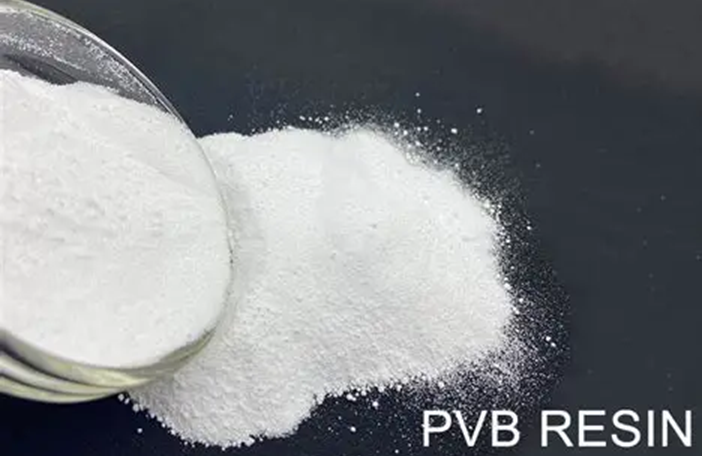
Polyvinyl Butyral (PVB) is a thermoplastic resin produced by the acetalization of polyvinyl alcohol (PVA) with butyraldehyde. It is best known as the interlayer material in laminated safety glass, especially in automotive windshields and architectural glazing.
🔬 Chemical Structure & Production
-
Structure: PVB is a copolymer containing mainly vinyl butyral units, with residual vinyl alcohol and vinyl acetate groups.
-
Production Steps:
-
Hydrolysis of polyvinyl acetate → polyvinyl alcohol (PVA).
-
Acetalization of PVA with butyraldehyde under acidic conditions → PVB.
-
Neutralization, washing, drying, and processing into powder, granules, or films.
-
-
Typical Composition:
-
Butyral content: 65–85%
-
Vinyl alcohol: 12–25%
-
Vinyl acetate: up to 3%
-
⚙️ Physical & Chemical Properties
-
Appearance: White to light yellow powder or granules; films are clear and transparent.
-
Density: ~1.07–1.14 g/cm³
-
Glass Transition Temperature (Tg): 60–75 °C (without plasticizer)
-
Processing Temperature: 140–200 °C
-
Solubility: Soluble in alcohols, ketones, esters, and aromatics; insoluble in water.
-
Optical: High transparency, low haze, UV resistance.
-
Mechanical: Excellent impact absorption, flexibility, and adhesion to glass/metal.
-
Electrical: Good insulating properties.
📊 Grades & Specifications
-
Film Grade (Laminating):
-
Used in laminated glass (automotive, architectural).
-
Key parameters: optical clarity, haze, adhesion, thickness uniformity.
-
-
Adhesive/Coating Grade:
-
Used in inks, primers, adhesives for metals, ceramics, textiles.
-
Key parameters: viscosity, hydroxyl content, volatile matter.
-
Typical Quality Indicators:
-
Viscosity (10% solution, 25 °C): 20–120 mPa·s
-
Hydroxyl value: determines adhesion and solubility
-
Volatile content: ≤1–2%
-
Moisture: ≤0.5–1%
🏭 Applications
-
Laminated Safety Glass:
-
Automotive windshields, architectural glazing, aerospace windows.
-
Benefits: impact resistance, fragment retention, acoustic damping, UV filtering.
-
-
Adhesives & Coatings:
-
Strong adhesion to glass, metal, ceramics, textiles.
-
Used in primers, protective coatings, and specialty adhesives.
-
-
Printing Inks:
-
Binder providing clarity, abrasion resistance, and adhesion.
-
-
Electronics/Optics:
-
Transparent protective coatings, insulating layers.
-
📦 Processing & Storage
-
Film Processing: Extrusion or calendaring at 160–200 °C; laminated under heat and pressure (autoclave).
-
Adhesive Processing: Dissolved in solvent blends (MEK, IPA, EtOAc); requires controlled addition and swelling.
-
Storage: Cool, dry, sealed packaging; avoid moisture and direct sunlight.
-
Shelf Life: Typically 12–24 months depending on supplier.
✅ Procurement Checklist
-
Grade type (film vs adhesive)
-
Form (powder, granule, film roll)
-
Plasticizer status (neat vs pre-plasticized)
-
COA, TDS, SDS availability
-
Packaging (20–25 kg bags, film rolls)
-
Compliance (REACH, automotive/marine standards)
-
Logistics (INCOTERMS, palletization, HS code)
Quick Technical-Commercial Table
| Grade Type | Form | Viscosity (25 °C, 10%) | OH Content | Volatiles | Main Use |
|---|---|---|---|---|---|
| Film (Laminating) | Film/Granule | 40–80 mPa·s | Medium-low | ≤1.0–1.5% | Laminated glass |
| Adhesive/Coating | Powder/Granule | 60–120 mPa·s | Medium-high | ≤1.0–2.0% | Adhesives, inks, primers |
🧾 Synonyms & Scientific Names
-
Poly(vinyl butyral)
-
Polyvinyl acetal
-
Poly[(2-propyl-1,3-dioxane-4,6-diyl)methylene]
-
PVB (common abbreviation)
-
Butvar (common laboratory and industrial synonym)
🌍 International Names
-
Polivinilbutiral (Spanish)
-
Polivinil butirrale (Italian)
-
Polivinylbutyral (German)
🏭 Trade Names (Commercial Brands)
Different manufacturers market PVB films and resins under proprietary names:
-
Saflex (Eastman)
-
Butacite (DuPont, now Kuraray)
-
S-Lec (Sekisui Chemical)
-
Trosifol (Kuraray)
-
Everlam (Everlam NV)
-
KB PVB
-
GUTMANN PVB
-
GlasNovations
-
WINLITE