We unleash your business potential by maximize the business innovation.
Send EmailSteel Shot, Cast Steel Shot, Blasting Shot, Shot Blasting Media, Steel Blasting Shot, Steel Grit Shot, Metal Shot Blasting, Granulated Steel Shot, 7439‑89‑6
CAST STEEL SHOT (STEEL SHOT) TECHNICAL DATA SHEET (TDS)
Product Name: Cast Steel Shot
Other Names: Steel Shot, Metal Shot, Steel Balls, Blasting Shot, Blasting Steel, Shot Blasting Media, Steel Abrasive, SAE Shot
CAS Number: 7439-89-6 (Iron – main component)
Material: High carbon cast steel
Chemical Class: Ferritic metal abrasive
SECTION 1: PRODUCT IDENTIFICATION AND CHEMICAL IDENTITY
| Parameter | Description |
|---|---|
| Product Name | Cast Steel Shot |
| Other Names | Steel Shot, Metal Shot, Steel Balls, Blasting Shot, Blasting Steel, Shot Blasting Media, Steel Abrasive, SAE Shot, Cast Steel Abrasive |
| CAS Number | 7439-89-6 (Iron - main component) |
| Material | High carbon cast steel |
| Chemical Class | Ferritic metal abrasive |
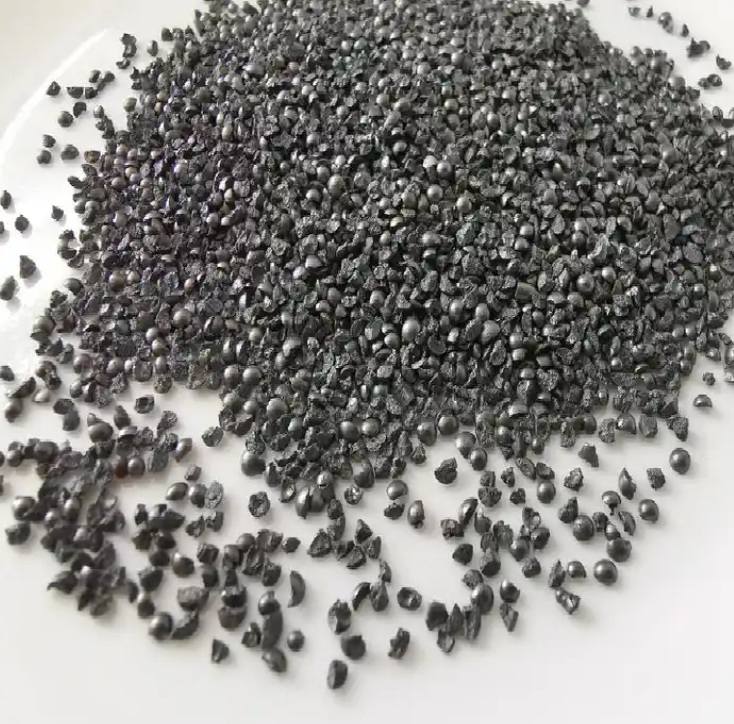
| Shape | Spherical |
| Color | Black / Dark gray |
| Hardness Range | 40 – 60 HRC (depending on grade) |
| Density | 7.20 – 7.80 g/cm³ |
PRODUCT DESCRIPTION AND EXPLANATION:
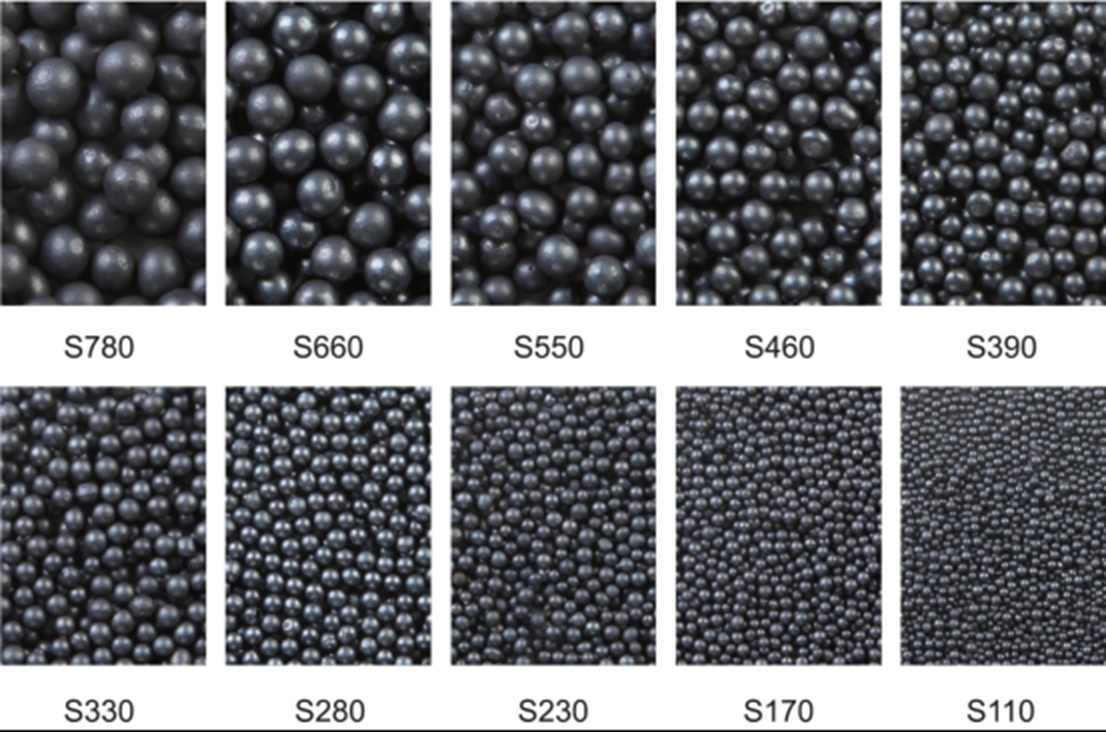
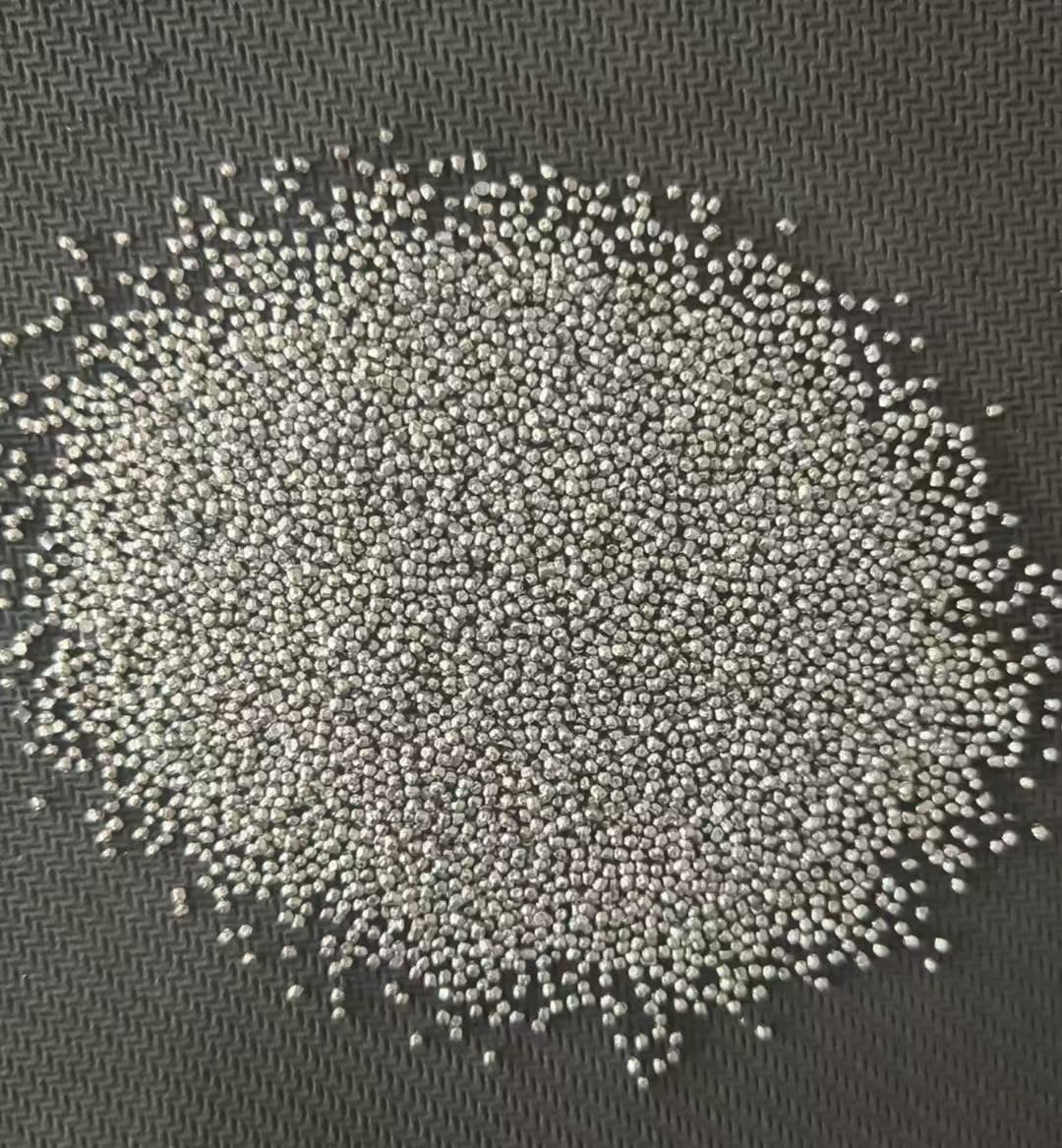
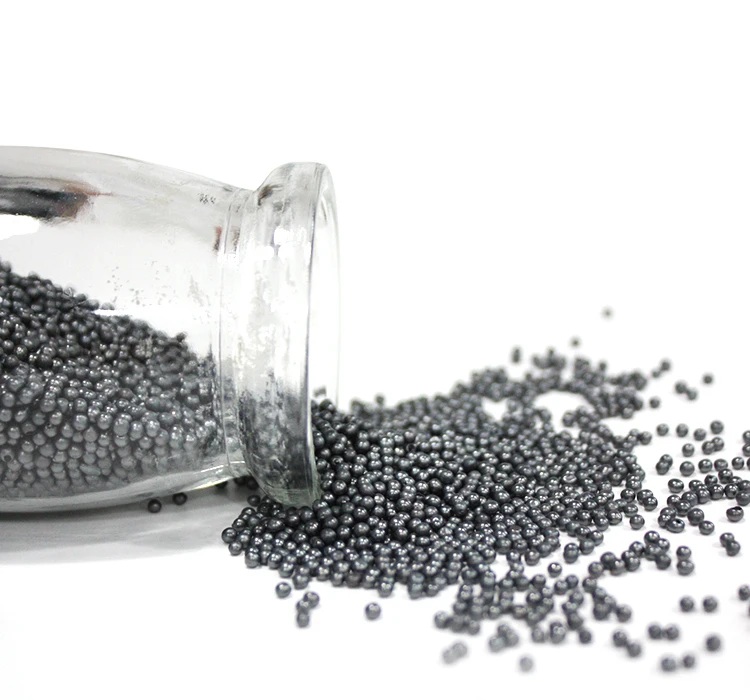
Cast steel shot is a spherical metal abrasive produced from high carbon cast steel. It is widely used as a blasting media in industrial surface cleaning, shot peening, deburring, and surface preparation applications. Classified according to SAE J444 standard, cast steel shot is manufactured in size ranges from S70 (0.180 mm) to S780 (2.80 mm). Due to its spherical geometry, it provides a smoother surface finish compared to angular abrasives and is preferred in applications where surface integrity must be maintained.
The most important feature of cast steel shot is its high reusability rate. During blasting operations, particles are resistant to fracturing and wear, allowing them to be recycled many times, which provides cost-effective solutions in the long term. It is widely used in foundries, steel mills, automotive industry, shipbuilding, construction sector, and general metalworking industry. In shot peening applications, the compressive residual stresses created on the surface significantly increase the fatigue resistance and service life of metal components.
SECTION 2: CHEMICAL COMPOSITION
| Element | Content (%) | Explanation |
|---|---|---|
| Carbon (C) | %0.80 – 1.20 | Provides hardness and durability; high carbon steel grade |
| Manganese (Mn) | %0.35 – 1.25 | Increases hardenability; improves mechanical properties |
| Silicon (Si) | ≥ %0.40 | Provides deoxidation; contributes to hardness and durability |
| Sulfur (S) | ≤ %0.050 | Impurity; low levels are critical for quality |
| Phosphorus (P) | ≤ %0.050 | Impurity; low levels are critical for quality |
| Iron (Fe) | Balance (approximately %96 – 98) | Main component; matrix material |
CHEMICAL COMPOSITION EXPLANATION:
Cast steel shot is a material that provides hardness and wear resistance through its high carbon content (%0.80-1.20). Manganese (%0.35-1.25) increases the hardenability of the steel and improves its mechanical properties. Silicon (≥%0.40) provides deoxidation and contributes to hardness and durability. Maintaining harmful impurities such as sulfur and phosphorus at low levels (below %0.050) directly affects the quality and performance of the material. Iron, at approximately 96-98%, is the main matrix element. This chemical composition gives cast steel shot the hardness, durability, and impact resistance required for demanding blasting applications.
SECTION 3: PHYSICAL PROPERTIES
| Property | Value | Explanation |
|---|---|---|
| Shape | Spherical | Excellent roundness; homogeneous impact distribution |
| Density | 7.20 – 7.80 g/cm³ | High density; provides effective impact energy |
| Bulk Density | ~4.4 g/cm³ | Reference value for storage and transportation |
| Hardness (Regular) | 40 – 50 HRC | General purpose hardness for standard applications |
| Hardness (Special) | 52 – 56 HRC | For more demanding cleaning and peening applications |
| Hardness (High) | 56 – 60 HRC | For heavy applications requiring maximum impact resistance |
| Hardness Deviation | Max. ± 3.0 HRC | Batch-to-batch consistency guarantee |
| Microstructure | Tempered martensite or tempered troostite + carbide | Optimum hardness and toughness balance |
PHYSICAL PROPERTIES EXPLANATION:
Cast steel shot provides homogeneous impact distribution on the workpiece surface due to its spherical shape. This shape enables a smoother surface finish compared to angular abrasives. Its high density (7.20-7.80 g/cm³) ensures that each particle carries high impact energy, providing effective cleaning and peening performance. Bulk density is approximately 4.4 g/cm³, which serves as a reference for storage and transportation calculations.
Hardness is one of the most critical performance parameters of cast steel shot. Three different hardness grades are offered:
-
Regular (40-50 HRC): Suitable for general cleaning and light peening applications. Lower hardness provides less breakage and longer service life.
-
Special (52-56 HRC): Designed for more demanding cleaning and medium-heavy peening applications. Offers optimum balance between hardness and toughness.
-
High (56-60 HRC): Ideal for heavy applications requiring maximum impact resistance and aggressive cleaning. Highest hardness provides the most effective surface preparation.
The microstructure consists of tempered martensite or tempered troostite with carbide phases. This structure gives cast steel shot an excellent balance between hardness and toughness, ensuring both effective abrasion and long service life.
SECTION 4: SIZE GRADES (SAE STANDARD)
| Grade | Size Range (mm) | Mesh No | Explanation |
|---|---|---|---|
| S70 | 0.180 | 80 | Finest; for precision surface finishing |
| S110 | 0.20 – 0.60 | 70 | Fine grade; light cleaning and finishing |
| S170 | 0.30 – 0.90 | 50 | Fine-medium; general surface preparation |
| S230 | 0.40 – 1.00 | 45 | Medium; multi-purpose blasting applications |
| S280 | 0.50 – 1.20 | 35 | Medium-coarse; casting cleaning |
| S330 | 0.60 – 1.40 | 30 | Coarse; heavy cleaning and peening |
| S390 | 0.70 – 1.70 | 25 | Coarse; steel structure cleaning |
| S460 | 0.85 – 2.00 | 18 | Very coarse; heavy scale removal |
| S550 | 1.00 – 2.00 | 16 | Very coarse; heavy peening and cleaning |
| S660 | 1.20 – 2.40 | 14 | Extra coarse; heavy industrial applications |
| S780 | 1.40 – 2.80 | 12 | Coarsest; heaviest cleaning operations |
SIZE CLASSIFICATION EXPLANATION:
Cast steel shot is classified according to the SAE J444 standard and sized using sieving methods. The higher the numerical grade (from S70 to S780), the larger the particle size. Size selection should be based on application requirements:
-
Small sizes (S70 – S170): Fine surface finish, precision cleaning, light deburring, detailed parts.
-
Medium sizes (S230 – S330): General purpose blasting, casting cleaning, surface preparation, shot peening.
-
Large sizes (S390 – S780): Heavy scale removal, thick rust layer removal, heavy structural steel cleaning, aggressive surface preparation.
Correct size selection directly affects process efficiency, surface quality, and cost-effectiveness. Particles that are too small cannot provide sufficient impact energy, while particles that are too large can damage the surface and cause more dust formation.
SECTION 5: APPLICATION AREAS
| Industry | Application | Details |
|---|---|---|
| Foundry | Cleaning of steel castings, iron castings, S.G. iron castings and forgings | Removal of sand residues, scale and burnt sand; improvement of surface quality |
| Steel Industry | Scale, rust and mill scale removal from steel plates and profiles | Removal of rolling scale, rust and oxide layers; surface preparation before painting |
| Automotive | Shot peening, deburring, stress relief | Gears, springs, crankshafts, fasteners; increasing fatigue resistance |
| Shipbuilding | Surface preparation of steel plates, pipe sections and fittings | Surface preparation before marine coatings; rust and scale removal |
| Construction | Surface preparation of structural steel, concrete surface preparation | Surface preparation before paint and fireproof coatings; concrete surface texturing |
| General Metalworking | Surface cleaning, texturing, deburring, finishing | Deburring after machining; surface roughening; aesthetic finishing |
| Container Industry | Cleaning of steel containers, tank interiors | Internal surface cleaning of storage tanks, pressure vessels, shipping containers |
| Shot Peening | Creating compressive stress to increase fatigue resistance | Aerospace, automotive, military and heavy machinery parts; extending fatigue life |
APPLICATION AREAS EXPLANATION:
Cast steel shot plays a critical role in many different industrial sectors:
Foundry Applications: Removal of sand residues, burnt sand, scale and other surface contaminants from cast parts. Steel shot smoothens casting surfaces and prepares them for subsequent processes.
Steel Industry: Removal of scale layers, rust and oxide layers formed on steel plates and profiles after rolling operations. Provides surface preparation before painting, galvanizing and other coating processes.
Automotive Industry: Shot peening for surface hardening and increasing fatigue resistance of critical safety and performance parts (gears, springs, crankshafts, fasteners). Also deburring and surface finishing after machining.
Shipbuilding: Surface preparation of steel plates, pipe sections and fittings before marine coatings (paint, epoxy, anti-corrosive). Complete removal of rust and scale ensures long coating life.
Shot Peening Applications: Steel shot impacts the surface at high velocity, creating plastic deformation and compressive residual stresses. This process significantly increases fatigue resistance, crack resistance and overall service life of metal parts. Widely used in aerospace, automotive, military and heavy machinery industries.
SECTION 6: FUNCTIONAL PROPERTIES
| Property | Description |
|---|---|
| Reusability | Can be recycled many times; cost-effective blasting media |
| Spherical Shape | Provides smoother surface finish compared to steel grit |
| High Durability | Low wear rate; long service life |
| Surface Quality | Produces smooth, clean surface |
| Peening Effect | Creates compressive residual stresses; increases fatigue resistance |
| Low Fracture Rate | Reduces material consumption; lowers operational costs |
| Homogeneous Impact | Provides even impact distribution due to spherical shape |
FUNCTIONAL PROPERTIES EXPLANATION:
One of the most important functional properties of cast steel shot is its high reusability rate. During blasting operations, particles are resistant to fracturing and maintain their effectiveness over a long period. This feature provides significant cost advantages, especially in large-scale and continuous operations.
The spherical shape is the most distinguishing feature that sets cast steel shot apart from angular abrasives (steel grit, aluminum oxide). This geometry provides a smoother finish on the workpiece surface and is preferred in applications where surface integrity must be preserved. At the same time, the spherical shape ensures homogeneous distribution of impact energy on the surface.
High durability and low fracture rate extend the service life of cast steel shot. These properties reduce material consumption, lower operational costs, and require less frequent media replenishment.
In shot peening applications, the compressive residual stresses created by cast steel shot increase the fatigue resistance and crack resistance of metal parts. This significantly extends the service life of critical components subjected to dynamic loads.
SECTION 7: ADVANTAGES
-
Cost Effective: Recyclable; can be used multiple times. Low fracture rate and long service life reduce total operational costs.
-
Efficient: High impact energy for effective cleaning. High density enables each particle to provide maximum cleaning performance.
-
Versatile: Suitable for various industries and applications. Wide range of uses from foundries to aerospace, shipbuilding to automotive.
-
Smooth Surface: Spherical shape produces smoother surfaces compared to angular grit. Ideal for applications where surface integrity must be maintained.
-
Durable: Low fracture rate reduces material consumption. Long service life requires less frequent media replacement.
-
Controlled Hardness: Available in various hardness grades for specific applications. Three different hardness levels from 40-60 HRC enable application-specific optimization.
-
Homogeneous Performance: SAE J444 classification guarantees consistent size distribution and performance.
-
Environmentally Friendly: Non-toxic, recyclable, not classified as hazardous waste.
SECTION 8: QUALITY STANDARDS
| Standard | Description |
|---|---|
| SAE J444 | Society of Automotive Engineers (shot size classification standard). Most widely used classification standard worldwide. |
| ISO 9001:2015 | Quality management systems. Guarantees compliance of production processes with international quality standards. |
| GB/T 18838.3-2008 | Chinese high carbon cast steel shot (grit) standard. Quality requirements for Chinese market. |
| GB/T 18838.4-2008 | Chinese low carbon cast steel shot (grit) standard. Alternative carbon level requirements for Chinese market. |
| IS 4606:1983 | Indian steel shot standard. Quality requirements for Indian market. |
| DIN 8201 | German standard (steel shot and grit). Quality requirements for European market. |
| BSS (British Standard Specification) | British standard. Quality requirements for UK market. |
QUALITY STANDARDS EXPLANATION:
Cast steel shot is manufactured and tested according to internationally recognized quality standards. SAE J444 is the most widely used standard for size classification worldwide, defining 11 different size grades from S70 to S780. ISO 9001:2015 guarantees compliance of production processes with quality management systems.
GB/T 18838.3-2008 and GB/T 18838.4-2008 are standards applicable to the Chinese market, specifying separate quality requirements for high and low carbon steel shots. IS 4606:1983 is for the Indian market, a standard that is compatible with SAE J444 but also covers local requirements. DIN 8201 and BSS standards are respectively valid for German and UK markets.
Compliance with these standards ensures guaranteed size consistency, hardness values, chemical composition, microstructure and performance properties of cast steel shot.
SECTION 9: COMPARISON WITH OTHER ABRASIVES
| Parameter | Steel Shot | Steel Grit | Glass Bead | Aluminum Oxide | Copper Slag |
|---|---|---|---|---|---|
| Shape | Spherical | Angular | Spherical | Angular | Angular |
| Surface Finish | Smooth | Rough | Smooth | Rough | Rough |
| Reusability | High (100+ cycles) | High (100+ cycles) | Low (1-5 cycles) | Medium (10-20 cycles) | Low (1-3 cycles) |
| Hardness | 40-60 HRC | 40-60 HRC | 5-6 Mohs | 9 Mohs | 6-7 Mohs |
| Application | Peening, cleaning | Profiling, scale removal | Light cleaning, decorative | Profiling, hard surfaces | Scale removal |
| Cost | Medium-High | Medium-High | Medium | High | Low |
| Dust Formation | Low | Low | Medium | High | High |
| Environmental Impact | Low (recyclable) | Low (recyclable) | Medium | Medium | High (hazardous waste) |
| Surface Profile | Low | High | Low | High | High |
COMPARISON EXPLANATION:
Cast steel shot offers a unique balance of performance and cost advantages among abrasive materials:
Comparison with Steel Grit: Although both are steel-based, steel grit creates a more aggressive surface profile with its angular shape, while steel shot provides a smoother surface finish with its spherical shape. Steel grit is more effective in rapid cleaning of thick scale layers. Steel shot is preferred in peening and precision cleaning applications where surface integrity must be preserved.
Comparison with Glass Bead: Both are spherical and provide smooth surface finish. However, steel shot has much higher density and hardness, making it effective in heavier cleaning and peening applications. Glass bead is suitable for lighter applications (decorative finishing, precision cleaning). Steel shot's reusability (100+ cycles) is much higher compared to glass bead (1-5 cycles).
Comparison with Aluminum Oxide: Aluminum oxide is effective in the most demanding surface preparation applications due to its very high hardness (9 Mohs). However, its angular shape and high dust formation are disadvantages compared to steel shot. Steel shot is a cost-effective alternative with lower dust formation and longer service life.
Comparison with Copper Slag: Although copper slag is a low-cost alternative, it is increasingly less preferred due to low reusability (1-3 cycles), high dust formation, and environmental concerns (hazardous waste classification). Steel shot is more economical and environmentally friendly in the long term despite its higher initial cost.
SECTION 10: SAFETY AND TOXICOLOGY
| Parameter | Value |
|---|---|
| GHS Classification | Not classified as hazardous (in solid form) |
| Health Hazards | Dust may cause respiratory tract irritation; use appropriate PPE |
| Required PPE | Safety goggles, dust mask (N95/P2), hearing protection, work gloves, safety shoes |
| Storage | Store in dry conditions; protect from moisture to prevent rusting |
| Fire Risk | Not flammable |
| Incompatibilities | Strong acids, oxidizing agents |
| Oral Toxicity (LD50) | Not applicable (not toxic in solid metal form) |
| Skin Irritation | May cause mechanical irritation (abrasive effect) |
| Eye Irritation | May cause mechanical irritation (dust or particle entry) |
| Chronic Effects | No known chronic health effects (does not contain silica) |
| Carcinogenicity | Not classified |
| Bioaccumulation | Not likely |
SAFETY AND TOXICOLOGY EXPLANATION:
Cast steel shot is not classified as a hazardous substance in solid metal form. However, dust and particles generated during blasting operations may cause respiratory tract irritation. Since blasting dust may contain additional hazards depending on the surface being cleaned (e.g., lead, chromium, cadmium, other heavy metals from paint or coatings), appropriate personal protective equipment must always be used during blasting operations.
Personal Protective Equipment (PPE) Recommendations:
-
Respiratory Protection: N95/P2 or higher filtration dust mask (supplied air respirator if working in blasting cabinet)
-
Eye Protection: Closed-type safety goggles or face shield
-
Hearing Protection: Ear plugs or earmuffs (blasting operations can create noise levels above 85 dB(A))
-
Hand Protection: Nitrile or neoprene work gloves
-
Foot Protection: Steel-toe safety shoes
Storage Precautions:
Cast steel shot should be stored in dry conditions, in original packaging or tightly closed containers. Exposure to moisture can cause rusting and adversely affect abrasive performance. Storage areas should be kept away from strong acids and oxidizing agents.
Health Effects:
-
Inhalation: Dust may cause mechanical irritation in the nose, throat and lungs. Symptoms may include coughing, sneezing and shortness of breath.
-
Skin Contact: Abrasive particles may cause mechanical irritation on skin. Prolonged contact may lead to skin dryness and cracking.
-
Eye Contact: Particles may cause mechanical irritation, redness and pain in eyes.
SECTION 11: TRANSPORT INFORMATION
| Parameter | Information |
|---|---|
| UN Number | Not applicable (not a hazardous substance) |
| Hazard Class | Not a hazardous substance |
| Packing Group | Not applicable |
| Proper Shipping Name | Cast Steel Shot |
| Marine Pollutant | No |
| ADR/RID Label | Not applicable |
| Transport Temperature | Ambient (room temperature) |
| Special Precautions | Protect from moisture; use appropriate lifting equipment due to weight |
TRANSPORT INFORMATION EXPLANATION:
Cast steel shot is not classified as a hazardous substance, therefore no special restrictions apply for road, sea or air transport. UN number, hazard class and packing group are not required. However, due to the product's high density (7.20-7.80 g/cm³), pallets and packaging weight capacities must be considered during transport. The product should be protected from moisture and transported in dry conditions to prevent rusting. ADR/RID labeling is not required. Not classified as a marine pollutant.
SECTION 12: REGULATORY INFORMATION
| Region | Status |
|---|---|
| EU (REACH) | Registered / compliant |
| Türkiye (KKDİK) | Mandatory compliance; requires registration |
| USA (TSCA) | Listed |
| Canada (DSL) | Listed |
| Australia (AICS) | Listed |
| Japan (ENCS) | Listed |
| Korea (KECL) | Listed |
| China (IECSC) | Listed |
REGULATORY INFORMATION EXPLANATION:
Cast steel shot, with iron (CAS 7439-89-6) as its main component, is a metal abrasive registered in all major industrial markets including the EU (REACH), USA (TSCA), Canada (DSL), Australia (AICS), Japan (ENCS), Korea (KECL) and China (IECSC). In Türkiye, it requires mandatory registration under KKDİK (Regulation on Registration, Evaluation, Authorization and Restriction of Chemicals). Since the product is not classified as hazardous, no special labeling or packaging requirements apply. Standard customs procedures apply for import/export operations.
SECTION 13: STORAGE AND HANDLING
| Parameter | Information |
|---|---|
| Storage Conditions | Cool, dry, well-ventilated area; room temperature (2-40°C) |
| Container Requirements | Tightly closed containers; keep in original packaging |
| Materials to Avoid | Strong acids, oxidizing agents, moisture |
| Shelf Life | Unlimited (under proper storage, provided no rusting occurs) |
| Hygroscopicity | Not hygroscopic (however moisture causes rusting) |
| Handling Notes | Avoid dust formation; use appropriate PPE; protect from moisture |
| Packaging Options | 25 kg multi-layer bag, 25 kg plastic drum, 50-100 kg fiber drum, 500-1,000 kg big bag |
STORAGE AND HANDLING EXPLANATION:
Cast steel shot should be stored at 2-40°C in cool, dry and well-ventilated areas. It should be kept in tightly closed containers, preferably in original packaging. Moisture can cause rusting, adversely affecting product quality and performance. It should be kept away from strong acids and oxidizing agents.
Under proper storage conditions (protected from moisture, dry), the shelf life of cast steel shot is unlimited. However, since the onset of rusting will cause performance degradation, products showing signs of rusting should not be used.
Handling Notes:
-
Avoid dust formation (use closed systems, local exhaust ventilation)
-
Avoid skin and eye contact (use protective gloves and goggles)
-
Avoid dust inhalation (use dust mask or respirator)
-
Do not expose to moisture and water (causes rusting)
-
Used shot can be reused after cleaning from foreign materials
-
Perform regular maintenance of blasting equipment filtration and dust collection systems
SECTION 14: FIRE FIGHTING MEASURES
| Parameter | Information |
|---|---|
| Fire Hazard | Not flammable (except metal dust) |
| Extinguishing Media | Water spray, CO₂, dry chemical powder, sand |
| Special Hazards | Use of water in metal dust fire may cause explosion; thermal decomposition may produce toxic fumes (iron oxides) |
| Protective Equipment | Self-contained breathing apparatus (SCBA), full protective clothing |
| Explosion Risk | May form explosive mixtures in air as dust cloud (dust explosion) |
| Automatic Fire Suppression | Appropriate systems recommended against dust explosion risk |
FIRE FIGHTING MEASURES EXPLANATION:
Cast steel shot is not flammable in bulk form. However, when reduced to fine dust, it can form explosive mixtures in air (dust explosion risk). In case of fire, use water spray, CO₂, dry chemical powder or sand for extinguishing. Important: Use of water in metal dust fire may cause explosion. Thermal decomposition may produce iron oxide fumes. Use self-contained breathing apparatus (SCBA) and full protective clothing during fire fighting. Automatic fire suppression systems are recommended for blasting equipment against dust explosion risk.
SECTION 15: ACCIDENTAL RELEASE MEASURES
| Parameter | Information |
|---|---|
| Personal Protection | Wear appropriate PPE (dust mask, safety goggles, protective clothing, gloves) |
| Ventilation | Increase ventilation; evacuate area if necessary |
| Control | Stop source if safe to do so; contain to prevent dust spread |
| Cleaning Methods | Use vacuum or carefully sweep to prevent dust formation; place in appropriate disposal container |
| Environmental Precautions | Prevent entry into drains, sewers and water bodies |
| Waste Disposal | Dispose according to local regulations (can be recycled as scrap metal) |
ACCIDENTAL RELEASE MEASURES EXPLANATION:
In case of spillage, appropriate personal protective equipment should be worn (dust mask, safety goggles, protective clothing, gloves). The area should be ventilated and the spill contained to prevent dust spread. Cleaning should be done using vacuum or careful sweeping to prevent dust formation, and the spilled material should be placed in an appropriate disposal container. Environmental release (drains, sewers, water bodies) should be prevented. Waste should be disposed according to local regulations; steel shot can be recycled as scrap metal.
SECTION 16: FIRST AID MEASURES
| Exposure Route | Action |
|---|---|
| Inhalation | Move person to fresh air. If irritation persists, seek medical attention. |
| Skin Contact | Wash with plenty of water and soap; remove contaminated clothing. If irritation persists, seek medical attention. |
| Eye Contact | Rinse immediately with plenty of water for at least 15 minutes. Remove contact lenses if present. If irritation persists, seek medical attention. |
| Ingestion | Rinse mouth with water. Drink plenty of water. Do not induce vomiting. If large amount is swallowed, seek medical attention. |
FIRST AID MEASURES EXPLANATION:
Standard first aid measures apply for cast steel shot exposure:
-
Inhalation: In case of dust inhalation, move the person to fresh air. If coughing or respiratory irritation persists, seek medical attention.
-
Skin Contact: Abrasive particles should be removed from skin by washing with plenty of water and soap. Remove contaminated clothing. If irritation persists, seek medical attention.
-
Eye Contact: Eyes should be rinsed immediately with plenty of water for at least 15 minutes. Remove contact lenses if present. If irritation persists, seek medical attention.
-
Ingestion: Rinse mouth with water, drink plenty of water. Do not induce vomiting. If large amount is swallowed, seek medical attention.
SECTION 17: RAW MATERIALS AND DOWNSTREAM PRODUCTS
17.1. Raw Materials (Upstream)
| Raw Material | Description |
|---|---|
| Iron (Fe) | Main component; approximately 96-98% |
| Carbon (C) | %0.80-1.20; provides hardness and durability |
| Manganese (Mn) | %0.35-1.25; increases hardenability |
| Silicon (Si) | ≥%0.40; provides deoxidation |
| Scrap Steel | Recycled steel; sustainable production |
17.2. Downstream Products
| Downstream Product | Application |
|---|---|
| Used Cast Steel Shot | Recycled as scrap in metal recycling facilities |
| Dust and Particle Waste | Collected in filter systems; disposed at waste management facilities |
| Cleaned Surface (Workpiece) | Ready surface for coating, painting, welding or assembly |
SECTION 18: INDUSTRY COMPATIBILITY AND USAGE VOLUMES
| Industry | Application Area | Example Use | Suitability |
|---|---|---|---|
| Foundry | Casting cleaning, scale removal | Steel and iron castings | High |
| Steel Industry | Surface preparation, scale removal | Plates, profiles, sheets | High |
| Automotive | Shot peening, deburring | Gears, springs, crankshafts | High |
| Shipbuilding | Surface preparation, rust removal | Steel plates, pipes | High |
| Construction | Structural steel cleaning | Beams, columns | High |
| Aerospace | Shot peening, surface finishing | Landing gear, engine parts | High |
| General Metalworking | Deburring, finishing | Machined parts | High |
| Container | Tank interior cleaning | Storage tanks | Medium |
SECTION 19: DERIVATIVES AND RELATED COMPOUNDS
| Compound | Description |
|---|---|
| Steel Grit | Angular shaped, more aggressive abrasive; profiling applications |
| Stainless Steel Shot | Corrosion resistant; food and medical industries |
| Low Carbon Steel Shot | Softer; precision applications |
| High Carbon Steel Shot | Hard and durable; heavy applications |
| Spheroidal Cast Steel Shot | More homogeneous microstructure; superior durability |
| Ceramic Bead | Alternative abrasive; glass and ceramic applications |
SECTION 20: SUMMARY AND CRITICAL NOTES
SUMMARY:
Cast Steel Shot (CAS 7439-89-6) is a spherical industrial abrasive produced from high carbon cast steel. Manufactured in 11 different size grades from S70 (0.180 mm) to S780 (2.80 mm) according to SAE J444 standard. With %0.80-1.20 carbon content, it has hardness values ranging from 40-60 HRC (Regular, Special, High hardness grades). Density is 7.20-7.80 g/cm³, bulk density is ~4.4 g/cm³.
Its spherical shape provides a smoother surface finish compared to steel grit and is preferred in applications where surface integrity must be preserved. Low fracture rate and high reusability (100+ cycles) make it a cost-effective blasting media. Used in foundries, steel industry, automotive, shipbuilding, construction, aerospace and general metalworking sectors for cleaning, shot peening, deburring and surface preparation applications.
In shot peening applications, the compressive residual stresses created significantly increase fatigue resistance and service life of metal parts. Not classified as hazardous substance; store in dry conditions, protect from moisture.
Basic Properties:
| Property | Value |
|---|---|
| Product Name | Cast Steel Shot |
| CAS Number | 7439-89-6 (Iron) |
| Material | High carbon cast steel |
| Shape | Spherical |
| Color | Black / Dark gray |
| Hardness Range | 40 – 60 HRC (3 grades) |
| Density | 7.20 – 7.80 g/cm³ |
| Bulk Density | ~4.4 g/cm³ |
| Size Range | 0.180 – 2.80 mm (11 grades) |
| Primary Use | Blasting, shot peening, surface cleaning |
Main Application Areas:
| Industry | Applications |
|---|---|
| Foundry | Casting cleaning, sand residue removal |
| Steel Industry | Scale, rust and mill scale removal |
| Automotive | Shot peening, deburring, stress relief |
| Shipbuilding | Surface preparation, rust removal |
| Construction | Structural steel and concrete surface preparation |
| Aerospace | Shot peening, surface finishing |
| General Metalworking | Deburring, finishing, texturing |
Key Safety Points:
-
NOT HAZARDOUS: No hazardous substance classification in solid form
-
DUST RISK: Blasting dust may cause respiratory tract irritation; use appropriate PPE
-
PPE RECOMMENDED: Dust mask (N95/P2), safety goggles, hearing protection, work gloves
-
STORAGE: Dry conditions, protected from moisture, tightly closed containers (2-40°C)
-
FIRE RISK: Not flammable in bulk; take precautions against dust explosion risk
-
RECYCLING: Used shot can be recycled as scrap metal
CRITICAL NOTES:
-
Spherical Shape: Cast steel shot is spherical and provides a smoother surface finish compared to angular steel grit. Ideal for peening and cleaning applications where surface integrity is important. This feature makes cast steel shot indispensable especially for surface hardening (shot peening) and precision surface preparation applications.
-
High Reusability: Cast steel shot can be recycled up to 100+ cycles in blasting equipment. Low fracture rate and long service life make it a cost-effective choice for continuous industrial operations. Provides significant long-term cost advantages compared to non-recyclable abrasives (glass bead, copper slag).
-
Size Classification: Cast steel shot is classified in sizes ranging from S70 (0.180 mm) to S780 (2.80 mm) according to SAE J444 standards. The higher the number, the larger the particle size. Correct size selection is critical for application efficiency and surface quality. Small sizes for precision operations, large sizes for heavy cleaning.
-
Hardness Options: Available in three different hardness grades for specific application requirements:
-
Regular (40-50 HRC): General cleaning and light peening
-
Special (52-56 HRC): Demanding cleaning and medium-heavy peening
-
High (56-60 HRC): Maximum impact resistance and aggressive cleaning
-
Hardness deviation maximum ±3.0 HRC guarantees batch-to-batch consistency
-
-
Applications: Used in foundries, steel mills, automotive industry, shipbuilding, construction, aerospace and general metalworking for cleaning, peening, deburring and surface preparation. In shot peening applications, creates compressive residual stresses increasing fatigue resistance.
-
Quality Standards: Products comply with SAE J444, IS 4606:1983, DIN 8201, BSS and GB/T 18838 standards. Manufactured under ISO 9001:2015 quality management systems.
-
Chemical Composition: High carbon steel with %0.80-1.20 carbon content provides hardness and durability for demanding blasting applications. Manganese (%0.35-1.25) increases hardenability, silicon (≥%0.40) provides deoxidation. Sulfur and phosphorus ≤%0.050 with low impurity levels guarantee quality.
-
Typical Sizes: Common sizes include S110 (0.20-0.60 mm), S230 (0.40-1.00 mm), S330 (0.60-1.40 mm) and S550 (1.00-2.00 mm). Finest size S70 (0.180 mm), coarsest size S780 (1.40-2.80 mm).
-
Rusting Risk: Cast steel shot rusts when exposed to moisture. Rusted shot loses abrasive performance and may cause rust contamination on workpiece surfaces. Therefore, the product must always be stored in dry conditions and protected from moisture during use.
-
Recycling and Sustainability: Used cast steel shot can be recycled as scrap metal. Its non-toxic nature, recyclability and long service life make it an environmentally friendly abrasive option. Much more sustainable compared to single-use abrasives like copper slag.
Difference Between Steel Ball and Steel Grit
Although both products are metallic abrasives used in blasting operations, they are designed for fundamentally different purposes. The key difference lies in their particle shape and the effect they create on the surface.
Steel Ball (Steel Shot)
Steel Ball features a fully spherical particle shape. Instead of cutting into the surface, it transfers energy through impact, producing a peening effect. This process cleans the surface while creating compressive stresses that improve the fatigue resistance and service life of the component.
Key Characteristics
- Spherical particle structure
- Impact-based cleaning action
- Low surface roughness profile
- Excellent durability and recyclability
- Ideal for shot peening applications
- Improves fatigue strength and component life
- Suitable for precision and high-value parts
Typical Applications
- Shot peening processes
- Automotive components
- Gears and transmission parts
- Springs
- Shafts and crankshafts
- Aerospace and defense industry components
Primary Purpose: Surface strengthening, fatigue-life improvement, and controlled cleaning without aggressive material removal.
Steel Grit
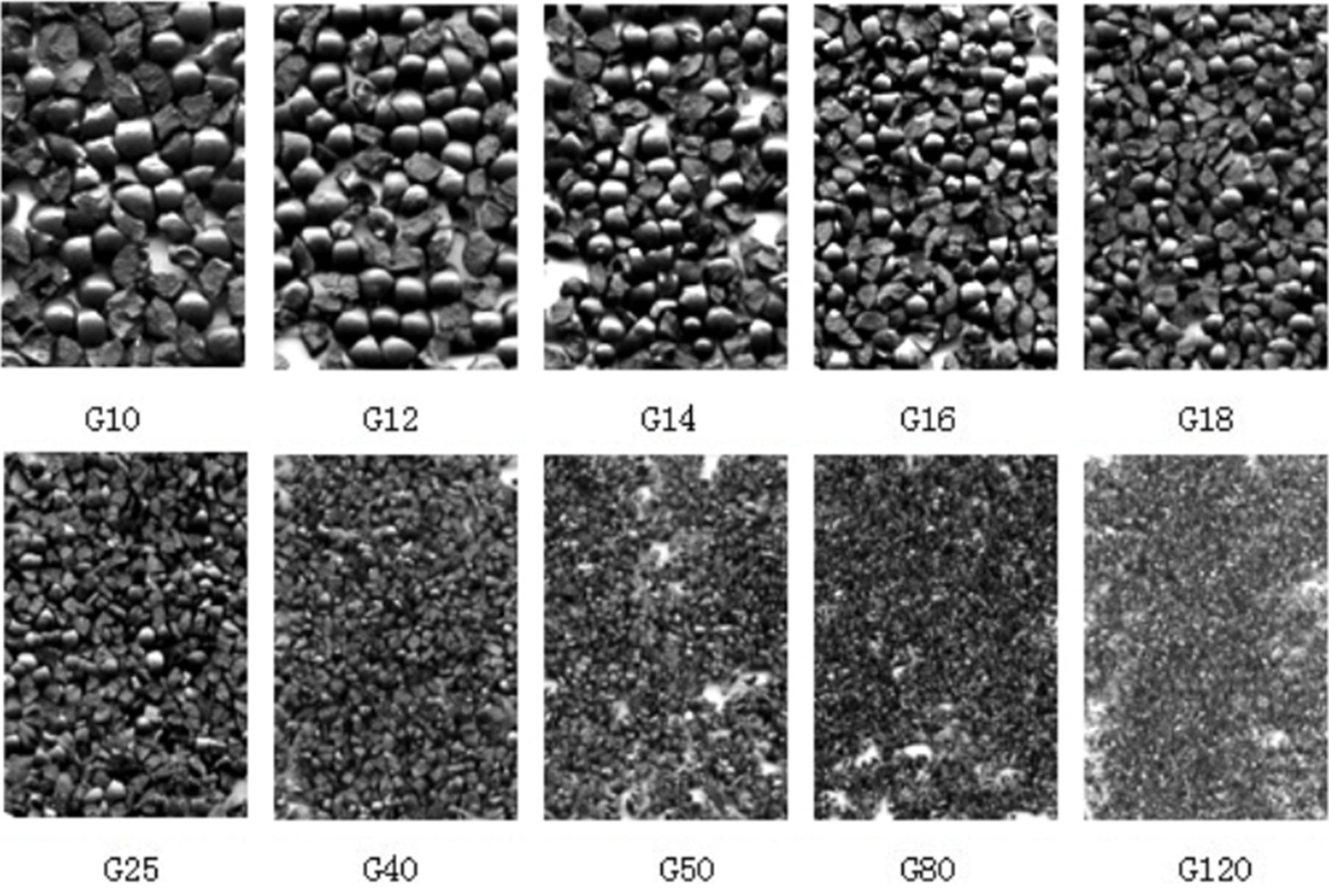
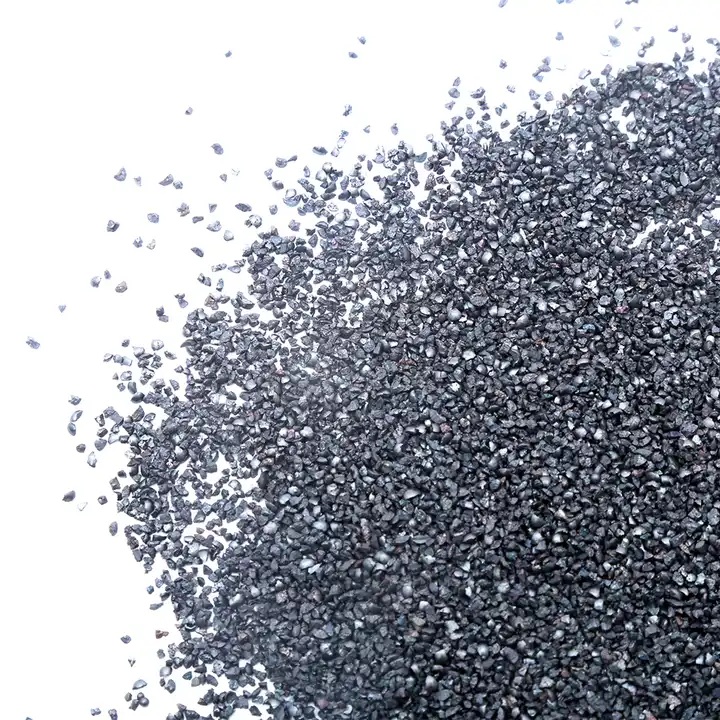
Steel Grit is produced by crushing steel shot into angular particles. Its sharp edges create a cutting and abrasive action on impact, making it highly effective for removing rust, mill scale, old coatings, and other contaminants.
Key Characteristics
- Angular and sharp-edged particle structure
- Aggressive cutting action
- High cleaning efficiency
- Creates a pronounced surface profile
- Excellent for coating and painting preparation
- Durable and reusable
- High productivity in heavy-duty applications
Typical Applications
- Structural steel cleaning
- Shipbuilding and marine industries
- Tank and bridge fabrication
- Foundries and heavy manufacturing
- Rust and mill scale removal
- Surface preparation before painting, galvanizing, or thermal spraying
Primary Purpose: Surface cleaning, coating removal, and creation of the required anchor profile for protective coatings.
Technical Comparison
| Criteria | Steel Ball (Steel Shot) | Steel Grit |
|---|---|---|
| Particle Shape | Spherical | Angular |
| Working Mechanism | Impact | Cutting |
| Cleaning Speed | Moderate | High |
| Surface Profile | Low | Medium to High |
| Shot Peening | Excellent | Not Recommended |
| Surface Strengthening | Excellent | Limited |
| Rust & Coating Removal | Moderate | Excellent |
| Surface Roughening | Low | High |
| Coating Preparation | Acceptable | Ideal |
| Fatigue Resistance Improvement | Excellent | Limited |
Summary:
Steel Ball is primarily a surface enhancement abrasive. It cleans the surface while improving mechanical performance through compressive stress generation.
Steel Grit is primarily a surface preparation abrasive. It aggressively removes contaminants and creates the surface profile required for optimal coating adhesion.
In simple terms:
Steel Ball strengthens the surface.
Steel Grit prepares the surface.
If the objective is to increase component durability and fatigue resistance, Steel Ball is the preferred solution. If the objective is rust removal, coating removal, and surface profiling before painting or galvanizing, Steel Grit is the more effective choice.
IMPORTANT DISCLAIMER: This Technical Data Sheet (TDS) is for informational purposes only and is prepared based on available technical data. The information provided is believed to be accurate. However, the user is solely responsible for determining the product's suitability for their specific applications and for complying with all applicable local, national and international regulations and safety requirements. For complete safety, storage, handling, transport, waste and regulatory compliance information, please refer to the official Safety Data Sheet (SDS/MSDS) provided by the manufacturer/supplier. Users are obligated to test the product in their own processes and applications. All occupational health and safety rules must be observed when working with Cast Steel Shot.