We unleash your business potential by maximize the business innovation.
Send EmailEthylenediamine, Ethanediamine, Ethylene Diamine, Diaminoethane, EDA, 107‑15‑3
Ethylenediamine (EDA) – Comprehensive Technical Overview
1. Chemical Identity
Name: Ethylenediamine
Abbreviation: EDA
CAS Number: 107‑15‑3
Molecular Formula: C2H8N2
Structure: A linear diamine containing two primary amine groups
UN Number: 1604
EC Number: 203‑468‑6
2. Physical & Chemical Properties
-
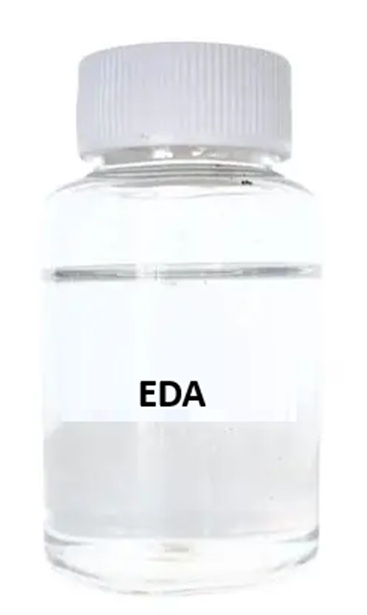
Appearance: Colorless to pale yellow liquid
-
Odor: Strong ammonia-like smell
-
Boiling Point: ~116 °C
-
Melting Point: ~8.5 °C
-
Density: ~0.90 g/cm³ at 20 °C
-
Solubility: Completely miscible with water
-
pH: Strongly alkaline
-
Flash Point: ~38–40 °C (closed cup)
-
Vapor Pressure: Moderate
-
Viscosity: Low
-
Refractive Index: ~1.46
Chemical Behavior:
-
Strong base
-
Reacts vigorously with acids
-
Absorbs CO₂ from air
-
Can form salts and complexes easily
-
Incompatible with oxidizers, acid chlorides, acid anhydrides
3. Reactivity & Stability
-
Stable under recommended storage conditions
-
Hazardous reactions:
-
Exothermic reaction with acids
-
Reaction with CO₂ forming carbamates
-
Reaction with oxidizing agents may be violent
-
-
Decomposition products: Nitrogen oxides, ammonia, irritating vapors
4. Toxicology & Health Hazards
EDA is classified as corrosive, sensitizing, and acutely toxic.
Routes of Exposure
-
Inhalation
-
Skin contact
-
Eye contact
-
Ingestion
Acute Effects
-
Severe skin burns
-
Eye damage (risk of permanent injury)
-
Respiratory tract irritation
-
Coughing, wheezing, shortness of breath
-
Gastrointestinal burns if swallowed
Chronic Effects
-
Skin sensitization (allergic dermatitis)
-
Respiratory sensitization (asthma-like symptoms)
-
Repeated exposure may cause chronic irritation
5. Handling, Storage & Transportation
Personal Protective Equipment (PPE)
-
Chemical-resistant gloves (nitrile, neoprene)
-
Safety goggles or face shield
-
Chemical-resistant apron or suit
-
Respiratory protection when vapors exceed limits
Storage Conditions
-
Store in tightly closed containers
-
Keep away from heat, sparks, open flames
-
Protect from moisture and CO₂
-
Use in well-ventilated areas
-
Separate from acids and oxidizers
Transportation
-
Classified as Corrosive Liquid
-
UN 1604
-
Packaging must comply with ADR/IMDG/IATA regulations
6. Industrial Applications
EDA is a highly versatile intermediate used across multiple industries.
Chemical Manufacturing
-
Production of EDTA (major application)
-
Polyamide resins
-
Epoxy curing agents
-
Polyurethane catalysts
-
Chelating agents
-
Corrosion inhibitors
-
Surfactants and emulsifiers
Textile & Leather
-
Resin finishing agents
-
Dye intermediates
-
Fiber treatment chemicals
Pharmaceuticals & Agrochemicals
-
Intermediate for APIs
-
Pesticide and herbicide intermediates
Gas Treatment
-
Absorption of acidic gases (H₂S, CO₂)
Fuel & Lubricant Additives
-
Dispersants
-
Detergent additives
-
Anti-corrosion packages
7. Regulatory Classification
GHS Classification
-
Skin Corrosion Category 1B
-
Eye Damage Category 1
-
Acute Toxicity (Oral, Dermal, Inhalation)
-
Respiratory Sensitizer Category 1
-
Skin Sensitizer Category 1
-
Flammable Liquid Category 3
NFPA Ratings
-
Health: 3
-
Flammability: 2
-
Reactivity: 0
8. Advantages & Limitations
✅ Advantages
-
Highly reactive diamine
-
Excellent chelating ability
-
Essential intermediate for EDTA and epoxy systems
-
Effective in gas scrubbing applications
-
Strong performance in polymer chemistry
⚠️ Limitations
-
Strongly corrosive
-
Sensitizing and irritating
-
Requires careful storage and handling
-
Flammable at moderate temperatures
9. Key Notes for Industrial Use
-
Vapors are heavier than air and may accumulate near the floor
-
Absorbs CO₂ from air → keep containers tightly sealed
-
Avoid aerosol formation
-
Ensure emergency showers and eyewash stations are available
-
Use explosion-proof equipment in flammable zones
📊 Ethylenediamine (EDA) – Sectoral Suitability Table
| Sector | Suitability Status | Explanation |
|---|---|---|
| Chelating Agent Production (EDTA, DTPA, NTA) | ✅ Suitable | EDA is the primary raw material for these products. |
| Epoxy Systems (Curing Agents, Modified Amines) | ✅ Suitable | Widely used in epoxy curing formulations. |
| Polyamide Resins | ✅ Suitable | Used in water‑based ink resins and textile finishing resins. |
| Fuel & Lubricant Additives | ✅ Suitable | Present in corrosion inhibitor and dispersant packages. |
| Agrochemicals (Pesticide Intermediates) | ✅ Suitable | Used as an intermediate in many active ingredient syntheses. |
| Pharmaceutical Industry (API Intermediates) | ✅ Partially Suitable | Used in certain API syntheses but in limited volumes. |
| Gas Treatment (CO₂ / H₂S Absorption) | ✅ Partially Suitable | Used in amine blends at low concentrations. |
| Textile & Leather Chemicals | ✅ Partially Suitable | Limited use in finishing, resins, and dye auxiliaries. |
| Surfactants & Specialty Chemicals (AEEA, etc.) | ✅ Suitable | Key raw material for AEEA and other EDA derivatives. |
| Home Care & Cleaning Products | ❌ Not Suitable | Not used due to toxicity and strong odor. |
| Food & Cosmetics | ❌ Not Suitable | Not permitted in food or cosmetic applications. |
| Water Treatment (Direct Use) | ❌ Not Suitable | Plays an indirect role via EDTA production but not used directly. |
📊 EDA – Usage Method & Consumption Amounts in Suitable Sectors
| Sector | How EDA Is Used | EDA Consumption (kg per ton of product) |
|---|---|---|
| Chelating Agent Production (EDTA, DTPA, NTA) | Main raw material; forms the core of the chelating structure | 350–420 kg |
| Epoxy Systems (Curing Agents, Modified Amines) | Used as a curing/crosslinking amine in epoxy resin systems | 150–250 kg |
| Polyamide Resins | Diamine component in water‑based ink resins and textile finishing resins | 80–120 kg |
| Fuel & Lubricant Additives | Reactive amine core in corrosion inhibitor and dispersant packages | 20–60 kg |
| Agrochemicals (Pesticide Intermediates) | Intermediate in active ingredient synthesis; aminations and alkylation reactions | 50–150 kg |
| Surfactants & Specialty Chemicals (AEEA, etc.) | Core molecule for AEEA and other EDA‑based specialty amines | 300–350 kg |
| Textile & Leather Chemicals | Limited use in finishing agents, resins, and dye auxiliaries | 5–20 kg |
| Gas Treatment (CO₂ / H₂S Absorption) | Low‑ratio co‑amine in amine blends for gas scrubbing | 10–30 kg |
🧪 Ethylenediamine (EDA) – Synonyms & Alternative Names
1. Common Names
-
Ethylenediamine
-
EDA
-
1,2‑Diaminoethane
-
Diaminoethane
-
Ethane‑1,2‑diamine
2. Systematic / Chemical Names
-
1,2‑Ethanediamine
-
Ethylene diamine (separated spelling)
-
α,β‑Diaminoethane
-
Ethylene‑1,2‑diamine
-
Ethanediamine
3. Industrial / Commercial Names
-
EDA 99%
-
EDA 100%
-
EDA Technical Grade
-
EDA Anhydrous
-
EDA Free Base
4. Codes & Identifiers
-
EDA (industry standard abbreviation)
-
CAS 107‑15‑3
-
EC 203‑468‑6
5. Related Derivative Names (Not EDA itself, but EDA‑based products)
These appear frequently in industry because they are produced from EDA:
-
AEEA – Aminoethyl Ethanolamine
-
DETA – Diethylenetriamine
-
TETA – Triethylenetetramine
-
TEPA – Tetraethylenepentamine