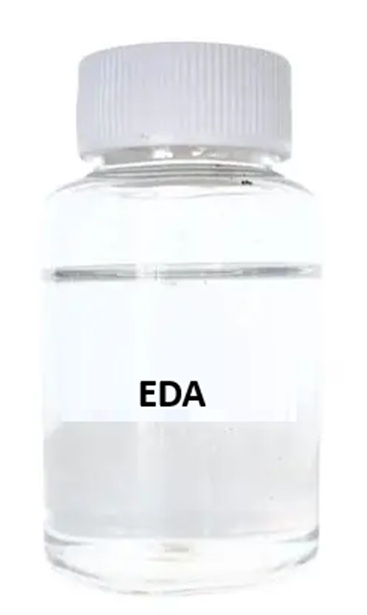
Ethylenediamine, Ethanediamine, Ethylene Diamine, Diaminoethane, EDA, 107‑15‑3
ETHYLENEDIAMINE (EDA)
CAS Number: 107-15-3
EC Number (EINECS): 203-468-6
Molecular Formula: C₂H₈N₂
Molecular Weight: 60.10 g/mol
UN Number: 1604
DOT Class: Corrosive / Flammable Liquid
SECTION 1: PRODUCT IDENTIFICATION AND CHEMICAL IDENTITY
| Parameter |
Description |
| Chemical Name (IUPAC) |
Ethane-1,2-diamine |
| Other Names |
Ethylenediamine, 1,2-Diaminoethane, Diaminoethane, EDA, Ethylene Diamine, 1,2-Ethanediamine, α,β-Diaminoethane |
| CAS Number |
107-15-3 |
| EC Number (EINECS) |
203-468-6 |
| Molecular Formula |
C₂H₈N₂ |
| Molecular Weight |
60.10 g/mol |
| Chemical Class |
Primary diamine (aliphatic) |
| Structure |
H₂N-CH₂-CH₂-NH₂ (two connected primary amine groups) |
| Appearance |
Colorless, clear liquid |
| Odor |
Characteristic ammonia-like, pungent odor |
| UN Number |
1604 |
| DOT Class |
Corrosive / Flammable Liquid |
| NFPA 704 |
Health: 3, Flammability: 2, Reactivity: 0 |
SECTION 2: PHYSICAL AND CHEMICAL PROPERTIES
| Property |
Value |
| Molecular Formula |
C₂H₈N₂ |
| Molecular Weight |
60.10 g/mol |
| Appearance |
Colorless, clear liquid |
| Odor |
Characteristic ammonia-like, pungent |
| Boiling Point |
~116 °C (760 mmHg) |
| Melting Point |
~8.5 °C |
| Density |
~0.90 g/cm³ (25°C) |
| pH (1% solution) |
Strongly basic (pH ~11-12) |
| Solubility in Water |
Completely miscible |
| Vapor Pressure |
Moderate (1.6 kPa @ 20°C) |
| Refractive Index (n²⁰D) |
~1.456 |
| Viscosity |
~1.54 cP (25°C) |
| Flash Point |
~34 °C (closed cup) |
| Flammability Limits |
Lower: 2.7%, Upper: 16.0% (in air) |
| LogP (octanol/water) |
-2.04 (highly hydrophilic) |
| Vapor Density (air=1) |
2.07 (heavier than air) |
SECTION 3: SOLUBILITY PROFILE
| Solvent |
Solubility |
Condition |
| Water |
Completely miscible |
All proportions |
| Methanol |
Completely miscible |
- |
| Ethanol |
Completely miscible |
- |
| Acetone |
Completely miscible |
- |
| Chloroform |
Miscible |
- |
| Ethyl Acetate |
Miscible |
- |
| Benzene |
Limited |
- |
| Ether |
Limited |
- |
| Hexane |
Insoluble |
- |
Critical Note: EDA is highly hydrophilic (LogP < 0) and completely miscible with water in all proportions. Aqueous solutions are strongly basic.
SECTION 4: CHEMICAL PROPERTIES AND REACTIONS
| Property |
Description |
| Chemical Class |
Primary diamine (aliphatic) |
| pKa |
pKa₁: 6.85 (conjugate acid), pKa₂: 9.93 (conjugate acid) |
| Basicity |
Strongly basic (can accept two protons) |
| Reactivity |
High; nucleophilic attack, chelation, amide formation |
4.1. Major Reactions
| Reaction Type |
Description |
| Acid-Base Reaction |
Rapidly reacts with acids to form salts: H₂NCH₂CH₂NH₂ + 2HCl → (H₃NCH₂CH₂NH₃)Cl₂ |
| Carbamate Formation |
Reacts with CO₂: 2 RNH₂ + CO₂ → RNHCOO⁻ + RNH₃⁺ |
| Nucleophilic Acyl Substitution |
Forms amides with acid chlorides, anhydrides, and esters |
| Alkylation |
Alkylated by alkyl halides |
| Chelation |
Forms stable chelate complexes with metal ions (Cu²⁺, Ni²⁺, Co²⁺, Zn²⁺) |
| Thermal Decomposition |
> 200°C releases toxic nitrogen oxides (NOₓ) and ammonia |
| Oxidation |
Violent reaction risk with strong oxidizers |
4.2. Stability
| Parameter |
Information |
| Thermal Stability |
Stable (under normal conditions) |
| Polymerization |
Not expected |
| Incompatibilities |
Strong oxidizers, acids, acid chlorides, acid anhydrides, CO₂ (in pressurized vessels) |
SECTION 5: SPECTRAL DATA
| Parameter |
Value |
| FTIR (KBr, cm⁻¹) |
3350, 3280 (N-H asym/sym), 2950 (C-H), 1600 (N-H bend), 1150 (C-N) |
| ¹H-NMR (D₂O, ppm) |
2.70 (s, 4H, CH₂-CH₂), 1.50 (s, 4H, NH₂, exchangeable) |
| ¹³C-NMR (D₂O, ppm) |
41.5 (CH₂) |
| Mass Spectrometry (ESI-MS) |
61.1 [M+H]⁺ |
SECTION 6: PURITY AND QUALITY SPECIFICATIONS
| Parameter |
Technical Grade |
Pharmaceutical Grade |
| Purity (GC) |
≥ 99.0% |
≥ 99.5% |
| Water Content (Karl Fischer) |
≤ 0.5% |
≤ 0.1% |
| Color (APHA) |
≤ 20 |
≤ 10 |
| Density (20°C) |
0.898 - 0.902 g/cm³ |
0.899 - 0.901 g/cm³ |
| Refractive Index (n²⁰D) |
1.456 - 1.458 |
1.456 - 1.457 |
| Heavy Metals (Pb) |
≤ 10 ppm |
≤ 5 ppm |
| Volatile Organic Matter |
Not specified |
Compliant (GC) |
| Analysis Method |
GC, Titration |
GC, Titration, HPLC |
SECTION 7: MAJOR APPLICATIONS
7.1. Chelating Agent Production (Largest Application)
| Application |
Description |
| EDTA Production |
Main raw material for ethylenediaminetetraacetic acid (EDTA). Consumption: ~350-420 kg EDA / ton EDTA |
| DTPA Production |
Used in the production of diethylenetriaminepentaacetic acid |
| NTA Production |
Used in the production of nitrilotriacetic acid |
7.2. Polymer and Resin Industry
| Application |
Description |
| Epoxy Curing Agents |
Used as hardener and crosslinker for epoxy resins. Consumption: ~150-250 kg EDA / ton epoxy system |
| Polyamide Resins |
Diamine component in water-based ink and textile finishing resins. Consumption: ~80-120 kg EDA / ton resin |
| Thermosetting Polyamide Resins |
Used in adhesive and coating formulations |
7.3. Specialty Chemicals and Intermediates
| Application |
Description |
| AEEA Production |
Core molecule for aminoethyl ethanolamine (AEEA) production. Consumption: ~300-350 kg EDA / ton AEEA |
| Imidazoline Derivatives |
Production of amphoteric surfactants |
| Polyurethane Catalysts |
Used as catalyst in polyurethane foam production |
7.4. Fuel and Oil Additives
| Application |
Description |
| Corrosion Inhibitors |
Anti-corrosion agent in petroleum and natural gas pipelines. Consumption: ~20-60 kg EDA / ton additive package |
| Dispersants |
Used as dispersant in motor oils and fuels |
7.5. Agricultural Chemicals
| Application |
Description |
| Pesticide Intermediates |
Intermediate in fungicide, herbicide, and insecticide synthesis. Consumption: ~50-150 kg EDA / ton active ingredient |
| Growth Regulators |
Used in plant growth regulator synthesis |
7.6. Gas Treatment
| Application |
Description |
| Acid Gas Absorption |
Auxiliary amine in CO₂ and H₂S absorption solutions. Consumption: ~10-30 kg EDA / ton gas treatment solution |
7.7. Textile and Leather Chemicals
| Application |
Description |
| Finishing Agents and Resins |
Used in textile finishing agents and leather processing chemicals. Consumption: ~5-20 kg EDA / ton product |
| Dye Auxiliaries |
Auxiliary in textile dyeing processes |
SECTION 8: DERIVATIVES AND BY-PRODUCTS
| Compound |
Description |
| EDTA (Ethylenediaminetetraacetic Acid) |
Most important derivative; chelating agent |
| DETA (Diethylenetriamine) |
Derived from EDA + ethyleneimine reaction |
| TETA (Triethylenetetramine) |
Higher amine derivative |
| TEPA (Tetraethylenepentamine) |
Higher amine derivative |
| AEEA (Aminoethyl Ethanolamine) |
Ethanolamine derivative |
| Etidronic Acid Derivatives |
Used as water treatment and corrosion inhibitors |
| Imidazoline Derivatives |
Surfactants, corrosion inhibitors |
| Piperazine |
Cyclic diamino derivative |
SECTION 9: PRODUCTION METHODS AND RAW MATERIALS
9.1. Main Production Methods
| Method |
Description |
| EDC-Ammonolysis |
Reaction of 1,2-dichloroethane (EDC) with ammonia under high pressure (most common): ClCH₂CH₂Cl + 4 NH₃ → H₂NCH₂CH₂NH₂ + 2 NH₄Cl |
| Ethanolamine Method |
Catalytic reaction of monoethanolamine with ammonia |
| Formaldehyde-HCN Method |
Synthesis from formaldehyde and hydrogen cyanide (old method) |
9.2. Raw Materials
| Raw Material |
Role |
| 1,2-Dichloroethane (EDC) |
Direct precursor (most common) |
| Ammonia (NH₃) |
Amination reagent |
| Monoethanolamine (MEA) |
Alternative starting material |
| Catalysts |
Reaction accelerator |
SECTION 10: INDUSTRY SUITABILITY MATRIX
| Industry |
Application |
Suitability |
| Chelating Agent Production (EDTA, DTPA, NTA) |
Main raw material |
High |
| Epoxy Systems |
Hardener/crosslinker |
High |
| Polyamide Resins |
Diamine component |
High |
| Specialty Chemicals (AEEA, Imidazoline) |
Core molecule |
High |
| Fuel & Oil Additives |
Corrosion inhibitor, dispersant |
Suitable |
| Agricultural Chemicals (Pesticides) |
Intermediate |
Moderate |
| Pharmaceutical Industry (API) |
Intermediate |
Moderate |
| Gas Treatment (CO₂ / H₂S) |
Auxiliary amine |
Moderate |
| Textile & Leather Chemicals |
Finishing, resin, dye auxiliary |
Moderate |
| Cleaning & Household Products |
Due to toxicity and odor |
Not Suitable |
| Food & Cosmetics |
Prohibited due to toxicity |
Not Suitable |
| Direct Water Treatment |
Due to toxicity |
Not Suitable |
SECTION 11: TOXICOLOGY AND HEALTH EFFECTS
| Parameter |
Value / Description |
| GHS Classification |
Acute Toxicity (Oral/Dermal/Inhalation), Skin Corrosion Cat. 1B, Eye Damage Cat. 1, Respiratory Sensitizer |
| Oral LD50 (Rat) |
~1,000 - 1,500 mg/kg |
| Dermal LD50 (Rabbit) |
~500 - 1,000 mg/kg |
| Inhalation LC50 (Rat, 4 hours) |
~1,000 - 2,000 ppm |
| Skin Irritation |
Severely corrosive (permanent damage) |
| Eye Contact |
Risk of permanent damage, blindness |
| Inhalation |
Severe respiratory tract irritation, edema, bronchospasm |
| Skin Sensitization |
Positive (allergic contact dermatitis) |
| Respiratory Sensitization |
Positive (asthma-like symptoms) |
| Mutagenicity |
Limited data; suspect |
| Carcinogenicity |
Not classified |
| Reproductive Toxicity |
Limited data |
| Target Organs |
Respiratory system, skin, eyes, liver, kidneys |
11.1. Exposure Effects
| Exposure Route |
Acute Effects |
Chronic Effects |
| Inhalation |
Severe respiratory tract irritation, edema, bronchospasm |
Respiratory sensitization (asthma), allergic rhinitis |
| Skin Contact |
Severe burns, blisters, dermatitis, pain |
Allergic contact dermatitis, skin sensitization |
| Eye Contact |
Risk of permanent damage, corneal injury, blindness |
Corneal opacity (with repeated exposure) |
| Ingestion |
Mouth, throat, and stomach burns, nausea, vomiting |
Digestive system sensitization |
11.2. Occupational Exposure Limit Values
| Region |
TWA (8 hours) |
STEL (15 minutes) |
| ACGIH (USA) |
10 ppm (25 mg/m³) |
- |
| OSHA (USA) |
10 ppm (25 mg/m³) |
- |
| NIOSH (USA) |
10 ppm (25 mg/m³) |
- |
| EU |
10 ppm (20 mg/m³) |
15 ppm (30 mg/m³) |
| Turkey |
10 ppm (25 mg/m³) |
- |
SECTION 12: ECOTOXICOLOGY AND ENVIRONMENTAL BEHAVIOR
| Parameter |
Value / Description |
| Fish Toxicity (LC50, 96 hours) |
~100 - 500 mg/L (Leuciscus idus, Pimephales promelas) |
| Daphnia Toxicity (EC50, 48 hours) |
~50 - 200 mg/L |
| Algae Toxicity (EC50, 72 hours) |
~100 - 300 mg/L |
| Bacteria Toxicity (EC50) |
~100 - 500 mg/L |
| Bioaccumulation Factor (BCF) |
Low (LogP < 1) |
| Biodegradability |
Readily biodegradable (OECD 301, ≥ 60%, 28 days) |
| Behavior in Water |
High water solubility, completely miscible, low volatility |
| Soil / Sediment |
High mobility; high potential for groundwater infiltration |
| Photodegradation |
Undergoes atmospheric photochemical reaction (half-life: ~1 day) |
| Bioaccumulation Potential |
Low (LogP < 3) |
| Persistence |
Low (readily biodegradable) |
| Water Hazard Class (WGK Germany) |
WGK 2 (hazardous to water) |
Ecotoxicological Summary: Despite high water solubility, EDA exhibits moderate ecotoxicity. LC₅₀/EC₅₀ values for aquatic organisms range from 50-500 mg/L. It is readily biodegradable (OECD 301) and has low bioaccumulation potential. However, due to its high basicity and ammonia-like odor, spills can have environmental impacts. Classified as WGK 2 (hazardous to water).
SECTION 13: SAFETY MEASURES AND PERSONAL PROTECTIVE EQUIPMENT
| Parameter |
Information |
| Respiratory Protection |
Depends on vapor concentration; organic vapor cartridge mask; SCBA at high concentrations |
| Gloves |
Chemically resistant (nitrile, neoprene, butyl rubber); replace frequently |
| Eye Protection |
Chemical safety goggles + face shield |
| Body Protection |
Chemically resistant apron, full body protective clothing |
| Ventilation |
Local exhaust ventilation and general ventilation |
| Engineering Controls |
Closed systems, spill containment systems |
SECTION 14: STORAGE INFORMATION
| Parameter |
Information |
| Storage Conditions |
Cool, well-ventilated, dry area |
| Temperature |
Room temperature (15-25°C) |
| Container |
Stainless steel (316L), carbon steel (passivated), plastic (HDPE) |
| Materials to Avoid |
Heat, ignition sources, acids, oxidizers, CO₂ (in pressurized vessels) |
| Confined Spaces |
Do not use in confined spaces; vapors are heavier than air, can accumulate on the ground |
| Shelf Life |
12-24 months (under proper storage) |
SECTION 15: TRANSPORT INFORMATION
| Parameter |
Information |
| UN Number |
1604 |
| Hazard Class |
8 (Corrosive) + 3 (Flammable Liquid) |
| Packing Group |
II (moderate hazard) |
| Proper Shipping Name |
Ethylenediamine |
| ADR/RID Class |
8 (Corrosive), Flammable liquid (3) |
| IMDG Code |
Class 8, PG II |
| IATA (Air) |
Class 8, PG II |
| Marine Pollutant |
No |
| Transport Notes |
Keep separate from acids; well-ventilated vehicles |
SECTION 16: FIRE-FIGHTING MEASURES
| Parameter |
Information |
| Fire Hazard |
Moderately flammable liquid (NFPA 2); flash point 34°C |
| Extinguishing Media |
Foam, CO₂, dry chemical, water fog (small fires) |
| Special Hazards |
When heated, releases toxic fumes (NOₓ, ammonia) |
| Decomposition Products |
NOₓ, ammonia, CO, CO₂ |
| Protective Equipment |
Self-contained breathing apparatus (SCBA), full protective clothing |
| Explosion Risk |
Vapor/air mixtures may be explosive (lower limit: 2.7%, upper: 16%) |
| Water Use |
Water fog can be used for large fires; prevent water runoff |
SECTION 17: ACCIDENTAL RELEASE AND CLEANUP
| Parameter |
Information |
| Personal Protection |
Chemically resistant gloves, goggles, face shield, protective clothing, SCBA (in confined spaces) |
| Ventilation |
Increase ventilation; evacuate area |
| Control |
Stop source; prevent vapor spread; contain spill |
| Cleanup Methods |
Collect with absorbent material (clay, sand, vermiculite); place in appropriate disposal container |
| Neutralization |
Can be neutralized with dilute acid (HCl, H₂SO₄) (caution!) |
| Environmental Precautions |
Prevent entry into drains, sewers, and water bodies |
| Waste Disposal |
According to local regulations; incineration (wastewater is basic) |
SECTION 18: FIRST AID MEASURES
| Exposure Route |
Action |
| Inhalation |
Move person to fresh air. Administer oxygen if breathing difficulty. Seek medical attention. If breathing stops, perform artificial respiration. |
| Skin Contact |
Remove contaminated clothing immediately. Wash with plenty of soap and water for at least 15 minutes. Seek medical attention. |
| Eye Contact |
Rinse immediately with plenty of water for at least 15 minutes. Remove contact lenses. Seek immediate medical attention (emergency ophthalmological intervention required). |
| Ingestion |
Rinse mouth with water. Do NOT induce vomiting (corrosive risk)! Drink plenty of water. Seek medical attention. |
SECTION 19: REGULATORY INFORMATION
| Region / Authority |
Status |
| EU REACH (EC 1907/2006) |
Registered |
| Turkey KKDİK |
Registration required |
| USA TSCA |
Listed |
| USA OSHA |
Compliant with 29 CFR 1910.1200 |
| USA FDA |
Prohibited in food and cosmetics |
| Japan (ENCS) |
Listed |
| China (IECSC) |
Listed |
| Korea (KECL) |
Listed |
| Australia (AICS) |
Listed |
| Canada (DSL) |
Listed |
| GHS Classification |
Acute Tox. 4, Skin Corr. 1B, Eye Dam. 1, Resp. Sens. 1, Flam. Liq. 3 |
SECTION 20: SUMMARY AND CRITICAL WARNINGS
Basic Properties
| Property |
Value |
| Appearance |
Colorless, clear liquid |
| Odor |
Ammonia-like, pungent |
| CAS |
107-15-3 |
| Formula |
C₂H₈N₂ |
| Molecular Weight |
60.10 g/mol |
| Boiling Point |
~116 °C |
| Melting Point |
~8.5 °C |
| Water Solubility |
Completely miscible |
| pH |
Strongly basic (~11-12) |
| UN No |
1604 |
| DOT Class |
Corrosive / Flammable Liquid |
| NFPA |
Health: 3, Flammability: 2, Reactivity: 0 |
| GHS Classification |
Skin Corr. 1B, Eye Dam. 1, Resp. Sens. 1 |
| Primary Use |
EDTA production, epoxy hardener, polyamide resins |
CRITICAL WARNINGS
-
High Corrosivity: EDA causes severe burns and permanent damage to skin and eyes. Eye contact can lead to blindness. Appropriate PPE is mandatory for all uses.
-
Respiratory Sensitization: EDA is a known respiratory sensitizer that can cause allergic asthma. Repeated exposure may lead to asthma-like symptoms.
-
Skin Sensitization: Allergic contact dermatitis is common. Once sensitized, reactions can occur at very low concentrations.
-
Flammability: Moderately flammable (flash point 34°C). Keep away from ignition sources. Vapor/air mixtures can be explosive (2.7-16.0%).
-
CO₂ Risk in Pressurized Vessels: EDA reacts with CO₂ to form carbamate. CO₂ ingress into pressurized vessels creates overpressure and explosion risk.
-
Vapor Density: Vapors are heavier than air (2.07 times), so they accumulate on the ground, in pits, and low areas. Extra ventilation required in confined spaces.
-
Skin Penetration: Rapidly penetrates skin. Gloves should be changed frequently (breakthrough time depends on material; nitrile ≤ 1 hour).
-
Regulations: Subject to hazardous material regulations (UN 1604, Class 8, PG II). All local and international regulations must be followed for transport, storage, and use.
-
Use Restrictions: Prohibited in food, cosmetics, consumer cleaning products, and direct water treatment applications.
-
Storage: Store away from acids, oxidizers, and CO₂ sources in a cool, well-ventilated area. Metal containers (stainless steel, carbon steel) are suitable but must be sealed against CO₂ ingress.
IMPORTANT DISCLAIMER: This Technical Data Sheet (TDS) is for informational purposes only and is based on available scientific data. The user is solely responsible for determining the product's suitability for their specific application and for complying with all applicable local, national, and international regulations. EDA is a high-risk chemical; for complete safety, storage, handling, transportation, disposal, and regulatory compliance information, always refer to the official Safety Data Sheet (SDS/MSDS) provided by the manufacturer/supplier. Users are responsible for testing the product in their own processes and applications. All local, national, and international regulations must be followed when working with EDA.