We unleash your business potential by maximize the business innovation.
Send EmailEuropium Metal, Metallic Europium, Elemental Europium, 7440-53-1
EUROPYUM METAL (EUROPIUM METAL / METALLIC EUROPIUM)
PRODUCT IDENTIFICATION INFORMATION
| Parameter | Information |
|---|---|
| Product Name | Europium Metal / Metallic Europium |
| Other Technical Names | Europium Metal, Metallic Europium, Elemental Europium, Avrupa Metali |
| CAS Number | 7440-53-1 |
| Chemical Symbol | Eu |
| Atomic Number | 63 |
| Atomic Weight | 151.97 g/mol |
| Product Family | Rare Earth Element (Lanthanide Series) |
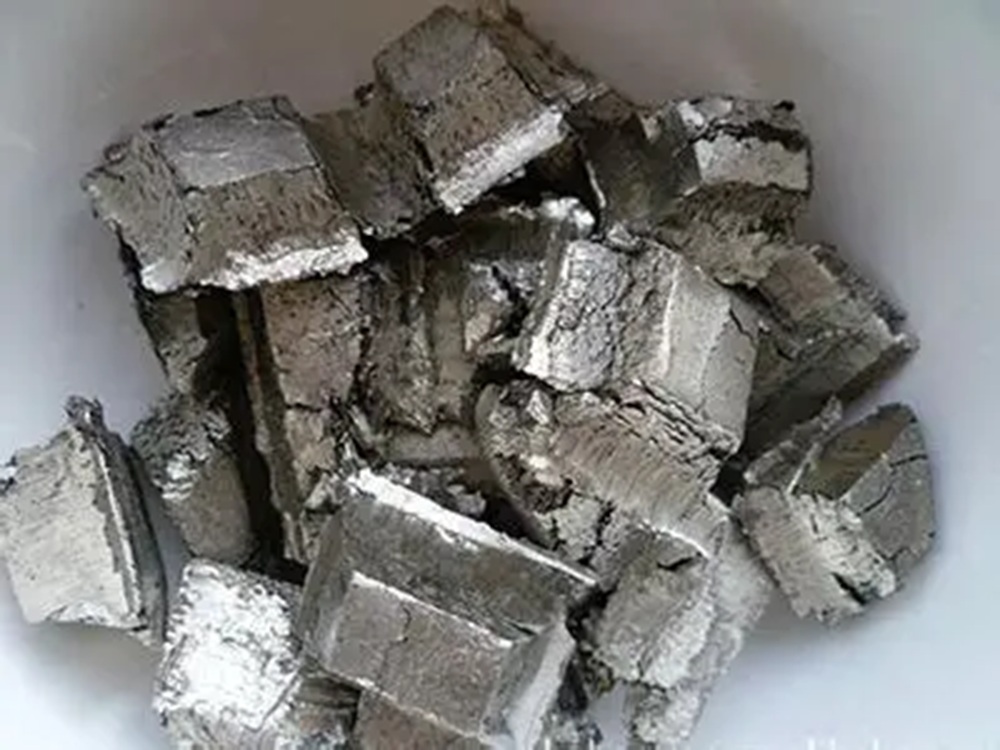
| Appearance | Silver-grey, piece form metal |
CHEMICAL STRUCTURE
    Europium Metal (Eu)

    Body-Centered Cubic (BCC) Crystal Structure

         Eu  Eu  Eu  Eu
           \  |  /  |
            Eu Eu Eu Eu
           /  |  \  |
         Eu  Eu  Eu  Eu

    Body-Centered Cubic (BCC) Crystal Structure
    Highly Reactive Rare Earth Metal
    High Neutron Absorption Capacity
    Used in Nuclear and Optical Applications
Molecular Formula: Eu (Elemental)
Crystal Structure: Body-Centered Cubic (BCC)
Electron Configuration: [Xe] 4f⁷ 6s²
Oxidation States: +2, +3 (primarily)
Stability: Very easily oxidizes in air; must be stored under argon gas
Ductility: Poor; brittle structure
SECTION 1: CHEMICAL IDENTITY AND DEFINITION
| Parameter | Information |
|---|---|
| Product Name | Europium Metal / Metallic Europium |
| Other Technical Names (English) | Europium Metal, Metallic Europium, Elemental Europium |
| Other Technical Names (Turkish) | Europium Metali, Avrupa Metali |
| Other Technical Names (German) | EuropiumMetall, Metallisches Europium |
| Other Technical Names (French) | Métal de Europium, Europium Métallique |
| Other Technical Names (Spanish) | Metal de Europio, Europio Metálico |
| CAS Number | 7440-53-1 |
| Chemical Symbol | Eu |
| Atomic Number | 63 |
| Atomic Weight | 151.97 g/mol |
| Chemical Class | Rare Earth Element; Lanthanide Series |
| Crystal Structure | Body-Centered Cubic (BCC) |
| Electron Configuration | [Xe] 4f⁷ 6s² |
| Oxidation States | +2, +3 (primarily) |
| Appearance | Silver-grey metallic piece form |
| Odor | Odorless |
| Color | Silver-grey |
| Luster | Metallic luster |
| Magnetic Properties | Paramagnetic |
SECTION 2: PHYSICAL AND CHEMICAL PROPERTIES
| Property | Value | Test Method / Note |
|---|---|---|
| Appearance | Silver-grey metallic piece form | Visual |
| Atomic Weight | 151.97 g/mol | Calculated |
| Density (20°C) | 9.066 g/cm³ | ASTM D792 |
| Melting Point | 1490°C | DSC |
| Boiling Point | 1527°C | - |
| Hardness (Brinell) | ~2.5 (soft) | - |
| Hardness (Mohs) | ~1.5-2.0 | Mohs Scale |
| Electrical Conductivity | ~1.12 × 10⁶ S/m | - |
| Thermal Conductivity | ~13.9 W/m·K | - |
| Specific Heat (25°C) | ~0.18 J/g·K | - |
| Electrical Resistivity | ~90 × 10⁻⁸ Ω·m | - |
| Thermal Expansion Coefficient | ~35 × 10⁻⁶ /°C | - |
| Corrosion Resistance | Poor; oxidizes rapidly in air | - |
| Magnetic Properties | Paramagnetic | - |
| Neutron Absorption | Very high; higher than other elements | Critical for nuclear applications |
| Ductility | Poor; brittle structure | - |
| Stability | Unstable in air; oxidizes rapidly | Must be stored under argon |
SECTION 3: CHEMICAL PROPERTIES AND REACTIVITY
| Parameter | Information |
|---|---|
| Chemical Character | Rare earth metal; lanthanide series; highly reactive; high neutron absorption capacity; paramagnetic; brittle structure |
| Stability | Unstable in air; oxidizes very rapidly; Must be stored under inert atmosphere (argon gas); Reacts with moisture |
| Reactivity | Reacts very rapidly with oxygen; Reacts with water; Reacts with halogens; Reacts with acids; Highly electropositive |
| Incompatible Materials | Oxygen, air, moisture, water, halogens, acids, oxidizing agents |
| Oxidation Reaction | 4Eu + 3O₂ → 2Eu₂O₃ (rapid oxidation in air) |
| Water Reaction | 2Eu + 6H₂O → 2Eu(OH)₃ + 3H₂ (reacts with water) |
| Acid Reaction | 2Eu + 6HCl → 2EuCl₃ + 3H₂ (reacts with acids) |
| Halogen Reaction | 2Eu + 3F₂ → 2EuF₃ (reacts with halogens) |
| Special Property | Very high neutron absorption capacity; More effective than other elements for neutron absorption |
| Storage Requirement | Must be stored under argon gas or in sealed containers with inert atmosphere |
SECTION 4: RARE EARTH ELEMENT COMPARISON TABLE
| Property | Europium (Eu) | Gadolinium (Gd) | Terbium (Tb) | Explanation |
|---|---|---|---|---|
| Atomic Number | 63 | 64 | 65 | Lanthanide series |
| Atomic Weight | 151.97 | 157.25 | 158.93 | - |
| Density (g/cm³) | 9.066 | 7.90 | 8.23 | Europium is denser |
| Melting Point (°C) | 1490 | 1313 | 1356 | Higher melting point |
| Electron Configuration | [Xe] 4f⁷ 6s² | [Xe] 4f⁷ 5d¹ 6s² | [Xe] 4f⁹ 6s² | - |
| Oxidation States | +2, +3 | +3 | +3, +4 | Europium has +2 state |
| Neutron Absorption | Very high | Very high | High | All have high absorption |
| Reactivity | Very high | High | High | Europium is most reactive |
| Primary Use | Nuclear, optical | Nuclear, MRI | Phosphors, nuclear | - |
SECTION 5: EUROPIUM METAL GRADES
| Grade | Purity (%) | Form | Application Areas |
|---|---|---|---|
| Eu-1 | ≥ 99.99% | Piece, ingot | Nuclear reactors, high-purity research |
| Eu-2 | ≥ 99.9% | Piece, ingot | Laser glass, optoelectronics |
| Eu-3 | ≥ 99.5% | Piece, ingot | Fluorescent glass, general research |
| Eu-Distilled | ≥ 99.99% | Distilled pieces | Quantum technology, high-purity applications |
SECTION 6: FUNCTIONAL PROPERTIES AND MECHANISM OF ACTION
| Property | Explanation |
|---|---|
| Rare Earth Element | Belongs to the lanthanide series. Has unique electronic configuration with 4f⁷ 6s² electrons. |
| Neutron Absorption | Can absorb more neutrons than other elements. This makes it very valuable for nuclear applications. The cross-section for neutron capture is exceptionally high. |
| Optical Properties | Used as a dopant in laser glasses and optoelectronic devices. Provides unique fluorescence properties. |
| Reactivity | Reacts very rapidly with oxygen; therefore must be stored in inert atmosphere. Oxidation occurs even at room temperature. |
| Brittleness | Has poor ductility; brittle structure. Cannot be easily shaped or formed. |
| Magnetic Properties | Paramagnetic. Exhibits magnetic behavior due to unpaired 4f electrons. |
| Reducing Agent | Acts as a strong reducing agent due to its highly electropositive nature. |
SECTION 7: MAIN APPLICATION AREAS
| Industry / Application | Function | Typical Use |
|---|---|---|
| Nuclear Reactors | Neutron absorption | Used in control rods because neutron absorption capacity is very high; Helps regulate nuclear reactions |
| Laser and Optoelectronics | Dopant/additive | Used as a dopant in some special glasses; Enhances optical properties |
| Fluorescent Glass | Fluorescence production | Used in the production of fluorescent glass; Provides unique luminescent properties |
| Quantum Technology | Quantum memory | Has been researched in quantum memory chips since 2015; Can be used in systems that store data for days |
| Phosphors | Luminescence | Used in phosphor production for displays and lighting |
| Biomedical Research | Imaging and tracing | Used in biological and medical research as a tracer |
| Chemical Research | Catalysis | Used as a catalyst in certain chemical reactions |
| Thin Film Deposition | Coating | Used in evaporation and sputtering processes for thin film deposition |
SECTION 8: QUANTUM TECHNOLOGY APPLICATION (DETAILED)
| Parameter | Explanation |
|---|---|
| Research Started | Since 2015 |
| Application Area | Quantum memory chips |
| Function | Data storage for days |
| Mechanism | Europium ions in crystalline matrices can store quantum information for extended periods |
| Advantage | Long coherence times compared to other materials |
| Potential | Future quantum computing and quantum communication systems |
SECTION 9: QUALITY SPECIFICATIONS (EU-1 GRADE – ≥99.99%)
| Parameter | Specification | Test Method |
|---|---|---|
| Appearance | Silver-grey metallic piece form | Visual |
| Purity (Eu) | ≥ 99.99% | AAS / ICP / GDMS |
| Oxygen (O) | ≤ 0.05% | LECO / Inert Gas Fusion |
| Nitrogen (N) | ≤ 0.02% | LECO / Inert Gas Fusion |
| Carbon (C) | ≤ 0.02% | Combustion / ICP |
| Iron (Fe) | ≤ 0.01% | AAS / ICP / GDMS |
| Silicon (Si) | ≤ 0.01% | AAS / ICP / GDMS |
| Aluminum (Al) | ≤ 0.005% | AAS / ICP / GDMS |
| Calcium (Ca) | ≤ 0.01% | AAS / ICP / GDMS |
| Magnesium (Mg) | ≤ 0.005% | AAS / ICP / GDMS |
| Other Rare Earths | ≤ 0.01% | ICP / GDMS |
| Form | Piece, ingot | Visual |
| Packaging | Under argon gas in sealed containers | - |
SECTION 10: TOXICOLOGICAL PROFILE
| Parameter | Value |
|---|---|
| Acute Oral Toxicity | Low toxicity (metallic form) |
| Acute Inhalation Toxicity | Dust inhalation may cause irritation |
| Skin Irritation | Metallic form is not irritating |
| Eye Irritation | Metallic form is not irritating |
| Chronic Toxicity | Rare earth compounds may show health effects with prolonged exposure |
| Carcinogenicity | Not classified as carcinogenic |
| Mutagenicity | Not classified as mutagenic |
| Target Organs | Respiratory system (dust irritation) |
| Occupational Exposure Limit (8h TWA) | 2.5 mg/m³ (rare earths, total dust) |
| Special Toxicity Note | Metallic europium is relatively safe in solid form; Fine dust may cause respiratory irritation; Should be handled with appropriate dust control measures; Reactivity with moisture and air requires careful handling |
SECTION 11: GHS CLASSIFICATION AND LABELING
GHS Classification (in compliance with CLP and UN GHS):
| Hazard Class | Category | H-Statement |
|---|---|---|
| Pyrophoric Solids | Category 2 | H250 (optional) |
| Water-Reactive Substances | Category 2 | H261 (optional) |
| STOT - SE (Single Exposure) | Category 3 | H335 (optional) |
Note: In bulk solid form, may be classified as hazardous due to reactivity. Fine powder is pyrophoric in air.
Signal Word: DANGER (optional) or WARNING (depending on classification)
Hazard Pictograms: GHS02 (Flammable), GHS07 (optional)
Hazard Statements (H-Codes) - if classified:
| Code | Statement |
|---|---|
| H250 | Catches fire spontaneously if exposed to air |
| H261 | In contact with water releases flammable gases |
| H335 | May cause respiratory irritation |
SECTION 12: PRECAUTIONARY STATEMENTS (P-CODES)
| Code | Statement |
|---|---|
| P222 | Do not allow contact with air |
| P223 | Keep away from water |
| P231 | Handle under inert gas |
| P232 | Protect from moisture |
| P261 | Avoid breathing dust/fume/gas/mist/vapors/spray |
| P264 | Wash hands thoroughly after handling |
| P280 | Wear protective gloves/protective clothing/eye protection/face protection |
| P304+P340 | IF INHALED: Remove person to fresh air and keep comfortable for breathing |
| P312 | Call a POISON CENTER/doctor if you feel unwell |
| P362+P364 | Take off contaminated clothing and wash it before reuse |
| P403+P233 | Store in a well-ventilated place. Keep container tightly closed |
| P501 | Dispose of contents/container in accordance with local/regional/national/international regulations |
SECTION 13: FIRST AID MEASURES
| Exposure Route | Action to Take |
|---|---|
| Inhalation | Move to fresh air immediately. Keep at rest in a position comfortable for breathing. If symptoms persist, get medical attention. |
| Skin Contact | Wash with plenty of soap and water. Remove contaminated clothing. If skin irritation occurs, get medical advice/attention. |
| Eye Contact | Rinse immediately with plenty of water for at least 15 minutes. Keep eyelids open. Remove contact lenses. Continue rinsing. If eye irritation persists, get medical advice/attention. |
| Ingestion | Rinse mouth with water. Do NOT induce vomiting. Drink plenty of water. If symptoms develop, get medical attention. |
SECTION 14: FIRE-FIGHTING MEASURES
| Parameter | Information |
|---|---|
| Fire Hazard | Pyrophoric in fine powder form; Spontaneously ignites in air; Reacts with water releasing flammable hydrogen gas |
| Hazards During Fire | May release europium oxide fumes; Reacts violently with water; Risk of explosion if exposed to water |
| Suitable Extinguishing Media | Dry chemical powder, sand, graphite powder, Class D extinguishers for metal fires |
| Unsuitable Extinguishing Media | Water (violent reaction); CO₂ (limited effectiveness); Foam (limited effectiveness) |
| Special Protective Equipment | Self-contained breathing apparatus (SCBA), full protective clothing |
| Special Precautions | Do not use water; Keep containers sealed; Store under inert gas; Evacuate area |
SECTION 15: STORAGE AND SHELF LIFE
| Parameter | Information |
|---|---|
| Storage Conditions | Must be stored under argon gas or other inert atmosphere; Sealed containers; Dry environment; Away from oxidizing agents |
| Container Requirements | Sealed glass ampoules or metal containers with inert gas; Containers must be airtight |
| Materials to Protect From | Air, oxygen, moisture, water, acids, halogens, oxidizing agents |
| Shelf Life | Limited; Product quality may degrade over time due to oxidation; Typically 1-2 years under proper storage |
| Stability Note | Very reactive in air; Oxidation occurs rapidly even at room temperature; Must be stored under argon |
SECTION 16: PACKAGING OPTIONS
| Packaging Type | Quantity | Material |
|---|---|---|
| Glass Ampoule | 5-50 g | Sealed glass ampoule under argon |
| Metal Canister | 50-500 g | Sealed metal canister under argon |
| Sealed Container | Custom quantities | Metal or glass with inert gas |
| Special Packaging | Custom quantities | Customer-specified requirements |
SECTION 17: TRANSPORT INFORMATION
| Parameter | Information |
|---|---|
| UN Number | 3208 (Metallic substance, water-reactive, n.o.s.) |
| Hazard Class | 4.3 (Dangerous when wet) |
| Packing Group | II |
| ADR/RID | 4.3, PG II |
| IMDG Code | 4.3, PG II |
| IATA (Air) | 4.3, PG II |
| Marine Pollutant | May be considered hazardous |
| Transport Temperature | Ambient temperature; Must be protected from moisture and air |
| Special Precautions | Must be shipped under inert gas; Must be properly sealed |
SECTION 18: OTHER NAMES AND SYNONYMS
| Type | Name |
|---|---|
| Turkish Names | Europium Metali, Avrupa Metali, Seryum Metali (confusion caution) |
| English Names | Europium Metal, Metallic Europium, Elemental Europium |
| German Names | EuropiumMetall, Metallisches Europium |
| French Names | Métal de Europium, Europium Métallique |
| Spanish Names | Metal de Europio, Europio Metálico |
| Chemical Names | Europium (elemental form); Europium metal |
| CAS Number | 7440-53-1 |
| Atomic Symbol | Eu |
| Atomic Number | 63 |
SECTION 19: SUMMARY TABLE
| Parameter | Value |
|---|---|
| Product | Europium Metal (Metallic Europium) |
| CAS Number | 7440-53-1 |
| Atomic Number | 63 |
| Atomic Weight | 151.97 g/mol |
| Appearance | Silver-grey metallic piece form |
| Density | 9.066 g/cm³ |
| Melting Point | 1490°C |
| Boiling Point | 1527°C |
| Hardness (Mohs) | ~1.5-2.0 |
| Crystal Structure | Body-Centered Cubic (BCC) |
| Primary Function | Rare earth metal; neutron absorber; optical dopant |
| Main Applications | Nuclear reactors, laser glass, optoelectronics, fluorescent glass, quantum technology |
| Shelf Life | 1-2 years (limited) |
| GHS Signal Word | DANGER (optional, reactive) |
| UN Number | 3208 |
| Special Features | Very high neutron absorption; Rapid oxidation in air; Must be stored under argon; Brittle structure |
SECTION 20: CRITICAL WARNINGS AND BEST PRACTICES
CRITICAL WARNINGS:
-
Highly reactive material that oxidizes very rapidly in air. Must be stored under argon gas at all times.
-
Pyrophoric in fine powder form - spontaneously ignites in air. Avoid creating fine dust.
-
Reacts violently with water - releases flammable hydrogen gas. Keep away from moisture.
-
Brittle structure - poor ductility, easily fractures. Handle with care.
-
Neutron absorption is very high - valuable for nuclear applications but requires specialized handling.
-
Limited shelf life - product quality may degrade over time due to oxidation.
-
Storage requirement - sealed containers with argon gas; airtight packaging is essential.
-
Incompatibilities: Air, oxygen, moisture, water, halogens, acids, oxidizing agents.
BEST PRACTICE RECOMMENDATIONS:
9. Storage:
Must be stored under argon gas or other inert atmosphere. Use sealed glass ampoules or metal containers. Ensure containers are completely airtight. Store in cool, dry environment.
10. Handling:
Always handle under inert atmosphere (argon glove box). Avoid exposure to air and moisture. Wear appropriate personal protective equipment.
11. Nuclear Applications:
Use high-purity grade (≥99.99%) for nuclear reactor control rods. Ensure proper certification and quality control.
12. Optical Applications:
Use appropriate grade for laser glass and optoelectronic devices. Purity requirements vary by application.
13. Quantum Technology:
Use distilled or ultra-high purity (≥99.99%) for quantum memory applications. Proper crystal growth conditions required.
14. Personal Protective Equipment:
Use safety goggles, protective clothing, protective gloves (nitrile, neoprene), NIOSH approved dust mask (if dust is present), and inert atmosphere glove box for handling.
15. Fire Safety:
DO NOT USE WATER. Use dry chemical powder, sand, or Class D extinguishers. Evacuate area immediately.
16. Spill Response:
Do not allow contact with air or moisture. Use inert atmosphere recovery methods. Place in sealed container. Contact specialized disposal services.
17. Disposal:
Dispose in accordance with local, regional and national regulations. Contact licensed waste disposal services for rare earth metals.
SPECIAL HANDLING GUIDE:
| Activity | Requirement |
|---|---|
| Receiving | Check sealed containers; Verify inert atmosphere; Inspect for damage |
| Opening | Open only in argon glove box; Prepare work area |
| Weighing | Use closed system; Perform under inert atmosphere |
| Packaging | Seal immediately with argon; Use airtight containers |
| Storage | Maintain argon atmosphere; Monitor for leaks |
| Transport | Ship under inert gas; Special labeling required |
RECOMMENDED STORAGE CONDITIONS:
| Parameter | Requirement |
|---|---|
| Storage Temperature | Ambient (15-25°C) |
| Atmosphere | Argon gas (≥99.999%) |
| Humidity | <1% relative humidity |
| Container | Glass ampoule or sealed metal canister |
| Monitoring | Regular inspection for container integrity |
| Location | Cool, dry, well-ventilated area separate from incompatible materials |
LEGAL DISCLAIMER:
The information provided in this document is based on our current knowledge and experience and is provided in good faith; however, since all conditions of use are beyond our control, it does not constitute a binding specification or warranty. This Technical Data Sheet is for informational purposes only. Users are responsible for testing suitability for their own applications. For complete safety, storage, use, handling, disposal and regulatory compliance information, reference should be made to the official Safety Data Sheet (SDS/MSDS) provided by the manufacturer/supplier.