We unleash your business potential by maximize the business innovation.
Send EmailMagnesium Silicate, Talcum, Agalite, Talc Powder, Steatite, E553, 14807-96-6
Talc (Magnesium Silicate)
-
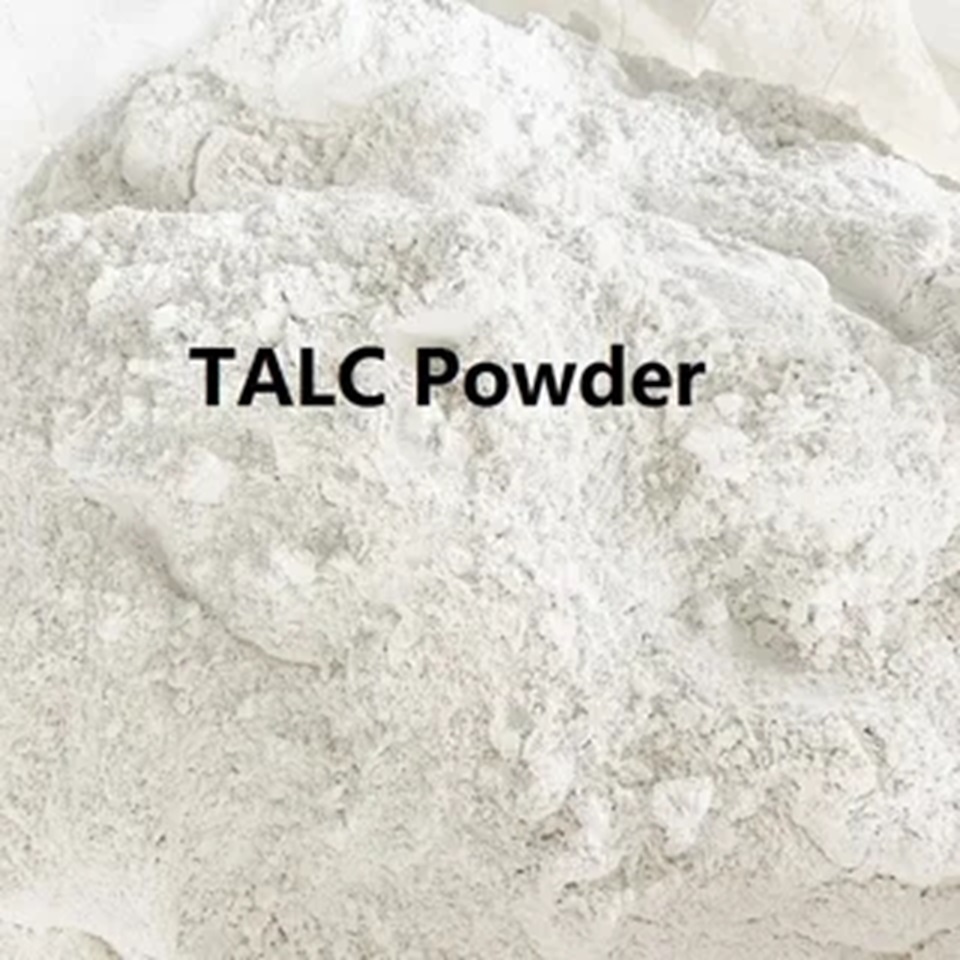
Chemical Name: Talc, Talcum Powder
-
Chemical Formula: Mg3Si4O10(OH)2 or H2Mg3(SiO3)4
-
CAS Number: 14807-96-6
-
Appearance: White powder
-
Packaging: Jute bags, bulk form
-
Structure: Crystalline, lamellar and flaky masses; extremely soft (Mohs hardness: 1). Its bonding resembles mica.
Physical and Chemical Properties
-
Very soft and smooth texture.
-
Poor conductor of heat and electricity.
-
Fire-resistant.
-
Easily cleaved into thin sheets.
Applications
| Industry | Usage |
|---|---|
| Cosmetics | Due to its softness, used in talcum powder and face powder. |
| Ceramics | Fire resistance and poor conductivity make it suitable for ceramic production. |
| Metallurgy & Machinery | Acts as a lubricant to reduce wear of machine parts. |
| Granite & Marble | Impure form known as soapstone, used for laboratory countertops resistant to acids, and for sinks. |
| Rubber, Paint, Paper | Serves as a filler material, improving durability and volume. |
| Cement | Used in weather-resistant cement formulations. |
| Art & Decoration | Soapstone has been carved for thousands of years into vases, sculptures, and ornamental objects. |
Highlights
-
Cosmetics: The most common consumer use is baby powder and facial powder.
-
Industrial: Widely applied as a filler in rubber, paint, and paper industries.
-
Decorative: Soapstone’s softness and workability make it a traditional material for artistic carving.
🔹 How is it Used?
-
Cosmetics: Finely ground talc is applied directly to the skin in baby powder, face powder, and makeup formulations.
-
Ceramics: Added to ceramic mixtures to improve fire resistance and reduce thermal/electrical conductivity.
-
Metallurgy & Machinery: Used as a dry lubricant to minimize friction and wear in machine parts.
-
Granite & Marble: In its impure form (soapstone), processed into slabs for laboratory countertops, sinks, and acid-resistant surfaces.
-
Rubber, Paint, Paper: Incorporated as a filler to enhance durability, texture, and volume.
-
Cement: Mixed into formulations to produce weather-resistant cement.
-
Art & Decoration: Soapstone carved into vases, sculptures, and ornamental objects due to its softness and ease of shaping.
🔹 What is its Function?
-
Provides softness and smoothness in cosmetic applications.
-
Enhances heat and chemical resistance in ceramics and laboratory surfaces.
-
Acts as a lubricant in mechanical systems.
-
Serves as a filler to reduce production costs and improve product properties in rubber, paint, and paper.
-
Offers decorative and functional versatility in soapstone carvings and architectural uses.
🔹 Typical Usage Amounts
-
Cosmetics: Generally 1–10% of the formulation, depending on product type.
-
Ceramics: 5–15% of the mixture to achieve desired resistance.
-
Rubber/Paint/Paper: 10–30% as a filler material.
-
Cement: 3–5% for weather-resistant blends. (Note: Exact ratios vary by industry standards and production processes.)
🔹 Other Names
-
Soapstone → Impure block form used in construction and art.
-
Magnesium Silicate → International chemical designation.
-
Talcum Powder → Common name in cosmetics.
-
Steatite → Geological and industrial terminology.