We unleash your business potential by maximize the business innovation.
Send EmailMagnesium Silicate, Magnesium Silicate Hydroxide, Hydrated Magnesium Silicate, Talcum, Agalite, Talc Powder, Steatite, Soapstone, French Chalk, E553, 14807-96-6
TALC (MAGNESIUM SILICATE)
1. PRODUCT DEFINITION AND CHEMICAL IDENTITY
| Parameter | Description |
|---|---|
| Chemical Name | Magnesium Silicate Hydroxide / Hydrated Magnesium Silicate |
| Common Name | Talc, Talcum Powder |
| Other Names | Soapstone, Steatite, French Chalk, Magnesium Silicate |
| CAS Number | 14807-96-6 |
| Molecular Formula (typical) | Mg₃Si₄O₁₀(OH)₂ or H₂Mg₃(SiO₃)₄ |
| Molecular Weight | Variable (a naturally occurring mineral mixture) |
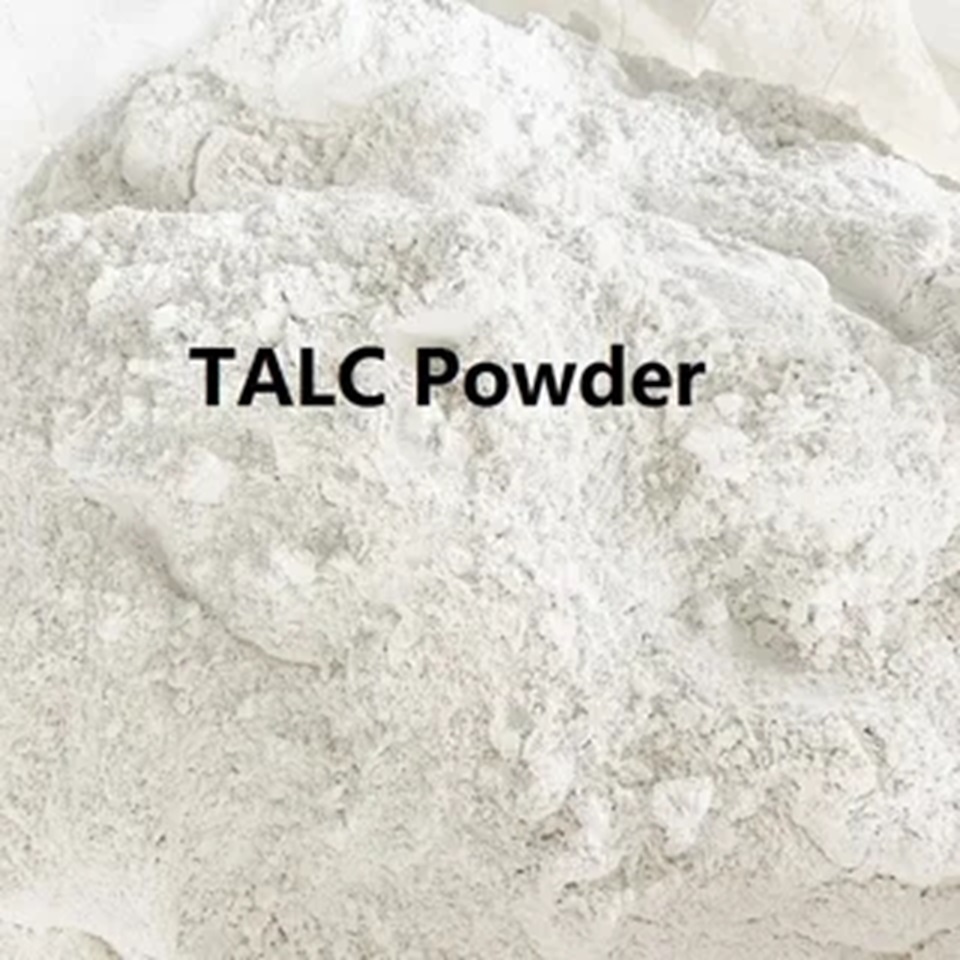
| Appearance | White, fine, soft, slippery powder |
| Odour | Odourless |
Note: Talc is a naturally occurring phyllosilicate mineral with a platy, lamellar crystal structure. It possesses the lowest value on the Mohs hardness scale (1), making it one of the softest known minerals. Due to its oil-absorbing, lubricating, filling, and heat-resistant properties, it is used across a vast industrial spectrum, from cosmetics and ceramics to plastics and paper. Cosmetic-grade talc must be of high purity and certified as asbestos-free.
2. PHYSICAL AND CHEMICAL PROPERTIES
| Property | Value / Description |
|---|---|
| Physical form | White, fine, soft, slippery powder; can also be found as a foliated, scaly mass |
| Hardness (Mohs) | 1 (lowest; extremely soft) |
| Density | ~2.6 – 2.8 g/cm³ |
| Thermal conductivity | Very low; an excellent thermal insulator |
| Electrical conductivity | Poor conductor; a good electrical insulator |
| Fire resistance | High; melting point >1300 °C |
| Solubility in water | Insoluble |
| Resistance to acids/alkalis | Chemically inert; resistant to most acids and alkalis |
| Surface property | Hydrophobic; tends to repel water |
| Oil absorption capacity | High; can absorb a significant portion of its own weight in oil |
3. FUNCTIONAL PROPERTIES AND MODE OF ACTION
-
Lubricant and Slip Agent: Thanks to its lamellar crystal structure, its particles slide easily over one another. This property imparts a smooth, silky feel to cosmetic powders, prevents powders from sticking to dies during tablet manufacturing, and reduces friction and wear on machine parts.
-
Filler and Extender: Adds bulk to products like plastics, rubber, paints, and paper, reducing cost and improving mechanical properties such as stiffness, impact resistance, and dimensional stability.
-
Opacifier and Whitening Agent: Its high brightness and whiteness provide opacity and enhance whiteness in paints and coatings.
-
Heat and Chemical Resistance: Due to its chemical inertness and high melting point, it is favoured in ceramic glazes, refractory materials, and laboratory bench tops.
-
Oil and Moisture Absorber: Absorbs excess oil and moisture from the skin, providing a matte finish. This is the core function of cosmetic talcum powders.
4. TALC TYPES AND COMMERCIAL FORMS
| Type / Form | Description | Primary Application |
|---|---|---|
| Cosmetic Grade Talc (Talcum Powder) | Asbestos-free, high purity, finely ground, sterilized | Baby powder, face powder, makeup products, body powders |
| Industrial Grade Talc | Technical purity, various particle sizes | Plastics, rubber, paints, paper, cement, ceramics |
| Soapstone (Steatite) | Impure, massive block form | Countertops, sinks, sculptures, vases, decorative carvings |
| Micronized Talc | Very finely ground, narrow particle size distribution | Premium cosmetics, advanced plastics and coating applications |
5. SECTORAL APPLICATIONS AND USAGE RATES
| Sector | Application | Typical Usage Rate / Notes |
|---|---|---|
| Cosmetics & Personal Care | Baby powder, face powder, blush, eyeshadow, deodorant, dry shampoo | 1 – 10% (formulation dependent); provides slip, softness, and oil absorption |
| Plastics & Polymers | Automotive parts, household appliances, packaging films | 10 – 40%; increases stiffness, impact resistance, and thermal stability |
| Rubber | Tires, seals, hoses, gloves | 10 – 30%; acts as a mould release agent, filler, and surface quality improver |
| Paints & Coatings | Interior/exterior paints, industrial coatings, varnishes | 5 – 20%; provides opacity, matting, corrosion resistance, and spreadability |
| Paper & Cardboard | Coated papers, cardboard, specialty papers | 5 – 15%; as a filler, it enhances gloss, opacity, and printability |
| Ceramics & Refractories | Ceramic glazes, furnace bricks, laboratory bench tops, crucibles | 5 – 15%; imparts heat resistance, thermal shock resistance, and chemical inertness |
| Construction & Cement | Special durable cements, joint fillers | 3 – 5%; improves weather resistance and workability |
| Art & Decoration | Sculptures, vases, ornaments (in soapstone form) | Processed as solid blocks; easily carved and shaped |
| Pharmaceuticals | Glidant and anti-adherent in tablets; filler in ointments | 1 – 5%; improves powder flow and prevents sticking to the tablet press |
6. ALTERNATIVE NAMES AND SYNONYMS
| Category | Names |
|---|---|
| Chemical & Mineral Names | Magnesium Silicate Hydroxide, Hydrated Magnesium Silicate, Talc, Steatite |
| Physical Form & Use Terms | Talcum Powder, Soapstone, Micronized Talc, Cosmetic Talc, Industrial Talc |
| International Names | Talc, Magnesium Silicate, French Chalk |
7. ALTERNATIVES AND COMPARISON
| Alternative | Comparison with Talc |
|---|---|
| Corn Starch (Zea Mays Starch) | A natural alternative to talc in cosmetic powders. Provides similar oil absorption and softness, but does not offer the same long-lasting slip as talc and can become sticky when wet. |
| Kaolin (White Clay) | Used in cosmetics and as a filler. Has a higher water absorption capacity than talc but provides less lubricity and a less silky feel. |
| Mica | Has a similar platy structure; used in cosmetics to add shimmer and sparkle. Talc provides a more matte finish and better slip. |
| Calcium Carbonate (CaCO₃) | A common filler in plastics, paints, and paper. It is cheaper than talc but lacks talc's advantages in lubricity, heat resistance, and chemical inertness. |
| Silica (SiO₂) | Used as a matting and thickening agent in paints and cosmetics. Talc is softer and more slippery, making it a better filler and slip agent. |
8. SAFETY, STORAGE, AND REGULATORY INFORMATION
-
GHS Classification: Not classified as a hazardous substance. However, inhalation of fine dust may cause mechanical respiratory irritation.
-
Asbestos Warning: Natural talc deposits can be found in association with asbestos, a carcinogenic mineral. Therefore, cosmetic and pharmaceutical grade talc must be certified as "asbestos-free." Reputable manufacturers rigorously test and document their products to ensure this.
-
Cosmetic Safety: The Cosmetic Ingredient Review (CIR) panel has confirmed the safety of talc in cosmetic products, provided it is of an asbestos-free grade.
-
Storage:
-
Store in a cool, dry, and well-ventilated area in tightly sealed packaging.
-
Protect from moisture; although talc is hydrophobic, it should be kept in a dry environment to prevent the powder from caking.
-
-
Personal Protective Equipment (PPE): When handling large quantities with a risk of dusting, the use of a dust mask and safety goggles is recommended to prevent mechanical irritation.
-
Packaging: Typically 25 kg kraft paper bags, cartons with PE inner liner, or 500-1000 kg big bags.
9. FREQUENTLY ASKED QUESTIONS
Q1: Is talcum powder safe?
Yes, cosmetic-grade talcum powder that is certified as asbestos-free and manufactured according to all regulatory standards is considered safe. Safety concerns have historically stemmed from risks associated with inhaling talc contaminated with asbestos. Today, cosmetic-grade talc undergoes rigorous testing to eliminate this risk.
Q2: What is the difference between talc and cornstarch?
Talc is a natural mineral (magnesium silicate) that provides excellent slip, softness, and oil absorption. Cornstarch is a plant-derived polysaccharide. Both are used in baby powders; however, talc provides a better slip feel, while cornstarch can become sticky upon contact with water.
Q3: Why is talc used in plastics?
Talc is one of the most common mineral fillers added to plastics. In automotive parts (bumpers, dashboards) and household appliances, it increases stiffness, impact resistance, and thermal stability while reducing production costs. It also improves the dimensional stability (control of thermal expansion/contraction) of plastics.
Q4: Is talc soluble in water?
No, talc is insoluble in water. It has a hydrophobic (water-repelling) nature, so it can be difficult to wet and disperse when mixed with water. However, it can be dispersed in aqueous systems with the aid of surfactants.
Q5: What is the role of talc in ceramics?
In ceramic glazes and bodies, talc acts as a high-temperature flux, lowering the firing temperature. It also increases thermal shock resistance, preventing ceramic ware from cracking during sudden temperature changes.
10. QUICK REFERENCE TABLE
| Property | Value |
|---|---|
| CAS | 14807-96-6 |
| Chemical Family | Magnesium Silicate Hydroxide (Phyllosilicate) |
| Appearance | White, fine, soft, slippery powder |
| Hardness (Mohs) | 1 (softest) |
| Melting Point | >1300 °C |
| Main Functions | Lubricant, filler, opacifier, oil/moisture absorber |
| Most Famous Use | Baby powder and cosmetic powders |
| Safety Note | Only "asbestos-free" cosmetic grade must be used |