We unleash your business potential by maximize the business innovation.
Send EmailMagnesium Carbonate, Magnesium Hydroxide Carbonate, Magnesite, Magnesium Carbonate Hydrate, Hydromagnesite, E504, 546-93-0, 12125‑28‑9
MAGNESIUM CARBONATE (E504)
Product Name: Magnesium Carbonate
Other Names: Magnesite, Hydromagnesite, E504, INS 504
CAS Numbers: 546-93-0 (anhydrous), 12125-28-9 (basic / hydromagnesite)
Chemical Formula: MgCO₃ (anhydrous), 4MgCO₃·Mg(OH)₂·5H₂O (basic)
Molecular Weight: 84.31 g/mol (anhydrous), 485 g/mol (basic)
EC Number (EINECS): 208-915-9
Chemical Class: Inorganic salt, carbonate
SECTION 1: PRODUCT IDENTIFICATION AND CHEMICAL IDENTITY
| Parameter | Information |
|---|---|
| Chemical Name | Magnesium Carbonate |
| Common Names | Magnesite, Hydromagnesite, Barringtonite (dihydrate), Nesquehonite (trihydrate), Lansfordite (pentahydrate), E504 |
| Food Additive Code | E504(i) (Magnesium Carbonate), E504(ii) (Magnesium Hydroxide Carbonate) |
| CAS Number | 546-93-0 (anhydrous); 12125-28-9 (basic / hydromagnesite) |
| Molecular Formula (anhydrous) | MgCO₃ |
| Molecular Weight | 84.31 g/mol (anhydrous); 485 g/mol (basic form) |
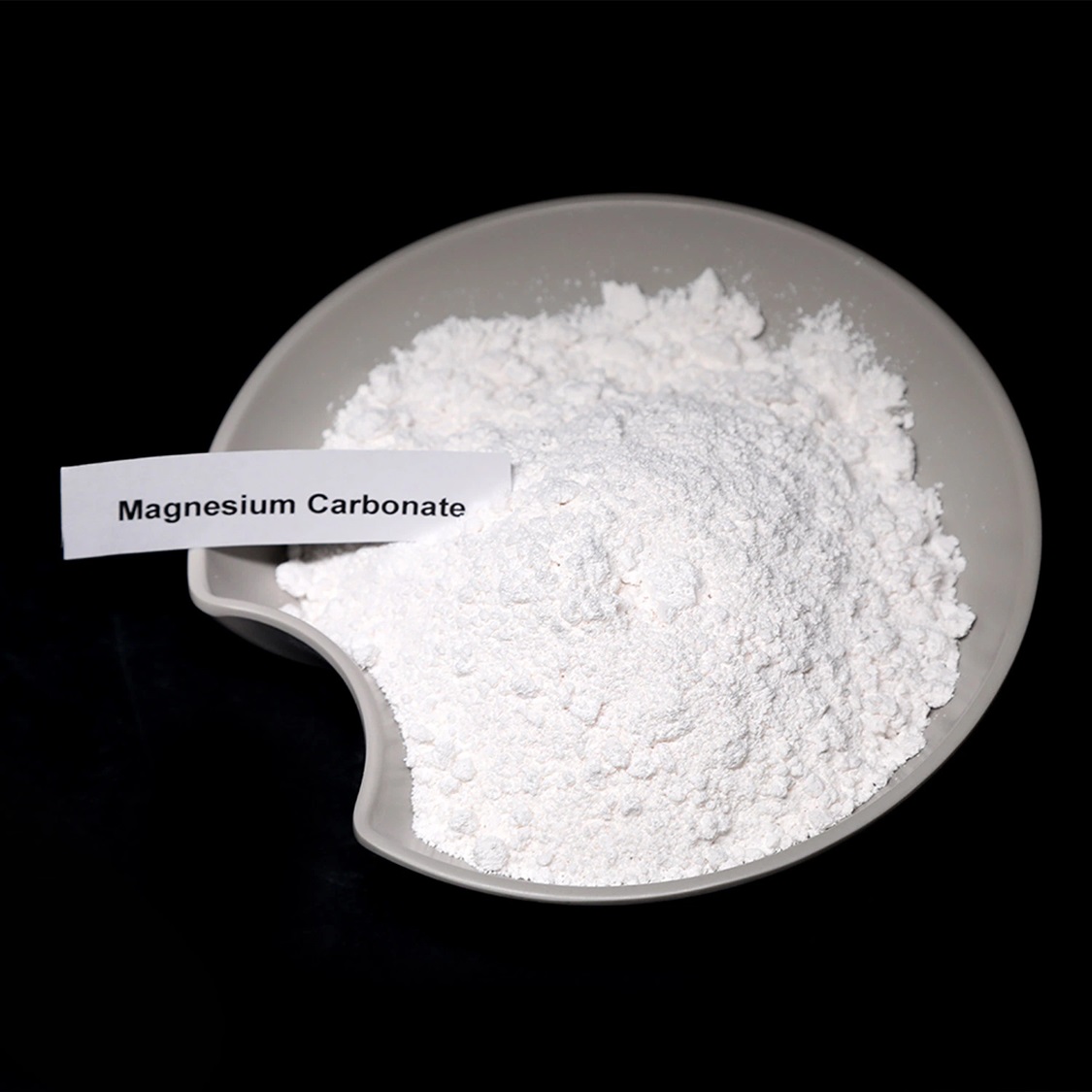
| Appearance | White, odorless, light, friable masses or bulky white powder |
| Odor | Odorless |
| Taste | Slightly earthy |
| Density (anhydrous) | 2.958 – 3.05 g/cm³ |
| Bulk Density (Light) | <150 – 300 g/L (very low, fluffy structure) |
| Bulk Density (Heavy) | 450 – 600 g/L (higher, granular structure) |
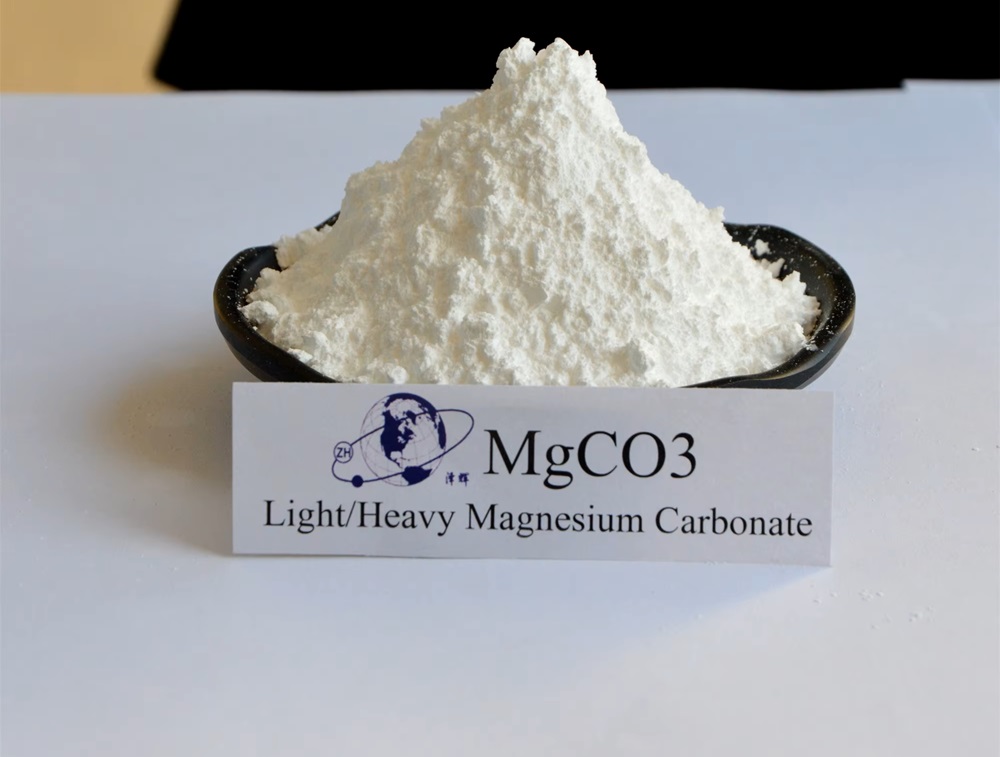
Note: Commercial magnesium carbonate products are rarely in the pure anhydrous MgCO₃ form. They are typically found as basic carbonates (hydromagnesite) or hydrated forms. Commercially, two main grades are available: "Light" and "Heavy" magnesium carbonate .
SECTION 2: FORMS AND HYDRATES
| Form | Chemical Formula | Mineral Name | Density (g/cm³) |
|---|---|---|---|
| Anhydrous | MgCO₃ | Magnesite | 2.958 |
| Dihydrate | MgCO₃·2H₂O | Barringtonite | 2.825 |
| Trihydrate | MgCO₃·3H₂O | Nesquehonite | 1.837 |
| Pentahydrate | MgCO₃·5H₂O | Lansfordite | 1.73 |
| Basic (Heavy) | 4MgCO₃·Mg(OH)₂·4H₂O | Hydromagnesite | ~2.2 |
| Basic (Light) | 4MgCO₃·Mg(OH)₂·3H₂O | Dypingite | ~2.0 |
SECTION 3: PHYSICAL AND CHEMICAL PROPERTIES
| Property | Value / Description |
|---|---|
| Physical Form | White, light, free-flowing powder (light form) or white granules (heavy form) |
| Decomposition Temperature | Begins at ~350°C; decomposes to MgO + CO₂ |
| Melting Point | ~990°C (decomposes) |
| Density (Anhydrous) | 2.958 – 3.05 g/cm³ |
| Bulk Density (Light) | <150 – 300 g/L (very low, fluffy structure) |
| Bulk Density (Heavy) | 450 – 600 g/L (higher, granular structure) |
| Bulk Density (Medium Heavy) | ~300 g/L |
| Solubility in Water | Practically insoluble; 0.01 g/100 mL at 20°C |
| Solubility in Dilute Acids | Effervescently soluble (fizzes, releasing CO₂ gas) |
| Solubility in CO₂-Water | More soluble in water containing CO₂ |
| Hygroscopicity | Hygroscopic (absorbs moisture) |
| Stability | Stable in dry air and on exposure to light |
| pH (1% solution) | ~10 (alkaline) |
| Refractive Index | 1.717 (anhydrous) |
| Vapor Pressure | 0 mmHg (approx) |
| Heat of Formation | -1096 kJ/mol |
SECTION 4: CHEMICAL PROPERTIES AND REACTIONS
4.1. With Acids
Like many Group 2 metal carbonates, magnesium carbonate reacts with aqueous acids to release carbon dioxide and water:
-
MgCO₃ + 2 HCl → MgCl₂ + CO₂ + H₂O
4.2. Thermal Decomposition
At high temperatures MgCO₃ decomposes to magnesium oxide and carbon dioxide :
-
MgCO₃ → MgO + CO₂ (ΔH = +118 kJ/mol)
Key Thermochemical Comparison:
| Parameter | MgCO₃ | CaCO₃ | Difference |
|---|---|---|---|
| Decomposition Onset | ~350°C | ~825°C | ~475°C lower |
| Acid-Neutralizing Capacity | 0.024 mEq/mg | 0.020 mEq/mg | 20% higher |
4.3. Acid-Neutralizing Mechanism (Antacid Action)
Magnesium carbonate reacts with gastric hydrochloric acid (HCl) to form soluble magnesium chloride, carbon dioxide, and water. This reaction rapidly neutralizes excess acid, providing relief from heartburn and indigestion .
The USP theoretical acid-neutralizing capacity formula for combined antacid formulations :
ANC = 0.8 × (0.024M) + 0.9 × (0.02C)
Where:
-
0.024 = theoretical ANC of MgCO₃ (mEq/mg)
-
0.02 = theoretical ANC of CaCO₃ (mEq/mg)
-
M and C = quantities of MgCO₃ and CaCO₃ (mg) based on labeled quantities
SECTION 5: PRODUCT TYPES: LIGHT AND HEAVY FORMS
| Property | Light Magnesium Carbonate | Heavy Magnesium Carbonate |
|---|---|---|
| Bulk Density | <150 – 300 g/L (fluffy structure) | 450 – 600 g/L (granular structure) |
| Surface Area | Very high | Lower |
| Flowability | Less free-flowing, fluffy powder | More free-flowing, granular |
| Molecular Formula | 4MgCO₃·Mg(OH)₂·3H₂O | 4MgCO₃·Mg(OH)₂·4H₂O |
| Pharmacopoeia Name | Magnesii subcarbonas levis | Magnesii subcarbonas ponderosus |
| Ph.Eur. Sulfate Limit | ≤0.3% | ≤0.6% |
| Primary Applications | Tablet filler, anti-caking agent, sports chalk, odor/moisture absorbent | Direct tablet compression, antacid formulations, flow aid in dense mixtures |
5.1. Directly Compressible Grades
| Product | Bulk Density (g/L) | Composition | Mg Content |
|---|---|---|---|
| Magnesium Carbonate DC 97GA | ~450 | Granules with 3% gum arabic | ~24% Mg |
| Magnesium Carbonate DC 90S | ~600 | Granules with 10% corn starch | - |
| Magnesium Carbonate DC 90S/C | ~500 | Coarse granules with 10% corn starch | ~22.5% Mg |
SECTION 6: PHARMACOPOEIAL AND FOOD STANDARDS
6.1. Pharmacopoeial Specifications (USP)
| Test | USP Specification | Typical Value |
|---|---|---|
| Assay (as MgO) | 40.0 – 43.5% | 42.0% |
| Soluble Salts | ≤1.0% | 0.30% |
| Acid-Insoluble | ≤0.05% | 0.02% |
| Arsenic | ≤4 ppm | <1 ppm |
| Calcium | ≤0.45% | <0.1 ppm |
| Heavy Metals | ≤30 ppm | - |
| Iron | ≤200 ppm | <0.5 ppm |
6.2. Pharmacopoeial Specifications (Ph.Eur.)
| Test | Ph.Eur. Specification | Typical Value |
|---|---|---|
| Assay (as MgO) | 40.0 – 45.0% | 42.0% |
| Chlorides | ≤0.07% | 0.02% |
| Sulphates (Heavy) | ≤0.6% | 0.10% |
| Sulphates (Light) | ≤0.3% | - |
| Calcium | ≤0.75% | <0.5 ppm |
6.3. Food Additive Specifications (E504(i))
| Parameter | Specification |
|---|---|
| Definition | Basic hydrated or monohydrated magnesium carbonate or mixture of the two |
| Chemical Formula | MgCO₃·nH₂O |
| Assay (Mg content) | Not less than 24.0% and not more than 26.4% Mg |
| Description | Odourless, light, white friable masses or as a bulky white powder |
| Solubility | Practically insoluble both in water or ethanol |
| Acid-insoluble matter | Not more than 0.05% |
| Water soluble matter | Not more than 1.0% |
| Calcium | Not more than 0.4% |
| Arsenic | Not more than 4 mg/kg |
| Lead | Not more than 2 mg/kg |
| Mercury | Not more than 1 mg/kg |
6.4. Food Additive Specifications (E504(ii))
| Parameter | Specification |
|---|---|
| Synonyms | Magnesium hydrogen carbonate; Magnesium subcarbonate; Hydrated basic magnesium carbonate |
| Chemical Formula | 4MgCO₃·Mg(OH)₂·5H₂O |
| Molecular Weight | 485 |
| Assay (as MgO) | Not less than 40.0% and not more than 45.0% |
| Acid-insoluble matter | Not more than 0.05% |
| Water soluble matter | Not more than 1.0% |
| Calcium | Not more than 1.0% |
| Arsenic | Not more than 3 ppm |
| Lead | Not more than 2 ppm |
SECTION 7: FUNCTIONAL PROPERTIES AND MECHANISM OF ACTION
| Function | Description |
|---|---|
| Antacid (Neutralizing Agent) | Reacts rapidly with gastric hydrochloric acid (HCl) to form soluble magnesium chloride, effectively neutralizing excess stomach acid. USP acid-neutralizing capacity: 0.024 mEq/mg (20% higher than CaCO₃ at 0.020 mEq/mg) |
| Laxative | Osmotically active laxative; draws water into the intestines |
| Anti-Caking Agent (E504) | Effectively absorbs moisture and prevents caking in powdered foods such as table salt, sugar, baking powder, and spices |
| Odor and Moisture Absorbent | Light form, with its high surface area, is excellent at absorbing sweat, moisture, and odors |
| Magnesium Source (Nutritional Supplement) | Used in tablets and powders to address magnesium deficiency |
| Flame Retardant and Smoke Suppressant | Upon heating, decomposes releasing non-combustible gases (CO₂) which dilute combustible gases and form a protective char layer |
| Filler and Processing Aid | Functions as an inert filler in tablets, plastics, rubber, paints, and paper |
| Direct Compression Excipient | Heavy magnesium carbonate produces tablets with high crushing strength, low friability, and good disintegration properties |
| Color Retention Agent | Used in foods to retain color |
| Cosmetic Ingredient | Functions as absorbent, binder, bulking agent, opacifying agent, and colorant in cosmetics |
SECTION 8: INDUSTRY APPLICATIONS AND USAGE RATES
| Industry | Application | Typical Usage / Notes |
|---|---|---|
| Pharmaceutical & Nutraceutical | Antacid tablets/suspensions; magnesium dietary supplements; inert filler, glidant and lubricant in tablet production; API for laxatives and antacids | Antacid: 250-500 mg per dose; Laxative: 2.0-5.0 g |
| Food Industry (E504) | Anti-caking agent in salt, sugar, baking powder, spice blends; carrier for flavors and colors; acidity regulator; color retention agent; bulking agent or pH regulator | 0.1 – 2% (as anti-caking agent); generally used quantum satis |
| Sports & Fitness | Sports chalk (climbing, gymnastics, weightlifting, yoga) to absorb sweat and improve grip | Applied directly to hands in powder form |
| Cosmetics & Personal Care | Absorbent, binder, bulking agent, and opacifying agent; odor and moisture absorbent in talcum powders, foot powders, deodorants, and soaps; perfume absorbent | 1 – 10% |
| Plastics & Rubber | Flame retardant synergist and smoke suppressant; reinforcing filler; improves modulus with minimal reduction in rebound | 5 – 40 parts per rubber hydrocarbon |
| Refractory Materials | Calcined to produce magnesium oxide (MgO) for furnace bricks, crucibles, and high-temperature insulation | Raw material input |
| Agriculture | Soil conditioner to neutralize acidic soils; rumen buffering agent in dairy nutrition | Application rate based on soil pH |
| Infant Formula | Permitted for fortification of infant formulae and follow-on formulae | EU permitted |
| Food for Special Medical Purposes | Permitted for food for special medical purposes | EU permitted |
SECTION 9: LEGAL PERMISSIONS (EU FOOD REGULATION)
| Category | Status |
|---|---|
| Food | Permitted |
| Food supplements | Permitted |
| Infant formulae and follow-on formulae | Permitted |
| Processed cereal-based foods and baby foods | Permitted |
| Food for special medical purposes | Permitted |
| Total diet replacement for weight control | Permitted |
| Food additive | Permitted |
SECTION 10: OTHER NAMES AND SYNONYMS
| Category | Names |
|---|---|
| Chemical Names | Magnesium Carbonate, Magnesite, Hydromagnesite, Carbonic Acid Magnesium Salt, Magnesium Hydroxide Carbonate |
| Hydrate Names | Barringtonite (dihydrate), Nesquehonite (trihydrate), Lansfordite (pentahydrate) |
| Physical Form Terms | Light Magnesium Carbonate, Heavy Magnesium Carbonate, Basic Magnesium Carbonate |
| Quality Terms | Food Grade, Technical Grade, USP, Ph.Eur., BP, JP, FCC, E504, JECFA |
| Ph.Eur. Names | Magnesii subcarbonas levis (light), Magnesii subcarbonas ponderosus (heavy) |
| Functional Search Terms | Antacid, Dietary Supplement, Anti-Caking Agent, Flame Retardant, Smoke Suppressant, Filler, Chalk |
| CAS Registry | 546-93-0 (anhydrous); 12125-28-9 (basic/hydromagnesite) |
| EINECS | 208-915-9 |
| RTECS | OM2470000 |
| HS Code | 28369910, 2836991000 |
| ATC Code | A02AA01, A06AD01 |
SECTION 11: PHARMACEUTICAL AND CLINICAL INFORMATION
11.1. Medical Uses
| Indication | Description |
|---|---|
| Antacid | For relief of dyspepsia, heartburn, and gastroesophageal reflux disease (GERD) |
| Laxative | For loosening bowels |
| Magnesium Deficiency | For treatment of fatigue, sleep disorders, myalgia, muscle spasm |
11.2. Dosage
| Use | Dosage |
|---|---|
| Antacid | 250 – 500 mg per dose |
| Laxative | 2.0 – 5.0 g |
11.3. Acid-Neutralizing Capacity (USP Requirement)
| Requirement | Value |
|---|---|
| Minimum ANC | Not less than 5 mEq consumed by the minimum single dose |
| Formula | 0.8(0.024M) + 0.9(0.02C) |
| Theoretical ANC of MgCO₃ | 0.024 mEq/mg |
| Theoretical ANC of CaCO₃ | 0.02 mEq/mg |
11.4. Contraindications
| Condition | Reason |
|---|---|
| Renal Impairment | Risk of hypermagnesemia |
| Gastrointestinal Obstruction | Contraindicated |
| Fecal Impaction | Contraindicated |
SECTION 12: SAFETY, STORAGE AND REGULATORY INFORMATION
| Parameter | Information |
|---|---|
| GHS Classification | Not classified as a hazardous substance. Dust may cause mechanical irritation to eyes and respiratory tract |
| NIOSH PEL | TWA 15 mg/m³ (total); TWA 5 mg/m³ (resp) |
| NIOSH REL | TWA 10 mg/m³ (total); TWA 5 mg/m³ (resp) |
| NFPA 704 | Health: 1, Fire: 0, Reactivity: 0 |
| Food Additive (E504) | Approved in EU, Turkey, and many other countries |
| Pharmaceutical Compliance | USP, Ph.Eur., BP, JP, FCC |
| Kosher/Halal | Kosher certified; Halal certified |
| GMO-Free | GMO-free |
| BSE/TSE-Free | BSE/TSE-free |
| Retest Period | 36 months |
| Storage | Keep well closed, dry and at room temperature. Store in well-closed containers in a cool, dry place |
| Incompatibilities | Phenobarbital sodium, diazepam solution (pH≥5), some binary powder mixtures, lansoprazole, formaldehyde; acids dissolve MgCO₃ with CO₂ liberation |
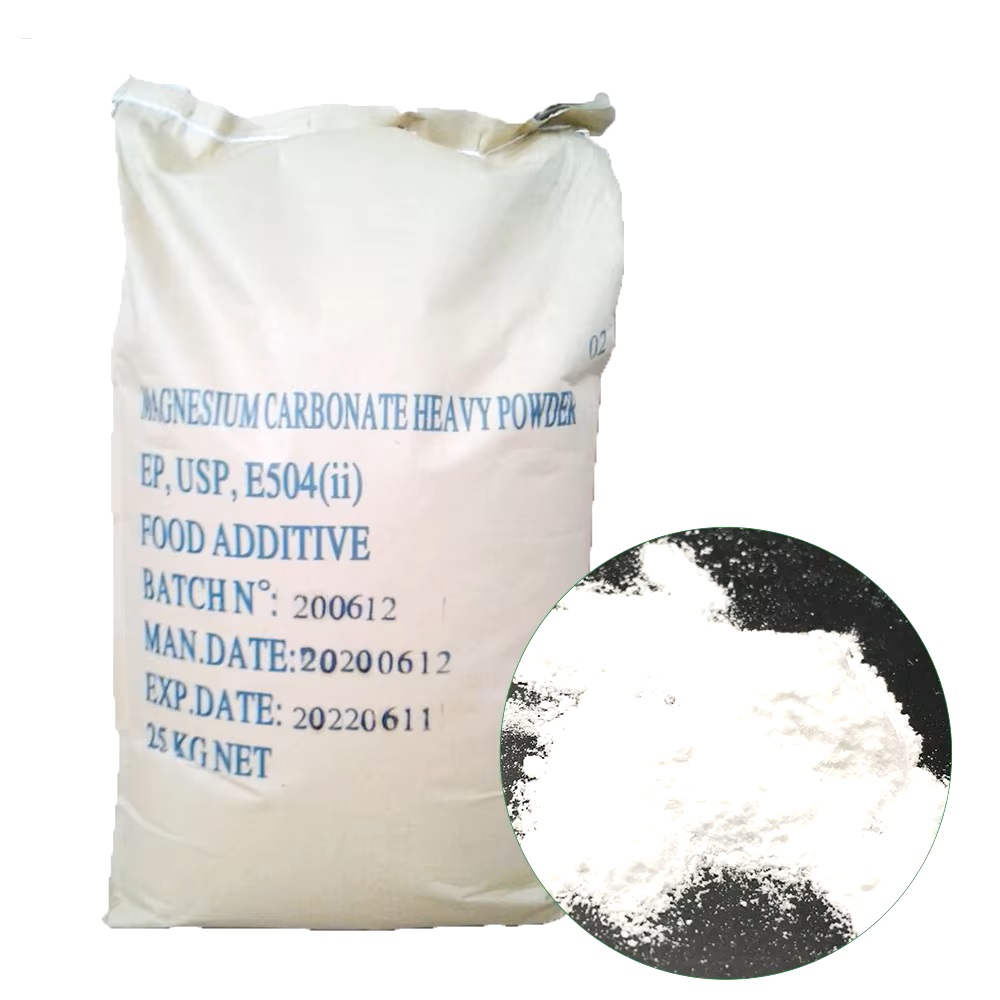
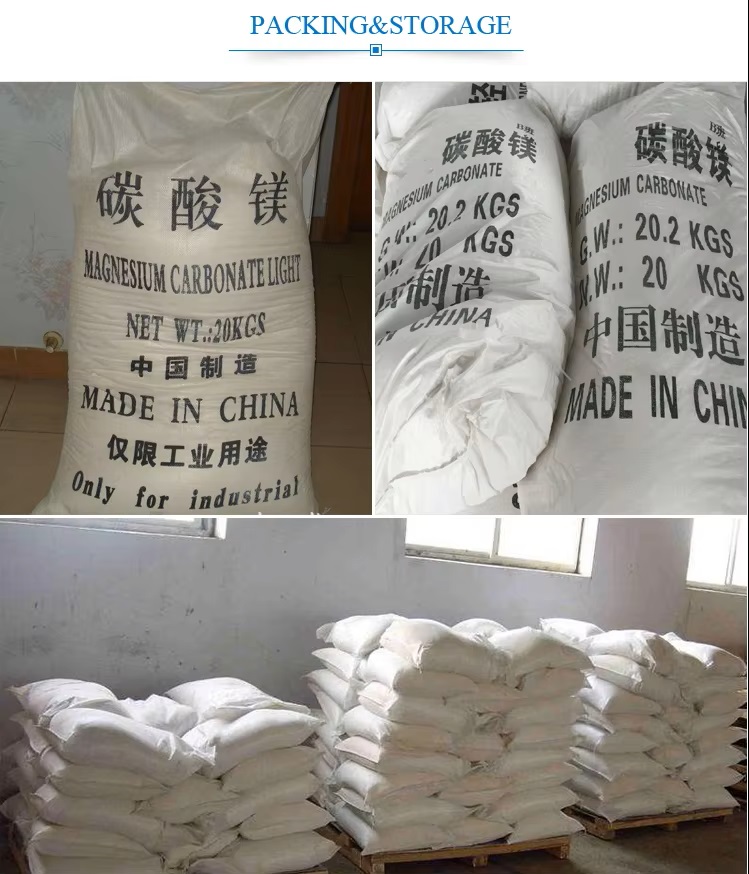
| Packaging | 25 kg bags; various types available |
SECTION 13: PHYSICAL SPECIFICATIONS (TYPICAL)
| Parameter | Light Grade | Heavy Grade |
|---|---|---|
| Bulk Density | <150 – 300 g/L | 450 – 600 g/L |
| Particle Size (325 mesh) | - | ≥99.0% passing |
| MgO Content | 40.0 – 45.0% | 40.0 – 45.0% |
| Calcium | ≤1.0% | ≤0.60% |
| Iron | ≤200 ppm | ≤0.02% |
| Sulphates | ≤0.3% | ≤0.3% |
| Chlorides | ≤0.07% | ≤0.25% |
SECTION 14: SUMMARY AND CRITICAL NOTES
Product Summary
| Parameter | Value / Description |
|---|---|
| Product | Magnesium Carbonate (E504) |
| CAS Number | 546-93-0 (anhydrous); 12125-28-9 (basic) |
| Chemical Formula | MgCO₃·nH₂O |
| Appearance | White, odorless powder or granules |
| Food Additive Code | E504(i), E504(ii) |
| Primary Functions | Antacid, anti-caking agent, moisture/odor absorbent, filler, magnesium supplement, flame retardant |
| Key Property | Effervescent dissolution in dilute acids; 20% higher acid-neutralizing capacity than CaCO₃ |
| Pharmacopoeial Compliance | USP, Ph.Eur., BP, JP, FCC |
Critical Notes
-
Versatile Compound: Magnesium carbonate has a wide range of applications, from food additive (E504) to pharmaceutical antacids, sports chalk, and industrial flame retardants .
-
Light vs. Heavy Forms: Commercial products are available in "light" and "heavy" forms with different physical properties. Light form (<150-300 g/L) is superior for moisture and odor absorption; heavy form (450-600 g/L) is preferred for direct tablet compression .
-
Antacid Effect: Magnesium carbonate is an effective antacid with a 20% higher acid-neutralizing capacity per milligram than calcium carbonate (0.024 vs 0.020 mEq/mg) as codified in USP monographs .
-
Thermal Properties: Decomposes at approximately 350°C, which is ~475°C lower than calcium carbonate (825°C), enabling lower-energy calcination to MgO .
-
Sports Chalk: The "chalk" used by climbers, weightlifters, and gymnasts to absorb sweat and improve grip is actually magnesium carbonate .
-
Direct Compression Excipient: Heavy magnesium carbonate produces tablets with high crushing strength, low friability, and good disintegration properties .
-
USP/Ph.Eur. Compliance: Grades meeting USP, Ph.Eur., BP, and JP standards are suitable for use in medicinal products .
-
Food Additive Status: Approved as E504(i) and E504(ii) in the EU. Permitted for use in food supplements, infant formulae, baby foods, and foods for special medical purposes .
-
Contraindications: Contraindicated in patients with renal impairment due to risk of hypermagnesemia. May cause diarrhea and laxative effect.
-
Shelf Life: Retest period of 36 months when stored in well-closed containers at room temperature .
IMPORTANT DECLARATION: This Technical Data Sheet (TDS) is for informational purposes only and has been prepared based on available technical data. The user is responsible for determining the product's suitability for their specific application and for complying with all local, national, and international regulations. For complete safety, storage, use, transport, waste, and regulatory compliance information, refer to the official Safety Data Sheet (SDS/MSDS) provided by the manufacturer/supplier.