We unleash your business potential by maximize the business innovation.
Send EmailTriethyl Citrate, Ethyl Citrate, TEC, E1505, 77-93-0
TRIETHYL CITRATE (TEC)
Ethyl Citrate - Citric Acid Triethyl Ester - E1505
CAS: 77-93-0
| Product Group | Citric Acid Esters |
| CAS Number | 77-93-0 |
| EINECS Number | 201-070-7 |
| INS / E Number | E1505 |
| FEMA Number | 3083 |
ITEM 1: PRODUCT IDENTITY AND NOMENCLATURE
| Parameter | Description |
|---|---|
| Chemical Name | Triethyl 2-hydroxypropane-1,2,3-tricarboxylate |
| INCI Name | Triethyl Citrate |
| Common Names | Triethyl Citrate, Ethyl Citrate, TEC, Citric Acid Triethyl Ester |
| CAS Number | 77-93-0 |
| EINECS / EC Number | 201-070-7 |
| INS / E Number | E1505 |
| FEMA Number | 3083 |
| REACH Registration Status | Registered and compliant |
| HS Code | 2918.15.00.00.00 |
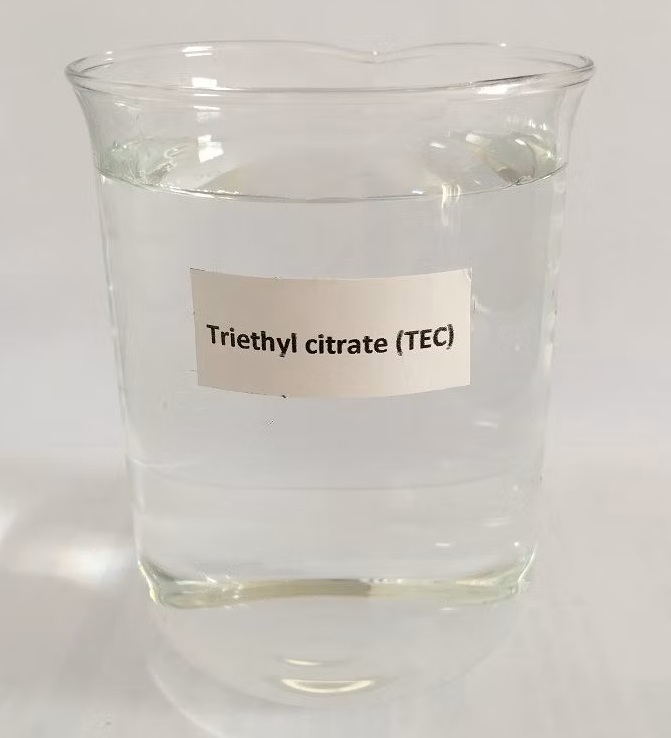
Description: Triethyl Citrate (TEC) is a colorless, odorless liquid produced by the esterification of naturally derived citric acid and ethanol. It is widely used as a food additive (E1505), cosmetic ingredient, and pharmaceutical excipient. The product is 100% plant-based and derived from renewable raw materials.
ITEM 2: CHEMICAL STRUCTURE AND COMPOSITION
| Parameter | Description |
|---|---|
| Chemical Formula | C₁₂H₂₀O₇ |
| Molecular Weight | 276.29 g/mol |
| Chemical Family | Organic Ester (Citric Acid Derivative) |
| Raw Material Source | Citric Acid + Ethanol (plant-based) |
| Structural Formula | CCOC(=O)CC(O)(CC(=O)OCC)C(=O)OCC |
| SMILES | CCOC(=O)CC(O)(CC(=O)OCC)C(=O)OCC |
| InChI Key | DOOTYTYQINUNNV-UHFFFAOYSA-N |
| Source | 100% plant-based, palm oil-free |
Description: Triethyl Citrate is a triester formed by the esterification of the three carboxyl groups of citric acid with ethyl alcohol. The molecule contains a central hydroxyl group (-OH), which imparts both polar and non-polar characteristics.
ITEM 3: PHYSICAL APPEARANCE AND FORM
| Parameter | Specification | Test Method |
|---|---|---|
| Color | Practically colorless | Visual Inspection |
| Physical Form | Oily liquid | Visual Inspection |
| Odor | Odorless or very faint | Organoleptic |
| Taste | Bitter taste | Organoleptic |
| Color (APHA) | ≤ 50 | ASTM D1209 |
| Clarity | Clear, free from sediment | Visual Inspection |
Description: Triethyl Citrate is a clear, oily, practically colorless and odorless liquid. It is characterized by high purity (>99%) and contains no visible sediment or turbidity.
ITEM 4: DENSITY AND SPECIFIC GRAVITY
| Property | Specification | Typical Value | Test Method |
|---|---|---|---|
| Density (25°C) | 1.135 – 1.139 g/cm³ | 1.136 g/cm³ | ASTM D792 |
| Specific Gravity (25°C/25°C) | 1.135 – 1.139 | 1.138 – 1.139 | ASTM D891 |
| Density (25°C) - Literature | ~1.14 g/mL | 1.14 g/mL | Literature |
Description: The specific gravity range of 1.135-1.139 indicates that the product is heavier than water (1.0 g/cm³). This property is important for density adjustments and phase separation calculations in formulations.
ITEM 5: REFRACTIVE INDEX
| Property | Specification | Typical Value | Test Method |
|---|---|---|---|
| Refractive Index (20°C) | 1.439 – 1.441 | 1.440 – 1.441 | ASTM D1218 |
| Refractive Index (25°C) | 1.439 – 1.441 | 1.440 | ASTM D1218 |
| Refractive Index (Literature) | n20/D 1.442 | 1.442 | Literature |
Description: Refractive index is a critical parameter for purity and identity verification. Deviations from the specified range may indicate potential changes in product purity or composition.
ITEM 6: THERMAL PROPERTIES
| Property | Specification / Value | Test Method |
|---|---|---|
| Melting Point | -55 °C | DSC |
| Boiling Point | 294 °C | – |
| Boiling Point (15 mmHg) | 235 °C | – |
| Boiling Point (1 mmHg) | 127 °C | – |
| Flash Point (Closed Cup) | 155 °C | ASTM D93 |
| Flash Point (Fahrenheit) | 311 °F | ASTM D93 |
| Vapor Density (Air=1) | 9.7 | – |
| Vapor Pressure | 1 mmHg at 107 °C | – |
Description: Triethyl Citrate has a very low melting point of -55°C and remains liquid over a wide temperature range. The boiling point is approximately 294°C, and with a flash point of 155°C, it is classified as a combustible liquid.
ITEM 7: SOLUBILITY AND MISCIBILITY
| Solvent / Medium | Solubility / Miscibility |
|---|---|
| Water | Partially soluble |
| Ethanol (Alcohol) | Completely miscible |
| Ether | Completely miscible |
| Isopropyl Alcohol | Completely miscible |
| Glycols | Completely miscible |
| Mineral Oils | Completely miscible |
| Vegetable Oils | Completely miscible |
| Silicones | Completely miscible |
| Aromatic Solvents | Completely miscible |
| Aliphatic Hydrocarbons | Partially miscible |
Description: Triethyl Citrate is partially soluble in water and completely miscible with most organic solvents. This broad solubility profile allows its use in both water-based and oil-based formulations. It exhibits excellent compatibility with alcohols, glycols, and oils.
ITEM 8: PURITY AND ANALYTICAL SPECIFICATIONS (FOOD & COSMETIC)
| Parameter | Specification | Test Method |
|---|---|---|
| Purity (Assay) | ≥ 99.0% | GC / Titration |
| Water Content (Moisture) | ≤ 0.25% | Karl Fischer |
| Acidity | ≤ 0.02% (as citric acid) | Titration |
| Color (APHA) | ≤ 50 | ASTM D1209 |
| Lead (Pb) | ≤ 2 mg/kg | ICP-MS / AAS |
| Lead (Pb) - Previous Regulations | ≤ 5 mg/kg | ICP-MS / AAS |
| Arsenic (As) | ≤ 3 mg/kg | ICP-MS / AAS |
| Heavy Metals (Total) | ≤ 10 mg/kg | ICP-MS / AAS |
Description: Triethyl Citrate is a high-purity product (>99%). Parameters such as water content, acidity, and heavy metal limits are subject to strict quality control standards for both food additive (E1505) and cosmetic ingredient applications.
ITEM 9: CHEMICAL STABILITY AND SHELF LIFE
| Parameter | Description / Value |
|---|---|
| Chemical Stability | Stable under normal conditions |
| Shelf Life | 24 months (under proper storage) |
| Storage Conditions | Cool, dry, well-ventilated area |
| Storage Temperature | 15 – 30°C |
| Materials to Avoid | Strong oxidizers, excessive heat |
| Signs of Degradation | Color darkening, odor change |
Description: When stored under proper conditions (cool, dry environment in original packaging), the shelf life can extend up to 24 months. Exposure to high temperatures, prolonged contact with air, or contact with strong oxidizers may cause degradation.
ITEM 10: FOOD INDUSTRY APPLICATIONS (E1505)
| Application | Function / Description |
|---|---|
| Food Additive (E1505) | Stabilizer, emulsifier, flavor carrier |
| Egg White Stabilization | Foam stabilizer |
| Flavor Carrier | Solvent and carrier for flavor substances |
| Capsule and Tablet Formulations | Coating agent, plasticizer |
| Orally Disintegrating Tablets | Taste modifier |
| Food Supplements | Excipient in capsule and tablet formulations |
| Maximum Usage (Taiwan) | Up to 3.5 g/kg in capsule/tablet foods |
Description: Approved as a food additive with the code E1505. It complies with JECFA, FDA, and EU regulations. It is used as a foam stabilizer in egg white-based products and as a flavor carrier.
ITEM 11: COSMETIC APPLICATIONS (INCI: TRIETHYL CITRATE)
| Application Category | Function |
|---|---|
| Deodorant / Antiperspirant | Inhibits enzymatic degradation of sweat components |
| Sunscreen | Enhances solubility of organic UV filters |
| Hair Styling (Hairspray) | Film reinforcing agent, resin plasticizer |
| Nail Polish | Film reinforcing agent, plasticizer |
| Perfume | Carrier, diluent, fixative |
| Skin Care | Emollient, antioxidant, moisturizer |
| Makeup | Pigment dispersant, plasticizer |
| Body Lotions | Emulsifier, viscosity builder |
Description: INCI name is "Triethyl Citrate". It has versatile applications in cosmetics: as an active ingredient in deodorants, as a UV filter solvent in sunscreens, and as a film reinforcing agent in hair sprays. It is preferred as a natural alternative to aluminum salts in deodorant formulations.
ITEM 12: PHARMACEUTICAL APPLICATIONS
| Application | Function / Description |
|---|---|
| Drug Coatings | Film coating plasticizer |
| Tablet Formulations | Excipient, enteric coating component |
| Biological Products | Stabilizing agent |
| Vaccine Formulations | Stabilizer |
| USP Grade | Pharmaceutical primary standard |
Description: Used as a USP reference standard. Functions as a stabilizer in biological product formulations and as a plasticizer in polymeric materials. Produced in compliance with pharmaceutical quality requirements.
ITEM 13: PLASTICIZER APPLICATIONS
| Application | Description |
|---|---|
| Nitrocellulose | Plasticizer |
| Vinyl Acetate | Plasticizer |
| Vinyl Chloride Acetate | Plasticizer |
| Natural Resins | Plasticizer |
| Membrane Preparation | Non-toxic diluent (Green Chemistry) |
Description: Triethyl Citrate is an effective plasticizer for polymers such as nitrocellulose and vinyl acetate. Its non-toxic nature provides a green alternative to conventional plasticizers.
ITEM 14: COSMETIC USAGE CONCENTRATIONS
| Application | Recommended Concentration |
|---|---|
| Deodorant Formulations | 1 – 5% |
| Sunscreens | Depends on UV filter system |
| Hair Sprays | Adjusted based on formulation |
| Nail Polish / Nail Care | Optimized for film properties |
Description: The recommended concentration range for deodorant applications is 1-5%. This range effectively inhibits enzymatic degradation of sweat components while maintaining skin tolerance.
ITEM 15: REGULATORY COMPLIANCE AND CERTIFICATIONS
| Certificate / Standard | Status / Compliance |
|---|---|
| FDA 21 CFR 117 | Compliant (food additive) |
| EU Regulation (EC) 1333/2008 | Compliant (E1505) |
| EU Regulation (EU) 231/2012 | Meets specifications |
| EU Cosmetics Regulation 1223/2009 | Compliant (INCI listed) |
| JECFA | Meets specifications |
| USP | Pharmaceutical primary standard |
| IFRA | Compliant with guidelines |
| REACH | Registered and compliant |
| Halal | Available (select grades) |
| Kosher | Available (select grades) |
| ECOCERT / COSMOS | Approved |
| NATURE | Approved |
| Naturalness Index (ISO 16128) | 1 (derived natural) |
Description: Triethyl Citrate complies with the strictest global regulatory requirements. It is approved for food (E1505), cosmetic (INCI), and pharmaceutical (USP) applications. ECOCERT/COSMOS certification supports its use in natural and organic cosmetic formulations.
ITEM 16: GREEN CHEMISTRY AND SUSTAINABILITY
| Parameter | Description |
|---|---|
| Source | 100% plant-based, palm oil-free |
| Renewable Raw Material | Citric acid and ethanol (plant-derived) |
| Green Chemistry Feature | Complies with "Less Hazardous Chemical Synthesis" principle |
| Bio-based Product | Yes |
| Naturalness Index (ISO 16128) | 1 (derived natural) |
Description: Triethyl Citrate is a product aligned with Green Chemistry Principles, produced from renewable sources. Its non-toxic nature offers a sustainable alternative to conventional chemicals.
ITEM 17: SAFETY AND TOXICOLOGICAL PROFILE
| Parameter | Description |
|---|---|
| Acute Oral Toxicity | Low toxicity |
| Skin Irritation | Non-irritating |
| Skin Sensitization | Non-sensitizing |
| Eye Irritation | Mild irritation possible |
| Carcinogenicity | Not classified |
| Mutagenicity | Not classified |
| Reproductive Toxicity | Not classified |
| Known Allergens | None |
| Skin Flora Effect | Does not affect natural skin flora |
| Toxicological Profile | Good toxicological profile |
Description: Triethyl Citrate is considered a safe compound. It is known to be non-irritating and non-sensitizing to the skin. It does not adversely affect natural skin flora in deodorant formulations.
ITEM 18: HAZARD CLASSIFICATION AND SAFETY
| Parameter | Description |
|---|---|
| GHS / CLP Classification | No hazard classification (most grades) |
| Flammability Class | 10 - Combustible liquids |
| Flash Point | 155°C (closed cup) |
| Fire Extinguishing | CO₂, dry chemical powder, foam |
| Personal Protective Equipment | Safety goggles, laboratory gloves |
| Ventilation | Adequate general ventilation |
| Transport Classification | Not classified as dangerous goods |
Description: Generally not classified as a hazardous substance, but falls into the combustible liquids class. It poses a flash risk above 155°C, so it should be kept away from heat sources and open flames.
ITEM 19: STORAGE AND HANDLING PRECAUTIONS
| Parameter | Description |
|---|---|
| Storage Temperature | 15 – 30°C |
| Storage Conditions | Cool, dry, well-ventilated area |
| Materials to Avoid | Excessive heat, strong oxidizers |
| Packaging Materials | Glass, stainless steel, suitable plastics |
| Shelf Life | 24 months (under proper conditions) |
| Signs of Degradation | Color darkening, increased acidity |
| Waste Disposal | Comply with local regulations |
| Spill Cleanup | Collect with absorbent material |
Description: Remains stable for 24 months when stored in a cool, dry place in original packaging. Contact with high temperatures, moisture, or oxidizing substances should be avoided.
ITEM 20: APPLICATION MATRIX AND INDUSTRIES
| Industry | Suitability | Primary Functions |
|---|---|---|
| Food Industry | Excellent (E1505) | Emulsifier, stabilizer, flavor carrier |
| Cosmetics | Excellent (INCI) | Deodorant, UV filter solvent, film reinforcing agent |
| Pharmaceutical | Excellent (USP) | Stabilizer, plasticizer, excipient |
| Perfume & Fragrance | Excellent | Solvent, diluent, fixative |
| Polymer / Plastics | Good | Plasticizer (nitrocellulose, vinyl resins) |
| Biological Products | Good | Stabilizing agent, membrane preparation |
| Personal Care | Excellent | Emollient, antioxidant, moisturizer |
Description: Triethyl Citrate has versatile applications across food (E1505), cosmetics (Triethyl Citrate), pharmaceutical (USP), and technical applications (plasticizer). Its safety profile and natural origin make it preferred across multiple industries.
COMPARISON TABLE FOR CITRATE ESTERS
| Product | CAS No | Food | Cosmetics | Pharmaceutical | Plastics | Description |
|---|---|---|---|---|---|---|
| Triethyl Citrate (TEC) | 77-93-0 | Suitable (E1505) | Suitable (INCI) | Suitable (USP) | Suitable | Most widely used citrate ester |
| Tributyl Citrate (TBC) | 77-94-1 | Limited | Limited | Limited | Suitable | Lower polarity, plasticizer |
| Acetyl Tributyl Citrate (ATBC) | 77-90-7 | Suitable (E1505) | Limited | Limited | Suitable | Better hydrolytic stability |
| Acetyl Triethyl Citrate (ATEC) | 77-89-4 | Suitable (E1505) | Limited | Limited | Suitable | Better hydrolytic stability |
PACKAGING INFORMATION
| Parameter | Description |
|---|---|
| Standard Packaging | 20 kg plastic jerrycan |
| Bulk Packaging | 227 kg steel drum |
| Small Packaging | 1 kg, 5 kg laboratory bottles |
| Packaging Materials | HDPE, stainless steel, glass |
| Labeling | Product code, batch number, net weight, safety warnings |
QUALITY AND CERTIFICATION SUMMARY
| Certificate / Standard | Status |
|---|---|
| ISO 9001:2015 | Certified manufacturing sites |
| REACH (EC 1907/2006) | Registered and compliant |
| FDA 21 CFR | Approved as food additive |
| EU Cosmetics Regulation | INCI listed |
| USP | Pharmaceutical primary standard |
| Halal / Kosher | Available upon request |
| ECOCERT / COSMOS | Approved grades available |
Disclaimer: This Technical Data Sheet provides typical values for reference purposes only. All values are based on standard laboratory measurements and do not constitute a binding specification. For binding properties, please request the Certificate of Analysis (COA) for each specific batch. The user is solely responsible for determining product suitability for their intended application and for compliance with all applicable regulations.