We unleash your business potential by maximize the business innovation.
Send EmailE1505, Triethyl Citrate, Ethyl Citrate, TEC, 77-93-0
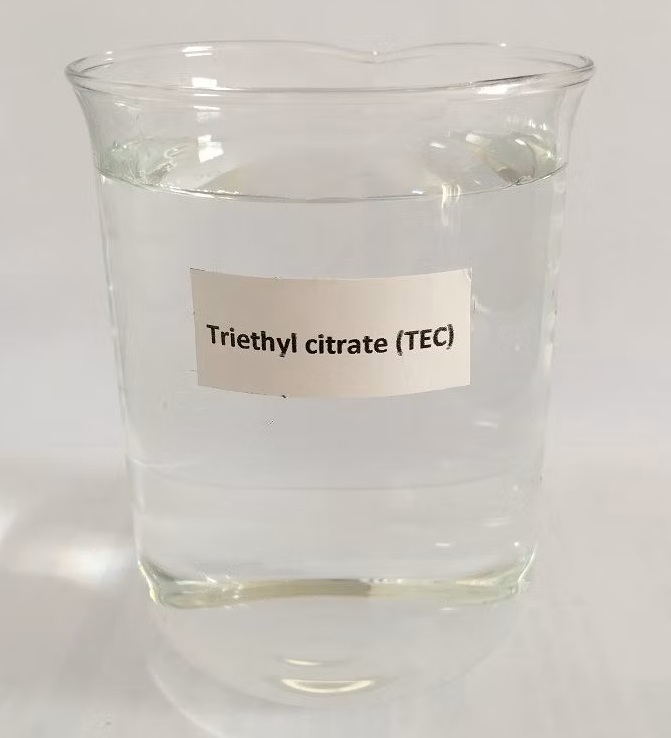
Triethyl Citrate (TEC) is a citric acid ester widely used as a safe solvent, plasticizer, and additive in cosmetics, food, and pharmaceuticals.
🔬 Chemical Profile
-
IUPAC Name: Triethyl 2-hydroxypropane-1,2,3-tricarboxylate
-
CAS Number: 77-93-0
-
Formula: C₁₂H₂₀O₇
-
Molar Mass: 276.28 g/mol
-
Appearance: Oily, colorless liquid with a faint fruity odor
-
Physical Properties:
-
Density: 1.137 g/mL at 25 °C
-
Melting Point: −55 °C
-
Boiling Point: 294 °C at 1 atm
-
🌍 Applications
-
Cosmetics & Personal Care:
-
Acts as a fixative in perfumes for long-lasting fragrance.
-
Used in deodorants to inhibit bacterial enzymes that cause odor.
-
Helps disperse insoluble UV filters in sunscreens.
-
-
Food Industry:
-
Approved as a food additive (E number E1505).
-
Functions as a flavor stabilizer and emulsifier.
-
-
Pharmaceuticals:
-
Serves as a plasticizer in tablets and coatings.
-
Improves flexibility and stability of formulations.
-
⚠️ Safety & Considerations
-
Generally recognized as safe (GRAS) in food and cosmetics.
-
Rapidly metabolized into citric acid in the body, making it non-toxic.
-
Not suitable for deodorants in individuals with low skin esterase activity
📊 Triethyl Citrate (TEC) – Sectoral Usage Table
| Sector | Usage | Example Applications |
|---|---|---|
| Cosmetics | Fixative, enzyme inhibitor in deodorants, UV filter dispersant | Perfume, deodorant, sunscreen |
| Food | Flavor stabilizer, emulsifier, food additive (E1505) | Confectionery, beverage flavors, chewing gum |
| Pharmaceuticals | Plasticizer, increases flexibility in tablet and capsule coatings | Controlled-release tablets, film-coated drugs |
| Chemicals/Industry | Eco-friendly plasticizer, biodegradable solvent | Bioplastics as alternatives to PVC |
| Agriculture | Auxiliary solvent and stabilizer in formulations | Pesticide and fertilizer additives |
🧭 Summary
Triethyl Citrate is a versatile and safe compound widely used across cosmetics, food, pharmaceuticals, industry, and agriculture. Its role as an eco-friendly plasticizer makes it especially valuable in sustainable production.
📊 Triethyl Citrate (TEC) – Cosmetics Sector
| Usage Area | Function | Example Products |
|---|---|---|
| Perfumes | Fixative, enhances fragrance longevity | Eau de parfum, cologne |
| Deodorants | Enzyme inhibitor, prevents odor | Roll-on, stick deodorant |
| Sunscreens | Helps disperse UV filters | SPF lotion, cream, spray |
| Hair Care Products | Provides flexibility and softness | Hair spray, conditioner |
| Makeup Products | Solvent and stabilizer in formulations | Foundation, BB cream, lipstick |
| Skin Care Products | Light, non-greasy moisturizing effect | Moisturizing cream, serum |
🍽️ Triethyl Citrate (TEC) – Food Sector
| Usage Area | Function | Example Products |
|---|---|---|
| Flavor Stabilizer | Enhances stability of volatile flavors | Fruit-flavored drinks, candies |
| Emulsifier | Helps mix oil and water phases | Sauces, creams, ice cream |
| Food Additive (E1505) | Approved additive in Europe, considered safe | Chewing gum, confectionery, beverages |
| Solvent | Dissolves flavor and color compounds | Liqueurs, flavored drinks |
| Stabilizer | Improves shelf life and consistency | Desserts, dairy products |
💊 Triethyl Citrate (TEC) – Pharmaceutical Sector
| Usage Area | Function | Example Applications |
|---|---|---|
| Tablet Coatings | Plasticizer, increases coating flexibility | Film-coated tablets, enteric coatings |
| Capsule Production | Reduces brittleness in gelatin capsules | Hard and soft capsules |
| Controlled Release | Regulates release rate of active ingredients | Extended-release tablets |
| Pharmaceutical Excipient | Solvent and stabilizer | Syrups, liquid formulations |
| Biocompatibility | Metabolized into citric acid, non-toxic | Safe drug delivery systems |
⚙️ Triethyl Citrate (TEC) – Chemical/Industrial Sector
| Usage Area | Function | Example Applications |
|---|---|---|
| Plasticizer | Eco-friendly alternative to PVC, adds flexibility | Bioplastics, packaging materials |
| Solvent | Facilitates dissolution of organic compounds | Paints, varnishes, coatings |
| Stabilizer | Enhances chemical durability | Industrial coatings, adhesives |
| Lubricant Additive | Reduces friction, improves processing | Plastic processing, rubber production |
| Eco-Friendly Additive | Biodegradable, non-toxic | Green chemistry, sustainable production |
🌱 Triethyl Citrate (TEC) – Agriculture Sector
| Usage Area | Function | Example Applications |
|---|---|---|
| Formulation Solvent | Helps dissolve active ingredients | Pesticide and herbicide solutions |
| Stabilizer | Improves shelf life and effectiveness | Fertilizer additives, liquid agrochemicals |
| Carrier Agent | Ensures homogeneous distribution of actives | Foliar fertilizers, nutrient solutions |
| Eco-Friendly Additive | Biodegradable, safe for environment | Organic farming, sustainable practices |
| Emulsifier | Mixes oil- and water-based components | Agricultural sprays, foliar solutions |
🧭 Overall Summary
Triethyl Citrate is a versatile, safe, and eco-friendly compound used across multiple industries.
-
In cosmetics, it enhances fragrance longevity and stabilizes formulations.
-
In food, it acts as a flavor stabilizer and emulsifier (E1505).
-
In pharmaceuticals, it serves as a plasticizer and excipient.
-
In industry, it replaces traditional plasticizers with a sustainable alternative.
-
In agriculture, it functions as a solvent, stabilizer, and eco-friendly additive.
📑 Triethyl Citrate – Synonyms in English
-
Ethyl Citrate
-
Citric Acid Triethyl Ester
-
Citric Acid Ethyl Ester
-
Triethyl 2-hydroxypropane-1,2,3-tricarboxylate
-
1,2,3-Propane-tricarboxylic Acid, 2-hydroxy-, Triethyl Ester
-
E1505 (European food additive code)
-
Citroflex 2 (commercial name)
-
Eudraflex (commercial name)
-
Hydragen Cat (commercial name)