We unleash your business potential by maximize the business innovation.
Send EmailCetyl Alcohol, Hexadecanol, Cetanol, Palmityl Alcohol, 1-Hexadecanol, C16 Alcohol, Ethal, Ethol, 36653-82-4
Cetyl alcohol, chemically known as hexadecan-1-ol, is a saturated primary fatty alcohol comprising a 16-carbon chain. Its molecular structure (C₁₆H₃₄O) consists of a long hydrocarbon tail (C16H33) and a terminal hydroxyl group (-OH). This structure imparts an amphiphilic character, meaning it possesses both lipophilic (fat-loving) and weakly hydrophilic (water-loving) properties. Its industrial significance is derived from this amphiphilic nature and its physical state as a waxy solid at room temperature. It serves multiple functional roles across the cosmetic, pharmaceutical, and food industries, functioning as an emulsifier, thickener, opacifier, and emollient.
The characteristic properties of cetyl alcohol make it indispensable for specific applications.
Molecular Structure and Nomenclature:
IUPAC Name: Hexadecan-1-ol
Other Names: 1-Hexadecanol, Palmityl alcohol, Cetyl alcohol, Cetanol, Ethal.
Chemical Formula: CH₃-(CH₂)₁₅-OH
CAS Number: 36653-82-4
Molecular Weight: 242.44 g/mol
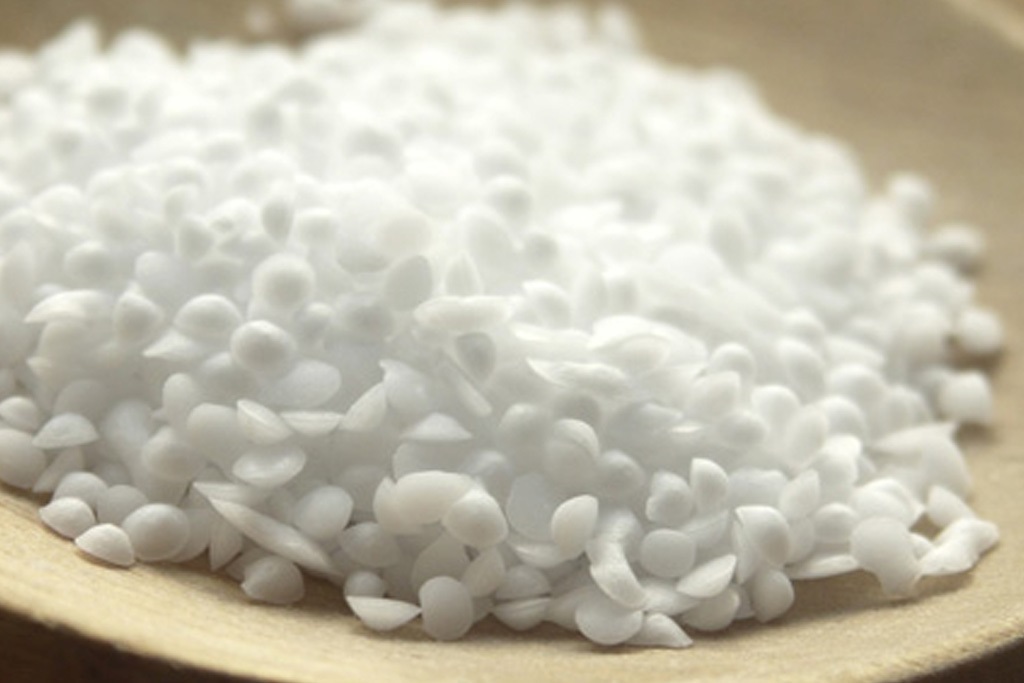
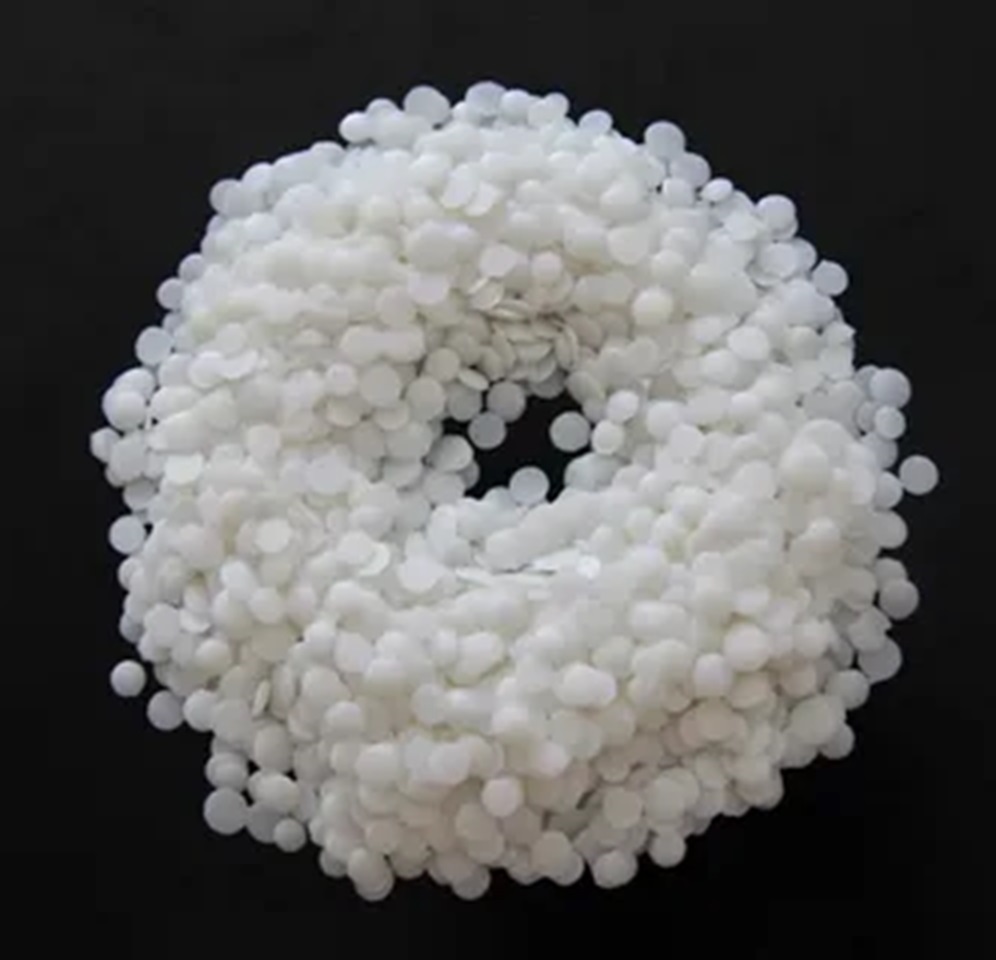
Physical State and Appearance: At room temperature (20-25°C), it is a white, waxy solid, typically in the form of flakes, granules, or pastilles. Its crystalline structure can vary depending on purity and production method. It possesses a characteristic, faint, clean, waxy odor.
Thermal Properties:
Melting Point: 49.3 °C (for the pure substance). For commercial grades, this range is typically between 47-51 °C. This relatively low melting point means it does not completely melt at skin temperature (32-37°C) but softens, forming a lubricious film on the skin.
Boiling Point: 344 °C (at 760 mmHg), decomposing upon boiling. This high boiling point indicates evaporative loss during thermal processing is negligible.
Flash Point: 185 °C (closed cup method). This high value classifies it as a chemical with a low risk of ignition, making it safe to handle.
Density and Solubility:
Density: 0.81 g/cm³ (at 20°C). Being lighter than water, it tends to accumulate in the upper phase when mixed with water.
Solubility:
In Water: Practically insoluble (< 0.1 mg/L at 20°C). Its hydrophobic long carbon chain prevents interaction with water molecules.
In Organic Solvents: Readily soluble in organic solvents such as ethanol, diethyl ether, chloroform, and acetone. It is highly miscible with liquid and solid oils and fats (e.g., mineral oil, vegetable oils).
Chemical Stability and Reactivity:
As a saturated alcohol, it is highly resistant to oxidation and is stable under normal storage conditions.
Being a primary alcohol, it can undergo typical alcohol reactions such as esterification (reacting with fatty acids to form wax esters), ethoxylation (addition of ethylene oxide), and sulfation. These reactions are used in the industrial production of cetyl alcohol derivatives (e.g., cetostearyl alcohol, cetyl palmitate, sodium cetyl sulfate).
The industrial production of cetyl alcohol primarily utilizes two main sources: natural vegetable oils and petrochemicals.
Vegetable-Derived Production (Natural Route):
This method is preferred in the cosmetic and food sectors due to its use of renewable raw materials and the production of biocompatible substances.
Raw Material Sourcing: Coconut oil or palm kernel oil are primary sources as they contain high levels of palmitic acid (C16:0). These oils are a mixture of various fatty acids bound in triglyceride form.
Fatty Acid Production (Hydrolysis): The vegetable oil is reacted with water under high pressure and temperature (hydrolysis) to break it down into glycerin and a mixture of free fatty acids.
Fractionation (Distillation): The resulting fatty acid mixture is subjected to fractional distillation under vacuum. This process separates fatty acids of different chain lengths (caprylic, capric, lauric, myristic, palmitic, stearic, etc.) based on their boiling point differences. The high-purity palmitic acid (C16:0) fraction is collected for cetyl alcohol production.
Hydrogenation (Reduction): The obtained palmitic acid is reacted with hydrogen gas under high temperature and pressure in the presence of a suitable catalyst (typically copper chromite or zinc oxide). This chemical reduction converts the carboxyl group (-COOH) into a primary alcohol group (-CH₂OH). Reaction: C₁₅H₃₁COOH + 2H₂ → C₁₅H₃₁CH₂OH + H₂O
Purification: The crude cetyl alcohol is purified through processes like redistillation or crystallization to remove by-products and catalyst residues.
Petrochemical-Derived Production (Synthetic Route):
This method is often more cost-effective and is used for large-scale industrial applications.
Feedstock: Ethylene (C₂H₄) gas.
Aluminum Alkyl Synthesis (Ziegler Process): An organoaluminum compound, such as triethylaluminum, is reacted with ethylene under controlled conditions to extend the carbon chain. This process yields a mixture of alkyl aluminum compounds with various chain lengths (a broad molecular weight distribution).
Oxidation and Hydrolysis: The resulting aluminum alkyl mixture is oxidized and then hydrolyzed with water to yield a corresponding mixture of primary alcohols (ranging from C₂ to C₂₀+).
Distillation: This alcohol mixture is processed in a precise fractional distillation column to separate it into fine fractions. This distillation ultimately yields high-purity cetyl alcohol (the C16 fraction).
The role of cetyl alcohol in modern cosmetic formulations extends far beyond being a simple additive; it is a fundamental building block that determines a product's sensory attributes, stability, and performance.
Cetyl alcohol acts as a non-ionic co-emulsifier and stabilizing agent. In oil-in-water (O/W) emulsions, it reinforces the interfacial film created by the primary emulsifier (e.g., sodium cetyl sulfate or polysorbates). Its hydroxyl group orients towards the water phase, while its long hydrocarbon chain orients towards the oil phase, forming an organized layer at the oil-water interface. This enhances emulsion stability through three main mechanisms:
Strengthening the Interfacial Film: Cetyl alcohol molecules intersperse between the primary emulsifier molecules, increasing the density and elasticity of the film they form, thus preventing droplet coalescence.
Increasing Viscosity (Imparting Consistency): It forms structures (lamellar phases or gel networks) within the continuous phase (water), reducing the emulsion's fluidity. Higher viscosity restricts droplet movement, lowering the probability of coalescence.
Reducing Interfacial Tension: Working synergistically with the primary emulsifier, it further reduces the interfacial tension between oil and water, facilitating the formation of smaller, more homogeneous droplets.
The "consistency" of a cream or lotion (its flow behavior, spreadability, firmness) is the domain of rheology. Cetyl alcohol plays a critical role in modulating a formulation's rheological profile. Although insoluble in water, it can swell upon contact with water to form a three-dimensional crystalline network (a gel network). This network becomes entrapped within the emulsion, imparting characteristic viscoelastic properties. At higher concentrations, it lends a spoonable firmness to the product, while at lower concentrations, it helps stabilize a fluid lotion. This ensures the product dispenses easily from a tube but spreads smoothly on the skin, leaving a long-lasting feel.
Cetyl alcohol functions as an effective emollient. Emollients help organize the lipid matrix (lamellar lipids) found between dead cells (corneocytes) in the outermost layer of the skin, the stratum corneum. This lipid matrix is the skin's natural barrier. Upon application, cetyl alcohol contributes by:
Occlusion: It forms a thin, lipophilic film on the skin's surface, temporarily hindering water evaporation from the skin (transepidermal water loss - TEWL). This promotes hydration of the stratum corneum.
Softening and Smoothing: This film penetrates between dried and rough skin cells, softening them, filling the intercellular spaces, and making the skin microscopically smoother. This results in the tactile sensation of soft, supple skin.
Unlike drying alcohols (such as ethanol), cetyl alcohol has negligible potential to damage the skin barrier and generally contributes supportively to it.
Due to its non-ionic nature, cetyl alcohol is compatible with a very wide range of cosmetic ingredients.
pH Range: It is chemically stable across a pH range of 4 to 8. This encompasses the slightly acidic pH range (4.5-6) that is ideal for skin.
Interaction with Other Ingredients:
Cationic Compounds: It does not interact with cationic surfactants used in hair conditioners (e.g., cetrimonium chloride), making it ideal for hair care products.
Active Ingredients: It does not negatively affect the stability or efficacy of sensitive active ingredients like Vitamin C, retinol, or peptides.
Other Fatty Alcohols: It is used in synergistic blends with other fatty alcohols like stearyl alcohol or behenyl alcohol to fine-tune a formulation's melting point, texture, and stability (e.g., in cetostearyl alcohol).
Pharmaceutical Applications:
Widely used in topical drug delivery systems (ointments, creams, gels).
Topical Dosage Forms: It can prolong the residence time of drug actives on the skin and modulate their penetration. It is found as a thickener and stabilizer in creams containing actives like hydrocortisone.
Suppositories: Used as an excipient in some suppository formulations to adjust the desired melting point and firmness.
Excipient: It is an officially recognized excipient with a proven safety profile, listed in pharmacopoeias (USP/NF, Ph. Eur.).
Food Industry Applications:
Its use as a food additive is subject to regional regulations.
Glazing Agent: Applied as a surface coating agent on confectionery, chocolates, and some fruits (e.g., citrus fruits) to impart shine and prevent moisture loss. It is known by the code E-132e in the EU.
Flavoring Agent: At very low concentrations, it may function as a fixative or adjunct to the flavor profile of certain food products.
Antifoaming Agent: Used to control undesirable foaming during food processing.
Industrial and Technical Applications:
Metalworking Fluids: Used as a friction-reducing and anti-wear additive in cutting fluids and lubricants. It is particularly effective in lubricating the threads of fasteners like nuts and bolts.
Textile and Paper Industry: Employed for softening textile fibers and providing surface smoothness in paper coatings.
Plastics and Polymer Industry: Can function as an internal lubricant or mold release agent for some polymers.
The safety of cetyl alcohol has been extensively evaluated by authoritative bodies such as the Cosmetic Ingredient Review (CIR) and the European Chemicals Agency (ECHA).
Acute Toxicity: Its acute toxicity via oral, dermal, or inhalation routes is very low. LD50 values are sufficiently high to indicate it is practically non-toxic.
Skin and Eye Irritation: As a pure substance, it may be mildly irritating in rabbit eye tests. However, at typical concentrations used in cosmetic products (ranging from 1-10%), it poses no significant risk of irritation to skin or eyes. In cosmetic formulations, it is generally classified as non-irritating or mildly irritating.
Skin Sensitization: Its potential to cause allergic contact dermatitis in humans is considered very low. It is rarely reported in connection with allergic reactions to cosmetic products.
Carcinogenicity, Mutagenicity, Reproductive Toxicity: Current scientific data show no evidence that cetyl alcohol is carcinogenic, mutagenic, or toxic to the reproductive system. It is not classified for any hazard class under the CLP Regulation (EC 1272/2008).
Environmental Impact: When derived from vegetable sources, it originates from renewable resources. It is readily biodegradable, meaning its potential for persistence in the environment is low.
Storage: Should be stored in cool (below 25°C), dry, and well-ventilated areas. It must be protected from direct sunlight and excessive temperature fluctuations. High temperatures can cause caking or melting; moisture can degrade its physical form and create conditions for microbial growth.
Packaging: Must be kept in its original, tightly closed container. Due to its ability to absorb odors, it should not be stored in the same environment as strong-smelling chemicals.
Shelf Life: When stored under appropriate conditions, the shelf life is typically 2-3 years from the date of manufacture.
Handling: Due to its high flash point, it is not classified as a dangerous good for transport. It can be handled safely with standard industrial hygiene measures (gloves, protective eyewear).
Cetyl alcohol is a member of a family of fatty alcohols. Comparing it with other members of this family is critical for selecting the correct ingredient in formulation science.
| Property | Cetyl Alcohol (C16) | Stearyl Alcohol (C18) | Cetostearyl Alcohol (C16-18) | Myristyl Alcohol (C14) | Behenyl Alcohol (C22) |
|---|---|---|---|---|---|
| Chain Length | 16 Carbons | 18 Carbons | Mixture of 16 & 18 | 14 Carbons | 22 Carbons |
| Melting Point (°C) | ~49 | ~59 | ~49-56 | ~38 | ~70 |
| Consistency / Texture | Creamy, balanced | Firmer, less spreadable | Balanced, very common commercially | Softer, lighter | Very firm, strong structure |
| Skin Feel | Silky, lubricious | Heavier, richer | Intermediate between cetyl and stearyl | Light, less greasy feel | Very rich, protective film |
| Typical Use | General purpose creams, lotions | Firmer creams, sticks | Standard in most creams and lotions | Light lotions, serums | Very solid sticks, protective creams |
| Solubility/Function | Good balance | Requires higher processing temperatures | Easy to process, balanced | Remains soft even at lower temperatures | Requires high-temperature processing |
Cetyl alcohol is a versatile raw material used across different sectors for purposes that are often similar but tailored to specific industry needs. The usage quantity varies significantly depending on the product type and its intended function within the formulation.
This is the most common application area for cetyl alcohol. It performs multiple functions simultaneously within a single product.
Purposes and Functions:
Thickener (Viscosity Modifier): It provides the desired density and "body" to lotions and creams. It prevents the product from being too runny, making it easier to apply and control during use .
Emulsifier (Co-Emulsifier): It helps two normally immiscible liquids, like water and oil, form a homogeneous mixture (emulsion) and prevents this mixture from separating over time (enhances stability) .
Emollient (Softener): It forms a thin, protective film on the skin and hair, which helps prevent moisture loss, imparting a feeling of softness and smoothness .
Opacifier: It gives products like shampoos a pearlescent or opaque (matte) appearance, enhancing the aesthetic texture .
Application Method:
During the manufacturing process, it is added to the oil phase of the formulation. It is heated along with other oil-soluble components (such as vegetable oils, other waxes, etc.) to around 50-70°C until melted. This heated oil phase is then mixed with the water phase (heated to the same temperature) to achieve homogenization and emulsification .
Usage Quantities:
The ratio depends on the product type and desired consistency.
Lotions and Light Creams: Typically used in the range of 0.5% - 3% .
Rich Creams, Body Butters, and Hair Conditioners: A range of 2% - 6% is preferred for a more noticeable consistency and emollient effect .
Shampoos and Shower Gels: Used for foam stabilization and slight viscosity increase, generally at 0.5% - 2% .
As a Co-Emulsifier: To support the primary emulsifier and enhance emulsion stability, 0.5% - 3% is usually sufficient. When the concentration exceeds 5%, it begins to exhibit emulsifier-like properties on its own .
Cetyl alcohol is used as a safe and effective excipient (auxiliary substance) in topical (skin-applied) drug formulations.
Purposes and Functions:
Cream and Ointment Base: It forms a stable and homogeneous base (carrier) necessary for delivering active pharmaceutical ingredients to the skin .
Consistency and Stability Enhancer: As in cosmetics, it ensures that pharmaceutical creams and ointments have the desired consistency and remain stable (do not separate or degrade) throughout their shelf life .
Suppository Base Modification: In suppository formulations, it is used to raise the melting point of the base, ensuring it melts at the correct rate at body temperature and releases the active ingredient properly .
Water Absorption Property: When mixed with water-repellent bases like petrolatum in specific ratios (e.g., 19:1 petrolatum:cetyl alcohol), it enables the mixture to absorb up to 40-50% of its weight in water. This helps incorporate water-soluble drugs or perspiration into the base .
Application Method:
The application principle is the same as in cosmetics; it is melted in the oil phase of the formulation and then emulsified with the water phase.
Usage Quantities:
Topical Creams and Ointments: It can be used in varying ratios, typically between 1% and 10% . The exact percentage in a drug formulation is determined during pharmaceutical development based on compatibility with the active ingredient and other excipients.
Suppositories: It can be used at about 5-10% by weight of the total suppository base to adjust the melting point.
Its use in this sector is more limited and strictly controlled compared to cosmetics and pharmaceuticals.
Purposes and Functions:
Glazing Agent (Surface Coating Agent): Used as a surface coating on confectionery, chocolates, and some dried fruits to provide a glossy appearance and prevent moisture loss . For example, it can be found in the colored writing or images on some types of chewing gum .
Carrier / Solvent: It can act as a solvent or carrier for certain additives, such as food colors or flavors.
Application Method:
It is generally applied to the final product as a thin film. Since it is insoluble in water, application is usually done by spraying or dipping the product into the melted substance.
Usage Quantities:
Its use as a food additive is at very low levels (typically around 0.1-1% of the finished product). According to Good Manufacturing Practice (GMP) principles, it is used at the lowest necessary level to achieve its intended purpose. In the USA, it is listed as Generally Recognized as Safe (GRAS) by the FDA or is approved for specific uses .
The role of cetyl alcohol in industry is based on its chemical inertness and lubricating properties.
Purposes and Functions:
Lubricant: In the metalworking industry, it is used to reduce friction and prevent wear, especially during the threading or tightening of fasteners like nuts and bolts .
Surface Coating and Protection: It is used as an active ingredient in some industrial coatings or in products called "liquid pool covers." It forms a thin, non-volatile layer on the water surface, reducing water evaporation and consequently heat loss .
Chemical Intermediate: It serves as a starting material in the production of other chemicals used in the detergent, textile, and plastics industries (such as cetyl sulfate or ethoxylated cetyl alcohol) .
Application Method:
The application varies depending on the purpose. As a lubricant, it is generally incorporated into liquid or paste products. For pool covers, it is applied to the water surface in the form of a fine powder or liquid.
Usage Quantities:
Lubricants: It can be used in varying ratios from 1% to 20% depending on the formulation's requirements. This is entirely dependent on specific technical needs.
Chemical Intermediate: The quantity is calculated in stoichiometric ratios based on the final chemical being produced.
Pool Covers: It is used in very low concentrations to form a layer only one molecule thick (a monolayer) on the water surface.
The following table summarizes the main purposes and typical usage quantities of cetyl alcohol across different sectors:
| Sector | Primary Purpose of Use | Typical Usage Quantity (as Percentage of Product) |
|---|---|---|
| Cosmetics | Thickener, emulsifier, emollient | 0.5% - 6% |
| Pharmaceuticals | Cream/ointment base, stabilizer, suppository additive | 1% - 10% (topical), 5-10% (suppository) |
| Food | Glazing agent, carrier/solvent | < 1% (very low, within GMP limits) |
| Industrial | Lubricant, chemical intermediate, evaporation retardant | 1% - 20% (lubricants) / varies based on need |