We unleash your business potential by maximize the business innovation.
Send EmailCadmium Sulfate, Cadmium Sulphate, 10124‑36‑4
CADMIUM SULFATE
1. PRODUCT IDENTIFICATION AND CHEMICAL IDENTITY
| Parameter | Information |
|---|---|
| Product Name | Cadmium Sulfate |
| Chemical Name | Cadmium(II) Sulfate |
| Other Names | Cadmium Sulphate, Cadmium Sulfate Hydrate |
| CAS Number | 10124-36-4 |
| EC Number (EINECS) | 233-331-6 |
| HS Code | 283329 |
| Molecular Formula | CdSO₄ (anhydrous) or CdSO₄·xH₂O (typically monohydrate or octahydrate) |
| Molecular Weight | ~208.47 g/mol (anhydrous basis) |
| Purity | ≥ 98–99% (industrial or analytical grade) |
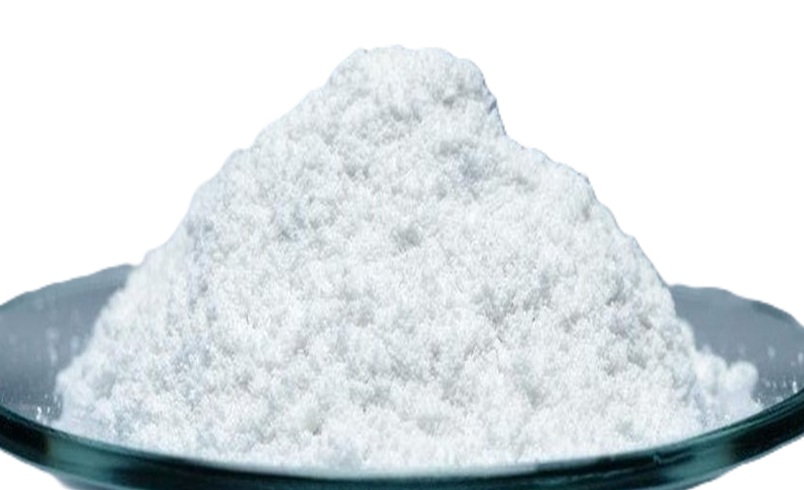
| Appearance | White crystalline solid |
| Odor | Odorless |
| Physical State (20°C) | Solid (crystalline) |
2. CHEMICAL STRUCTURE
2.1. Molecular Structure
Cadmium sulfate is the sulfate salt of cadmium. Cadmium ions (Cd²⁺) and sulfate ions (SO₄²⁻) are present in a 1:1 ratio. The compound typically exists in anhydrous form or as hydrates (monohydrate, octahydrate). It is hygroscopic and readily absorbs moisture from the air. It is a highly toxic heavy metal salt.
Structural Formula:
                    CADMIUM SULFATE [CdSO₄]
                               |
                     Cd²⁺ - SO₄²⁻ Ionic Bonds
                               |
             +----------------+----------------+
             |                |                |
         Ionic Crystal       Hygroscopic       Toxic
         Structure           Property          Salt
2.2. Structural Properties
| Parameter | Value |
|---|---|
| Oxidation State | Cd²⁺ (Cadmium +2) |
| Molecular Weight | ~208.47 g/mol (anhydrous) |
| Hydration States | Anhydrous, monohydrate, octahydrate |
| Appearance | White crystalline solid |
| Density | ~4.7 g/cm³ (anhydrous) |
| pH (aqueous solution) | Slightly acidic |
| Crystal System | Monoclinic (anhydrous) |
3. PHYSICAL AND CHEMICAL PROPERTIES
| Property | Value | Description |
|---|---|---|
| Appearance | White crystalline solid | - |
| Odor | Odorless | - |
| Chemical Formula | CdSO₄ | - |
| Molecular Weight | ~208.47 g/mol | - |
| Density | ~4.7 g/cm³ | - |
| Melting Point | Decomposes upon heating | - |
| Solubility in Water | High solubility | - |
| Solubility in Acids | Soluble | - |
| Solubility in Ethanol | Insoluble | - |
| Hygroscopicity | High | Absorbs moisture from air |
| Stability | Stable under normal conditions; sensitive to moisture | - |
| pH (aqueous solution) | Slightly acidic | - |
| Thermal Decomposition | Decomposes to cadmium oxide (CdO) | - |
| Toxicity | Highly toxic | - |
4. STABILITY AND REACTIVITY
| Parameter | Information |
|---|---|
| Chemical Stability | Stable under normal conditions |
| Conditions to Avoid | Moisture, high temperature, strong oxidizing agents |
| Incompatible Materials | Strong bases, strong oxidizing agents, reducing agents |
| Hazardous Decomposition Products | Cadmium oxide (CdO), sulfur dioxide (SO₂), sulfur trioxide (SO₃) |
| Hazardous Polymerization | Will not occur |
| Hygroscopicity | High; absorbs moisture from air |
| Photosensitivity | Low |
4.1. Chemical Reactions
Thermal Decomposition:
CdSO₄ → CdO + SO₃↑
Reaction with Alkali:
CdSO₄ + 2NaOH → Cd(OH)₂↓ + Na₂SO₄
Reaction with Sulfide:
CdSO₄ + Na₂S → CdS↓ + Na₂SO₄
5. APPLICATION AREAS
5.1. Electroplating and Surface Treatment
| Application | Function | Details |
|---|---|---|
| Electroplating | Corrosion-resistant coatings | Cadmium plating for steel and iron components |
| Metal Surface Treatment | Surface finishing | Specialty coating applications |
| Aerospace Industry | Corrosion protection | Cadmium coatings for aircraft components |
5.2. Pigments and Dyes
| Application | Function | Details |
|---|---|---|
| Cadmium Pigments | Colorant | Cadmium yellow, cadmium red pigments |
| Specialty Paints | High-temperature paints | Cadmium-based pigments for industrial applications |
| Glass Coloring | Colorant | Yellow-orange glass coloring |
5.3. Laboratory and Research
| Application | Function | Details |
|---|---|---|
| Laboratory Reagent | Cadmium chemistry research | Used as a reagent in cadmium chemistry |
| Analytical Chemistry | Standard preparation | Calibration and analysis |
| Precursor Compound | Starting material | Synthesis of other cadmium compounds |
| Research Material | Specialty research | Various research applications |
5.4. Batteries and Photovoltaics
| Application | Function | Details |
|---|---|---|
| Nickel-Cadmium Batteries | Electrode material | Ni-Cd battery applications (declining due to toxicity) |
| Photovoltaic Cells | Semiconductor material | Thin-film solar cells (limited use) |
| Semiconductor Research | Research material | Specialty semiconductor studies |
6. SECTOR SUITABILITY TABLE
| Sector / Application | Suitability | Description |
|---|---|---|
| Textile | Not Suitable | No application area |
| Food | Not Suitable | Prohibited in food additives or food contact materials |
| Cosmetics | Not Suitable | Prohibited in cosmetic formulations under CLP/REACH |
| Metal / Surface Treatment | Suitable | Used in electroplating and coatings (restricted) |
| Ceramics / Glass | Suitable | Limited use in pigments and specialty glass |
| Laboratory / Research | Suitable | Used as reagent in cadmium chemistry (under strict control) |
| Electronics / Optics | Suitable | Limited use in batteries, photovoltaics, and semiconductors |
| Construction Chemicals | Not Suitable | No application area |
7. STORAGE AND SHELF LIFE
| Parameter | Condition |
|---|---|
| Storage Conditions | Store in a cool, dry, well-ventilated area |
| Container Requirements | Sealed, moisture-proof containers |
| Moisture Protection | Store with desiccant; hygroscopic |
| Temperature | Room temperature (15-25°C) |
| Shelf Life | Approximately 2 years under proper conditions |
| Security | Must be stored in secure, locked area due to toxicity |
| Stability Note | Hygroscopic; may absorb moisture if exposed to humid air |
8. PACKAGING OPTIONS
| Packaging Type | Quantity | Material |
|---|---|---|
| Glass Bottle | 10 g, 50 g, 100 g | Amber glass with desiccant |
| Plastic Container | 100 g, 500 g, 1 kg | HDPE container, moisture-proof |
| Fiber Drum | 5 kg, 10 kg, 25 kg | PE-lined, moisture-proof |
| Steel Drum | 25 kg, 50 kg | Steel drum with inner liner |
9. SAFETY AND TOXICOLOGY
| Parameter | Value |
|---|---|
| Acute Oral Toxicity (LD50, Rat) | ~100-200 mg/kg (highly toxic) |
| Dermal Toxicity | Toxic |
| Skin Irritation | Irritant |
| Eye Irritation | Severe irritant |
| Inhalation | Highly toxic; may cause respiratory damage |
| Carcinogenicity | Classified as carcinogenic (H350) |
| Mutagenicity | Mutagenic potential |
| Reproductive Toxicity | Reproductive toxicant |
| Chronic Effects | Kidney damage, lung damage, bone damage (Itai-Itai disease) |
| Environmental Hazards | Very toxic to aquatic life (H410) |
| Target Organs | Kidneys, lungs, bones, liver |
10. GHS CLASSIFICATION
| Hazard Class | Category | H-Statement |
|---|---|---|
| Acute Toxicity (Oral) | Category 3 | H301: Toxic if swallowed |
| Carcinogenicity | Category 1B | H350: May cause cancer |
| Germ Cell Mutagenicity | Category 2 | H341: Suspected of causing genetic defects |
| Reproductive Toxicity | Category 2 | H361: Suspected of damaging fertility or the unborn child |
| Specific Target Organ Toxicity (Repeated Exposure) | Category 1 | H372: Causes damage to organs through prolonged or repeated exposure |
| Aquatic Toxicity (Acute) | Category 1 | H400: Very toxic to aquatic life |
| Aquatic Toxicity (Chronic) | Category 1 | H410: Very toxic to aquatic life with long-lasting effects |
Signal Word: DANGER
Hazard Pictograms: GHS06 (Skull and Crossbones), GHS08 (Health Hazard), GHS09 (Environment)
11. PRECAUTIONARY STATEMENTS (P-CODES)
| Code | Statement |
|---|---|
| P201 | Obtain special instructions before use |
| P202 | Do not handle until all safety precautions have been read and understood |
| P260 | Do not breathe dust |
| P264 | Wash hands thoroughly after handling |
| P270 | Do not eat, drink or smoke when using this product |
| P273 | Avoid release to the environment |
| P280 | Wear protective gloves/protective clothing/eye protection/face protection |
| P301+P310 | IF SWALLOWED: Immediately call a POISON CENTER/doctor |
| P302+P352 | IF ON SKIN: Wash with plenty of soap and water |
| P304+P340 | IF INHALED: Remove person to fresh air and keep comfortable for breathing |
| P305+P351+P338 | IF IN EYES: Rinse cautiously with water for several minutes. Remove contact lenses if present |
| P308+P313 | IF exposed or concerned: Get medical advice/attention |
| P391 | Collect spillage |
| P501 | Dispose of contents/container in accordance with local regulations |
12. FIRST AID MEASURES
| Route of Exposure | Action to Be Taken |
|---|---|
| Inhalation | Move to fresh air. If breathing difficulty occurs, administer oxygen. Seek immediate medical attention |
| Skin Contact | Wash with plenty of soap and water. Remove contaminated clothing. Seek medical attention |
| Eye Contact | Rinse thoroughly with plenty of water for at least 15 minutes. Remove contact lenses. Seek immediate medical attention |
| Ingestion | Do not induce vomiting. Rinse mouth. Drink water. Seek immediate medical attention. Show this SDS to the attending physician |
13. REGULATORY STATUS
| Region / Authority | Status |
|---|---|
| European Union (REACH) | Restricted; authorization required; SVHC candidate list |
| Turkey (KKDIK) | Strictly regulated; authorization required |
| TSCA (USA) | Registered; restricted |
| EINECS | 233-331-6 |
| Food / Cosmetics | Not approved |
| RoHS | Restricted (cadmium in electrical and electronic equipment) |
| REACH Annex XIV | Subject to authorization |
| EU Directive 2011/65/EU (RoHS) | Restricted |
| OSHA | Regulated as highly toxic substance |
14. OTHER NAMES AND SYNONYMS
-
Cadmium(II) Sulfate
-
Cadmium Sulphate
-
Cadmium Sulfate Hydrate
-
CdSO₄
15. QUICK REFERENCE TABLE
| Property | Value |
|---|---|
| CAS Number | 10124-36-4 |
| EC Number | 233-331-6 |
| HS Code | 283329 |
| Molecular Formula | CdSO₄ |
| Molecular Weight | ~208.47 g/mol |
| Appearance | White crystalline solid |
| Density | ~4.7 g/cm³ |
| Water Solubility | High |
| Purity | ≥ 98-99% |
| Hygroscopicity | High |
| Toxicity | Highly toxic, carcinogenic |
| GHS Signal Word | DANGER |
16. CRITICAL NOTICES AND BEST PRACTICES
CRITICAL NOTICES:
-
Cadmium sulfate is highly toxic and carcinogenic. Must be handled with extreme care in controlled laboratory or industrial environments.
-
Use in many regions is restricted due to environmental and health risks (REACH, RoHS, etc.).
-
Must be stored in secure, locked areas with restricted access.
-
Personal protective equipment (PPE) is mandatory: gloves, goggles, protective clothing, and respiratory protection.
-
Environmental release is strictly prohibited (H410).
-
Not approved for food or cosmetic applications.
-
Disposal must be through licensed hazardous waste facilities.
BEST PRACTICE RECOMMENDATIONS:
Storage:
-
Store in a cool, dry, well-ventilated area
-
Use sealed, moisture-proof containers
-
Store in a locked, secure area with restricted access
-
Keep away from food and feed materials
Handling:
-
Use in well-ventilated areas (fume hood required)
-
Use appropriate PPE (gloves, goggles, protective clothing, respiratory protection)
-
Avoid dust formation
-
Wash hands thoroughly after handling
-
Do not eat, drink or smoke when handling
Waste Management:
-
Dispose in accordance with local, regional, and national regulations
-
Must be disposed of by licensed hazardous waste facilities
-
Do not discharge into water bodies
LEGAL DISCLAIMER
This Technical Data Sheet (TDS) is for informational purposes only and is prepared based on available technical data. Cadmium sulfate is a highly toxic and carcinogenic substance. The user is solely responsible for determining the suitability of the product for their specific application and for complying with all local, national, and international regulations. For complete safety, storage, handling, transport, waste, and regulatory compliance information, the official Safety Data Sheet (SDS/MSDS) provided by the manufacturer/supplier must be consulted. This document does not substitute professional advice. Appropriate precautions must be taken during handling.