We unleash your business potential by maximize the business innovation.
Send EmailDysprosium Nitrate Hexahydrate, Dysprosium Nitrate Hydrate, Dysprosium Trinitrate Hexahydrate, 35725‑30‑5
DYSPROSIUM NITRATE HEXAHYDRATE (DYSPROSIUM(III) NITRATE)
Chemical Name: Dysprosium(III) Nitrate Hexahydrate
CAS Number: 35725-30-5
EC Number: 609-062-9
UN Number: 1477 (Oxidizing substance)
Customs Tariff Code: 2846.90.00.00.19
HS Code: 283429
1. PRODUCT IDENTIFICATION AND CHEMICAL IDENTITY
| Parameter | Description |
|---|---|
| Chemical Name (IUPAC) | Dysprosium(III) nitrate hexahydrate |
| Other Names | Dysprosium Nitrate, Dysprosium Trinitrate Hexahydrate, Dysprosium Nitrate Hydrate |
| CAS Number | 35725-30-5 |
| EC Number (EINECS) | 609-062-9 |
| Molecular Formula | Dy(NO₃)₃·6H₂O |
| Molecular Weight | 438.52 g/mol |
| Chemical Class | Inorganic nitrate / Rare earth metal nitrate |
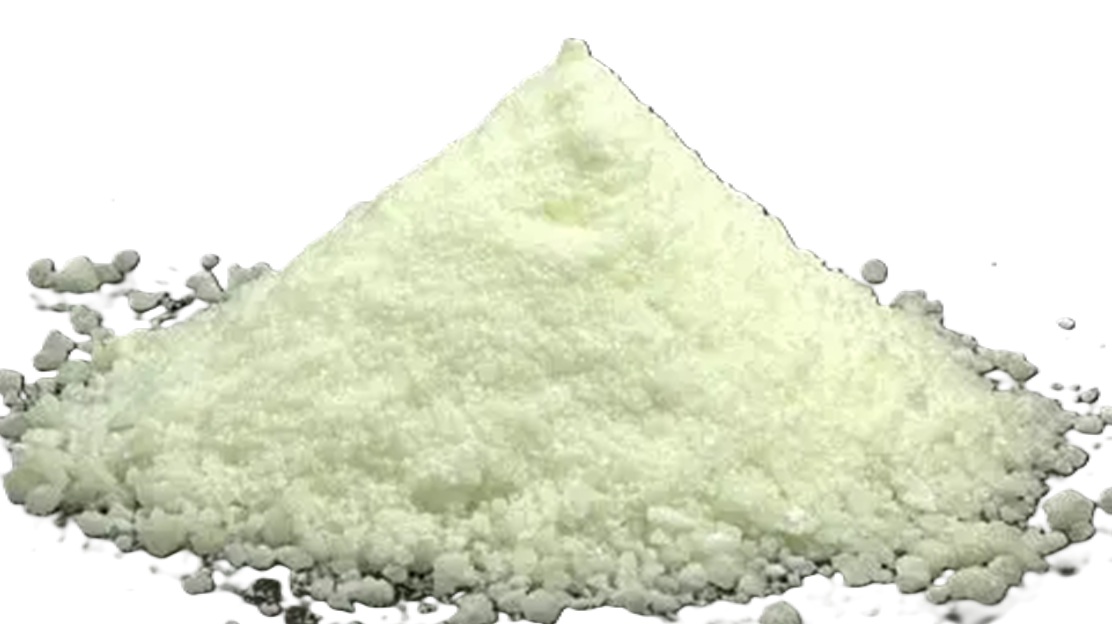
| Appearance | Light yellow-green crystalline solid |
| Odor | Odorless |
| Crystal Structure | Monoclinic |
CHEMICAL STRUCTURE AND DESCRIPTION:
Dysprosium Nitrate Hexahydrate (Dy(NO₃)₃·6H₂O) is the nitrate salt of dysprosium in the +3 oxidation state, containing six molecules of water of crystallization. The compound features dysprosium ions coordinated by nitrate groups and water molecules. It is highly soluble in water and ethanol. The compound is highly hygroscopic and must be stored in airtight containers. Dysprosium compounds are critical for magnetic alloys (especially Nd-Fe-B magnets with dysprosium addition for temperature stability), optical applications, and advanced ceramic materials.
Structural Features:
-
Hexahydrate form (6 water molecules)
-
Highly water-soluble
-
Light yellow-green appearance
-
Highly hygroscopic
-
Strong oxidizing properties (UN 1477)
-
High magnetic susceptibility (paramagnetic)
2. PHYSICAL AND CHEMICAL PROPERTIES
| Property | Value |
|---|---|
| Molecular Formula | Dy(NO₃)₃·6H₂O |
| Molecular Weight | 438.52 g/mol |
| Appearance | Light yellow-green crystalline solid |
| Odor | Odorless |
| Density | ~2.6 g/cm³ |
| Melting Point | ~60°C (decomposes) |
| Boiling Point | Decomposes before boiling |
| Solubility in Water | Highly soluble |
| Solubility in Ethanol | Soluble |
| pH (Aqueous Solution) | ~4-5 (5% solution) |
| Hygroscopicity | Highly hygroscopic |
| Crystal Structure | Monoclinic |
| Oxidizing Properties | Strong oxidizer (UN 1477) |
| Magnetic Properties | Paramagnetic (high magnetic moment) |
| Thermal Decomposition | Decomposes to Dy₂O₃ at elevated temperatures |
Dysprosium Nitrate Hexahydrate is a light yellow-green, highly hygroscopic crystalline solid with a molecular weight of 438.52 g/mol. It is highly soluble in water and ethanol. The compound is a strong oxidizer and must be stored away from combustible materials. Dysprosium compounds exhibit high magnetic susceptibility and are critical for temperature-stable permanent magnets.
3. SOLUBILITY PROFILE
| Solvent | Solubility | Conditions |
|---|---|---|
| Water | Highly soluble | All temperatures |
| Ethanol | Soluble | Room temperature |
| Methanol | Soluble | - |
| Acetone | Slightly soluble | - |
| Organic Solvents | Limited | - |
Dysprosium Nitrate is highly soluble in water and ethanol. This property makes it an ideal precursor for aqueous solution synthesis, precipitation reactions, and various material processing applications.
4. CHEMICAL PROPERTIES AND REACTIONS
| Property | Description |
|---|---|
| Chemical Class | Inorganic nitrate / Rare earth metal nitrate |
| Oxidation State | Dy³⁺ (+3) |
| Oxidizing Properties | Strong oxidizer; supports combustion |
| Hygroscopicity | Highly hygroscopic |
| Thermal Decomposition | Decomposes to Dy₂O₃ + NO₂ + O₂ |
| Hydrolysis | Slight hydrolysis in aqueous solution |
| Precursor Reactions | Used for oxide, hydroxide, and carbonate precipitation |
Dysprosium Nitrate is a strong oxidizer and can support combustion when in contact with combustible materials. Its high solubility makes it an ideal precursor for the preparation of other dysprosium compounds via precipitation reactions. Upon heating, it decomposes to dysprosium oxide (Dy₂O₃) with the release of nitrogen dioxide (NO₂) and oxygen.
Key Chemical Reactions:
Synthesis (Acid Dissolution):
Dy₂O₃ + 6HNO₃ → 2Dy(NO₃)₃ + 3H₂O
Thermal Decomposition:
4Dy(NO₃)₃ → 2Dy₂O₃ + 12NO₂↑ + 3O₂↑
Hydroxide Precipitation:
Dy(NO₃)₃ + 3NaOH → Dy(OH)₃ ↓ + 3NaNO₃
Oxalate Precipitation:
2Dy(NO₃)₃ + 3H₂C₂O₄ → Dy₂(C₂O₄)₃ ↓ + 6HNO₃
5. SPECIFICATIONS (HIGH PURITY)
| Parameter | Value |
|---|---|
| Purity (Dy(NO₃)₃·6H₂O) | ≥ 99.9% (rare earth purity) |
| Appearance | Light yellow-green crystalline solid |
| Solubility (5% aq.) | Clear solution |
| Other Rare Earth Elements | ≤ 0.1% |
| Iron (Fe) | ≤ 0.001% |
| Calcium (Ca) | ≤ 0.001% |
| Magnesium (Mg) | ≤ 0.001% |
| Chloride (Cl) | ≤ 0.005% |
| Sulfate (SO₄) | ≤ 0.005% |
| Shelf Life | ~2 years (under proper storage) |
Dysprosium Nitrate Hexahydrate is available in high purity grades (≥ 99.9% rare earth purity) for research, optical, and electronic applications.
6. APPLICATIONS AND INDUSTRIAL USES
6.1. Magnetic Materials and Alloys (Most Important Application)
| Application | Description |
|---|---|
| Nd-Fe-B Magnet Additive | Dysprosium addition improves high-temperature stability and coercivity |
| Heavy Rare Earth Source | Precursor for dysprosium metal and alloy production |
| Magnetic Refrigeration | Used in magnetocaloric materials research |
Dysprosium compounds are critical for high-performance permanent magnets. Dysprosium is added to Nd-Fe-B magnets to improve temperature stability and coercivity, making them suitable for electric vehicle motors and wind turbine generators operating at elevated temperatures.
6.2. Optical and Glass Applications
| Application | Description |
|---|---|
| Special Optical Glasses | Used in glass formulations for optical properties |
| Phosphor Materials | Used in phosphor and luminescent material synthesis |
| Laser Materials | Precursor for dysprosium-doped laser crystals |
6.3. Advanced Ceramics
| Application | Description |
|---|---|
| Ceramic Pigments | Used in ceramic pigment formulations |
| High-Temperature Ceramics | Advanced ceramic material production |
| Refractory Materials | High-temperature applications |
6.4. Catalyst and Chemical Synthesis
| Application | Description |
|---|---|
| Catalyst Precursor | Used in catalyst synthesis |
| Chemical Reagent | Laboratory reagent for rare earth chemistry research |
| Organic Synthesis | Used as a Lewis acid catalyst |
6.5. Research and Laboratory Applications
| Application | Description |
|---|---|
| Analytical Reagent | Rare earth element analysis |
| Coordination Chemistry | Model compound for lanthanide coordination studies |
| Materials Science | Precursor for advanced materials and nanomaterials |
7. SECTOR SUITABILITY TABLE
| Sector / Application | Suitability | Description |
|---|---|---|
| Textile | Not Suitable | No application area |
| Food | Prohibited | Not permitted as food additive or for food contact materials |
| Cosmetics | Prohibited | Not permitted in cosmetic formulations under CLP/REACH |
| Metal / Surface Treatment | Suitable | Used in rare earth alloys and coatings |
| Ceramics / Glass | Suitable | Used in specialty glass and advanced ceramic production |
| Laboratory / Research | Suitable | Widely used as reagent in rare earth chemistry |
| Electronics / Magnetic | Suitable | Used in magnetic alloys and electronic materials |
| Construction Chemicals | Not Suitable | No application area |
8. COMMON NAMES
-
Dysprosium nitrate salt
-
Light yellow-green crystalline powder
-
Rare earth nitrate
-
Dysprosium trinitrate
-
Magnetic alloy precursor
9. PRODUCTION PROCESS
| Stage | Description |
|---|---|
| Starting Material | Dysprosium oxide (Dy₂O₃) or dysprosium carbonate |
| Acid Dissolution | Dissolving dysprosium oxide or carbonate in nitric acid |
| Reaction | Dy₂O₃ + 6HNO₃ → 2Dy(NO₃)₃ + 3H₂O |
| Concentration | Evaporation to concentrate the solution |
| Crystallization | Controlled cooling crystallization |
| Filtration | Separation of crystals from mother liquor |
| Washing | Washing to remove impurities |
| Drying | Controlled drying to obtain hexahydrate form |
| Packaging | Packaging in airtight containers |
Reaction Equation:
Dy₂O₃ + 6HNO₃ → 2Dy(NO₃)₃ + 3H₂O
Production Types: High purity grades (hexahydrate form)
Major Producing Countries: China, United States, Japan
Commercial Purity: 99.9% and above (rare earth purity)
10. SAFETY AND TOXICOLOGY
| Parameter | Value |
|---|---|
| GHS Classification | GHS03 (Oxidizer), GHS07 (Warning) |
| Hazard Statements | H272 (May intensify fire; oxidizer), H302 (Harmful if swallowed) |
| Precautionary Statements | P210, P220, P221, P280 |
| Signal Word | Danger |
| UN Number | 1477 (Nitrates, inorganic, n.o.s.) |
| Hazard Class | 5.1 (Oxidizing substances) |
| Packing Group | II |
| Carcinogenicity | Not classified |
| Reproductive Toxicity | Not classified |
SPECIAL WARNINGS: Dysprosium Nitrate is classified as a strong oxidizer (UN 1477) . It may intensify fire when in contact with combustible materials. Harmful if swallowed (H302) . The product is for research use only; not for therapeutic or food applications.
11. TRANSPORT INFORMATION
| Parameter | Information |
|---|---|
| UN Number | 1477 |
| Hazard Class | 5.1 (Oxidizing substances) |
| Packing Group | II |
| Proper Shipping Name | Nitrates, inorganic, n.o.s. (Dysprosium nitrate) |
| Marine Pollutant | Yes |
| ADR/RID Label | 5.1 |
| IMDG / IATA | Oxidizing substance |
Dysprosium Nitrate is classified as an oxidizing substance (UN 1477, Class 5.1) . Transport must be conducted away from combustible and flammable materials.
12. REGULATORY INFORMATION
| Region | Status |
|---|---|
| EU | REACH registered |
| Turkey (KKDİK) | Mandatory compliance; registration required |
| USA (TSCA) | Listed |
| EINECS | 609-062-9 |
| Customs Tariff Code | 2846.90.00.00.19 |
| HS Code | 283429 |
Dysprosium Nitrate is registered in all major industrial markets. KKDİK registration is required for use in Turkey.
13. STORAGE AND HANDLING
| Parameter | Information |
|---|---|
| Storage Conditions | Cool, dry, well-ventilated area; away from heat and direct sunlight |
| Container Requirements | Airtight, moisture-proof containers |
| Special Storage | Store separately from combustible materials, reducing agents, and organic substances |
| Materials to Avoid | Reducing agents, combustible materials, organic substances, moisture |
| Shelf Life | ~2 years (under proper storage) |
| Hygroscopicity | Highly hygroscopic |
| Packaging Options | 100 g, 500 g, 1 kg, 5 kg, 25 kg |
Handling Notes:
-
CRITICAL: This compound is a strong oxidizer (UN 1477). Keep away from combustible materials .
-
Avoid dust formation and inhalation
-
Avoid skin and eye contact (use protective gloves and safety goggles)
-
Use in well-ventilated areas
-
Store in airtight containers away from moisture
-
Separate from reducing agents, organic substances, and flammable materials
-
Protect from light
-
Due to highly hygroscopic nature, handle in dry conditions
14. FIRE-FIGHTING MEASURES
| Parameter | Information |
|---|---|
| Fire Hazard | Not flammable, but supports combustion (oxidizer) |
| Extinguishing Media | Water spray, CO₂, dry chemical powder |
| Special Hazards | May intensify fire; thermal decomposition releases toxic nitrogen oxides |
| Protective Equipment | Self-contained breathing apparatus (SCBA), full protective clothing |
| Decomposition Products | Nitrogen oxides (NOx), dysprosium oxides |
Dysprosium Nitrate is not flammable but is a strong oxidizer that may intensify fire when in contact with combustible materials . Thermal decomposition may release toxic nitrogen oxides .
15. ACCIDENTAL RELEASE MEASURES
| Parameter | Information |
|---|---|
| Personal Protection | Wear appropriate PPE (dust mask, safety goggles, protective clothing, gloves) |
| Ventilation | Increase ventilation |
| Containment | Prevent dust dispersion; contain spill |
| Cleaning Methods | Carefully sweep or vacuum; place in appropriate disposal container |
| Environmental Precautions | Prevent entry into drains, sewers, and water bodies |
| Waste Disposal | Dispose according to local regulations |
In case of spillage, appropriate personal protective equipment must be worn. Due to its oxidizing nature, avoid contact with combustible materials. Clean up using dry methods.
16. FIRST AID MEASURES
| Exposure Route | Action |
|---|---|
| Inhalation | Move person to fresh air. If respiratory irritation persists, seek medical attention. |
| Skin Contact | Wash with plenty of water and soap; remove contaminated clothing. If irritation persists, seek medical attention. |
| Eye Contact | Rinse immediately with plenty of water for at least 15 minutes. Remove contact lenses if present. Seek medical attention. |
| Ingestion | Rinse mouth with water. Do NOT induce vomiting. Seek medical attention immediately. |
Special Notes:
-
Nitrate salts can cause methemoglobinemia in cases of severe ingestion
-
Medical personnel should be informed about nitrate salt exposure
-
In case of ingestion, do not induce vomiting due to possible aspiration risk
17. RAW MATERIALS AND DOWNSTREAM PRODUCTS
17.1. Raw Materials (Upstream)
| Raw Material | Description |
|---|---|
| Monazite Sand | Rare earth element ore containing dysprosium |
| Bastnäsite | Rare earth carbonate mineral |
| Dysprosium Oxide (Dy₂O₃) | Starting material for acid dissolution |
| Nitric Acid (HNO₃) | Acid source |
17.2. Downstream Products
| Product | Application |
|---|---|
| Dysprosium Oxide (Dy₂O₃) | Produced by thermal decomposition |
| Dysprosium Metal | Nd-Fe-B magnets, high-temperature alloys |
| Dysprosium-Doped Materials | Phosphors, laser materials |
| Magnetic Alloys | High-temperature stable permanent magnets |
18. QUALITY CONTROL PARAMETERS
| Parameter | Analytical Method | Description |
|---|---|---|
| Purity | Titration / ICP | Complexometric titration or ICP analysis |
| Dysprosium Content | Gravimetric / ICP | Determined as Dy₂O₃ |
| Nitrate Content | Ion Chromatography | Nitrate ion determination |
| Rare Earth Impurities | ICP-MS / ICP-OES | Detection of other lanthanides |
| Metal Impurities | ICP-MS / ICP-OES | Fe, Ca, Mg, Na, Zn, Cu, etc. |
| pH (Aqueous Solution) | pH Meter | ~4-5 (5% solution) |
| Moisture Content | Karl Fischer | Water content determination |
| Insoluble Matter | Gravimetric | Filtration and weighing |
| Appearance | Visual | Light yellow-green crystalline solid |
19. SUMMARY AND CRITICAL WARNINGS
SUMMARY:
Dysprosium Nitrate Hexahydrate (Dy(NO₃)₃·6H₂O, CAS 35725-30-5) is a light yellow-green, highly hygroscopic crystalline solid with a molecular weight of 438.52 g/mol. It is highly soluble in water and ethanol. Thermal decomposition yields dysprosium oxide (Dy₂O₃).
Its most important application is as a precursor for dysprosium compounds used in high-performance magnetic materials. Dysprosium is critical in Nd-Fe-B magnets for improving high-temperature stability and coercivity for electric vehicle motors and wind turbine generators . It is also used in advanced ceramics, specialty glasses, optical materials, and as a laboratory reagent for rare earth chemistry research.
The compound is classified as a strong oxidizer (UN 1477, Class 5.1) . It may intensify fire when in contact with combustible materials. It is harmful if swallowed (H302) . Due to its highly hygroscopic nature, it must be stored in airtight containers away from moisture and away from combustible and reducing agents. Shelf life is approximately 2 years under proper storage conditions.
Key Properties:
| Property | Value |
|---|---|
| Appearance | Light yellow-green crystalline solid |
| Chemical Formula | Dy(NO₃)₃·6H₂O |
| Molecular Weight | 438.52 g/mol |
| CAS Number | 35725-30-5 |
| EC Number | 609-062-9 |
| Water Solubility | Highly soluble |
| Hygroscopicity | Highly hygroscopic |
| Primary Use | Magnetic materials, research |
Major Application Areas:
| Sector | Applications |
|---|---|
| Electronics / Magnetic | Nd-Fe-B magnets, magnetic alloys |
| Ceramics / Glass | Advanced ceramics, optical glasses |
| Laboratory / Research | Reagent, material synthesis |
| Catalysis | Catalyst precursor |
Key Safety Points:
-
OXIDIZER: UN 1477, Class 5.1, Packing Group II
-
OXIDIZER: H272 (May intensify fire; oxidizer)
-
HARMFUL: H302 (Harmful if swallowed)
-
HYGROSCOPIC: Must be stored in airtight containers
-
STORAGE: Cool, dry, away from combustibles
-
PROTECTIVE EQUIPMENT: Gloves, safety goggles, dust mask
CRITICAL WARNINGS:
-
STRONG OXIDIZER (UN 1477): Dysprosium Nitrate is classified as a strong oxidizer (UN 1477, Class 5.1). It may intensify fire when in contact with combustible materials . Store separately from reducing agents, organic substances, and flammable materials.
-
HIGH SOLUBILITY: With excellent water solubility, Dysprosium Nitrate is ideal for aqueous processing, precipitation reactions, and material synthesis.
-
HIGHLY HYGROSCOPIC: Dysprosium Nitrate is highly hygroscopic. It must be stored in airtight containers and handled in dry conditions .
-
MAGNETIC APPLICATIONS: Dysprosium is critical for high-performance permanent magnets, particularly in Nd-Fe-B magnets for electric vehicle motors and wind turbine generators where high-temperature stability is required.
-
CUSTOMS CLASSIFICATION: The correct customs tariff code is 2846.90.00.00.19 (HS Code: 283429).
-
REGULATORY COMPLIANCE: REACH, KKDİK, and TSCA registration requirements apply. Not permitted for food, cosmetic, or pharmaceutical applications.
-
FIRE SAFETY: In case of fire, use water spray, CO₂, or dry chemical powder. Fire may release toxic nitrogen oxide fumes. Firefighters should use SCBA and full protective clothing.
Important Disclaimer: This Technical Data Sheet (TDS) is for informational purposes only. The information provided is based on available data and is believed to be accurate. However, the user is solely responsible for determining the suitability of the product for their specific applications and for complying with all applicable regulations and safety requirements. For complete safety, handling, storage, and regulatory compliance information, always refer to the official Safety Data Sheet (SDS/MSDS) provided by the manufacturer/supplier. Users are responsible for testing the product in their own processes and applications. All local, national, and international regulations must be followed when working with Dysprosium Nitrate. Due to its oxidizing nature, hygroscopicity, and environmental classification, a detailed risk assessment and handling procedure must be established prior to use.