We unleash your business potential by maximize the business innovation.
Send EmailYtterbium Nitrate pentahydrate, Ytterbium Nitrate Hydrate, Ytterbium Trinitrate Pentahydrate, 35725‑34‑9
YTTERBIUM(III) NITRATE PENTAHYDRATE
Chemical Name: Ytterbium(III) Nitrate Pentahydrate / Ytterbium Trinitrate Pentahydrate
CAS Number: 35725-34-9
EC Number: 252-223-0
HS Code: 283429
1. PRODUCT IDENTIFICATION AND CHEMICAL IDENTITY
| Parameter | Description |
|---|---|
| Turkish Name | Ytterbiyum(III) Nitrat Pentahidrat |
| English Name | Ytterbium(III) nitrate pentahydrate |
| Other Names (Synonyms) | Ytterbium nitrate hydrate, Ytterbium trinitrate pentahydrate |
| CAS Number | 35725-34-9 |
| EC Number (EINECS) | 252-223-0 |
| HS Code | 283429 |
| Molecular Formula | Yb(NO₃)₃·5H₂O |
| Molecular Weight | 449.07 g/mol |
| Chemical Class | Inorganic salt (rare earth metal nitrate, pentahydrate) |
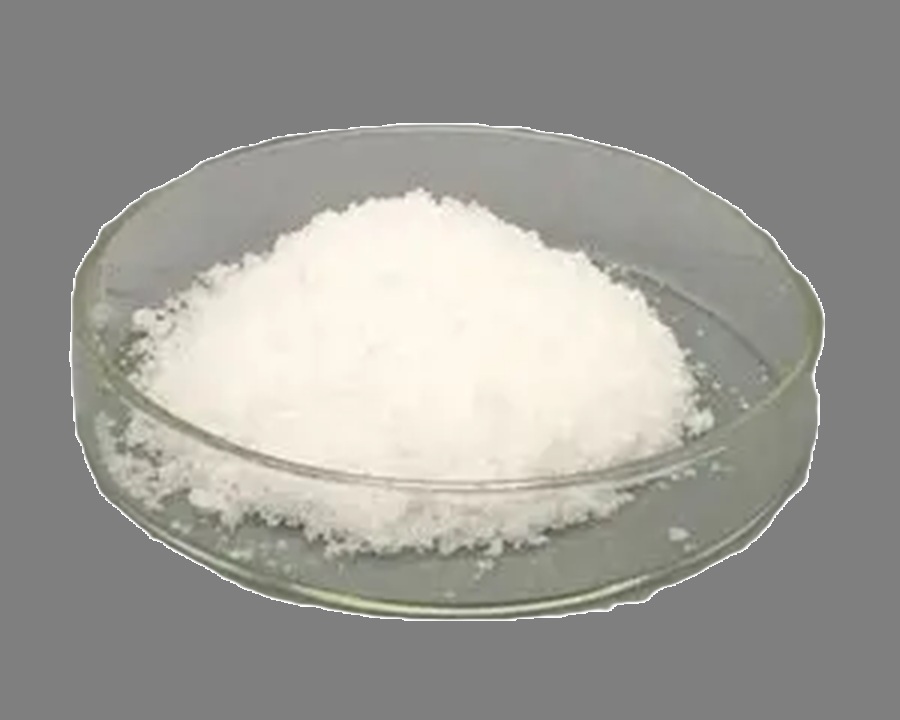
| Appearance | Light yellow-white crystalline solid |
| Odor | Odorless |
| Hygroscopic Property | Hygroscopic (moisture-absorbing) |
2. CHEMICAL STRUCTURE AND EXPLANATION
Chemical Structure and Bonding:
Ytterbium(III) Nitrate Pentahydrate is an ionic compound composed of one Ytterbium (Yb³⁺) cation and three Nitrate (NO₃⁻) anions. Ytterbium is in the +3 oxidation state (trivalent) in this compound. The molecule contains five molecules of water of crystallization. The characteristic light yellow-white color is due to the Yb³⁺ ion's f-f electronic transitions. As a heavy lanthanide (atomic number 70), ytterbium has unique spectroscopic and magnetic properties.
Molecular Formula Representation:
Yb(NO₃)₃·5H₂O
This formula indicates the following structure:
-
1 Ytterbium ion (Yb³⁺): Central metal atom.
-
3 Nitrate groups (NO₃⁻): Trigonal planar anions.
-
5 Water molecules (H₂O): Water of crystallization bound to the crystal lattice.
Crystal Structure and Ionic Arrangement:
In the crystal structure, the Yb³⁺ ion is coordinated by oxygen atoms from nitrate groups and water molecules (typically 8-9 coordinate). Nitrate ions act as bridges between ytterbium centers. The five water molecules are part of the crystal structure and impart specific thermal stability and solubility characteristics to the compound. Upon heating, these water molecules are sequentially removed (dehydration), eventually forming the anhydrous form.
Simplified Ionic Representation:
        Yb³⁺   NO₃⁻   H₂O
          \     /       /
           Yb(NO₃)₃ · 5H₂O
          /     \       \
        NO₃⁻   NO₃⁻   H₂O
(An ionic crystal lattice composed of 1 Yb³⁺ ion, 3 NO₃⁻ ions, and 5 water molecules)
Structural Properties:
| Property | Description |
|---|---|
| Bond Type | Ionic bonds and coordination bonds |
| Central Atom | Ytterbium (Yb³⁺) |
| Coordination Number | Typically 8-9 |
| Anion | Nitrate (NO₃⁻) |
| Water of Crystallization | 5 molecules (pentahydrate) |
| Crystal System | Monoclinic |
| Oxidation State (Yb) | +3 (trivalent) |
Dehydration (Loss of Water upon Heating):
Ytterbium Nitrate Pentahydrate loses water sequentially when heated:
Yb(NO₃)₃·5H₂O → Yb(NO₃)₃·xH₂O → Yb(NO₃)₃ (anhydrous)
At higher temperatures, the nitrate groups decompose to form ytterbium oxide (Yb₂O₃) and nitrogen oxides (NOx).
3. PHYSICAL AND CHEMICAL PROPERTIES
| Property | Value / Description |
|---|---|
| Molecular Formula | Yb(NO₃)₃·5H₂O |
| Molecular Weight | 449.07 g/mol |
| Appearance | Light yellow-white crystalline solid |
| Odor | Odorless |
| Density | Approximately 2.7 g/cm³ |
| Melting Point | Decomposes at approximately 60°C (dissolves in its own water of crystallization) |
| pH (Aqueous Solution) | Acidic (due to hydrolysis) |
| Solubility (Water) | High solubility in water |
| Solubility (Ethanol) | Soluble in ethanol |
| Solubility (Organic Solvents) | Soluble in polar organic solvents |
| Hygroscopic Property | Hygroscopic (moisture-absorbing) |
| Stability | Stable under normal conditions; protect from moisture and light |
| Thermal Decomposition Products | Ytterbium oxide (Yb₂O₃), nitrogen oxides (NO, NO₂), water vapor |
| Oxidizing Property | Exhibits oxidizing properties (due to nitrate ions) |
Important Physical Notes:
-
Ytterbium Nitrate appears as a light yellow-white crystalline solid due to the Yb³⁺ ion's f-f electronic transitions.
-
It is highly hygroscopic and rapidly absorbs moisture from the air, requiring special packaging and storage conditions.
-
It has a low melting point (~60°C); when heated, it dissolves in its own water of crystallization, forming a clear liquid.
-
It has high solubility in water and ethanol, making it suitable for various applications.
-
It exhibits oxidizing properties due to nitrate ions. Contact with organic materials should be avoided.
-
High purity grades (≥ 99.9%) are available in rare earth element purity.
-
Ytterbium has unique spectroscopic properties that make it valuable for laser and optical applications.
4. CHEMICAL PROPERTIES AND REACTIONS
| Property | Description |
|---|---|
| Chemical Class | Inorganic salt (rare earth metal nitrate, pentahydrate) |
| Oxidation State (Ytterbium) | +3 (trivalent) |
| Reactivity | Exhibits oxidizing properties; reacts with organic substances and reducing agents. |
| Stability | Protect from moisture and light. Decomposes upon heating. |
| Oxidizing Property | Exhibits oxidizing properties due to nitrate ions. |
| Acid-Base Properties | Forms acidic solutions in water due to hydrolysis. |
| Complex Formation | Can form complexes with various ligands (e.g., EDTA, oxalate, citrate). |
| Hydrolysis | Yb³⁺ ions hydrolyze in aqueous solutions: Yb³⁺ + H₂O ⇌ Yb(OH)²⁺ + H⁺ |
| Redox Properties | Yb³⁺ can be reduced to Yb²⁺ under certain conditions (with strong reducing agents). |
Important Reactions:
1. Thermal Decomposition:
This reaction is the primary method used for producing ytterbium oxide.
First, dehydration:
Yb(NO₃)₃·5H₂O → Yb(NO₃)₃ + 5H₂O (approximately 60-200°C)
Then, thermal decomposition:
4 Yb(NO₃)₃ → 2 Yb₂O₃ + 12 NO₂ + 3 O₂ (high temperature, >600°C)
2. Reaction with Bases (Precipitation):
Ytterbium hydroxide precipitates, which can be used as an intermediate in ytterbium oxide production.
Yb(NO₃)₃ + 3 NaOH → Yb(OH)₃ ↓ + 3 NaNO₃
3. Dissolution and Hydrolysis in Water:
Hydrolysis of ytterbium ions causes the solution to become acidic.
Yb³⁺ + H₂O ⇌ Yb(OH)²⁺ + H⁺
4. Reduction to Yb²⁺:
Yb³⁺ can be reduced to Yb²⁺ using strong reducing agents:
Yb³⁺ + e⁻ → Yb²⁺ (E° ≈ -1.05 V)
This property is important for certain optical and magnetic applications.
5. Precipitation with Oxalate:
2 Yb(NO₃)₃ + 3 (NH₄)₂C₂O₄ → Yb₂(C₂O₄)₃ ↓ + 6 NH₄NO₃
5. APPLICATIONS AND INDUSTRIAL USES
5.1. Laser and Optical Technologies (Most Important Application)
Ytterbium-doped laser materials are among the most important applications of ytterbium compounds. Yb-doped crystals (Yb:YAG, Yb:KYW, Yb:KGW) and fibers are widely used in high-power solid-state and fiber lasers.
| Application | Description |
|---|---|
| Solid-State Lasers | Yb:YAG, Yb:KYW, Yb:KGW laser crystals for high-power applications. |
| Fiber Lasers | Yb-doped fiber lasers for industrial and medical applications. |
| Ultrafast Lasers | Ytterbium-doped gain media for femtosecond and picosecond lasers. |
| Laser Amplifiers | Yb-doped amplifiers for high-energy laser systems. |
5.2. Optical Materials and Specialty Glasses
| Application | Description |
|---|---|
| Optical Glasses | Specialty glasses with unique optical properties. |
| Optical Coatings | Additive in specialty optical coatings. |
| Photonics | Photonic devices and systems. |
| Optical Fibers | Specialty optical fibers for communications and sensing. |
5.3. Catalyst Applications
| Application | Description |
|---|---|
| Oxidation Catalysts | Catalysts in various oxidation reactions. |
| Petrochemical Catalysts | Catalysts in petroleum refining and chemical synthesis. |
| Perovskite Catalysts | Precursor for the synthesis of perovskite-structured catalysts. |
| High-Temperature Catalysts | Catalysts for high-temperature processes. |
5.4. Advanced Ceramics and Materials
| Application | Description |
|---|---|
| Advanced Ceramics | Additive in the production of high-temperature and high-density ceramics. |
| Solid Oxide Fuel Cells (SOFC) | Additive in electrolyte materials. |
| Thermal Barrier Coatings | Thermal barrier coatings for high-temperature applications. |
| Dielectric Materials | Production of materials with high dielectric constant. |
5.5. Rare Earth Synthesis and Laboratory
| Application | Description |
|---|---|
| Rare Earth Chemistry | Starting material for the synthesis of other ytterbium compounds. |
| Analytical Reagent | Used in ytterbium determination and other analytical methods. |
| Materials Science | Research reagent for the development of new materials. |
| Organic Synthesis | Catalyst or reagent in organic transformations. |
5.6. Electronics
| Application | Description |
|---|---|
| Semiconductors | Production of advanced semiconductor materials. |
| Piezoelectric Materials | Specialty piezoelectric applications. |
| Magnetic Materials | Synthesis of ytterbium-based magnetic materials. |
6. SECTORAL SUITABILITY TABLE
| Sector / Application | Suitability | Description |
|---|---|---|
| Textile | No application. | No use in the textile industry. |
| Food | Prohibited. | Not permitted as a food additive or in food contact materials. |
| Cosmetics | Prohibited. | Prohibited in cosmetic formulations under CLP/REACH. |
| Metal / Surface Treatment | Suitable. | Used in rare earth alloys and coatings. |
| Ceramics / Glass | Suitable. | Used in specialty glass and advanced ceramic production. |
| Laboratory / Research | Highly suitable. | Widely used as a reagent in rare earth chemistry. |
| Electronics / Optics | Highly suitable. | Critical use in laser and optical materials research. |
| Construction Chemicals | No application. | No use in the construction sector. |
7. SAFETY AND TOXICOLOGY
| Parameter | Value / Description |
|---|---|
| GHS Classification | Oxidizer, Harmful |
| H-Statements (Hazard Statements) | H272: May intensify fire; oxidizer. H302: Harmful if swallowed. H315: Causes skin irritation. H319: Causes serious eye irritation. |
| P-Statements (Precautionary Statements) | P210: Keep away from heat/sparks/open flames. P220: Keep/Store away from clothing/combustible materials. P264: Wash hands thoroughly after handling. P280: Wear protective gloves and eye/face protection. P302+P352: IF ON SKIN: Wash with plenty of soap and water. P305+P351+P338: IF IN EYES: Rinse cautiously with water for several minutes (15 minutes). |
| Acute Toxicity (Oral) | Harmful if swallowed. |
| Skin Irritation | Irritant. |
| Eye Irritation | Causes serious eye irritation. |
| Inhalation | Dust inhalation may irritate the respiratory tract. |
| Carcinogenicity | Not classified as a carcinogen. |
| Mutagenicity | Not classified as a mutagen. |
| Reproductive Toxicity | Not classified. |
| Environmental Impact | Soluble salt; release into the environment should be prevented. Ytterbium compounds may exhibit toxic effects in aquatic environments. |
| Bioaccumulation | Not likely. |
| WGK (Germany) | 2 (water pollutant) |
Safety Precautions:
-
Keep away from heat, sparks, and open flames.
-
Store separately from combustible materials.
-
Avoid dust formation.
-
Work in well-ventilated areas.
-
Use protective gloves, safety goggles, and dust mask.
-
Wash hands thoroughly after handling.
-
In case of eye contact, rinse with plenty of water for at least 15 minutes and seek medical attention.
-
Avoid contact with organic materials.
8. STORAGE AND HANDLING
| Parameter | Information |
|---|---|
| Storage Conditions | Store in a cool, dry, well-ventilated area in the original tightly closed container. |
| Protection from Moisture | Must be strictly protected from moisture due to hygroscopic properties. |
| Temperature | Store in a cool environment (15-25°C). Avoid high temperatures. |
| Protection from Light | Protect from direct sunlight. |
| Materials to Avoid | Organic materials, reducing agents, combustible materials, moisture, acids. |
| Packaging Type | Tightly closed plastic or glass containers that prevent moisture ingress (preferably HDPE or aluminum foil bags). |
| Shelf Life | Approximately 2 years under proper storage conditions. |
| Handling Notes | Avoid dust formation. Use closed systems and local exhaust ventilation. Wear protective gloves, goggles, and dust mask. Wash hands after handling. Do not contact with organic materials. |
9. TRANSPORT AND REGULATORY INFORMATION
| Parameter | Information |
|---|---|
| UN Number | UN 1479 (Oxidizing solid, n.o.s.) or UN 1477 (Nitrate, inorganic) |
| Hazard Class | 5.1 (Oxidizing substances) |
| Packing Group | II or III (depending on concentration) |
| Proper Shipping Name | Oxidizing solid, n.o.s. (Ytterbium nitrate) |
| Marine Pollutant | No. |
| ADR/RID | Class 5.1, Oxidizer |
| IMDG Code | Class 5.1, Oxidizer |
| IATA | Class 5.1, Oxidizer |
| REACH Compliance (EU) | Registration is mandatory under REACH. |
| KKDİK Compliance (Turkey) | Registration and notification are mandatory. |
| TSCA (USA) | Listed. |
| Food/Cosmetic Approval | Not approved for food or cosmetic use. |
| Halal/Kosher Certification | Not available. |
| ISO 9001 | Production may be ISO 9001 compliant (depending on supplier). |
10. QUALITY AND PURITY
| Parameter | Description |
|---|---|
| Purity Grades | Rare earth element purity: ≥ 99.9% High purity: ≥ 99.99% Analytical grade: ≥ 99.999% |
| Application Quality | Laser grade, optical grade, catalyst grade, analytical grade. |
| Major Impurities | Other rare earth elements (particularly yttrium, erbium, thulium), other metals (iron, calcium, magnesium), moisture content. |
| Analytical Methods | ICP-MS, ICP-OES (elemental analysis), Karl Fischer (moisture determination), XRF (elemental analysis). |
| Particle Size | Crystalline or fine powder. |
11. RAW MATERIALS AND DOWNSTREAM PRODUCTS
11.1. Raw Materials (Upstream)
| Raw Material | Description |
|---|---|
| Ytterbium Oxide (Yb₂O₃) | Obtained by extraction and separation from rare earth minerals (e.g., monazite, xenotime) or as a byproduct of heavy rare earth processing. |
| Nitric Acid (HNO₃) | Used for dissolving ytterbium oxide. |
| Water (H₂O) | Used for crystallization and solution preparation. |
11.2. Downstream Products
| Downstream Product | Application |
|---|---|
| Ytterbium Oxide (Yb₂O₃) | Produced in high purity; laser, optical, and ceramic applications. |
| Yb-Doped Laser Crystals | Yb:YAG, Yb:KYW, Yb:KGW for solid-state lasers. |
| Yb-Doped Fiber | Yb-doped fiber for fiber lasers and amplifiers. |
| Ytterbium Metal | Production of high-purity ytterbium metal (for research and specialty alloys). |
| Ytterbium Salts (Chloride, Sulfate) | Synthesis of other ytterbium compounds. |
| Perovskite Catalysts | Ytterbium-containing perovskite catalysts. |
12. FIRST AID MEASURES
| Exposure Route | Action to Take |
|---|---|
| Inhalation | Move person to fresh air. If breathing is difficult, give oxygen. Seek medical attention. |
| Skin Contact | Wash with plenty of soap and water. Remove contaminated clothing. If irritation persists, seek medical attention. |
| Eye Contact | Rinse immediately with plenty of water for at least 15 minutes. Keep eyelids open. Remove contact lenses if present. Seek medical attention. |
| Ingestion | Rinse mouth with water. Drink plenty of water. Do not induce vomiting. Seek medical attention. |
13. FIREFIGHTING MEASURES
| Parameter | Information |
|---|---|
| Fire Hazard | Oxidizing substance; may intensify fire. May cause fire upon contact with combustible materials. |
| Extinguishing Media | Water spray, CO₂, dry chemical powder, alcohol foam. |
| Special Hazards | Thermal decomposition produces toxic and irritating fumes (nitrogen oxides). |
| Protective Equipment | Self-contained breathing apparatus (SCBA), full protective clothing. |
| Keep Away from Combustibles | In case of fire, remove from other combustible materials. |
14. ACCIDENTAL RELEASE MEASURES
| Parameter | Information |
|---|---|
| Personal Protection | Wear appropriate PPE (dust mask, safety goggles, protective clothing, nitrile gloves). |
| Ventilation | Increase ventilation. |
| Control | Contain to prevent dust spread. |
| Cleaning Methods | Use vacuum or carefully sweep to prevent dust generation; place in appropriate disposal container. |
| Environmental Precautions | Prevent entry into drains, sewers, and water bodies. |
| Waste Disposal | Dispose of according to local regulations. |
15. SUMMARY AND CRITICAL WARNINGS
SUMMARY:
Ytterbium(III) Nitrate Pentahydrate (Yb(NO₃)₃·5H₂O, CAS 35725-34-9) is an inorganic salt composed of one Ytterbium (Yb³⁺) and three Nitrate (NO₃⁻) ions, containing five molecules of water of crystallization. It appears as a light yellow-white crystalline solid, is highly soluble in water and ethanol, and is hygroscopic (moisture-absorbing). As a heavy lanthanide, ytterbium has unique spectroscopic properties that make it valuable for laser and optical applications.
Its most critical application is as a precursor for Yb-doped laser crystals (Yb:YAG, Yb:KYW, Yb:KGW) and fiber lasers used in industrial, medical, and scientific applications. It is also used in optical materials, catalysts, advanced ceramics, and as a laboratory reagent for rare earth chemistry research.
Under GHS classification, it is an oxidizer and harmful (H272, H302, H315, H319). Due to nitrate ions, it exhibits oxidizing properties and must be kept away from organic/reducing substances. Due to its hygroscopic nature, it must be stored in a cool, dry environment in tightly closed packaging. Appropriate Personal Protective Equipment (PPE) must be used during handling to avoid inhalation of dust and contact with skin/eyes.
Key Properties:
| Property | Value |
|---|---|
| Appearance | Light yellow-white crystalline solid |
| Chemical Formula | Yb(NO₃)₃·5H₂O |
| Molecular Weight | 449.07 g/mol |
| CAS Number | 35725-34-9 |
| EC Number | 252-223-0 |
| Density | Approximately 2.7 g/cm³ |
| Melting Point | Decomposes at approximately 60°C |
| Solubility in Water | High solubility |
| Solubility in Ethanol | Soluble |
| Hygroscopic | Yes |
| Oxidizing Property | Yes (due to nitrate ions) |
| GHS Classification | Oxidizer, Harmful (H272, H302, H315, H319) |
| Primary Use | Laser crystals, optical materials, catalysts |
CRITICAL WARNINGS:
1. Oxidizing Property: Exhibits oxidizing properties due to nitrate ions. Contact with organic materials, reducing agents, and combustible materials must be avoided. May intensify fire (H272). Therefore, it must be stored separately and away from combustible and reducing materials.
2. Hygroscopic Property and Moisture Sensitivity: Highly hygroscopic and rapidly absorbs moisture from the air. Storage and weighing operations must not be performed in humid environments. After opening, the container must be quickly resealed and storage under an inert atmosphere (nitrogen, argon) is preferred. Moisture absorption compromises weighing accuracy and stoichiometry. The light yellow-white color may change if the compound absorbs significant moisture.
3. Low Melting Point and Thermal Instability: Melts at approximately 60°C by dissolving in its own water of crystallization. This is an important property to consider during thermal processes. At higher temperatures, nitrate groups decompose, releasing toxic nitrogen oxides (NO, NO₂). Thermal processes should be conducted in well-ventilated areas or under fume hoods.
4. Hydrated Structure and Stoichiometry: Contains five molecules of water of crystallization. Different hydration states have different molecular weights. The specific hydrate form must be confirmed when ordering and using the product. Stoichiometric calculations must account for the water content.
5. Structure and Purity: High purity (≥ 99.9%) is critical for laser, optical, and catalyst applications. Even trace amounts of other rare earth elements (particularly yttrium, erbium, thulium) can significantly affect laser performance, optical properties, or catalytic activity. Purity specifications must be carefully verified for critical applications.
6. Laser Grade Requirements: For Yb-doped laser crystal and fiber production, extremely high purity is required. Impurities such as other rare earths (especially Er, Tm, Ho) and transition metals (Fe, Cu, Ni) can cause non-radiative energy transfer and reduce laser efficiency. The nitrate precursor must be completely converted to oxide without residual nitrate, which can cause scattering centers and optical losses.
7. Dust Control: The powder form can irritate the lungs if inhaled. Dust control measures must be implemented in the work area (closed systems, local exhaust ventilation) and appropriate respiratory protection (dust mask or N95/FFP2) must be used.
8. Aqueous Solution Acidity: Aqueous solutions are acidic due to hydrolysis. Appropriate protective equipment should be used when working with acidic solutions, and base solutions should be available for neutralization.
9. Environmental Precautions: As a water-soluble salt, release into the environment (particularly water sources) must be prevented. Ytterbium compounds may exhibit toxic effects in aquatic environments. Waste solutions must not be discharged into sewers and must be disposed of according to local regulations.
10. Regulatory Compliance: Registration and notification requirements under REACH and KKDİK must be observed. It is classified as Class 5.1 (Oxidizing substance) under ADR/IMDG/IATA, requiring special labeling and documentation during transport. Use in food, cosmetics, and textile sectors is strictly prohibited.
11. Special Warning for Laser Applications: For Yb-doped laser materials, the purity and homogeneity of ytterbium compounds are essential. Even small variations in composition or impurity levels can affect laser performance, efficiency, thermal properties, and emission wavelength. The nitrate-to-oxide conversion process must be carefully controlled to achieve high-quality crystals and fibers.
12. Special Warning for Yb²⁺/Yb³⁺ Redox: Ytterbium can exist in both Yb³⁺ and Yb²⁺ oxidation states. The desired oxidation state depends on the application. For most laser applications, Yb³⁺ is used. Care must be taken during processing to maintain the desired oxidation state. Strong reducing conditions can convert Yb³⁺ to Yb²⁺, altering optical properties.
13. Critical Raw Material Status: Ytterbium is a heavy rare earth element with limited availability and relatively high cost. Efficient use, recovery, and recycling of ytterbium-containing materials from waste lasers, optical components, and other sources should be considered to ensure sustainable supply. The nitrate form is particularly useful for solution-based processing and recovery methods.
14. Storage Warning: Due to the high cost and critical nature of ytterbium compounds, special attention should be paid to proper storage and inventory management. Minimize exposure to air and moisture to prevent degradation and loss of product. Color changes or efflorescence may indicate product degradation.
Disclaimer: This Technical Data Sheet (TDS) is for informational purposes only. The information provided is based on available data and is believed to be accurate. However, the user is solely responsible for determining the suitability of the product for their specific applications and for complying with all applicable regulations and safety requirements. For complete safety, handling, storage, and regulatory compliance information, always refer to the official Safety Data Sheet (SDS/MSDS) provided by the manufacturer/supplier. Users are responsible for testing the product in their own processes and applications. All local, national, and international regulations must be followed when working with Ytterbium(III) Nitrate Pentahydrate.