We unleash your business potential by maximize the business innovation.
Send EmailSingle Jersey, Interlock, Punto Di Roma, Rib, Cardigan, Pique, Two-Thread Fleece, Three-Thread Fleece, Denier, Selanik, Polar Fleece
Knitted Fabric Types
What is Single Jersey (Süprem) Fabric?
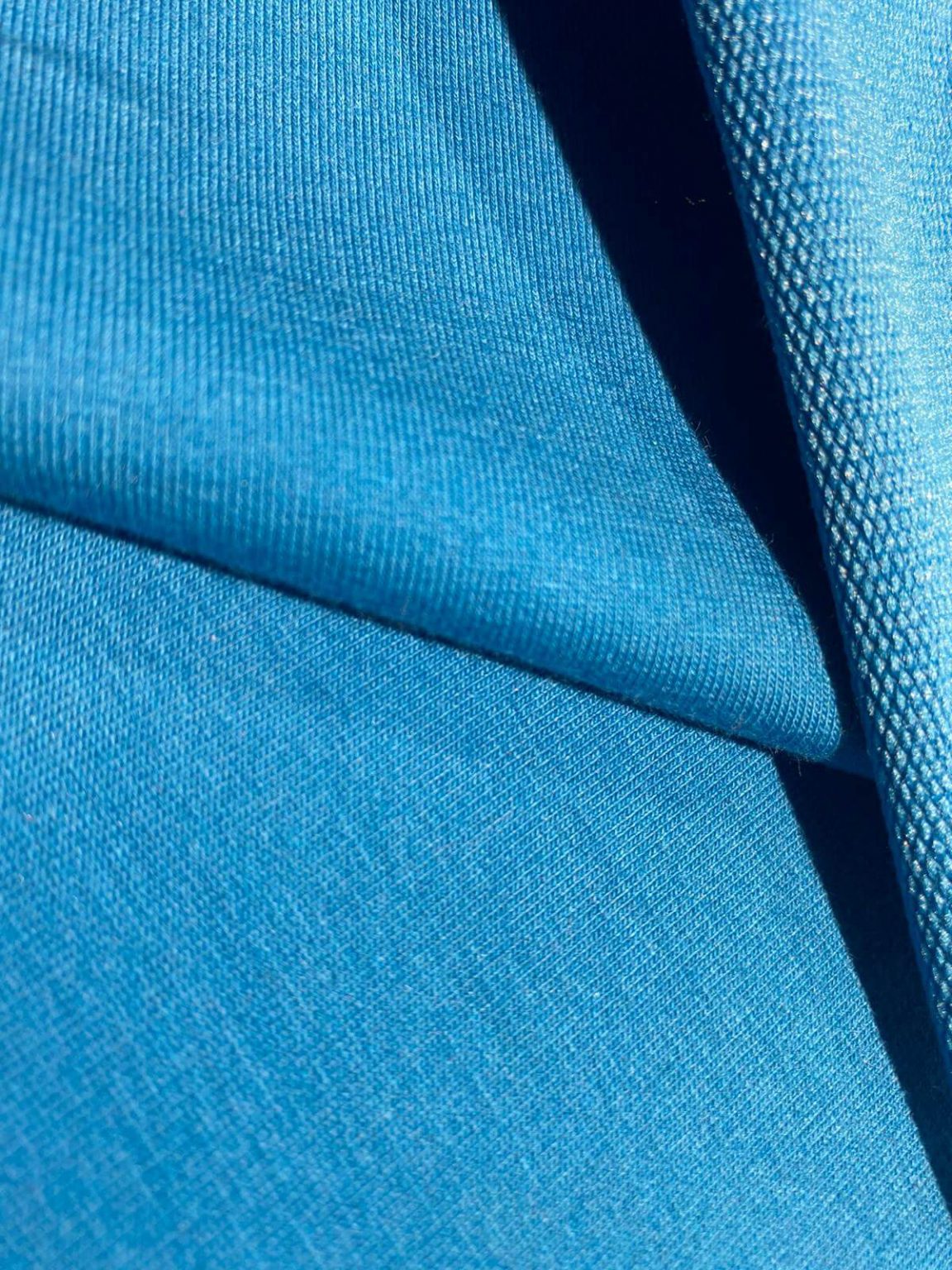
Single jersey fabric is a type of knitted fabric produced on single-bed circular knitting machines using cotton or cotton-heavy yarns with a plain knit technique. It is commonly used in the production of t-shirts, sleeveless undershirts, vests, and underwear.
Technical Characteristics
-
Surface structure: The front side has a smooth, plain knit appearance, while the back side shows purl loops.
-
Weight: Typically produced in the range of 100–130 g/m².
-
Width: Wider compared to rib and interlock fabrics.
-
Stretch: Stretches both in width and length directions.
-
Wrinkle resistance: Resistant to wrinkling and easy to iron.
-
Cutting behavior: Edges tend to curl when cut.
-
Production technique: Produced using plain (RL) knit technique.
-
Twisting risk: Risk of fabric twisting (skewing) due to unbalanced loop structure.
-
Sewing sensitivity: May tear if not sewn with fine-point needles.
Yarn and Blend Based Single Jersey Varieties
The following single jersey fabric types are produced with different yarn types and blends, using yarn counts (Ne) ranging from 10/1 to 60/1:
-
Plain Single Jersey
-
Open-End Grindle Plain Single Jersey
-
Open-End Grindle Lycra Single Jersey
-
Lycra Single Jersey
-
Combed Plain Single Jersey
-
Ring Grindle Plain Single Jersey
-
Ring Grindle Lycra Single Jersey
-
Combed Lycra Single Jersey
-
Cotton Polyester Full Lycra Single Jersey
-
Open-End Single Jersey
-
Carded Single Jersey
Variations and Special Types
-
Lycra Single Jersey: High stretchability, preferred for underwear and activewear.
-
Jacquard Single Jersey: Patterned using weft knitting and different knitting techniques.
-
Metallic Single Jersey: Produced with metallic yarns for visual effects.
-
Ring/Boucle Single Jersey: Variations with differentiated surface texture.
-
Medical and Sportswear Use: Used for summer outerwear and medical textiles.
Application Areas
-
T-shirts
-
Underwear
-
Baby clothing
-
Vests, sleeveless undershirts
-
Medical garments
-
Sportswear outerwear
Interlock Fabric
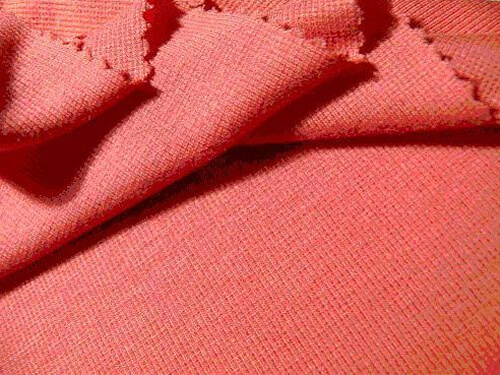
Interlock fabric is produced on double-bed circular knitting machines. It has a double-layered structure, the same appearance on both front and back sides, and a tight, firm texture.
Technical Characteristics
-
Surface appearance: Front and back sides are identical.
-
Texture: Tight and firm.
-
Stretch: Stretches only in the horizontal direction.
-
Shape retention: Excellent shape retention.
-
Air gap: An air gap exists between front and back layers, providing insulation.
-
Applications: Used in medical garments, sportswear, baby clothing, blouses, sweatpants.
-
Difference from rib fabric: When stretched widthwise, loops interlock with each other – this distinguishes interlock from rib.
Interlock with Float Stitch (Punto Di Roma)
Punto di Roma is a fabric type based on interlock but with a different knitting technique, also known as "çelikli interlok" in Turkish.
Technical Characteristics
-
Surface appearance: Front and back sides are identical.
-
Knitting technique: Knitted using a combination of knit and float (skip) stitches.
-
Moisture management: High moisture absorption and wicking ability.
-
Run risk: Loops may run (ladder) when stretched.
-
Pattern and surface variety: Limited pattern and surface variations.
-
Variations: Available in PES (polyester), ring-spun, yarn-dyed, etc.
Rib Fabric
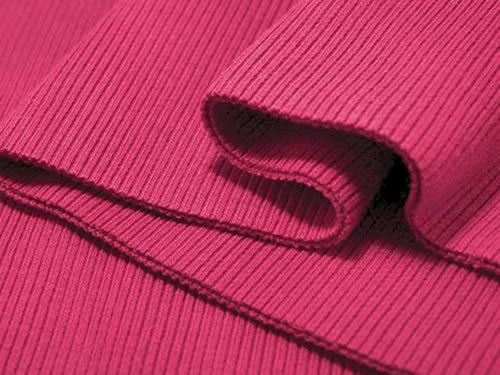
Rib fabric is produced on double-bed circular knitting machines. It has a ribbed, elastic appearance and is known for its high widthwise stretchability.
Technical Characteristics
-
Surface appearance: Front and back sides are similar, typically showing vertical stripes.
-
Widthwise stretch: Very high.
-
Lengthwise stretch: Some lengthwise stretch exists.
-
Thermal balance: Helps regulate body temperature and traps air for insulation.
-
Cutting behavior: Edges do not curl when cut.
-
Needle test: Knit structure can be verified with a needle test due to the RL loop structure.
-
Applications: Used in collars, cuffs, bodysuits, etc.
-
Lycra addition: Stretch can be further enhanced with Lycra.
Cardigan (Kaşkorse) Fabric
Cardigan fabric is similar to rib fabric in structure, with vertical stripes. It is knitted with a three-needle configuration and is mainly used in women’s wear and underwear.
Technical Characteristics
-
Surface appearance: Both front and back are striped and similar to each other.
-
Stretch: Stretches both widthwise and lengthwise.
-
Knit structure: Similar to rib but with a different needle arrangement.
-
Applications: Women’s clothing, nightgowns, belts, sweaters, underwear.
-
Flame resistance: High resistance to burning.
-
Finish varieties: Available in shiny and matte versions.
-
Dirt resistance: Does not hold dirt easily.
-
Shape retention: Shape is not easily distorted.
-
Print suitability: Suitable for patterns and prints.
-
Variations: Microfiber blends are available.
Pique (Lacoste) Fabric
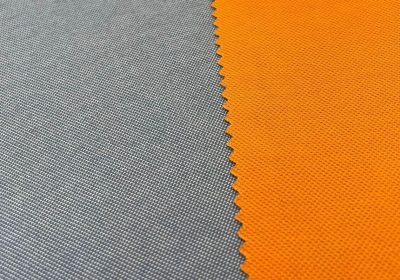
Pique fabric is known for its honeycomb-like back surface and smooth front surface, especially used in polo shirts.
Technical Characteristics
-
Applications: Polo shirts, sweatpants, dresses.
-
Surface structure: Back surface has a honeycomb appearance; front surface is smooth.
-
Production variants: Can be produced with single, double, or triple yarn systems.
-
Ease of sewing: Easy to sew; has a crisp, slightly stiff hand feel.
-
Other applications: Used in home textiles and formal wear.
-
Expansion behavior: Tends to relax and expand, allowing body conformity.
Two-Thread Fleece (Two Thread Fleece)
Two-thread fleece is a fabric type used mainly in sweatshirts and tracksuits, knitted with two different yarns: a ground yarn and a backing yarn.
Technical Characteristics
-
Applications: Sweatshirts, hoodies, tracksuits.
-
Production machine: Produced on single-bed circular knitting machines (plain/RL).
-
Yarn combination: Uses two distinct yarns – ground and backing.
-
Surface difference: Front and back surfaces are different.
-
Brushed finish: Available in brushed (napped) and unbrushed versions.
-
Variations: Lycra, grindle, printed, denier yarn, cotton-polyester blends.
Three-Thread Fleece (Three Ply Fleece)
Three-thread fleece is a heavy, thick fabric used in bulky sportswear, knitted with three separate yarns: ground, surface, and binding yarns.
Technical Characteristics
-
Applications: Heavy tracksuits, sportswear, tablecloths.
-
Yarn structure: Three different yarns – ground, surface, and binding.
-
Production technique: Knitted on plain (RL) machines using a combination of knit, tuck, and float stitches.
-
Wrinkle resistance: Does not wrinkle.
-
Tear resistance: Not easily torn.
-
Shape retention: Holds its shape well.
-
Variations: Brushed, printed, batik, ring-spun, polyester blends.
-
Yarn combination ratios: Examples: 30/70/10 or 30/90/30 (ground/backing/binding ratios).
Denier Fabric
Denier fabric is classified by fiber fineness and is generally used in technical textiles and accessories.
Technical Characteristics
-
Applications: Backpacks, technical textiles.
-
Fiber fineness: Produced in a range from 50 denier to 600 denier. Lower denier means finer yarn, higher denier means thicker yarn.
-
Abrasion resistance: Very high resistance to abrasion.
-
Thickness adjustment: Yarn fineness can be adjusted according to the required thickness and durability of the final product.
Selanik (Thessaloniki) Fabric
Selanik fabric is knitted on double-bed machines, with a rib-like front surface and an interlock-like back surface. It is used in sweatshirts and sweaters.
Technical Characteristics
-
Applications: Sweatshirts, sweaters, cardigans, jackets.
-
Production machine: Double-bed circular knitting machines.
-
Surface structure: Front has a rib (vertical stripe) appearance; back is smooth like interlock.
-
Variations: Two main variants – full Selanik and half Selanik.
-
Thermal behavior: Shows relaxation under high heat, improving shapeability and stretch.
-
User range: Used for both baby and adult outerwear.
Polar Fleece Fabric
Polar fleece is a fabric whose knit structure is not visible; its surface is mechanically or chemically softened to create a plush-like texture. It is commonly used as a lining or mid-layer.
Technical Characteristics
-
Applications: Baby clothing, lining for coats and jackets.
-
Surface characteristics: Knit structure is not visible; the surface is napped and softened.
-
Thermal insulation: Very high heat retention.
-
Tactile feel: Soft, plush-like texture that feels comfortable against the skin.