We unleash your business potential by maximize the business innovation.
Send EmailLanthanum Chloride Hexahydrate, 17272-45-6
LANTHANUM CHLORIDE HEXAHYDRATE (LACL₃·6H₂O)
LANTHANUM CHLORIDE HEXAHYDRATE / LANTHANUM(III) CHLORIDE HEXAHYDRATE
1. PRODUCT IDENTIFICATION AND CHEMICAL IDENTITY
| Parameter | Information |
|---|---|
| Product Name | Lanthanum Chloride Hexahydrate |
| Chemical Name | Lanthanum(III) Chloride Hexahydrate |
| Other Names | Lanthanum Salt, LaCl₃·6H₂O |
| CAS Number | 17272-45-6 |
| EC Number (EINECS) | 233-237-5 (anhydrous form) |
| Chemical Formula | LaCl₃·6H₂O |
| Molecular Weight | 371.37 g/mol |
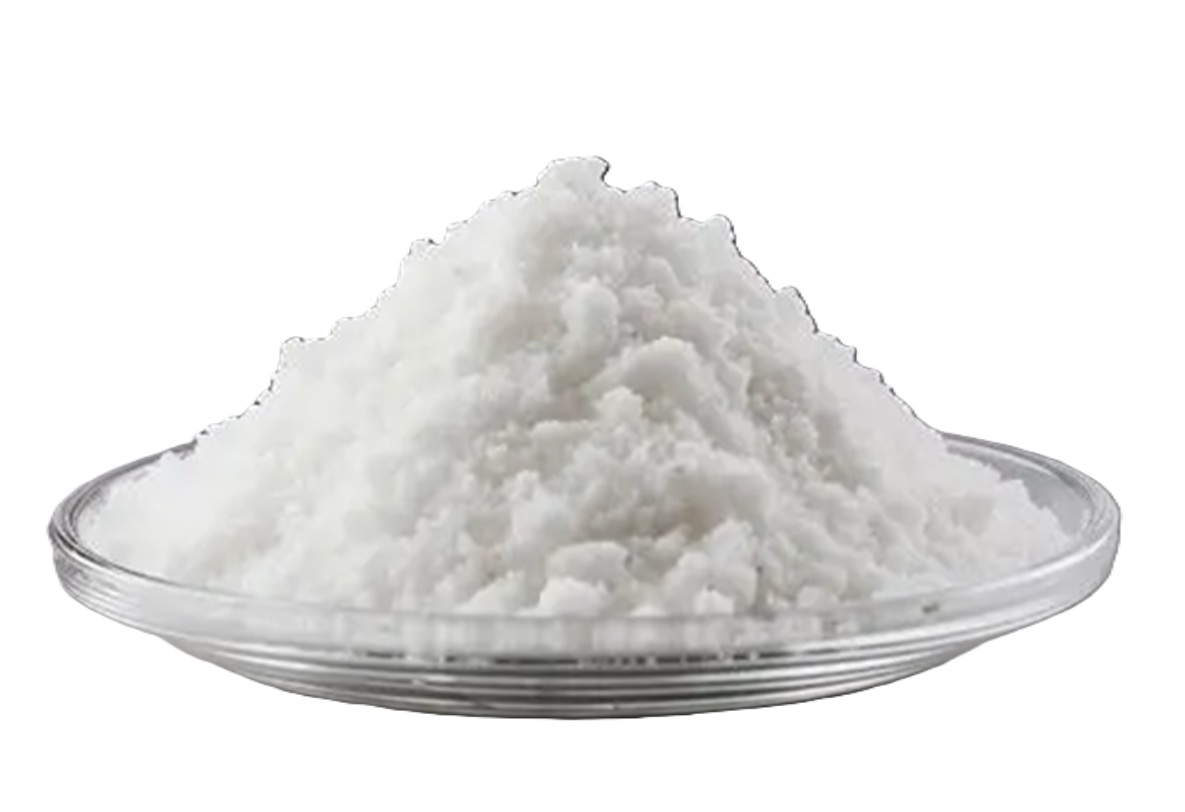
| Appearance | White crystalline powder |
| Odor | Odorless |
| Physical State (20°C) | Solid (crystalline powder) |
2. CHEMICAL STRUCTURE
2.1. Molecular Structure
Lanthanum chloride hexahydrate is the hydrated form of the chloride salt of the rare earth element lanthanum. Lanthanum ions (La³⁺) and chloride ions (Cl⁻) are present in a 1:3 ratio. Each lanthanum chloride unit contains six molecules of water of hydration. It is soluble in water and ethanol. Due to its hygroscopic nature, it is sensitive to degradation in humid environments.
Structural Features:
                    LANTHANUM CHLORIDE HEXAHYDRATE [LaCl₃·6H₂O]
                          |
                La³⁺ - Cl⁻ Ionic Bonds + 6H₂O
                          |
        +----------------+----------------+
        |                |                |
    White Crystalline  Soluble in        Highly
    Powder             Water and         Hygroscopic
                       Ethanol
2.2. Structural Properties
| Parameter | Value |
|---|---|
| Crystal Structure | Monoclinic |
| Chemical Formula | LaCl₃·6H₂O |
| Molecular Weight | 371.37 g/mol |
| Density | ~2.40 g/mL (25 °C) |
| Appearance | White crystalline powder |
| Melting Point | ~860 °C (anhydrous form) |
| pH (1M solution) | Slightly acidic (~5.0-6.0) |
3. PHYSICAL AND CHEMICAL PROPERTIES
| Property | Value | Description |
|---|---|---|
| Appearance | White crystalline powder | - |
| Odor | Odorless | - |
| Chemical Formula | LaCl₃·6H₂O | - |
| Molecular Weight | 371.37 g/mol | - |
| Density | ~2.40 g/mL (25 °C) | - |
| Melting Point | ~860 °C | Anhydrous form |
| Solubility in Water (25°C) | Soluble | - |
| Solubility in Ethanol | Soluble | - |
| Solubility in Acids | Soluble | - |
| pH (1M solution) | Slightly acidic (~5.0-6.0) | - |
| Stability | Hygroscopic | Must be stored in moisture-free conditions |
| Hygroscopicity | High | Absorbs moisture from air |
4. PURITY GRADES
| Parameter | Technical Grade | High Purity Grade | Analytical Grade |
|---|---|---|---|
| Purity (LaCl₃·6H₂O) | ≥ 99.0% | ≥ 99.5% | ≥ 99.9% |
| Lanthanum (La) Content | ≥ 37.0% | ≥ 37.5% | ≥ 37.8% |
| Other Rare Earths | ≤ 1.0% | ≤ 0.5% | ≤ 0.1% |
| Iron (Fe) | ≤ 100 ppm | ≤ 50 ppm | ≤ 20 ppm |
| Calcium (Ca) | ≤ 100 ppm | ≤ 50 ppm | ≤ 20 ppm |
| Sodium (Na) | ≤ 100 ppm | ≤ 50 ppm | ≤ 20 ppm |
| Lead (Pb) | ≤ 50 ppm | ≤ 20 ppm | ≤ 10 ppm |
| Sulfate (SO₄²⁻) | ≤ 0.2% | ≤ 0.1% | ≤ 0.05% |
| Nitrate (NO₃⁻) | ≤ 0.2% | ≤ 0.1% | ≤ 0.05% |
| Loss on Drying | Variable | Variable | Variable |
| Particle Size (D50) | 10-50 µm | 5-20 µm | 1-10 µm |
5. STABILITY AND REACTIVITY
| Parameter | Information |
|---|---|
| Chemical Stability | Hygroscopic; stable under dry, closed conditions. |
| Conditions to Avoid | High humidity, exposure to open atmosphere, prolonged air contact, high temperatures. |
| Incompatible Materials | Strong oxidizing agents, strong acids, alkali metals. |
| Hazardous Decomposition Products | At high temperatures: hydrogen chloride (HCl) and lanthanum oxychloride (LaOCl). |
| Hazardous Polymerization | Will not occur. |
| Hygroscopicity | High; when exposed to air, it absorbs moisture and tends to deliquesce (become liquid). |
5.1. Chemical Reactions
-
Thermal Decomposition (Hydrated Form):
LaCl₃·6H₂O → LaCl₃ + 6H₂O (~100-200°C)
LaCl₃ + H₂O → LaOCl + 2HCl (hydrolysis at high temperature) -
Behavior in Aqueous Solution:
LaCl₃(aq) → La³⁺(aq) + 3Cl⁻(aq) -
Precipitation with Alkali:
LaCl₃ + 3NaOH → La(OH)₃↓ + 3NaCl
6. APPLICATION AREAS
6.1. Catalyst Applications
| Application | Function | Details |
|---|---|---|
| Lewis Acid Catalyst | Catalytic activity | Acid catalyst in organic syntheses |
| Polymerization Catalyst | Polymerization initiator | Some polymerization reactions |
| Organic Synthesis | Catalyst | Various organic transformations |
6.2. Materials Science
| Application | Function | Details |
|---|---|---|
| Lanthanum Oxide (La₂O₃) Production | Precursor | High purity lanthanum oxide production |
| Lanthanum-Based Compounds | Synthesis precursor | Production of other lanthanum compounds |
| Nanomaterial Synthesis | Starting material | Lanthanum-based nanoparticles |
6.3. Electronics and Optics
| Application | Function | Details |
|---|---|---|
| Phosphor Production | Additive | Special phosphor formulations |
| Optical Glass | Rare earth additive | High refractive index glasses |
| Ceramic Materials | Additive | Advanced ceramics |
| Semiconductor Materials | Dopant | Electronic applications |
6.4. Water Treatment
| Application | Function | Details |
|---|---|---|
| Phosphate Remover | Phosphate binding | Special water treatment applications |
| Wastewater Treatment | Pollutant removal | Industrial wastewater |
6.5. Research
| Application | Function | Details |
|---|---|---|
| Rare Earth Chemistry | Reagent and analysis | Rare earth chemistry research |
| Coordination Complexes | Starting material | Coordination chemistry studies |
| Standard Preparation | Reference material | Calibration and analysis studies |
6.6. Sectoral Suitability Table
| Sector | Suitability | Explanation |
|---|---|---|
| Catalyst | Suitable | Lewis acid, organic synthesis |
| Research | Suitable | Rare earth chemistry, coordination complexes |
| Electronics | Suitable | Phosphors, optical glass, ceramics |
| Materials Science | Suitable | La₂O₃ production, nanomaterial synthesis |
| Water Treatment | Suitable | Phosphate remover |
| Textile | Not Suitable | Not suitable |
| Food | Not Suitable | Not suitable |
| Pharmaceutical | Limited | Indirect applications (precursor) |
7. PRODUCTION PROCESS
| Stage | Process | Description |
|---|---|---|
| 1. Raw Material Preparation | Lanthanum oxide (La₂O₃) | High purity lanthanum oxide obtained |
| 2. Acid Dissolution | Dissolution in hydrochloric acid (HCl) | La₂O₃ + 6HCl → 2LaCl₃ + 3H₂O |
| 3. Filtration | Removal of impurities | Insoluble impurities are filtered out |
| 4. Concentration | Evaporation | Solution is concentrated |
| 5. Crystallization | Hydrated form | LaCl₃·6H₂O crystallized |
| 6. Drying | Controlled conditions | Crystals dried under appropriate conditions |
| 7. Packaging | Moisture-proof packaging | Packaged in moisture-proof containers due to hygroscopic nature |
7.1. Major Producing Countries
| Country | Description |
|---|---|
| China | Major producer |
| USA | Rare earth production |
| Germany | High purity production (Sigma-Aldrich, Alfa Aesar) |
| Japan | High purity production |
8. ALTERNATIVE / SUBSTITUTE PRODUCTS
| Alternative | Description | When to Use |
|---|---|---|
| Lanthanum Nitrate Hexahydrate | Lanthanum source | When different anion is required |
| Lanthanum Oxide (La₂O₃) | Lanthanum source | When oxide form is required |
| Cerium Chloride (CeCl₃) | Similar chemical properties | When Ce is required |
| Neodymium Chloride (NdCl₃) | Similar chemical properties | When Nd is required |
| Lanthanum Acetate | Organic synthesis | When organic solvent compatibility is required |
9. SAFETY AND TOXICOLOGY
| Parameter | Value |
|---|---|
| Acute Oral Toxicity (LD50, Rat) | > 2,000 mg/kg (low toxicity) |
| Dermal Toxicity | Low |
| Skin Irritation | Mild to moderate irritant |
| Eye Irritation | Serious irritant |
| Inhalation | Dust inhalation may cause respiratory tract irritation. |
| Carcinogenicity | Not classified as carcinogenic. |
| Mutagenicity | Not mutagenic. |
| Chronic Effects | Rare earth compounds have low bioavailability; however, high doses may cause liver effects. |
| Environmental Hazards | Moderate aquatic toxicity; caution required due to chloride ion content. |
9.1. GHS Classification
| Hazard Class | Category | H-Statement |
|---|---|---|
| Acute Toxicity | Category 4 | H302: Harmful if swallowed. |
| Skin Irritation | Category 2 | H315: Causes skin irritation. |
| Eye Irritation | Category 2A | H319: Causes serious eye irritation. |
| Specific Target Organ Toxicity | Category 3 | H335: May cause respiratory irritation. |
Signal Word: WARNING
Hazard Pictograms: GHS07 (Exclamation Mark)
10. PRECAUTIONARY STATEMENTS (P-CODES)
| Code | Statement |
|---|---|
| P261 | Avoid breathing dust. |
| P264 | Wash thoroughly after handling. |
| P270 | Do not eat, drink or smoke when using this product. |
| P271 | Use only in well-ventilated areas. |
| P280 | Wear protective gloves/eye protection/face protection. |
| P301+P312 | IF SWALLOWED: Call a POISON CENTER or doctor if you feel unwell. |
| P302+P352 | IF ON SKIN: Wash with plenty of soap and water. |
| P304+P340 | IF INHALED: Remove person to fresh air and keep comfortable for breathing. |
| P305+P351+P338 | IF IN EYES: Rinse cautiously with water for several minutes. Remove contact lenses if present and easy to do. |
| P337+P313 | If eye irritation persists: Get medical advice/attention. |
| P501 | Dispose of contents/container in accordance with local regulations. |
11. FIRST AID MEASURES
| Exposure Route | Action to Take |
|---|---|
| Inhalation | Remove to fresh air. If symptoms persist, seek medical attention. |
| Skin Contact | Wash with plenty of soap and water. Remove contaminated clothing. If irritation persists, seek medical attention. |
| Eye Contact | Rinse thoroughly with plenty of water for at least 15 minutes. Remove contact lenses. If irritation persists, seek medical attention. |
| Ingestion | Rinse mouth. Drink plenty of water. If large amount is swallowed, seek medical attention. |
12. STORAGE AND SHELF LIFE
| Parameter | Condition |
|---|---|
| Storage Conditions | Store in a cool, dry, and well-ventilated area. Ensure a moisture-free environment. |
| Container Requirements | Moisture-proof, tightly closed containers. Vacuum-sealed or inert gas (N₂, Ar) packaging is recommended. |
| Temperature | Room temperature (15-25°C). |
| Shelf Life | 12-18 months under appropriate conditions (due to hygroscopic nature). |
| Stability Note | Highly hygroscopic; rapidly degrades in humid environments. If left open, La(OH)₃ and La₂(CO₃)₃ may form. |
13. PACKAGING OPTIONS
| Packaging Type | Quantity | Material |
|---|---|---|
| Laboratory Packaging | 25 g, 100 g | HDPE bottle, PTFE-lined cap, inert atmosphere |
| Laboratory Packaging | 500 g, 1 kg | HDPE bottle, moisture-proof |
| Industrial Packaging | 25 kg | PE-lined bag, moisture-proof |
| Drum | 25 kg, 50 kg | HDPE drum, moisture-proof |
14. TRANSPORT INFORMATION
| Parameter | Information |
|---|---|
| UN Number | Not classified (specific regulations apply for rare earth compounds) |
| Hazard Class | - |
| Packing Group | - |
| ADR/RID | Not regulated |
| IMDG | Not regulated |
| IATA | Not regulated |
| HS Code | 2846.90.00.00.19 (Other rare earth compounds) |
15. REGULATORY STATUS
| Region / Authority | Status |
|---|---|
| European Union (REACH) | Registered |
| Turkey (KKDIK) | Compliance required |
| TSCA (USA) | Registered |
| FDA/EFSA | Not suitable for food |
| ISO 9001:2015 | Production compliance |
| TS EN 14001 | Environmental management system compliance |
16. OTHER NAMES AND SYNONYMS
| Name | Description |
|---|---|
| Lanthanum Salt | Common name |
| Lanthanum Trichloride Hexahydrate | Chemical name |
| Lanthanum(III) Chloride Hexahydrate | Chemical name |
| LaCl₃·6H₂O | Chemical abbreviation |
| Lanthanum Chloride Hexahydrate | English name |
| Lanthanum Trichloride Hexahydrate | Alternative chemical name |
17. QUICK REFERENCE TABLE
| Property | Value |
|---|---|
| CAS Number | 17272-45-6 |
| EC Number | 233-237-5 |
| Chemical Formula | LaCl₃·6H₂O |
| Molecular Weight | 371.37 g/mol |
| Appearance | White crystalline powder |
| Density | ~2.40 g/mL |
| Melting Point | ~860 °C (anhydrous form) |
| Solubility in Water | Soluble |
| HS Code | 2846.90.00.00.19 |
| GHS Signal Word | WARNING |
18. CRITICAL WARNINGS AND BEST PRACTICES
CRITICAL WARNINGS:
-
Highly Hygroscopic Nature: Lanthanum chloride hexahydrate has a very high moisture absorption capacity. When exposed to air, it rapidly absorbs moisture, begins to dissolve, and loses its quality. Extreme care must be taken to avoid moisture during storage and handling.
-
Thermal Decomposition: Above ~200°C, water loss begins; at higher temperatures, toxic hydrogen chloride (HCl) gas is released. Ventilation is essential.
-
Incompatibility: Contact with strong oxidizing agents creates a fire and explosion risk.
-
Eye and Skin Irritation: Due to its acidic nature, it causes irritation to skin and eyes. Protective equipment is mandatory during use.
-
FDA/EFSA Status: Not suitable for direct food applications.
BEST PRACTICE RECOMMENDATIONS:
-
Storage:
-
Store in a cool, dry, and well-ventilated area.
-
Use moisture-proof, vacuum-sealed, or inert gas (N₂ or Ar) filled containers.
-
Keep away from oxidizing agents.
-
Store at room temperature (15-25°C).
-
-
Handling:
-
Immediately close containers tightly when not in use.
-
Ensure a dry working environment during use (humidity control).
-
Use a dust mask (N95 or better), protective goggles, and chemically resistant gloves.
-
Avoid dust formation and inhalation.
-
Wash hands thoroughly after handling.
-
When preparing solutions, add slowly due to acidic character.
-
-
Waste Management:
-
Dispose of in accordance with local regulations as heavy metal waste.
-
Do not discharge into water sources or sewers.
-
For large quantities, rare earth recovery should be considered.
-
LEGAL DISCLAIMER
This Technical Data Sheet (TDS) is for informational purposes only and has been prepared based on available technical data. The user is solely responsible for determining the suitability of the product for their specific applications and for complying with all local, national, and international regulations. For complete safety, storage, handling, transport, disposal, and regulatory compliance information, the official Safety Data Sheet (SDS/MSDS) provided by the manufacturer/supplier must be consulted. This document does not substitute professional advice. Lanthanum chloride hexahydrate requires careful handling and storage due to its highly hygroscopic nature; it is an important raw material for catalysts, optical materials, and water treatment applications.