We unleash your business potential by maximize the business innovation.
Send EmailPropyl Alcohol, Propanol, n-Propyl Alcohol, 71-23-8
1-Propanol (n-Propyl Alcohol)
1. Product Identity
| Property | Details |
|---|---|
| Product Name | 1-Propanol / n-Propyl Alcohol / Propyl Alcohol |
| CAS Number | 71-23-8 |
| EINECS Number | 200-746-9 |
| Molecular Formula | C₃H₈O |
| Molecular Weight | 60.1 g/mol |
| MDL Number | MFCD00002941 |
| BRN | 1098242 |
| Merck Index | 14,7842 |
| JECFA Number | 82 |
| FEMA Number | 2928 |
| HS Code | 29051200 |
| UN Number | UN 1274 |
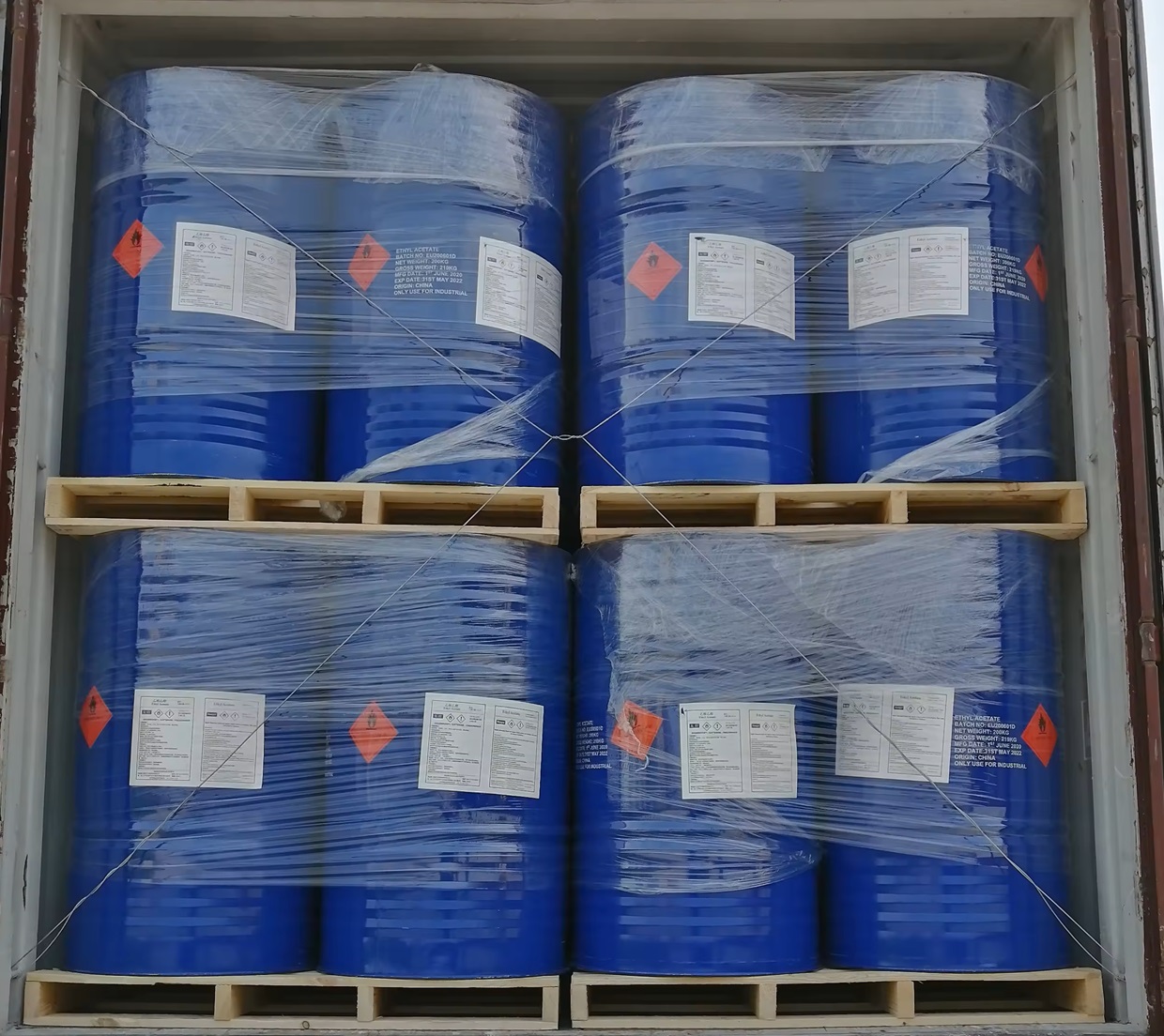
| Hazard Class | 3 (Flammable liquid) |
| Packing Group | II |
| RTECS | UH8225000 |
| WGK Germany | 1 |
| FLUKA F Codes | 10-23 |
| TSCA Status | Yes (Listed) |
2. Synonyms and Other Names
| Name | Context |
|---|---|
| 1-Propanol | IUPAC name |
| n-Propanol | Normal propanol |
| Propyl Alcohol | Common name |
| n-Propyl Alcohol | Normal propyl alcohol |
| Propan-1-ol | Systematic name |
| Ethyl carbinol | Alternative name |
| Natural Propyl Alcohol | Natural source designation |
| n-C₃H₇OH | Chemical notation |
| Alcool propilico | Italian |
| Alcool propylique | French |
3. Physical and Chemical Properties
| Property | Value |
|---|---|
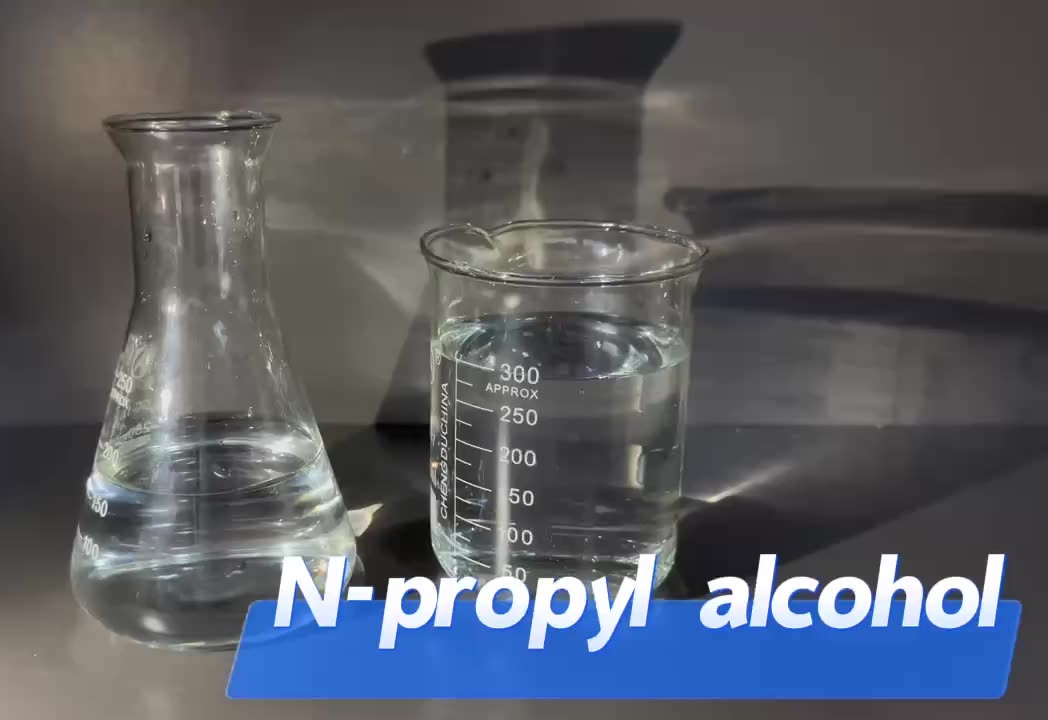
| Appearance | Colorless clear liquid |
| Color (APHA) | < 10 |
| Odor | Characteristic odor resembling ethyl alcohol |
| Density (25°C) | 0.804 g/mL |
| Melting Point | -127 °C |
| Boiling Point | 97 °C |
| Flash Point | 59°F (15°C) |
| Refractive Index (n20/D) | 1.384 |
| pH (200 g/L, 20°C) | 7 (neutral) |
| pKa | >14 |
| Vapor Pressure | 10 mm Hg (at 147°C) |
| Vapor Density | 2.1 (vs air) |
| Explosive Limit | 2.1 – 19.2% (by volume) |
| Stability | Stable, may form peroxides in air, highly flammable |
| Relative Polarity | 0.617 |
| Odor Threshold | 0.094 ppm |
| Henry's Law Constant | 6.75 |
4. Solubility Information
| Solvent | Solubility / Details |
|---|---|
| Water | Soluble (miscible in all proportions) |
| Ethanol | Miscible in all proportions |
| Ether | Miscible in all proportions |
| Hydrocarbons | Miscible in all proportions |
| Other Organic Solvents | Miscible in all proportions |
5. Spectroscopic Properties
| Wavelength | Maximum Absorbance (Amax) |
|---|---|
| λ: 220 nm | ≤ 0.40 |
| λ: 240 nm | ≤ 0.071 |
| λ: 275 nm | ≤ 0.0044 |
6. Exposure Limits
| Organization | Limit |
|---|---|
| NIOSH (TLV-TWA) | 200 ppm (500 mg/m³) |
| STEL (Short-Term Exposure Limit) | 250 ppm (625 mg/m³) |
| IDLH (Immediately Dangerous to Life/Health) | 4000 ppm |
| Occupational Standard (TWA) | 490 mg/m³ |
7. Toxicology Data
| Parameter | Value |
|---|---|
| Oral LD50 (Rat) | 1.87 g/kg (1870 mg/kg) |
| Oral LD50 (Mouse) | 6800 mg/kg |
| Eye Irritation (Rabbit) | Moderate (20 mg/24 h) |
| ADI (Acceptable Daily Intake) | Not specified (FAO/WHO, 2001) |
8. Product Description
1-Propanol (n-propyl alcohol) is a primary alcohol with three carbon atoms. It is a colorless clear liquid with an odor similar to ethyl alcohol. It is found in small amounts in fusel oil. Its chemical properties are similar to other low molecular weight aliphatic primary alcohols.
Key Characteristics:
-
Ethanol-like odor
-
Miscible with water, alcohol, ether, and hydrocarbons
-
Vapor forms explosive mixtures with air
-
Can react strongly with fire, high heat, and oxidizing agents
-
Formed by replacing a hydrogen atom in propane with a hydroxyl group
Isomers: Propanol has two isomers:
-
n-Propanol (1-Propanol) - Primary alcohol
-
Isopropanol (2-Propanol) - Secondary alcohol
9. Applications and Uses
9.1. As a Solvent
| Application Area | Function |
|---|---|
| Coating Solvents | Solvent in paint and coating industry |
| Printing Inks | Solvent in printing inks |
| Cosmetics | In cosmetic product formulations |
| Industrial Cleaning | As cleaning agent |
| Vegetable Oils | Solvent and cleaning agent |
| Natural Rubber | As solvent |
| Resins | Solvent for cellulose esters |
| Gas Chromatography Standard | Analytical standard |
9.2. Chemical Industry
| Application | Function |
|---|---|
| n-Propylamine Production | Intermediate used in pesticide and pharmaceutical production |
| Propyl Acetate Production | Ester used as solvent |
| Propylurea | Chemical intermediate |
| 2-Methyl-2-pentanol | Chemical intermediate |
| n-Bromopropane | Chemical intermediate |
| Perfluoropropionic Acid | Chemical intermediate |
| Propylparaben | Preservative |
9.3. Pharmaceutical Industry
| Drug | Application |
|---|---|
| Probenecid | Used in gout treatment |
| Sodium Valproate | Used in epilepsy treatment |
| Erythromycin | Antibiotic |
| Propylamine Sulfate | Pharmaceutical raw material |
| 2,5-Pyridinedicarboxylic Acid Dipropyl Ester | Pharmaceutical intermediate |
| Propylthiamine | Vitamin derivative |
| Adhesive Hemostatic BCA | Surgical adhesive |
9.4. Pesticide Industry
| Pesticide | Type |
|---|---|
| Azulene | Pesticide |
| Endazole | Pesticide |
| Isopropramine | Herbicide |
| Trifluralin | Herbicide |
| Kaekon | Pesticide |
| Sulfamaz | Pesticide |
| Maimao | Pesticide |
| Sulfolin | Pesticide |
| Flumol | Pesticide |
9.5. Food and Flavor Industry
| Application | Function | Typical Dosage |
|---|---|---|
| Food Flavors | Flavoring agent | Permitted per GB 2760-1996 |
| Food Processing Aid | Processing aid | - |
| Soft Drinks | Flavoring agent | 0.5-5.0 mg/kg |
| Cold Drinks | Flavoring agent | 0.50 mg/kg |
| Candy | Flavoring agent | 0.50 mg/kg |
| Baked Goods | Flavoring agent | 0.65 mg/kg |
9.6. Food Additives
| Application | Function |
|---|---|
| Plasticizers | In food packaging materials |
| Synthetic Flavors | Flavor component |
| Extraction Solvent | In natural flavor extraction |
9.7. Other Applications
| Application | Function |
|---|---|
| Feed Additives | In animal feed additive production |
| Chromatographic Analysis Reagent | In analytical chemistry |
| Laboratory Solvent | General laboratory applications |
10. FEMA Usage Limits
| Product | Dosage (mg/kg) |
|---|---|
| Soft Drinks | 0.5 – 5.0 |
| Cold Drinks | 0.50 |
| Candy | 0.50 |
| Baked Goods | 0.65 |
11. Production Methods
| Method | Description |
|---|---|
| 1. Propionaldehyde Hydrogenation | Ethylene converted to propionaldehyde via carbonyl, then hydrogenated to n-propanol |
| 2. Direct Synthesis from Ethylene and Water | Using metal carbonyl compounds as catalysts |
| 3. Propane or Butane Oxidation | Liquid phase oxidation of propane or butane |
| 4. Isopropanol By-product | Obtained as by-product during propylene hydration to isopropanol |
| 5. Acrolein Hydrogenation | Hydrogenation of acrolein yields n-propanol and allyl alcohol |
| 6. Allyl Alcohol Hydrogenation | Produced by hydrogenation of allyl alcohol |
| 7. Methanol Method | Via oxo-ethene synthesis |
| 8. Natural Gas Oxidation | Obtained from carbon hydride oxidation of natural gas |
| 9. From Fusel Oil | Extracted from fusel oil |
12. Purification Method (Chromatographic Purity)
| Stage | Process |
|---|---|
| 1. Activated Carbon Preparation | 50g shell-type activated carbon dried at 150°C for 8 hours |
| 2. Adsorption | Add 50g activated carbon to 1000ml analytical grade n-propanol, shake for 30 minutes, let stand for 10 hours |
| 3. Filtration | Filter out activated carbon |
| 4. Rectification | Adjust reflux ratio to 2:30, collect 96.5-97.5°C fractions |
| Yield | Approximately 88% |
| Standard | Q/12HB3730-2010 |
13. Safety and Incompatibilities
| Incompatible Materials | Description |
|---|---|
| Alkali Metals | Violent reaction |
| Alkaline Earth Metals | Violent reaction |
| Aluminum | May react |
| Strong Oxidizing Agents | Fire and explosion risk |
| Nitro Compounds | Violent reaction |
14. Storage Conditions
| Parameter | Details |
|---|---|
| Temperature | +5°C to +30°C |
| Ventilation | Store in cool, well-ventilated warehouse |
| Light | Protect from direct sunlight |
| Container | Keep container tightly closed |
| Ignition Sources | Keep away from fire and heat sources |
| Separate Storage | Store separately from oxidizers and acids |
15. Fire and Explosion Hazards
| Hazard | Description |
|---|---|
| Explosion Risk | Forms explosive mixtures with air (2.1-19.2%) |
| Fire Risk | Flammable with open flame, high heat, and oxidizers |
| Combustion Products | Irritating smoke from combustion |
16. Health and Safety
| Exposure | Effect / Precaution |
|---|---|
| Inhalation | High concentrations cause headache, drowsiness, eye, nose, and throat irritation |
| Eye Contact | Risk of serious eye damage (R41) |
| Skin Contact | Avoid contact (S24) |
| Ingestion | May be toxic |
| Ventilation | Work area should be well-ventilated |
| Protective Equipment | Wear eye/face protection (S39) |
Risk Codes:
-
R11: Highly Flammable
-
R41: Risk of serious damage to eyes
-
R67: Vapors may cause drowsiness and dizziness
Safety Descriptions:
-
S7: Keep container tightly closed
-
S16: Keep away from sources of ignition
-
S24: Avoid contact with skin
-
S26: In case of eye contact, rinse immediately with plenty of water
-
S39: Wear eye/face protection
17. Summary
1-Propanol (n-Propyl Alcohol, CAS: 71-23-8) is a colorless liquid with molecular formula C₃H₈O and molecular weight 60.1 g/mol. It has a characteristic odor resembling ethyl alcohol.
Key Physical Properties:
-
Melting point: -127°C
-
Boiling point: 97°C
-
Density: 0.804 g/mL
-
Flash point: 59°F (15°C)
-
Completely miscible with water and organic solvents
Main Application Areas:
-
Solvent: Coatings, printing inks, cosmetics, industrial cleaning
-
Chemical Industry: Production of n-propylamine, propyl acetate, propylparaben
-
Pharmaceutical Industry: Production of probenecid, sodium valproate, erythromycin
-
Pesticide Industry: Production of trifluralin, azulene, and other herbicides/pesticides
-
Food Industry: Flavoring agent, food processing aid
-
Analytical Chemistry: Chromatographic standard, laboratory solvent
Safety Considerations:
-
Highly flammable
-
Forms explosive mixtures with air
-
Risk of serious eye damage
-
Vapors may cause drowsiness and dizziness
-
Incompatible with oxidizing agents, alkali metals, and aluminum
-
Store in well-ventilated area away from ignition sources
1-Propanol is an important solvent and chemical intermediate widely used in industry, particularly in pharmaceutical, pesticide, and cosmetic sectors.