We unleash your business potential by maximize the business innovation.
Send EmailBismuth Telluride, Dibismuth Tritelluride, 1304-82-1
BISMUTH TELLURIDE (BI₂TE₃)
BISMUTH TELLURIDE / DIBISMUTH TRITELLURIDE / BISMUTH(III) TELLURIDE
1. PRODUCT IDENTIFICATION AND CHEMICAL IDENTITY
| Parameter | Information |
|---|---|
| Product Name | Bismuth Telluride |
| Chemical Name | Bismuth(III) Telluride, Dibismuth Tritelluride |
| Other Names | Bi₂Te₃, Bismuth Telluride Powder, Bismuth Telluride Ingot |
| CAS Number | 1304-82-1 |
| EC Number (EINECS) | 215-135-2 |
| Chemical Formula | Bi₂Te₃ |
| Molecular Weight | 800.76 g/mol |
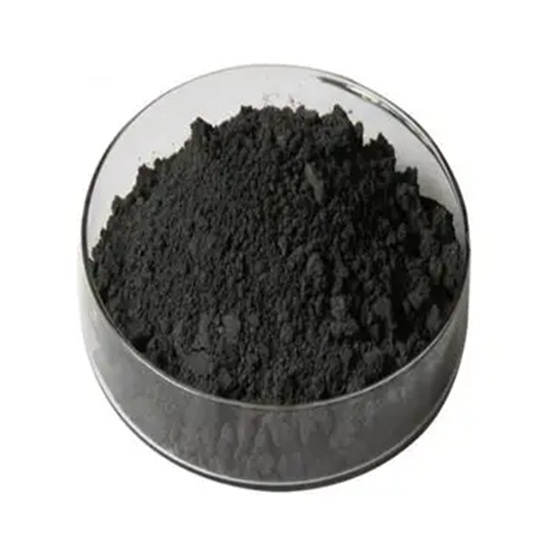
| Appearance | Dark gray to black crystalline powder, granule or consolidated ingot |
| Odor | Odorless |
| Physical State (20°C) | Solid (powder, granule or ingot) |
2. CHEMICAL STRUCTURE
2.1. Molecular Structure
Bismuth telluride is an intermetallic compound of bismuth and tellurium. It has a rhombohedral crystal structure (tetradymite type, R3̄m space group). It is a narrow bandgap semiconductor (band gap ~0.15 eV). Its unique layered crystal structure provides an exceptionally high thermoelectric figure of merit (ZT) between 200 K and 400 K.
Structural Features:
                    BISMUTH TELLURIDE [Bi₂Te₃]
                          |
                Bi - Te Covalent/Ionic Bonds
                          |
        +----------------+----------------+
        |                |                |
    Rhombohedral       Layered         Narrow Bandgap
    Crystal Structure  Structure        (~0.15 eV)
2.2. Structural Properties
| Parameter | Value |
|---|---|
| Crystal Structure | Rhombohedral (tetradymite type, R3̄m) |
| Chemical Formula | Bi₂Te₃ |
| Molecular Weight | 800.76 g/mol |
| Density | ~7.7 g/cm³ |
| Appearance | Dark gray to black crystalline powder, granule or ingot |
| Melting Point | ~585 °C |
| Band Gap | ~0.15 eV |
| Crystal System | Rhombohedral |
3. PHYSICAL AND CHEMICAL PROPERTIES
| Property | Value | Description |
|---|---|---|
| Appearance | Dark gray to black crystalline powder, granule or ingot | Color shade depends on purity |
| Odor | Odorless | - |
| Chemical Formula | Bi₂Te₃ | - |
| Molecular Weight | 800.76 g/mol | - |
| Density | ~7.7 g/cm³ | - |
| Melting Point | ~585 °C | - |
| Band Gap | ~0.15 eV | Narrow bandgap semiconductor |
| Thermal Conductivity | ~1.5 W/m·K | Very low for a crystalline solid |
| Electrical Conductivity | ~1 × 10⁵ S/m | Highly dependent on doping |
| Seebeck Coefficient | ±200 µV/K | Positive for p-type, negative for n-type |
| Figure of Merit (ZT) | ~1.0 (at 300 K) | Highest among commercial materials |
| Solubility in Water (25°C) | Insoluble | - |
| Solubility in Acids | Soluble in strong oxidizing acids | Soluble in HNO₃ |
| Solubility in Alcohol | Insoluble | - |
| Hygroscopicity | Low | - |
4. COMMERCIAL FORMS AND TYPES
4.1. Thermoelectric Material Types
| Type | Doping / Composition | Charge Carrier | Function in Module |
|---|---|---|---|
| N-Type Bi₂Te₃ | Selenium (Se) or excess Tellurium doped | Electrons (negative) | One leg of thermocouple |
| P-Type Bi₂Te₃ | Antimony (Sb) doped | Holes (positive) | Other leg of thermocouple |
| Undoped Bi₂Te₃ | Stoichiometric or near-stoichiometric | Intrinsic (natural) | Sputtering target or precursor for doping |
4.2. Commercial Forms
| Form | Description |
|---|---|
| Powder | Fine crystalline powder, for doping or sputtering targets |
| Granule | Coarser particles, for easy processing |
| Ingot | Vacuum-melted consolidated form, for crystal growth |
| Sputtering Target | Pressed and sintered discs for thin film deposition |
5. FUNCTIONAL PROPERTIES AND MECHANISM
5.1. Peltier Effect (Solid-State Cooling)
When direct current (DC) is passed through a junction of n-type and p-type Bi₂Te₃, one side absorbs heat and cools while the other side releases heat and warms. A thermoelectric module consisting of many such pairs acts as a compact, vibration-free, solid-state heat pump.
5.2. Seebeck Effect (Power Generation)
When a temperature difference is maintained across a Bi₂Te₃ couple, it generates a DC voltage. Modules can convert waste heat from industrial processes, automotive exhaust, or geothermal sources into usable electrical power.
5.3. Doping Engineering for Performance
The thermoelectric performance of the material is optimized through precisely controlled doping. n-type legs are typically doped with selenium (Bi₂Te₃₋ᵧSeᵧ) while p-type legs are doped with antimony ((Bi₁₋ₓSbₓ)₂Te₃). This maximizes the Seebeck coefficient while minimizing thermal conductivity, achieving the highest possible ZT value.
6. APPLICATION AREAS
6.1. Thermoelectric Cooling (Peltier)
| Application | Function | Details |
|---|---|---|
| Climate-Controlled Vehicle Seats | Active cooling/heating | Comfort systems |
| Portable Beverage Coolers | Thermoelectric cooling | Portable cooling devices |
| CPU/GPU Spot Cooling | Precise temperature control | Electronics thermal management |
| Laser Diode and IR Detector Temperature Stabilization | Temperature stabilization | Optoelectronic devices |
6.2. Thermoelectric Power Generation (Seebeck)
| Application | Function | Details |
|---|---|---|
| Industrial Waste Heat Recovery | Electricity from heat | Low-grade waste heat |
| Automotive Exhaust Heat Recovery | Waste heat to electricity | Vehicle efficiency improvement |
| Power for Remote Sensors | Energy harvesting | Field sensor networks |
| Cathodic Protection in Gas Pipelines | Protection power | Pipeline protection systems |
6.3. Scientific and Niche Applications
| Application | Function | Details |
|---|---|---|
| Research-Grade Crystal Growth | High purity ingots | Materials research |
| Thin Film Deposition | Sputtering coating | Aerospace thermal management |
| Topological Insulator Research | Quantum material studies | Fundamental physics research |
6.4. Sectoral Suitability Table
| Sector | Suitability | Explanation |
|---|---|---|
| Thermoelectric Cooling | Suitable | Peltier modules, temperature stabilization |
| Thermoelectric Power | Suitable | Waste heat recovery, energy harvesting |
| Electronics | Suitable | Spot cooling, thermal management |
| Automotive | Suitable | Climate-controlled seats, exhaust heat recovery |
| Aerospace | Suitable | Thermal management, thin film coatings |
| Research | Suitable | Crystal growth, quantum material studies |
| Food | Not Suitable | Not suitable |
| Cosmetics | Not Suitable | Not suitable |
7. STABILITY AND REACTIVITY
| Parameter | Information |
|---|---|
| Chemical Stability | Stable under normal conditions; may oxidize at high temperatures. |
| Conditions to Avoid | Strong oxidizing acids, oxidizing atmosphere at high temperatures, moisture. |
| Incompatible Materials | Strong oxidizing acids (HNO₃), halogens, oxidizing agents. |
| Hazardous Decomposition Products | Upon oxidation at high temperatures: bismuth oxide (Bi₂O₃) and tellurium dioxide (TeO₂). |
| Hazardous Polymerization | Will not occur. |
| Hygroscopicity | Low. |
7.1. Chemical Reactions
-
Oxidation (at High Temperature):
2Bi₂Te₃ + 9O₂ → 2Bi₂O₃ + 6TeO₂ -
Reaction with Acids:
Bi₂Te₃ + 6HNO₃ → 2Bi(NO₃)₃ + 3H₂TeO₃ + 3NO₂↑
8. ALTERNATIVE / SUBSTITUTE PRODUCTS
| Alternative | Description | When to Use |
|---|---|---|
| Lead Telluride (PbTe) | Mid-temperature thermoelectric | 250-500°C applications |
| Silicon-Germanium (SiGe) | High-temperature thermoelectric | >500°C applications |
| Skutterudites | Mid-temperature thermoelectric | 400-600°C applications |
| Tetrahedrites | Low-cost thermoelectric | Lower temperature tolerance |
| Half-Heusler Alloys | Mid-temperature thermoelectric | High temperature stability |
9. SAFETY AND TOXICOLOGY
| Parameter | Value |
|---|---|
| Acute Oral Toxicity (LD50, Rat) | > 2,000 mg/kg (low toxicity) |
| Dermal Toxicity | Low |
| Skin Irritation | Mild irritant |
| Eye Irritation | Mild to moderate irritant |
| Inhalation | Dust inhalation may cause respiratory tract irritation. |
| Carcinogenicity | Not classified as carcinogenic. |
| Mutagenicity | Not mutagenic. |
| Chronic Effects | Tellurium compounds may cause temporary garlic-like body odor ("tellurium breath") upon exposure. |
| Environmental Hazards | Moderate aquatic toxicity; caution required due to tellurium content. |
9.1. GHS Classification
| Hazard Class | Category | H-Statement |
|---|---|---|
| Acute Toxicity (Oral) | Category 4 | H302: Harmful if swallowed. |
| Acute Toxicity (Inhalation) | Category 4 | H332: Harmful if inhaled. |
| Skin Irritation | Category 2 | H315: Causes skin irritation. |
| Eye Irritation | Category 2A | H319: Causes serious eye irritation. |
| Specific Target Organ Toxicity | Category 3 | H335: May cause respiratory irritation. |
Signal Word: WARNING
Hazard Pictograms: GHS07 (Exclamation Mark)
10. PRECAUTIONARY STATEMENTS (P-CODES)
| Code | Statement |
|---|---|
| P261 | Avoid breathing dust. |
| P264 | Wash thoroughly after handling. |
| P270 | Do not eat, drink or smoke when using this product. |
| P271 | Use only in well-ventilated areas. |
| P280 | Wear protective gloves/eye protection/face protection. |
| P301+P312 | IF SWALLOWED: Call a POISON CENTER or doctor if you feel unwell. |
| P304+P340 | IF INHALED: Remove person to fresh air and keep comfortable for breathing. |
| P312 | Call a POISON CENTER or doctor if you feel unwell. |
| P330 | Rinse mouth. |
| P501 | Dispose of contents/container in accordance with local regulations. |
11. FIRST AID MEASURES
| Exposure Route | Action to Take |
|---|---|
| Inhalation | Remove to fresh air. If symptoms persist, seek medical attention. |
| Skin Contact | Wash with plenty of soap and water. Remove contaminated clothing. If irritation persists, seek medical attention. |
| Eye Contact | Rinse thoroughly with plenty of water for at least 15 minutes. Remove contact lenses. If irritation persists, seek medical attention. |
| Ingestion | Rinse mouth. Do not induce vomiting. Drink plenty of water. If large amount is swallowed, seek medical attention. |
12. STORAGE AND SHELF LIFE
| Parameter | Condition |
|---|---|
| Storage Conditions | Store in a cool, dry, and well-ventilated area. Ensure a moisture-free environment. |
| Container Requirements | Tightly closed, labeled containers. Protect from moisture and strong oxidizing acids. |
| Temperature | Room temperature (15-25°C). |
| Shelf Life | 24-36 months under appropriate conditions. |
| Stability Note | Stable under normal conditions; keep away from oxidizing agents. |
13. PACKAGING OPTIONS
| Packaging Type | Quantity | Material |
|---|---|---|
| Laboratory Packaging | 10 g, 25 g, 50 g, 100 g, 500 g | HDPE bottle, aluminum foil bag |
| Industrial Packaging | 1 kg, 5 kg, 10 kg | PE-lined kraft bag, moisture-proof |
| Drum | 25 kg | HDPE drum, moisture-proof |
| Ingot | 100 g, 500 g, 1 kg | Vacuum packaging, inert atmosphere |
14. TRANSPORT INFORMATION
| Parameter | Information |
|---|---|
| UN Number | Not classified (specific regulations apply for metal compounds) |
| Hazard Class | - |
| Packing Group | - |
| ADR/RID | Not regulated (special precautions may be required for powder form) |
| IMDG | Not regulated |
| IATA | Not regulated |
| HS Code | 2844.90.00.00.00 (Other metal tellurides) |
15. REGULATORY STATUS
| Region / Authority | Status |
|---|---|
| European Union (REACH) | Registered |
| Turkey (KKDIK) | Compliance required |
| TSCA (USA) | Registered |
| EINECS | 215-135-2 |
| China | Registered; major production and export country |
16. OTHER NAMES AND SYNONYMS
| Name | Description |
|---|---|
| Dibismuth Tritelluride | Systematic chemical name |
| Bismuth(III) Telluride | Chemical name |
| Bi₂Te₃ | Chemical abbreviation |
| BST | Common abbreviation for p-type alloy |
| Bismuth Antimony Telluride | P-type doped form |
| Bismuth Selenium Telluride | N-type doped form |
| Bi₂Te₃ Powder | Powder form |
| Bi₂Te₃ Ingot | Ingot form |
| Bi₂Te₃ Sputtering Target | Thin film production form |
17. QUICK REFERENCE TABLE
| Property | Value |
|---|---|
| CAS Number | 1304-82-1 |
| EC Number | 215-135-2 |
| Chemical Formula | Bi₂Te₃ |
| Molecular Weight | 800.76 g/mol |
| Appearance | Dark gray to black crystalline powder, granule or ingot |
| Density | ~7.7 g/cm³ |
| Melting Point | ~585 °C |
| Band Gap | ~0.15 eV |
| Figure of Merit (ZT) | ~1.0 (at 300 K) |
| HS Code | 2844.90.00.00.00 |
| GHS Signal Word | WARNING |
18. CRITICAL WARNINGS AND BEST PRACTICES
CRITICAL WARNINGS:
-
Thermoelectric Material: Bismuth telluride is the reference and most widely used thermoelectric material for near-room-temperature applications. It has the highest ZT (~1.0) among commercial materials.
-
Temperature Limitation: Thermoelectric performance peaks below 200°C and the operating limit is approximately 250°C. For high-temperature applications, PbTe or SiGe are used.
-
Doping Engineering: n-type legs are doped with Se, p-type legs with Sb to optimize performance.
-
Tellurium Breath: Tellurium compounds may cause temporary garlic-like body odor ("tellurium breath") upon exposure.
-
Powder Hazard: Fine powder form may cause respiratory tract irritation. Dust control measures must be taken.
BEST PRACTICE RECOMMENDATIONS:
-
Storage:
-
Store in a cool, dry, and well-ventilated area.
-
Use moisture-proof, tightly closed containers.
-
Keep away from oxidizing acids and oxidizing agents.
-
Store at room temperature (15-25°C).
-
-
Handling:
-
Use in well-ventilated areas with local exhaust ventilation or in a glovebox.
-
Use a dust mask (N95/FFP2), protective goggles, and gloves.
-
Avoid dust formation and inhalation.
-
Wash hands thoroughly after handling.
-
For dissolution in acids, add oxide to acid slowly with cooling and stirring.
-
Use vacuum or inert atmosphere (Ar, N₂) for thermoelectric module production.
-
-
Waste Management:
-
Dispose of in accordance with local regulations.
-
Do not discharge into water sources.
-
For large quantities, bismuth and tellurium recovery should be considered.
-
LEGAL DISCLAIMER
This Technical Data Sheet (TDS) is for informational purposes only and has been prepared based on available technical data. The user is solely responsible for determining the suitability of the product for their specific applications and for complying with all local, national, and international regulations. For complete safety, storage, handling, transport, disposal, and regulatory compliance information, the official Safety Data Sheet (SDS/MSDS) provided by the manufacturer/supplier must be consulted. This document does not substitute professional advice. Bismuth telluride is a critical material for thermoelectric applications, widely used in solid-state cooling and energy harvesting technologies; caution should be taken against inhalation of powder form.