We unleash your business potential by maximize the business innovation.
Send EmailMolybdenum Oxide, Dioxo Molybdenum, Molybdic Anhydride, Molybdenum Trioxide, 1313‑27‑5
MOLYBDENUM OXIDE (MOLYBDENUM TRIOXIDE)
1. PRODUCT IDENTIFICATION AND CHEMICAL IDENTITY
| Parameter | Information |
|---|---|
| Product Name | Molybdenum Oxide |
| Chemical Name | Molybdenum Trioxide, Molybdic Anhydride |
| Other Names | Molybdenum(VI) Oxide, Dioxomolybdenum(VI), MoO₃ |
| CAS Number | 1313-27-5 |
| EC Number (EINECS) | 215-204-7 |
| Chemical Formula | MoO₃ |
| Molecular Weight | 143.94 g/mol |
| Mineral Name | Molybdenite (oxidized form) |
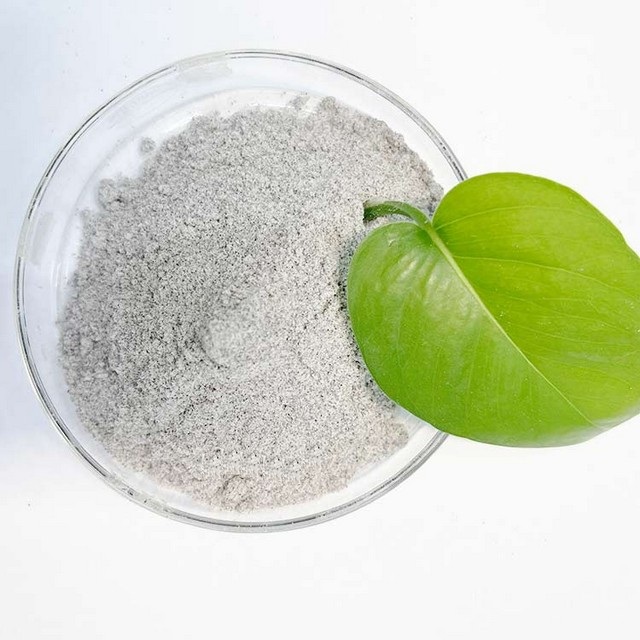
| Appearance | Yellow-green crystalline powder |
| Odor | Odorless |
| Physical State (20°C) | Solid (powder) |
2. CHEMICAL STRUCTURE
2.1. Molecular Structure
Molybdenum trioxide is the most stable oxide form of molybdenum. Each molybdenum ion (Mo⁶⁺) is surrounded by six oxygen ions (O²⁻), exhibiting an orthorhombic crystal structure. This structure is a layered structure where molybdenum ions display distorted octahedral coordination.
Structural Features:
                    MOLYBDENUM OXIDE (MoO₃)
                          |
                Mo⁶⁺ - O²⁻ Bonds
                          |
                Orthorhombic Crystal Structure
                          |
        +----------------+----------------+
        |                |                |
    Layered Structure  Distorted Octahedral  Coordination
                    Coordination
2.2. Crystal Structure
| Parameter | Value |
|---|---|
| Crystal System | Orthorhombic (stable at room temperature) |
| Space Group | Pbnm (No. 62) |
| Lattice Parameters | a = 3.9628 Å, b = 13.855 Å, c = 3.6964 Å |
| Unit Cell Volume | ~203 ų |
| Molecules per Unit Cell (Z) | 4 |
| Coordination Number | 6 (for Mo), 3 (for O) |
| Layer Spacing | ~0.7 nm |
2.3. Functional Properties
| Property | Description |
|---|---|
| Oxidation State | Mo⁶⁺ (molybdenum +6 oxidation state) |
| Bond Type | Mixed covalent-ionic (Mo-O bonds) |
| Crystal Defects | Oxygen vacancies; provide semiconductor properties |
| Layered Structure | Suitable for intercalation and 2D material applications |
3. PHYSICAL AND CHEMICAL PROPERTIES
| Property | Value | Description |
|---|---|---|
| Appearance | Yellow-green crystalline powder | - |
| Odor | Odorless | - |
| Molecular Weight | 143.94 g/mol | - |
| Density | ~4.69 g/cm³ (at 25°C) | - |
| Melting Point | ~795 °C | Decomposes at higher temperatures |
| Boiling Point | ~1155 °C (sublimes) | - |
| Solubility in Water | Slightly soluble (~1.2 g/L, 20°C) | - |
| Solubility in Acids | Soluble | - |
| Solubility in Alkalis | Soluble (forms molybdates) | - |
| Crystal Structure | Orthorhombic | Stable at room temperature |
| Thermal Conductivity | ~20 W/(m·K) | - |
| Electrical Conductivity | Semiconductor (at room temperature) | - |
| Band Gap (Eg) | ~2.7 – 3.2 eV | Exhibits semiconductor properties |
| Magnetic Behavior | Diamagnetic | - |
| Vapor Pressure | Low (at high temperature) | - |
| BET Surface Area | Variable (product dependent; typical 1-50 m²/g) | - |
| Sublimation Point | ~1155 °C | - |
4. PURITY GRADES
| Parameter | Industrial Grade | High Purity Grade | Ultra High Purity Grade |
|---|---|---|---|
| Purity | ≥ 99.0% | ≥ 99.9% | ≥ 99.99% |
| MoO₃ Content | ≥ 99.0% | ≥ 99.9% | ≥ 99.99% |
| Iron (Fe) | ≤ 0.1% | ≤ 0.01% | ≤ 0.001% |
| Nickel (Ni) | ≤ 0.05% | ≤ 0.005% | ≤ 0.0005% |
| Lead (Pb) | ≤ 0.05% | ≤ 0.005% | ≤ 0.0005% |
| Chloride (Cl⁻) | ≤ 0.05% | ≤ 0.01% | ≤ 0.005% |
| Sulfate (SO₄²⁻) | ≤ 0.1% | ≤ 0.02% | ≤ 0.01% |
| Calcium (Ca) | ≤ 0.05% | ≤ 0.01% | ≤ 0.005% |
| Sodium (Na) | ≤ 0.05% | ≤ 0.01% | ≤ 0.005% |
5. REACTIVITY AND STABILITY
| Parameter | Information |
|---|---|
| Chemical Stability | Stable under normal conditions; slow hydration in humid air |
| Conditions to Avoid | High temperature (>800°C), strong reducing agents |
| Incompatible Materials | Reducing agents (H₂, CO, C), strong acids, halogens, ammonia |
| Hazardous Decomposition Products | Molybdenum oxide fumes, toxic molybdenum vapors |
| Hazardous Polymerization | Will not occur |
| Heating in Oxygen-Free Atmosphere | Reduces to MoO₂ or Mo |
6. REACTIONS AND MECHANISM OF ACTION
6.1. Acid/Alkali Dissolution Reactions
Molybdenum trioxide dissolves in alkalis to form molybdate salts:
With Sodium Hydroxide:
MoO₃ + 2NaOH → Na₂MoO₄ + H₂O
With Ammonia:
MoO₃ + 2NH₄OH → (NH₄)₂MoO₄ + H₂O
6.2. Reduction Reactions
Molybdenum trioxide can be reduced to molybdenum metal or lower oxides by reducing agents:
With Hydrogen:
MoO₃ + 3H₂ → Mo + 3H₂O
With Carbon:
2MoO₃ + 3C → 2Mo + 3CO₂
With Carbon Monoxide:
MoO₃ + 3CO → Mo + 3CO₂
6.3. Hydration
Molybdenum trioxide slowly hydrates in moist environments:
MoO₃ + H₂O → MoO₃·H₂O (Molybdic Acid)
7. APPLICATION AREAS
7.1. Metallurgy (Most Important Application)
| Application | Function | Details |
|---|---|---|
| Steel Alloys | Alloying element | Hardening and corrosion resistance enhancer; high-strength steels |
| Molybdenum Metal Production | Intermediate | Precursor compound for molybdenum metal production |
| Superalloys | High temperature resistance | Aerospace and defense applications |
| Stainless Steel | Corrosion resistance | Performance in acidic environments |
| Tool Steels | Hardness increase | Cutting tools and dies |
7.2. Catalyst Applications
| Application | Function | Details |
|---|---|---|
| Hydrodesulfurization (HDS) | Catalyst | Sulfur removal in petroleum refining |
| Hydrodenitrification | Catalyst | Removal of nitrogen-containing compounds |
| Oxidation Reactions | Selective oxidation | Oxidation of organic compounds |
| Petrochemicals | Catalytic conversion | Various petrochemical processes |
| Ammonia Synthesis | Support catalyst | Haber-Bosch process |
7.3. Pigment and Ceramics Industry
| Application | Function | Details |
|---|---|---|
| Ceramic Pigment | Yellow colorant | In ceramic bodies and glazes |
| Glass Production | Color additive | Optical and decorative glass products |
| Enamel Coatings | Colorant | Yellow tones in enamel coatings |
| Thin Film Coatings | Optical coatings | Anti-reflective and decorative coatings |
7.4. Electronics and Semiconductor Applications
| Application | Function | Details |
|---|---|---|
| Thin Film Transistors | Semiconductor channel | OLED and flexible display technologies |
| Electrochromic Devices | Electrochromic layer | Smart windows, auto-dimming mirrors |
| Gas Sensors | Sensing layer | NO₂, NH₃, CO gas sensors |
| Photovoltaic Cells | Hole transport layer | Organic solar cells |
| Battery Technologies | Anode material | Anode additive in lithium-ion batteries |
| Supercapacitors | Electrode material | Energy storage applications |
7.5. Chemical Production
| Application | Function | Details |
|---|---|---|
| Molybdate Salts | Precursor | Ammonium molybdate, sodium molybdate production |
| Molybdenum Complexes | Intermediate | Synthesis of organometallic compounds |
| Corrosion Inhibitors | Active ingredient | Industrial cooling systems |
| Flame Retardants | Additive | Polymer and textile applications |
8. SECTOR SUITABILITY TABLE
| Sector | Suitability | Note |
|---|---|---|
| Metallurgy | ✔ | Steel alloys, corrosion resistance, hardening |
| Catalyst | ✔ | Hydrodesulfurization, oxidation catalysts |
| Ceramics and Glass | ✔ | Pigment, optical coloration |
| Electronics | ✔ | Thin film, sensors, electrochromic devices |
| Food/Cosmetics | ✖ | Heavy metal oxide; not suitable |
| Petrochemicals | ✔ | Refining and catalytic processes |
| Environmental Technologies | ✔ | Catalytic treatment systems |
9. PACKAGING OPTIONS
| Packaging Type | Quantity | Material |
|---|---|---|
| Kraft Bag | 25 kg | PE-lined kraft paper bag |
| Fiber Drum | 25 kg, 50 kg | PE-lined fiber drum |
| Plastic Drum | 50 kg | PE/HDPE drum |
| IBC Tank | 1000 kg | Plastic IBC (bulk scale) |
| Laboratory Bottle | 100 g, 500 g, 1 kg | Glass or HDPE bottle |
10. TOXICOLOGICAL PROFILE
| Parameter | Value |
|---|---|
| Acute Oral Toxicity (LD50, Rat) | 1,200 – 2,500 mg/kg |
| Acute Dermal Toxicity | Low; irritant |
| Skin Irritation | Irritant |
| Eye Irritation | Serious eye irritant |
| Inhalation | Dust may cause lung irritation; long-term exposure carries molybdenosis risk |
| Carcinogenicity | IARC Group 2B (limited evidence) |
| Mutagenicity | Potential mutagen |
| Reproductive Toxicity | Reproductive toxicity at high doses |
| LC50 (Fish) | 100 – 1000 mg/L (acute toxicity) |
| PBT (Persistent, Bioaccumulative, Toxic) | Potential |
11. GHS CLASSIFICATION
| Hazard Class | Category | H-Statement |
|---|---|---|
| Acute Toxicity (Oral) | Category 4 | H302: Harmful if swallowed |
| Serious Eye Damage | Category 1 | H318: Causes serious eye damage |
| Specific Target Organ Toxicity | Category 3 | H335: May cause respiratory irritation |
| Aquatic Toxicity (Acute) | Category 1 | H400: Very toxic to aquatic life |
| Aquatic Toxicity (Chronic) | Category 1 | H410: Very toxic to aquatic life with long-lasting effects |
Signal Word: DANGER
Hazard Pictograms: GHS05 (Corrosion), GHS07 (Exclamation Mark), GHS09 (Environment)
Hazard Statements (H-Codes):
| Code | Statement |
|---|---|
| H302 | Harmful if swallowed |
| H318 | Causes serious eye damage |
| H335 | May cause respiratory irritation |
| H400 | Very toxic to aquatic life |
| H410 | Very toxic to aquatic life with long-lasting effects |
12. PRECAUTIONARY STATEMENTS (P-CODES)
| Code | Statement |
|---|---|
| P261 | Avoid breathing dust/fume/gas/mist/vapors/spray |
| P264 | Wash hands thoroughly after handling |
| P270 | Do not eat, drink or smoke when using this product |
| P273 | Avoid release to the environment |
| P280 | Wear protective gloves/protective clothing/eye protection/face protection |
| P301+P312 | IF SWALLOWED: Call a POISON CENTER/doctor if you feel unwell |
| P305+P351+P338 | IF IN EYES: Rinse cautiously with water for several minutes. Remove contact lenses if present |
| P310 | Immediately call a POISON CENTER/doctor |
| P337+P313 | If eye irritation persists: Get medical advice/attention |
| P391 | Collect spillage |
| P501 | Dispose of contents/container in accordance with local regulations |
13. FIRST AID MEASURES
| Route of Exposure | Action to Be Taken |
|---|---|
| Inhalation | Move to fresh air. If breathing difficulty occurs, administer oxygen. If symptoms persist, seek medical attention |
| Skin Contact | Wash with plenty of soap and water. Remove contaminated clothing. If irritation develops, seek medical attention |
| Eye Contact | Rinse immediately with plenty of water for at least 15 minutes. Keep eyelids open. Remove contact lenses. Seek immediate medical attention |
| Ingestion | Rinse mouth. If conscious, drink water. Do not induce vomiting. Seek immediate medical attention |
| Note | Show this safety data sheet to the attending physician |
14. FIRE-FIGHTING MEASURES
| Parameter | Information |
|---|---|
| Fire Hazard | Not flammable, but may emit toxic fumes at high temperatures |
| Hazards from Fire | Molybdenum oxide fumes may be toxic |
| Suitable Extinguishing Media | Use extinguishing media appropriate to surrounding fire (powder, foam, CO₂) |
| Special Protective Equipment | Full protective clothing and SCBA (self-contained breathing apparatus) |
15. ACCIDENTAL RELEASE MEASURES
| Parameter | Information |
|---|---|
| Personal Protection | Dust mask (N95/FFP2), protective goggles, gloves, coverall |
| Ventilation | Increase ventilation; use local exhaust in confined spaces |
| Containment | Cover spilled area to prevent dust dispersion |
| Cleaning Methods | Collect dry using vacuum or careful sweeping. Avoid washing with water |
| Environmental Precautions | Prevent entry into drains, sewers, and water bodies |
| Waste Disposal | Dispose of in accordance with local regulations; licensed disposal facility |
16. STORAGE AND SHELF LIFE
| Parameter | Information |
|---|---|
| Storage Conditions | Store in dry, closed packaging; keep away from moisture |
| Container Requirements | Keep tightly closed in moisture-proof containers |
| Materials to Avoid | Acids, reducing agents, moisture |
| Shelf Life | 24 months under proper conditions |
| Stability Note | Hydration and caking may occur when exposed to moisture |
17. ENVIRONMENTAL INFORMATION
| Parameter | Information |
|---|---|
| Aquatic Toxicity | Very toxic to aquatic life (H400/H410) |
| Biodegradability | Not biodegradable (inorganic) |
| Bioaccumulation | Potential bioaccumulation; molybdenum can accumulate in living organisms |
| Waste Management | Heavy metal oxide; controlled disposal required |
| Recycling | Can be recovered from molybdenum scrap and spent catalysts |
| Carbon Footprint | Moderate; dependent on molybdenum mining and refining |
| WGK Germany | 2 (hazard to water) |
18. REGULATORY STATUS
| Region / Authority | Status |
|---|---|
| USA (FDA) | Limited use in food contact materials |
| European Union (REACH) | Registered; not on SVHC candidate list |
| Turkey (KKDIK) | Compliance required |
| OSHA | Regulated as dust |
| IARC | Group 2B (limited evidence) |
| EINECS | 215-204-7 |
| HS Code | 2825.90 |
| TSCA (USA) | Registered |
19. OTHER NAMES AND SYNONYMS
-
Molybdenum Trioxide
-
Molybdic Anhydride
-
Molybdenum(VI) Oxide
-
Dioxomolybdenum(VI)
-
MoO₃
-
Yellow Molybdenum Oxide
-
Molybdic Anhydride
-
Molybdenum Trioxide
20. QUICK REFERENCE TABLE
| Property | Value |
|---|---|
| CAS Number | 1313-27-5 |
| EC Number | 215-204-7 |
| Molecular Formula | MoO₃ |
| Molecular Weight | 143.94 g/mol |
| Appearance | Yellow-green crystalline powder |
| Density | ~4.69 g/cm³ |
| Melting Point | ~795 °C |
| Crystal Structure | Orthorhombic |
| Water Solubility | Slightly soluble (~1.2 g/L) |
| Purity Grades | 99.0% – 99.99% |
| HS Code | 2825.90 |
| GHS Signal Word | DANGER |
| UN Number | 3077 (Environmentally hazardous substance) |
| WGK Germany | 2 (hazard to water) |
21. CRITICAL NOTICES AND BEST PRACTICES
CRITICAL NOTICES:
-
Heavy Metal Toxicity: Molybdenum trioxide is a heavy metal oxide. Ingestion, inhalation, or skin contact poses health risks. Should not be used in food or cosmetic applications due to toxicological effects.
-
Eye Contact: Causes serious eye damage (H318). Always wear safety goggles.
-
Environmental Hazard: Very toxic to aquatic life (H400/H410). Release to the environment must be strictly prevented.
-
Moisture Sensitivity: Hydration and caking may occur when exposed to moisture. Should be stored in dry conditions.
-
Reaction with Reducing Agents: May be reduced by contact with hydrogen, carbon monoxide, or carbon.
-
Reaction with Acids: Contact with acids may form toxic molybdenum compounds.
-
Sublimation: Sublimes at high temperatures; may form toxic fumes.
BEST PRACTICE RECOMMENDATIONS:
Storage:
-
Store in dry, closed packaging; keep away from moisture
-
Store separately from acids and reducing agents
-
Keep tightly closed in original packaging
Handling:
-
Use in well-ventilated areas
-
Use dust mask (N95/FFP2), protective goggles, and gloves
-
Avoid dust formation
-
Wash hands after handling
Waste Management:
-
Heavy metal oxide waste; dispose of at licensed disposal facilities
-
Do not discharge into drains, sewers, or water bodies
-
Consider recycling if possible (molybdenum scrap, spent catalysts)
Emergency:
-
In case of eye contact, rinse immediately with plenty of water and seek medical attention
-
In case of dust inhalation, move to fresh air
-
If large amount is swallowed, do not induce vomiting; seek immediate medical attention
LEGAL DISCLAIMER
This Technical Data Sheet (TDS) is for informational purposes only and is prepared based on available technical data. The user is solely responsible for determining the suitability of the product for their specific application and for complying with all local, national, and international regulations. For complete safety, storage, handling, transport, waste, and regulatory compliance information, the official Safety Data Sheet (SDS/MSDS) provided by the manufacturer/supplier must be consulted. This document does not substitute professional advice. Molybdenum trioxide is a heavy metal oxide; appropriate precautions should be taken during handling.