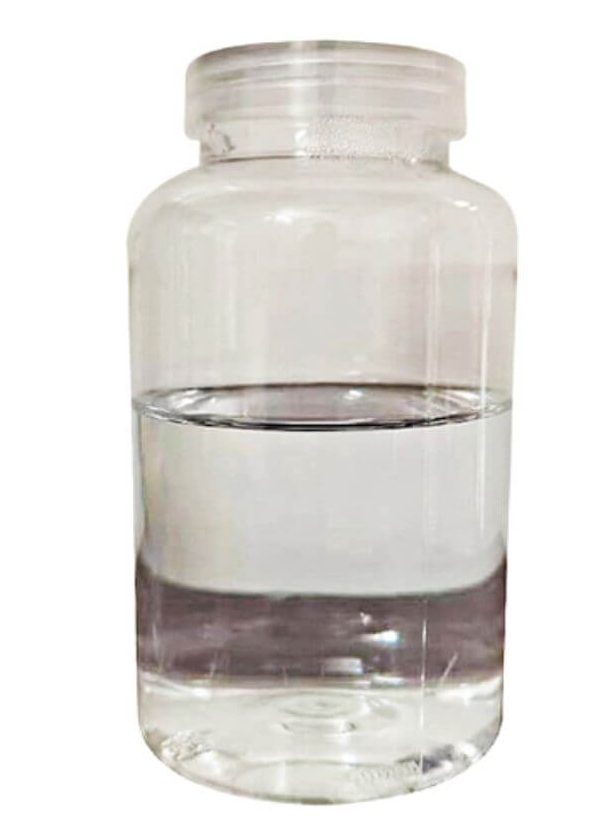
Isononanoic Acid, Tert-Nonanoic Acid, 7-Methyloctanoic Acid, 3302-10-1, 26896-18-4
ISONONANOIC ACID
CAS Numbers: 26896-18-4 / 3302-10-1
EC Number (EINECS): 248-092-3
Molecular Formula: C₉H₁₈O₂
Molecular Weight: 158.24 g/mol
REACH Status: Registered
SECTION 1: PRODUCT IDENTIFICATION AND CHEMICAL IDENTITY
| Parameter |
Description |
| Chemical Name (IUPAC) |
Isononanoic acid (mixture of branched-chain isomers) |
| Other Names |
7-Methyloctanoic acid, 3,5,5-Trimethylhexanoic acid, tert-Nonanoic acid, Iso-nonanoic acid, INA, IN Acid |
| CAS Numbers |
26896-18-4 (main), 3302-10-1 (specific isomer) |
| EC Number (EINECS) |
248-092-3 |
| Molecular Formula |
C₉H₁₈O₂ |
| Molecular Weight |
158.24 g/mol |
| Chemical Class |
Branched-chain carboxylic acid (aliphatic) |
| Structure |
C₈H₁₇COOH (branched alkyl chain with terminal carboxyl group) |
| Appearance |
Colorless to pale yellow liquid |
| Odor |
Mild characteristic odor |
| Production Method |
Oxidation of isononyl aldehyde |
SECTION 2: PHYSICAL AND CHEMICAL PROPERTIES
| Property |
Value |
| Molecular Formula |
C₉H₁₈O₂ |
| Molecular Weight |
158.24 g/mol |
| Appearance |
Colorless to pale yellow liquid |
| Odor |
Mild characteristic |
| Density (20°C) |
~0.89 g/cm³ |
| Boiling Point |
~250 °C |
| Melting Point |
~-30 °C |
| Flash Point |
~140 °C (closed cup) |
| Autoignition Temperature |
~370 °C |
| Acidity (pKa) |
~4.9 |
| Solubility in Water |
Limited (slightly soluble) |
| Solubility in Organic Solvents |
High (miscible with alcohols, esters, hydrocarbons) |
| Vapor Pressure (20°C) |
Very low |
| Viscosity (25°C) |
~15 cP |
| Refractive Index (n²⁰D) |
~1.425 |
| Acid Value |
~350 - 360 mg KOH/g |
| Thermal Stability |
Stable up to ~200°C (can be used in polymer systems without degradation) |
SECTION 3: SOLUBILITY PROFILE
| Solvent |
Solubility |
Condition |
| Water |
Slightly soluble |
25°C |
| Methanol |
Completely miscible |
- |
| Ethanol |
Completely miscible |
- |
| Acetone |
Completely miscible |
- |
| Ethyl Acetate |
Completely miscible |
- |
| Toluene |
Completely miscible |
- |
| Xylene |
Completely miscible |
- |
| Mineral Oils |
Completely miscible |
- |
| Aliphatic Hydrocarbons |
Completely miscible |
- |
| Aromatic Hydrocarbons |
Completely miscible |
- |
Critical Note: Isononanoic acid has limited water solubility but excellent solubility in most organic solvents. Its branched-chain structure provides unique solubility and compatibility characteristics compared to linear carboxylic acids.
SECTION 4: CHEMICAL PROPERTIES AND REACTIONS
| Property |
Description |
| Chemical Class |
Branched-chain carboxylic acid |
| Functional Group |
Carboxyl group (-COOH) with branched alkyl chain |
| Reactivity |
Undergoes typical carboxylic acid reactions |
| Esterification |
Reacts with alcohols to form esters (used in synthetic ester oils) |
| Salt Formation |
Forms metal soaps (calcium, zinc, cobalt salts) used as paint driers |
| Amidation |
Reacts with amines to form amides |
| Neutralization |
Reacts with bases to form salts |
| Thermal Decomposition |
> 250°C releases CO, CO₂, hydrocarbons |
| Oxidation |
Stable under normal conditions; can oxidize at high temperatures |
4.1. Key Reactions
| Reaction Type |
Description |
| Esterification |
Isononanoic acid + Alcohol → Isononanoate ester + Water |
| Metal Soap Formation |
Isononanoic acid + Metal oxide/hydroxide → Metal isononanoate + Water |
| Alkyd Resin Formation |
Isononanoic acid + Polyol + Phthalic anhydride → Modified alkyd resin |
| Amidation |
Isononanoic acid + Amine → Isononamide + Water |
4.2. Stability
| Parameter |
Information |
| Thermal Stability |
Stable up to ~200°C; decomposes above 250°C |
| Polymerization |
Does not polymerize |
| Incompatibilities |
Strong oxidizing agents, strong bases (exothermic reaction) |
| Corrosivity |
Mildly corrosive to metals (forms salts) |
| Decomposition Products |
CO, CO₂, hydrocarbons |
SECTION 5: SPECTRAL DATA
| Parameter |
Value |
| FTIR (KBr, cm⁻¹) |
2950 (C-H aliphatic), 1700 (C=O acid), 1450 (C-H bend), 1280 (C-O), 930 (OH) |
| ¹H-NMR (CDCl₃, ppm) |
10.5 (s, 1H, COOH), 2.2-2.4 (m, 2H, α-CH₂), 1.5-1.7 (m, 2H, β-CH₂), 1.2-1.4 (m, 8H, chain CH₂/CH), 0.8-0.9 (m, 3H, CH₃) |
| ¹³C-NMR (CDCl₃, ppm) |
180.0 (C=O), 34.0 (α-CH₂), 32.0 (β-CH₂), 29.0 (chain CH₂), 22.0 (CH₃), 14.0 (terminal CH₃) |
| Mass Spectrometry (EI-MS) |
158 [M]⁺, 141 [M-OH]⁺, 115 [M-C₂H₅]⁺, 87 [C₅H₁₁O]⁺, 73 [C₄H₉O]⁺ |
SECTION 6: PURITY AND QUALITY SPECIFICATIONS
| Parameter |
Standard Grade |
High Purity Grade |
| Purity (GC) |
≥ 98.0% |
≥ 99.0% |
| Color (APHA) |
≤ 50 |
≤ 20 |
| Acid Value (mg KOH/g) |
350 - 360 |
353 - 357 |
| Water Content (Karl Fischer) |
≤ 0.5% |
≤ 0.2% |
| Density (20°C) |
0.890 - 0.895 g/cm³ |
0.891 - 0.893 g/cm³ |
| Flash Point |
≥ 140 °C |
≥ 145 °C |
| Appearance |
Clear, colorless to pale yellow |
Clear, colorless |
| Odor |
Mild characteristic |
Mild characteristic |
| Isomer Distribution |
Specified (depending on production process) |
Specified |
SECTION 7: MAJOR APPLICATIONS AND END-USES
7.1. Polyolester Synthetic Lubricants (Mandatory Use)
| Application |
Function |
Suitability |
| Compressor Oils |
Base oil component, thermal/oxidative stability |
Mandatory |
| Refrigeration Lubricants |
Base oil for HVAC systems |
Mandatory |
| Engine Oils |
Synthetic ester base oil component |
Mandatory |
| Heat Transfer Fluids |
Base fluid for high-temperature systems |
Mandatory |
| Turbine Oils |
Base oil component |
Mandatory |
| Hydraulic Fluids |
Base oil component |
Mandatory |
| Metalworking Fluids |
Lubricity enhancer |
Optional |
7.2. Alkyd Resins and Coatings (Mandatory Use)
| Application |
Function |
Suitability |
| Industrial Paints |
Resin modifier, improves flexibility and weather resistance |
Mandatory |
| Stoving Enamels |
Resin component, enhances hardness and gloss |
Mandatory |
| Automotive Coatings |
Alkyd resin modifier for superior stability |
Mandatory |
| Marine Coatings |
Resin component for corrosion protection |
Mandatory |
| Coil Coatings |
Resin component for flexibility |
Mandatory |
| Wood Finishes |
Resin modifier, improves durability |
Mandatory |
7.3. Metal Soap Paint Driers (Mandatory Use)
| Application |
Function |
Suitability |
| Calcium Isononanoate |
Paint drier for oxidative curing |
Mandatory |
| Zinc Isononanoate |
Paint drier, anti-skinning agent |
Mandatory |
| Cobalt Isononanoate |
Primary oxidation catalyst in alkyd paints |
Mandatory |
| Manganese Isononanoate |
Oxidation catalyst |
Mandatory |
| Lead Isononanoate |
Oxidation catalyst (phased out in many regions) |
Mandatory (phasing out) |
| Zirconium Isononanoate |
Paint drier (alternative to lead) |
Mandatory |
7.4. Cosmetics and Personal Care (Optional Use)
| Application |
Function |
Suitability |
| Emulsion Stabilizers |
Co-emulsifier, pH adjuster |
Optional |
| Oil Phase Additives |
Emollient, skin conditioning agent |
Optional |
| Cleansing Products |
Surfactant precursor |
Optional |
| Fragrance Formulations |
Fixative and carrier |
Optional |
7.5. Plastic and Polymer Additives (Optional Use)
| Application |
Function |
Suitability |
| Plasticizers |
Flexibility and processability enhancer |
Optional |
| Polymer Modifiers |
Improves impact resistance and flow properties |
Optional |
| Heat Stabilizers |
PVC heat stabilizer component |
Optional |
7.6. Agricultural Chemicals (Optional Use)
| Application |
Function |
Suitability |
| Pesticide Formulations |
Solvent and carrier |
Optional |
| Herbicide Adjuvants |
Enhances active ingredient absorption |
Optional |
SECTION 8: INDUSTRY SUITABILITY AND MANDATORY USE
| Industry / Sector |
Application |
Mandatory Status |
Example Products |
| Paints & Coatings |
Alkyd resin modification, metal soap driers |
Mandatory |
Industrial paints, stoving enamels, automotive coatings |
| Lubricants & Energy |
Polyolester synthetic oils, heat transfer fluids |
Mandatory |
Compressor oils, engine oils, HVAC lubricants |
| Plastics & Polymers |
Plastic additive, flexibility enhancer |
Optional |
Plasticizers, polymer modifications |
| Automotive |
Synthetic engine oils, coating systems |
Mandatory (oils) |
Polyolester-based engine oils, automotive paints |
| Cosmetics & Detergents |
Emulsion stabilizer, oil phase additive |
Optional |
Creams, lotions, detergent formulations |
| Agriculture & Food |
Solvent/auxiliary additive |
Optional |
Specialty pesticide formulations |
| Rubber Industry |
Processing aid, tackifier |
Optional |
Rubber compounds |
SECTION 9: PRODUCT VARIANTS AND DERIVATIVES
9.1. Ester Derivatives
| Compound |
Application |
| Isononyl Isononanoate |
Cosmetic emollient, provides soft, non-greasy feel |
| Isononanoate Esters (various) |
Lubricants, plasticizers, coatings |
| Trimethylolpropane Triisononanoate |
High-performance lubricant base oil |
| Pentaerythritol Tetraisononanoate |
High-temperature lubricant base oil |
| Ethylhexyl Isononanoate |
Cosmetic emollient |
9.2. Metal Salts (Soaps)
| Compound |
Application |
| Calcium Isononanoate |
Paint drier, PVC stabilizer |
| Zinc Isononanoate |
Paint drier, anti-skinning agent |
| Cobalt Isononanoate |
Primary oxidation catalyst |
| Manganese Isononanoate |
Oxidation catalyst |
| Zirconium Isononanoate |
Paint drier |
| Barium Isononanoate |
PVC stabilizer |
SECTION 10: PRODUCTION METHOD AND RAW MATERIALS
10.1. Main Production Method
| Method |
Description |
| Aldehyde Oxidation |
Isononyl aldehyde + Oxygen → Isononanoic acid (most common industrial method) |
| Oxo Process |
Isooctene + CO + H₂ → Isononyl aldehyde → Oxidation → Isononanoic acid |
10.2. Raw Materials
| Raw Material |
Role |
| Isononyl Aldehyde |
Direct precursor (produced via hydroformylation of isooctene) |
| Isooctene |
Olefin precursor for oxo process |
| Oxygen / Air |
Oxidation agent |
| Catalyst |
Manganese or cobalt-based oxidation catalyst |
SECTION 10.5: ALTERNATIVES AND COMPARISON
10.5.1. Alternative Branched-Chain Carboxylic Acids
| Alternative |
Structure |
Application |
Advantages |
Disadvantages |
| Isovaleric Acid |
C₅ branched |
Coatings, flavors, specialty esters |
Reactive, easy esterification |
Strong odor, lower stability |
| Pentanoic Acid (Valeric Acid) |
C₅ linear |
Lubricants, plastic additives |
Simple chemistry, inexpensive |
Lower performance |
| Linear Nonanoic Acid |
C₉ linear |
Coatings, lubricants |
Easily available |
Higher yellowing tendency |
| 2-Ethylhexanoic Acid |
C₈ branched |
Paint driers, PVC stabilizers |
Excellent solubility |
Shorter chain length |
10.5.2. Alternative Esters (Application-Based)
| Application |
Alternative |
Advantages |
| Lubricants |
Adipic acid esters, Sebacic acid esters, Phthalates |
Available, but less environmentally preferred |
| Coatings |
Linear fatty acids (nonanoic, decanoic) |
Lower cost but higher yellowing risk |
| Cosmetics |
Isopropyl Myristate, Caprylic/Capric Triglycerides, Volatile Silicones |
Readily available, well-established |
10.5.3. Comparison of Key Alternatives
| Alternative |
Type |
Application |
Advantage |
Disadvantage |
| Isononyl Isononanoate |
Branched ester |
Cosmetics (emollient) |
Soft feel, low viscosity |
Limited industrial use |
| Isovaleric Acid |
Branched acid |
Flavors, coatings |
Reactive, easy esterification |
Strong odor, lower stability |
| Pentanoic Acid |
Linear acid |
Lubricants, plastic additives |
Simple chemistry, inexpensive |
Lower performance |
| Linear Nonanoic Acid |
Linear acid |
Coatings, lubricants |
Easily available |
Higher yellowing tendency |
| Sebacic Acid Esters |
Dicarboxylic |
Lubricants, polymers |
High stability |
More expensive |
SECTION 11: TOXICOLOGY AND HEALTH EFFECTS
| Parameter |
Value / Description |
| GHS Classification |
Skin Irritant (Category 2), Eye Irritant (Category 2), may cause respiratory irritation |
| Oral LD50 (Rat) |
> 2,000 mg/kg (moderate toxicity) |
| Dermal LD50 (Rabbit) |
> 2,000 mg/kg |
| Skin Irritation |
Irritating to skin |
| Eye Irritation |
Irritating to eyes |
| Skin Sensitization |
Not expected to be sensitizing |
| Inhalation |
May cause respiratory tract irritation |
| Mutagenicity |
Negative (Ames test) |
| Carcinogenicity |
Not classified |
| Reproductive Toxicity |
Not classified |
| Target Organs |
Skin, eyes, respiratory system |
11.1. Regulatory Status
| Regulation |
Status |
| EU REACH |
Registered |
| Turkey KKDİK |
Registration required |
| FDA (USA) |
Listed in cosmetic ingredient databases |
| EU Cosmetics Regulation |
Allowed (with restrictions) |
| EPA (USA) |
Listed |
| California Prop 65 |
Not listed |
SECTION 12: ECOTOXICOLOGY AND ENVIRONMENTAL BEHAVIOR
| Parameter |
Value / Description |
| Fish Toxicity (LC50, 96 hours) |
~10 - 50 mg/L (moderate toxicity to aquatic organisms) |
| Daphnia Toxicity (EC50, 48 hours) |
~10 - 50 mg/L |
| Algae Toxicity (EC50, 72 hours) |
~10 - 50 mg/L |
| Bacteria Toxicity (EC50) |
~100 - 500 mg/L |
| Bioaccumulation Factor (BCF) |
Low to moderate (LogP ~ 3-4) |
| Biodegradability |
Readily biodegradable (OECD 301, ≥ 60%, 28 days) |
| Hydrolysis |
Not hydrolytically degradable (acid stable) |
| Soil Mobility |
Low to moderate mobility |
| Bioaccumulation Potential |
Low to moderate |
| Persistence |
Low (readily biodegradable) |
| Water Hazard Class (WGK Germany) |
WGK 1 (slight hazard to water) |
Ecotoxicological Summary: Isononanoic acid exhibits moderate aquatic toxicity (LC₅₀/EC₅₀ 10-50 mg/L). It is readily biodegradable (OECD 301) and has low to moderate bioaccumulation potential. As a carboxylic acid, proper handling and waste management are recommended to prevent environmental release. Classified as WGK 1 (slight hazard to water).
SECTION 13: SAFETY MEASURES AND PERSONAL PROTECTIVE EQUIPMENT
| Parameter |
Information |
| Respiratory Protection |
Organic vapor cartridge (if aerosol or mist generation) |
| Gloves |
Chemically resistant (nitrile, neoprene) |
| Eye Protection |
Chemical safety goggles |
| Body Protection |
Chemical apron (for bulk handling) |
| Ventilation |
General ventilation sufficient; local exhaust at process points |
| Engineering Controls |
Closed systems when possible; eyewash stations |
SECTION 14: STORAGE INFORMATION
| Parameter |
Information |
| Storage Conditions |
Cool, dry, well-ventilated area |
| Temperature |
Room temperature (15-30°C); avoid excessive heat |
| Container |
HDPE drums (200 kg), IBC tanks (1000 kg), bulk tankers |
| Materials to Avoid |
Strong oxidizing agents, strong bases (exothermic reaction) |
| Shelf Life |
24 months (under recommended storage conditions) |
| Special Notes |
Protect from direct sunlight; keep containers tightly closed; avoid moisture contamination |
SECTION 15: TRANSPORT AND PACKAGING
15.1. Packaging Options
| Packaging Type |
Capacity |
| HDPE Drum |
200 kg |
| IBC Tank |
1,000 kg |
| Bulk Tanker |
20 - 25 MT |
15.2. Transport Information
| Parameter |
Information |
| UN Number |
Not regulated (not classified as dangerous goods under ADR) |
| Hazard Class |
Not applicable |
| Packing Group |
Not applicable |
| Proper Shipping Name |
Isononanoic Acid |
| ADR/RID |
Not regulated |
| IMDG Code |
Not regulated |
| IATA (Air) |
Not regulated |
| Marine Pollutant |
No |
| Transport Notes |
Keep away from heat; prevent leakage; no ADR classification - transportation ease |
SECTION 16: FIRE-FIGHTING MEASURES
| Parameter |
Information |
| Fire Hazard |
Combustible liquid (flash point ~140°C); not readily flammable |
| Extinguishing Media |
Water fog, foam, CO₂, dry chemical |
| Special Hazards |
When heated > 250°C, releases CO, CO₂, hydrocarbons |
| Decomposition Products |
CO, CO₂, hydrocarbons |
| Protective Equipment |
Self-contained breathing apparatus (SCBA), full protective clothing |
| Explosion Risk |
None; vapor/air mixtures not explosive |
| Water Use |
Avoid excessive water; prevent runoff entering drains |
SECTION 17: ACCIDENTAL RELEASE AND CLEANUP
| Parameter |
Information |
| Personal Protection |
Gloves, safety goggles, protective clothing |
| Ventilation |
Increase ventilation |
| Control |
Stop source; contain spill with absorbent materials |
| Cleanup Methods |
Soak up with absorbent material (sand, earth, vermiculite); collect in sealed containers |
| Environmental Precautions |
Prevent entry into drains, sewers, and water bodies |
| Waste Disposal |
According to local regulations; incineration (hazardous waste) |
SECTION 18: FIRST AID MEASURES
| Exposure Route |
Action |
| Inhalation |
Move person to fresh air. If breathing difficulty, administer oxygen. Seek medical attention if symptoms persist. |
| Skin Contact |
Wash with soap and plenty of water. Remove contaminated clothing. |
| Eye Contact |
Rinse with plenty of water for at least 15 minutes. Seek medical attention if irritation persists. |
| Ingestion |
Do NOT induce vomiting. Rinse mouth with water. Drink plenty of water. Seek medical attention immediately. |
SECTION 19: REGULATORY INFORMATION
| Region / Authority |
Status |
| EU REACH (EC 1907/2006) |
Registered |
| Turkey KKDİK |
Registration required |
| USA TSCA |
Listed |
| USA FDA |
Listed in cosmetic ingredient databases (IND) |
| EU Cosmetics Regulation |
Allowed (with restrictions) |
| Japan (ENCS) |
Listed |
| China (IECSC) |
Listed |
| Korea (KECL) |
Listed |
| Australia (AICS) |
Listed |
| Canada (DSL) |
Listed |
| GHS Classification |
Skin Irritant 2, Eye Irritant 2, STOT SE 3 |
SECTION 20: SUMMARY AND CRITICAL WARNINGS
Basic Properties
| Property |
Value |
| Appearance |
Colorless to pale yellow liquid |
| Odor |
Mild characteristic |
| CAS |
26896-18-4 / 3302-10-1 |
| Formula |
C₉H₁₈O₂ |
| Molecular Weight |
158.24 g/mol |
| Boiling Point |
~250 °C |
| Density |
~0.89 g/cm³ |
| Water Solubility |
Limited (slightly soluble) |
| Flash Point |
~140 °C |
| Acid Value |
~350 - 360 mg KOH/g |
| Primary Use |
Polyolester synthetic oils, alkyd resins, metal soap driers |
CRITICAL WARNINGS
-
Mandatory Use Applications: Isononanoic acid is a mandatory component in:
-
Polyolester synthetic lubricants (compressor oils, heat transfer fluids)
-
Alkyd resin production (industrial paints, automotive coatings)
-
Metal soap paint driers (calcium, cobalt, zinc, manganese salts)
-
No Direct Substitute: In mandatory applications (polyolester oils, alkyd resins, metal soaps), isononanoic acid has no direct replacement. Alternatives cause performance loss.
-
Branched-Chain Advantage: The branched-chain structure provides:
-
Lower yellowing tendency
-
Superior thermal/oxidative stability
-
Excellent solubility in organic systems
-
Better hydrolytic stability compared to linear acids
-
Cosmetics Use: In cosmetics, isononanoic acid is used as an emulsion stabilizer and oil phase additive. However, its esters (especially isononyl isononanoate) are more commonly used as emollients.
-
Environmental Profile: Readily biodegradable (OECD 301) and classified as WGK 1 (slight hazard to water). However, moderate aquatic toxicity (LC₅₀ 10-50 mg/L) requires responsible handling.
-
Health and Safety: Skin and eye irritant. Appropriate PPE (gloves, goggles) must be used during handling. Use in well-ventilated areas.
-
Transportation Ease: Not classified as dangerous goods under ADR regulations, providing logistical advantages.
-
Market Trends: Stable demand in Europe and USA; rapid growth observed in China. Increasing preference for bio-based alternatives in sustainability-focused applications.
IMPORTANT DISCLAIMER: This Technical Data Sheet (TDS) is for informational purposes only and is based on available scientific data. The user is solely responsible for determining the product's suitability for their specific application and for complying with all applicable local, national, and international regulations. For complete safety, storage, handling, transportation, disposal, and regulatory compliance information, always refer to the official Safety Data Sheet (SDS/MSDS) provided by the manufacturer/supplier. Users are responsible for testing the product in their own processes and applications. All local, national, and international regulations must be followed when working with isononanoic acid.