We unleash your business potential by maximize the business innovation.
Send EmailValeric Acid, Pentanoic Acid, 1‑Butanecarboxylic Acid, Propylacetic Acid, Pentane Acid, 109‑52‑4
VALERIC ACID - VALERIK ASİT
Pentanoic Acid - Propylacetic Acid
CAS: 109-52-4
| Product Name | Valeric Acid (Pentanoic Acid) |
| CAS Number | 109-52-4 |
| EC Number | 203-677-2 |
| Chemical Class | Carboxylic Acid (Fatty Acid) |
| IUPAC Name | Pentanoic Acid |
ITEM 1: PRODUCT IDENTITY AND NOMENCLATURE
| Parameter | Description |
|---|---|
| IUPAC Name | Pentanoic Acid |
| Chemical Formula | C₅H₁₀O₂ |
| Molecular Weight | 102.13 g/mol |
| CAS Number | 109-52-4 |
| EC Number | 203-677-2 |
| REACH Registration No | 01-2119486760-22-XXXX |
| Synonyms | Valeric Acid, n-Valeric Acid, Pentanoic Acid, 1-Butane Carboxylic Acid, Propylacetic Acid, Valerianic Acid |
| HS Code | 2915.60.00.00.00 |
Description: Valeric Acid (Pentanoic Acid) is a straight-chain carboxylic acid with five carbon atoms. It occurs naturally in valerian root and some fermented products. In industry, it is primarily used as a raw material for the production of ester derivatives (valerate esters), which are important in flavors, fragrances, and solvents. It is characterized by a sharp, unpleasant, cheesy/sweat-like odor.
ITEM 2: CHEMICAL STRUCTURE AND MOLECULAR PROPERTIES
| Parameter | Description |
|---|---|
| Chemical Family | Carboxylic Acids |
| Structure | Straight-chain (CH₃-(CH₂)₃-COOH) |
| Functional Group | Carboxyl (-COOH) |
| Carbon Count | 5 (C5) |
| Bond Type | Single bonds (saturated) |
| Molecular Structure | Linear alkyl chain + carboxyl group |
| SMILES | CCCCC(=O)O |
| InChI Key | NQPDZGIKBAWPEJ-UHFFFAOYSA-N |
Structural Formula:
text
      O
      ||
CH₃-CH₂-CH₂-CH₂-C-OH
Description: Valeric acid is a saturated fatty acid with five carbons. The carboxyl group (-COOH) gives the molecule its acidic properties. Its straight-chain structure provides high reactivity and esterification yields for derivative synthesis.
ITEM 3: PHYSICAL PROPERTIES - GENERAL
| Property | Specification | Typical Value | Test Method |
|---|---|---|---|
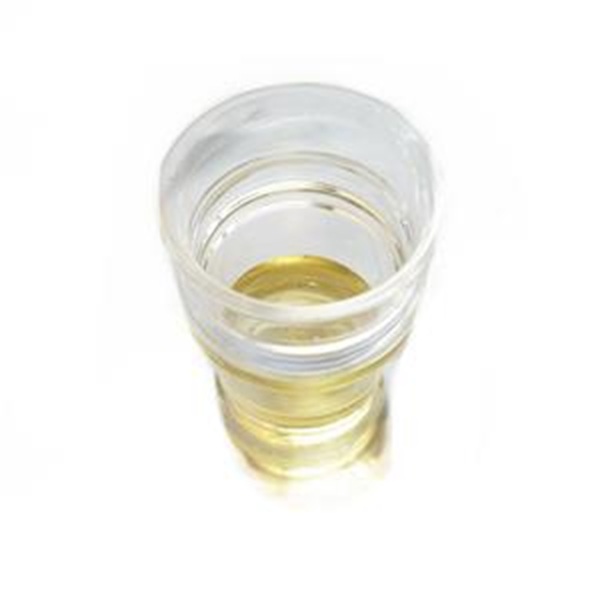
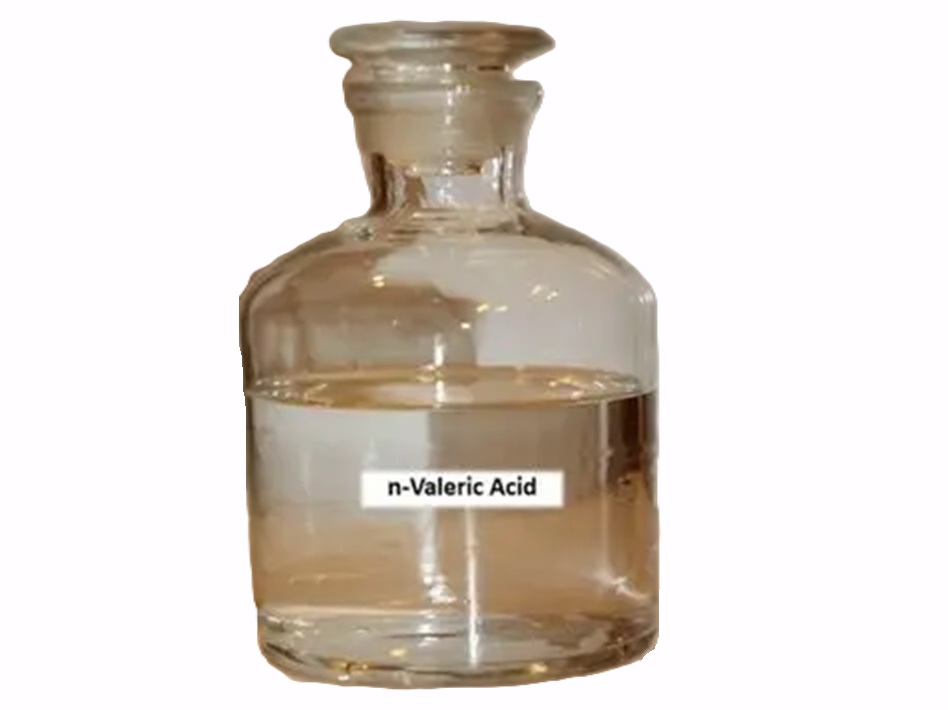
| Appearance | Colorless to light yellow liquid | Colorless liquid | Visual Inspection |
| Physical State | Liquid | Liquid | Visual Inspection |
| Odor | Sharp, unpleasant, cheesy/sweat-like | Sharp | Organoleptic |
| Color (APHA) | ≤ 30 | < 20 | ASTM D1209 |
| Clarity | Clear, free from sediment | Clear | Visual Inspection |
Description: Valeric acid is a clear liquid ranging from colorless to light yellow. Its characteristic sharp and unpleasant odor distinguishes it from other carboxylic acids. The odor threshold is very low and detectable even at very low concentrations.
ITEM 4: THERMAL PROPERTIES
| Property | Specification / Value | Test Method |
|---|---|---|
| Melting Point | -20 to -18 °C | DSC |
| Melting Point | -34.5 °C | DSC |
| Boiling Point | 185 - 187 °C | – |
| Boiling Point (10 mmHg) | 110 - 111 °C | – |
| Boiling Point (760 mmHg) | 186 °C | – |
| Flash Point (Closed Cup) | ~89 °C | ASTM D93 |
| Auto-ignition Temperature | ~400 °C | – |
| Evaporation Rate | Low | – |
| Vapor Pressure | 0.15 mmHg (20°C) | – |
Description: Valeric acid has a low melting point of -20°C and remains liquid over a wide temperature range. The boiling point is 186°C, and with a flash point of 89°C, it is classified as a combustible liquid. The high boiling point provides advantages in reactions and distillation processes.
ITEM 5: PHYSICAL PROPERTIES - DENSITY
| Property | Specification | Typical Value | Test Method |
|---|---|---|---|
| Density (20°C) | 0.935 – 0.945 g/mL | 0.939 g/mL | ASTM D4052 |
| Density (25°C) | 0.930 – 0.940 g/mL | 0.939 g/mL | ASTM D4052 |
| Specific Gravity (25/25°C) | 0.930 – 0.940 | 0.939 | ASTM D4052 |
| Density (Liquid) | ~0.94 g/mL | 0.939 g/mL | – |
Description: Valeric acid is lighter than water (0.939 g/mL). This property is important for phase separation processes and transportation calculations. Density varies with temperature; at 20°C it is measured at 0.939 g/mL.
ITEM 6: PHYSICAL PROPERTIES - OTHER
| Property | Typical Value | Test Method |
|---|---|---|
| Refractive Index (20°C) | 1.4070 – 1.4100 | ASTM D1218 |
| Refractive Index (n20/D) | 1.4086 | ASTM D1218 |
| Viscosity (20°C) | ~2.3 cP | – |
| Surface Tension | ~28 dyn/cm | – |
| Dielectric Constant | ~3.5 | – |
Description: Refractive index is a critical parameter for purity and identity verification. Deviations from the specified range may indicate potential changes in product purity or composition. Low viscosity facilitates pumpability and mixability.
ITEM 7: CHEMICAL PROPERTIES
| Property | Specification / Value | Test Method |
|---|---|---|
| Acid Value (mg KOH/g) | ≥ 540 | Titration |
| Acid Value | 548 – 550 mg KOH/g | Titration |
| pKa (25°C) | 4.84 | Potentiometric |
| pH (1% Aqueous Solution) | ~2.8 | pH Meter |
| Solubility in Water (25°C) | ~40 g/L | – |
| Solubility in Water | 49.9 g/L (20°C) | – |
| Solubility in Organic Solvents | Completely miscible | – |
| Esterification Reactivity | High | – |
| Hydrolysis Stability | Stable | – |
Description: Valeric acid is a weak acid (pKa 4.84). It is partially soluble in water (40 g/L) and completely miscible with most organic solvents. The high acid value (548-550 mg KOH/g) indicates high purity. It shows high reactivity in esterification reactions.
ITEM 8: PURITY AND ANALYTICAL SPECIFICATIONS
| Parameter | Specification | Typical Value | Test Method |
|---|---|---|---|
| Purity (GC) | ≥ 98.0% | 99.0% | GC |
| Purity | ≥ 99.0% | 99.5% | GC |
| Water Content (Karl Fischer) | ≤ 0.5% | 0.1% | Karl Fischer |
| Color (APHA) | ≤ 30 | 15 | ASTM D1209 |
| Acid Value | ≥ 540 mg KOH/g | 548 | Titration |
| Heavy Metals (Pb) | ≤ 10 ppm | <1 ppm | ICP-MS |
| Iron (Fe) | ≤ 5 ppm | <1 ppm | ICP-MS |
| Chloride (Cl) | ≤ 100 ppm | <10 ppm | Ion Chromatography |
| Sulfate (SO₄) | ≤ 100 ppm | <10 ppm | Ion Chromatography |
Description: Valeric acid is a high-purity product (>99%). Low water content and high acid value guarantee high quality and suitability for esterification reactions. Heavy metal content is within strict limits.
ITEM 9: CHEMICAL REACTIONS AND REACTIVITY
| Reaction Type | Reaction Partner | Product | Application |
|---|---|---|---|
| Carboxyl Group Reactions | |||
| Esterification | Alcohol | Valerate Esters | Flavors, fragrances, solvents |
| Amidation | Amine | Valeramides | Pharmaceutical synthesis, polymers |
| Neutralization | Base | Valerate Salts | Surfactants, cleaners |
| Reduction | LiAlH₄ / H₂ | Pentanol | Solvent, intermediate |
| Acid Chloride Formation | SOCl₂ / PCl₃ | Valeryl Chloride | Organic synthesis |
| Side Chain Reactions | |||
| Halogenation | Halogen (Cl₂, Br₂) | Halogenated Derivatives | Organic synthesis |
| Oxidation | KMnO₄ | CO₂ + H₂O | Complete oxidation |
Description: Valeric acid participates in a wide range of chemical reactions due to its carboxyl group. Esterification reactions represent the most important industrial application. It reacts with alcohols to form valerate esters.
ITEM 10: CHEMICAL INDUSTRY APPLICATIONS (PRIMARY USE)
| Application | Description / Function |
|---|---|
| Valerate Ester Production | Most common use; ethyl, pentyl, isoamyl, benzyl valerates |
| Solvent Production | Ester derivatives used as solvents |
| Organic Synthesis | Intermediate for various organic compounds |
| Plasticizers | Valerate esters as plasticizers |
| Polymer Production | Monomer in some polymer syntheses |
| Flow Control | pH adjuster in industrial processes |
Description: In the chemical industry, valeric acid is the primary raw material for valerate ester production. Through esterification with different alcohols, it forms solvents, flavor, and fragrance compounds. Its five-carbon structure provides balanced volatility and reactivity among short-chain carboxylic acids.
ITEM 11: FOOD AND FLAVOR INDUSTRY APPLICATIONS
| Application | Description / Function |
|---|---|
| Flavoring Esters | Pentyl valerate, ethyl valerate, isoamyl valerate |
| Fruity Flavors | Apple, pineapple, banana, strawberry flavors |
| Beverage Industry | Flavor component in fruit beverages |
| Sweeteners | Fruity taste profiles |
| Regulation | Direct acid use not suitable; only ester derivatives |
| Food Additive | FDA GRAS (ester derivatives) |
Description: Pure valeric acid is not used in foods due to its sharp and unpleasant odor. However, its ester derivatives (pentyl valerate, ethyl valerate, isoamyl valerate) produce fruity and pleasant odors. These esters are widely used as flavoring agents in the food and beverage industry.
ITEM 12: COSMETIC AND PERFUME INDUSTRY APPLICATIONS
| Application | Description / Function |
|---|---|
| Fragrance Components | Fruity, floral, sweet notes |
| Isoamyl Valerate | Common component in perfumery |
| Ethyl Valerate | Fruity top notes |
| Pentyl Valerate | Sweet, fruity character |
| Cosmetic Formulations | Fragrance component (ester derivatives) |
| INCI Name | Valeric Acid (pure acid not in INCI) |
Description: In the perfume and cosmetics industry, valeric acid esters provide fruity, floral, and sweet notes. Isoamyl valerate is a common component in perfumery. The pure acid is not used in cosmetics due to its unpleasant odor; only its derivatives are preferred.
ITEM 13: PHARMACEUTICAL AND DRUG INDUSTRY APPLICATIONS
| Application | Description / Function |
|---|---|
| API Synthesis | Intermediate in active pharmaceutical ingredient synthesis |
| Valproic Acid Relation | Chemically related to anticonvulsant drugs |
| Intermediate Chemical | Synthesis of various drug molecules |
| Bio-compatibility | Small molecule structure metabolizable |
| GMP Requirement | Pharmaceutical quality certifications mandatory |
| Usage | Controlled use; GMP-compliant production required |
Description: Valeric acid is used as an intermediate in API (Active Pharmaceutical Ingredient) synthesis. It is chemically related to valproic acid, used in anticonvulsant drugs. Its small molecular structure allows it to be metabolized in biological systems. GMP-compliant production and pharmaceutical quality certifications are mandatory.
ITEM 14: AGRICULTURE AND PESTICIDE INDUSTRY APPLICATIONS
| Application | Description / Function |
|---|---|
| Herbicide Production | Intermediate in some herbicide formulations |
| Pesticide Formulations | As intermediate chemical |
| Solubility Enhancer | Ester derivatives for enhanced efficacy |
| Regulation | Usage subject to regulations |
| Environmental Impact | Controlled dosage required |
Description: In the agricultural sector, valeric acid serves as an intermediate in some herbicide and pesticide formulations. Ester derivatives play a role in enhancing solubility and efficacy in agricultural chemicals. Usage is subject to regulations; controlled dosage is required due to environmental impact.
ITEM 15: SECTOR COMPATIBILITY MATRIX
| Industry | Suitability | Application | Notes |
|---|---|---|---|
| Chemical Industry | High | Ester production, solvent, intermediate | Most common use; valerate esters for fragrance |
| Food & Flavor | Limited | Flavoring esters (e.g., pentyl valerate) | Direct acid use not suitable; only ester derivatives |
| Cosmetics & Perfume | High | Fragrance via ester derivatives | Strong acid odor prevents direct use |
| Pharmaceutical & Drug | Medium | Intermediate, API synthesis | Controlled use; GMP-compliant production required |
| Agriculture & Pesticides | Medium | Intermediate in pesticide formulations | Limited use; subject to regulations |
| Textile & Dye | Low | Solvent or auxiliary chemical | Special formulations only |
| Energy & Fuel Additives | Not Suitable | — | No widespread use |
ITEM 16: SOLUBILITY AND MISCIBILITY
| Solvent / Medium | Solubility / Miscibility |
|---|---|
| Water | Partially soluble (~40 g/L, 25°C) |
| Water | 49.9 g/L (20°C) |
| Ethanol (Alcohol) | Completely miscible |
| Ether | Completely miscible |
| Chloroform | Completely miscible |
| Acetone | Completely miscible |
| Benzene | Completely miscible |
| Hexane | Completely miscible |
| Oils | Completely miscible |
| Glycols | Partially miscible |
Description: Valeric acid is partially soluble in water and completely miscible with most organic solvents. This broad solubility profile allows its use in both water-based and organic-based formulations.
ITEM 17: SAFETY AND TOXICOLOGICAL PROFILE
| Parameter | Description |
|---|---|
| Acute Oral Toxicity (LD50) | ~1500 - 2000 mg/kg (rat) |
| Acute Dermal Toxicity | Low - Medium |
| Skin Irritation | Irritant |
| Eye Irritation | Irritant |
| Skin Sensitization | May cause sensitization |
| Inhalation | Respiratory tract irritant |
| Carcinogenicity | Not classified |
| Mutagenicity | Not classified |
| Reproductive Toxicity | Not classified |
| Odor Detection Threshold | Very low (<1 ppm) |
Description: Valeric acid can cause skin and eye irritation and is known for its strong, unpleasant odor. Inhalation may cause respiratory tract irritation. The odor detection threshold is very low and it can be detected even at very low concentrations.
ITEM 18: HANDLING AND PERSONAL PROTECTIVE EQUIPMENT (PPE)
| Parameter | Recommendation |
|---|---|
| Skin Contact | Irritant; wash with soap and water |
| Eye Contact | Irritant; rinse with plenty of water for 15 minutes; seek medical attention |
| Inhalation | Respiratory irritation; move to fresh air; seek medical attention if breathing difficulty |
| Ingestion | Rinse mouth; drink water or milk; seek medical attention |
| Ventilation | Good ventilation or local exhaust |
| Gloves | Nitrile or neoprene gloves |
| Eye Protection | Safety goggles (chemical splash) |
| Respiratory Protection | Organic vapor mask |
| Clothing | Chemical-resistant apron |
Description: Standard industrial hygiene practices should be followed when handling valeric acid. Due to its strong odor, good ventilation should be ensured. Skin and eye contact should be avoided.
ITEM 19: STORAGE AND SHELF LIFE
| Parameter | Description |
|---|---|
| Storage Temperature | Below +30 °C |
| Storage Conditions | Tightly closed, well-ventilated area |
| Materials to Avoid | Strong oxidizers, high heat |
| Packaging Materials | Glass, stainless steel, HDPE |
| Shelf Life | 24 months (under proper storage) |
| Signs of Degradation | Color darkening, acidity increase |
| Incompatibilities | Strong bases, oxidizers |
Description: Valeric acid should be stored in a cool, dry place in tightly closed containers. Store below +30°C in well-ventilated areas. Keep away from strong oxidizers.
ITEM 20: SPILL CLEANUP AND DISPOSAL
| Parameter | Description |
|---|---|
| Small Spills | Absorb with inert material (sand, vermiculite) |
| Large Spills | Dike, absorb with inert material, collect in suitable containers |
| Do Not | Discharge to sewers or water sources |
| Waste Disposal | Dispose according to local regulations |
| Environmental Classification | Harmful to aquatic life |
| RCRA Classification | Hazardous waste (expected) |
Description: For valeric acid spills, the material should be collected with absorbent material and transferred to suitable containers. Do not discharge to sewers or water sources. Environmental precautions should be taken as it is harmful to aquatic life.
PACKAGING AND TRANSPORT INFORMATION
| Parameter | Description |
|---|---|
| Standard Packaging | 200 kg steel drum |
| Bulk Packaging | 1000 kg IBC |
| Small Packaging | 1 L, 5 L, 25 L (laboratory) |
| Packaging Materials | Stainless steel, HDPE, glass |
| Labeling | GHS hazard labels mandatory |
| UN Number | 1993 |
| DOT Classification | Flammable liquids, hazard class 3 |
| Transport Temperature | Ambient temperature |
SYNONYMS AND ALIASES
| Name | Description |
|---|---|
| Pentanoic Acid | IUPAC official name |
| n-Valeric Acid | Straight-chain form |
| 1-Butane Carboxylic Acid | Structural name |
| Propylacetic Acid | Structural name |
| Valerianic Acid | Older literature |
| Pentanoic Acid | Short form |
| 1-Pentanoic Acid | Positional name |
In Different Languages:
| Language | Name |
|---|---|
| English | Valeric Acid, Pentanoic Acid |
| French | Acide valérique, Acide pentanoïque |
| German | Valeriansäure, Pentansäure |
| Spanish | Ácido valérico, Ácido pentanoico |
| Italian | Acido valerico, Acido pentanoico |
| Turkish | Valerik Asit, Pentanoik Asit |
| Russian | Валериановая кислота (Valerianovaya kislota) |
| Polish | Kwas walerianowy |
QUALITY AND CERTIFICATION SUMMARY
| Certificate / Standard | Status |
|---|---|
| ISO 9001:2015 | Certified manufacturing sites |
| REACH (EC 1907/2006) | Registered and compliant |
| FDA 21 CFR | Suitable for flavor ester derivatives |
| GMP | Available (select grades) |
| Halal / Kosher | Available upon request |
| Pharmaceutical Grade | Available (select grades) |
Disclaimer: This Technical Data Sheet provides typical values for reference purposes only. All values are based on standard laboratory measurements and do not constitute a binding specification. For binding properties, please request the Certificate of Analysis (COA) for each specific batch. The user is solely responsible for determining product suitability for their intended application and for compliance with all applicable regulations. Safety Data Sheet (SDS) must be requested from the supplier before use.